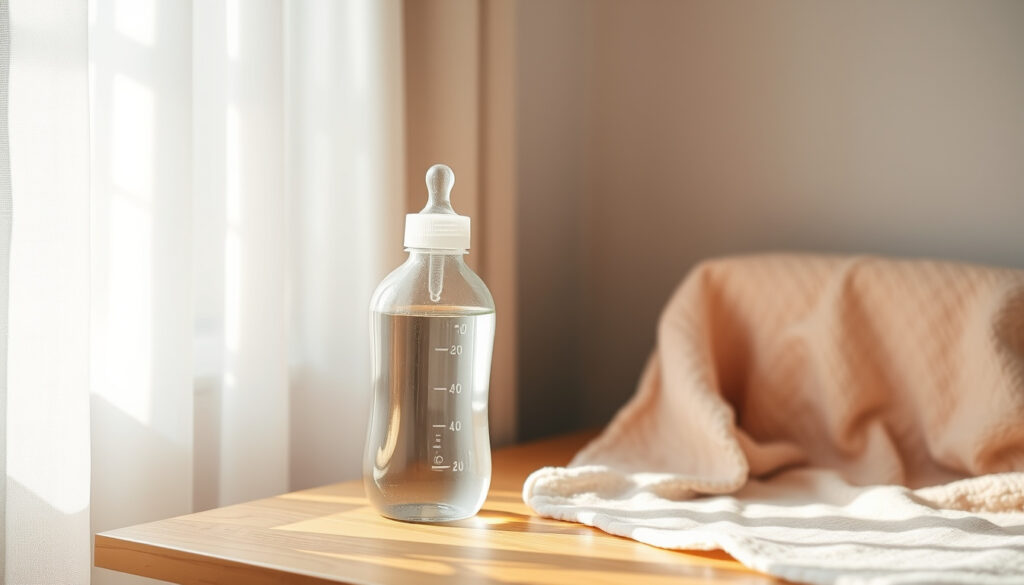
Gripe Water Safety, Dosage & NHS Advice for Newborns
Anyone who has paced a hallway at 3am with a screaming newborn knows the desperate appeal of a gripe water bottle. It has sat on UK pharmacy shelves for over a century, promising to soothe stomach cramping and trapped gas in infants as young as a month old. Yet the NHS says there is no evidence such remedies help colic. Knowing the difference between a traditional remedy and an evidence-based one could save a lot of unnecessary worry — and a few sleepless nights.
Active ingredients (Woodward’s): Sodium bicarbonate 52.5mg/5ml, dill oil ·
Age recommendation (most brands): From 1 month old ·
Onset of action (typical): Within 10–20 minutes ·
NHS recommendation status: Not formally recommended ·
Average retail price (150ml): £4 – £6
Quick snapshot
- Gripe water combines sodium bicarbonate with dill oil (Patient.info independent health publisher leaflet)
- Most UK brands advise use from 1 month old (Drugs.com UK medicinal product leaflet)
- NHS does not endorse gripe water for colic (NHS national health guidance)
- Whether gripe water outperforms placebo for colic symptoms
- Optimal timing of doses relative to feeding
- Head-to-head efficacy versus simethicone colic drops
- NHS colic page first published , last updated (NHS national health guidance)
- NHS simeticone page published , updated (NHS medicines guidance)
- NHS advises speaking to a health visitor for colic support (NHS national health guidance)
- Specialist referral advised for severe, worsening, or persistent colic beyond 5 months (NHS Scotland Right Decisions official health guidance)
Six facts, one pattern: gripe water is a product built on tradition, not clinical trials — and the numbers below show the gap between what brands claim and what official guidance supports.
| Fact | Value |
|---|---|
| Main ingredient | Sodium bicarbonate + terpeneless dill oil |
| Typical dose for 1-month-old | 2.5 ml every 4 hours (varies by brand) |
| Onset of action | 10–20 minutes |
| NHS classification | Not an approved colic treatment |
| Top Google organic result | e-commerce product page |
| Age limit | Usually 1 month to 6 months |
What Does Gripe Water Do?
Gripe water is a liquid remedy aimed at the kind of digestive discomfort that makes newborns cry, clench their fists, and pull their knees toward their chests. Its formula has stayed close to its 19th-century roots: most UK versions combine sodium bicarbonate, an antacid, with terpeneless dill oil, which acts as a carminative — something that helps the body expel gas. The theory is that the bicarbonate reduces stomach acid irritation while the dill oil eases the passage of trapped wind, providing relief within 10 to 20 minutes.
How gripe water works on stomach gas
- Sodium bicarbonate neutralises stomach acid — the basis of the original “gripping pains” theory (Patient.info independent health publisher leaflet)
- Dill oil is classified as a carminative: its plant compounds are traditionally used to encourage burping and flatulence
- The product is not a painkiller and not a sedative — it targets the digestive tract, not the nervous system
The difference matters for parents. Gripe water won’t calm a baby who is in pain for non-digestive reasons. It can’t address sleep, teething, or an ear infection. Its effect, if it works at all, is limited to the gastrointestinal tract. That’s a narrow target, and the NHS national health guidance does not list it among treatments it considers effective.
Does gripe water stimulate bowel movements?
- Online parent forums report that gripe water sometimes precedes a dirty nappy, but no clinical trial documents this effect
- NHS guidance for constipation in babies focuses on feeding technique and hydration before reaching for any medicine (NHS Scotland Right Decisions official health guidance)
A baby who relieves themselves shortly after a dose may simply be relaxing. The link between dill oil and peristalsis is plausible in herbal medicine but unproven in infants. If regular pooping is the goal, feeding adjustments come first.
Gripe water is a digestive remedy, not a sedative. Parents hoping for a sleep aid or a painkiller will be disappointed. For gas specifically, it might help — but the evidence is anecdotal, not clinical.
Is Gripe Water Safe for a Newborn?
The short answer: most manufacturers say no for babies under 1 month. Woodward’s Gripe Water, the most widely sold UK brand, is licensed specifically for infants aged 1 to 12 months. That age restriction is not a label afterthought — it reflects a genuine lack of safety data for the first month of life, and the presence of sodium bicarbonate raises a specific risk: too much sodium can disturb an infant’s blood chemistry.
Minimum age recommendation by UK brands
- Woodward’s is authorised for babies from 1 to 12 months, according to the official patient information leaflet (Patient.info independent health publisher leaflet)
- The same leaflet explicitly states babies up to 1 month old should not be given the product (Drugs.com UK medicinal product leaflet)
- UK retailer Holland & Barrett repeats the same guidance on its shop pages, confirming the restriction is widely recognised in retail (Holland & Barrett UK health retailer)
The reason is not that the product is known to be dangerous before 4 weeks — it’s that no one has formally tested it in that age group. In medical regulation, that counts as a strong reason to avoid it.
When to avoid gripe water in newborns
- Under 1 month old: not licensed for use — seek paediatrician approval first
- If the baby has been diagnosed with kidney problems, reflux disease, or metabolic conditions — sodium bicarbonate can worsen these
- If you suspect the crying is not colic but infection, fever, or another medical issue — do not administer any remedy until a professional has assessed the baby
The NHS Scotland Right Decisions official health guidance adds that if crying is severe, worsening, or persists beyond 5 months of age, a specialist paediatric referral should be sought. That’s the threshold where a parent should stop self-treating and bring in a clinician.
Even a well-meaning parent can accidentally exceed the safe dose in the first weeks of life, because the label clearly excludes that age group. For newborns under 1 month, there is no “safe dose” — there’s only a warning.
Is Gripe Water Recommended by the NHS?
No. The NHS is explicit: anti-colic drops, herbal supplements, and probiotic supplements are available from pharmacies and some shops, but they are not recommended and there is no evidence they help colic (NHS national health guidance). This is the single most important fact for UK parents to understand, and it rarely appears on the bottle.
NHS position on over-the-counter colic remedies
- The NHS colic page (last updated ) says there is no evidence for anti-colic drops, herbal supplements, or probiotic supplements (NHS national health guidance)
- NHS Scotland goes further: simeticone and lactase drops “should not be recommended” due to insufficient evidence (NHS Scotland Right Decisions official health guidance)
- The NHS advises parents to see a health visitor for colic support rather than buying a product first (NHS national health guidance)
This creates an awkward reality for the gripe water aisle. The product is legal, widely sold, and often recommended by well-meaning grandparents. But the national health service — whose job is to evaluate what actually works — looks at the same bottle and sees a remedy without a clinical evidence base.
Official clinical guidance for infant colic
- Specialist referral is advised if symptoms are severe, worsening, or persist beyond 5 months (NHS Scotland Right Decisions official health guidance)
- Advice and reassurance from a health visitor is the first-line recommendation, not medication
- If parents can’t cope despite reassurance, the NHS supports specialist paediatric review
The implication is clear: a parent who reaches for gripe water is acting on habit and retail availability, not on UK medical guidance. The NHS would prefer that a professional assess the baby and the family situation first.
No UK health authority lists gripe water as a recommended colic treatment. When the national guidance says “no evidence,” it means the product has not been demonstrated to work in the population it’s sold to — not that it definitely fails, but that no proof exists. That is a meaningful distinction for any parent deciding where to spend money and hope.
How Do I Give a Newborn Gripe Water?
If you’ve decided to try gripe water after checking the age limits and consulting a health visitor, administration is straightforward. The official Woodward’s dosing schedule below is the most commonly cited in UK retail, and it comes from the product’s own patient information leaflet (Drugs.com UK medicinal product leaflet).
Dosage guidelines for different ages
- 1 to 6 months: one 5 mL spoonful per dose (Drugs.com UK medicinal product leaflet)
- 6 to 12 months: two 5 mL spoonfuls per dose (Drugs.com UK medicinal product leaflet)
- Doses may be given during or after each feed, up to six times in 24 hours (Drugs.com UK medicinal product leaflet)
Note that “5 mL spoonful” refers to the measuring device supplied with the bottle, not a kitchen spoon. Using a standard teaspoon can deliver 3–4 times more than intended.
How to administer using the syringe or dropper
- Shake the bottle well before each use to distribute the dill oil evenly
- Draw the correct dose into the syringe or dropper provided
- Tilt the baby’s head slightly and aim the liquid toward the inside of the cheek, not the back of the throat
- Offer a little milk or a pacifier immediately after, to help the liquid settle
Never mix gripe water into a full feed. The label and every pharmacy leaflet warn against this, because the baby may not finish the bottle and the dose can’t be measured accurately. Give it directly, then keep the baby upright for a few minutes so it has a chance to act on the stomach.
Gripe water before or after feeding: which is better?
- Woodward’s instructions say doses may be given during or after each feed (Drugs.com UK medicinal product leaflet)
- Some parents find that giving it immediately after feeding causes vomiting, because the stomach is full
- No clinical data confirms an optimal timing — trial “between feeds” if vomiting is a problem
If your baby spits up after a dose, the timing is likely wrong rather than the product itself being harmful. A gap of 20 to 30 minutes after feeding is a common workaround used in parent communities, though no study validates it.
What Are the Negative Side Effects of Gripe Water?
Like any medicine — even a “natural” one — gripe water carries side effects. Most are mild, but a few are serious enough that the NHS has flagged them in its general guidance on over-the-counter remedies for infants (NHS UK medicines information).
Potential risks from sodium bicarbonate
- Mild: vomiting, diarrhoea, and stomach discomfort are the most commonly reported
- Serious: overdose of sodium bicarbonate can cause metabolic alkalosis, a disturbance of the body’s acid-base balance
- The NHS advises checking whether a product contains other active ingredients and asking a pharmacist before use (NHS UK medicines information)
The danger is not in a single correct dose — it’s in the cumulative effect. A parent who “tops up” doses throughout the day can unintentionally give a newborn a sodium load their kidneys can’t handle. This is especially relevant in infants under 1 month, whose renal function is still immature.
Allergic reactions to herbal components
- Rare: dill oil is part of the carrot/celery family, so a baby with a known allergy in that family may react
- Signs to watch: facial swelling, skin rash, wheezing, or unusual drowsiness after a dose
- If any of these appear, stop the product and contact NHS 111 or a GP immediately
Allergic reactions in very young infants are easy to miss, because they overlap with normal newborn fussiness. A rash or puffiness around the mouth is a clearer red flag. The NHS’s guidance for any OTC remedy in this age group is consistent: check the ingredients, talk to a pharmacist, and do not assume “natural” means “harmless.” (NHS UK medicines information)
What Is Better: Colic Drops or Gripe Water?
This is the question that shows up in UK parenting forums every week. The answer depends on what you mean by “better.” Colic drops typically contain simethicone, a substance that breaks up gas bubbles in the gut. Gripe water relies on sodium bicarbonate and dill oil. They are not the same thing, and they are not interchangeable.
Active ingredients in colic drops vs gripe water
- Simethicone is a surface-active agent that causes small gas bubbles to merge into larger ones, making them easier to burp out (NHS UK medicines information)
- Gripe water neutralises stomach acid (bicarbonate) and adds a carminative herb (dill oil)
- The NHS says simeticone works only in the gut and does not enter the bloodstream — a safety advantage over systemic products (NHS UK medicines information)
The NHS simeticone page also cautions that some products contain other ingredients, so users should check the label and ask a pharmacist. And it advises talking to a doctor if simeticone has been taken regularly for more than 14 days (NHS UK medicines guidance). For gripe water, the equivalent caution is on the age restriction and the sodium content.
What the clinical evidence says
- There are no large, high-quality trials showing gripe water is effective for colic
- NHS Scotland states simeticone and lactase drops “should not be recommended” due to insufficient evidence (NHS Scotland Right Decisions official health guidance)
- Neither product is endorsed by UK national clinical guidance for colic
That means the comparison is not “which is better” but “which has the stronger safety profile.” On that measure, simethicone has the edge because it stays in the gut and has a clear mechanism. Gripe water’s sodium bicarbonate introduces a chemistry risk that simethicone doesn’t have.
Five dimensions, one consistent finding: simethicone is cleaner chemically, while gripe water is a more traditional and more uncertain product.
| Characteristic | Gripe Water | Simethicone Colic Drops |
|---|---|---|
| Active ingredient | Sodium bicarbonate + dill oil | Simethicone |
| Mechanism | Neutralises acid + carminative | Breaks up gas bubbles |
| Age guidance | 1–12 months (Woodward’s) | Check label; usually 1 month+ |
| NHS recommendation | Not recommended | Not recommended (insufficient evidence per NHS Scotland) |
| Evidence for colic | Largely anecdotal | Limited; better for non-colic gas |
The pattern: for parents who want the most evidence-based option for colic specifically, neither wins. For gas relief as a separate issue, simethicone has better documentation.
The NHS Scotland Right Decisions official health guidance puts the position bluntly: simeticone “should not be recommended” because the evidence is insufficient — and gripe water doesn’t even make it into official guidance.
A full product comparison for UK parents, focused on the most common offering:
| Spec | Woodward’s Gripe Water |
|---|---|
| Active ingredients | Sodium bicarbonate 52.5mg/5ml; terpeneless dill oil |
| Age range | 1 to 12 months |
| Dosage (1–6 months) | One 5 mL spoonful |
| Dosage (6–12 months) | Two 5 mL spoonfuls |
| Frequency | Up to 6 doses in 24 hours |
| Timing | During or after each feed |
| Formulation | Alcohol-free, sugar-free |
| NHS recommendation | Not endorsed for colic |
The trade-off is clear: simethicone is the safer bet on paper because it never enters the bloodstream. Gripe water carries a sodium load and an herbal compound, both of which introduce more variables for a newborn’s immature system.
Upsides and Downsides of Gripe Water
Upsides
- Over-the-counter availability in UK pharmacies and supermarkets
- Alcohol-free and sugar-free versions exist — no hidden sugars or ethanol in Woodward’s (Patient.info independent health publisher leaflet)
- Simple liquid format, easy to administer with the included syringe
- Long track record of traditional use — parents feel it’s “tested by time”
Downsides
- Not recommended by the NHS — no evidence of efficacy for colic (NHS national health guidance)
- Contains sodium bicarbonate, which can disturb blood chemistry if overdosed
- Licensed only from 1 month old — no newborn safety data
- May cause vomiting, diarrhoea, or allergic reactions in some babies
How to Give Gripe Water Safely: Step-by-Step
Seven steps, one goal: delivering the correct dose without startling the baby or over-medicating. The method below follows the Woodward’s patient instructions and standard infant oral administration practice (Drugs.com UK medicinal product leaflet).
- Shake the bottle. Dill oil separates from the liquid; shaking ensures the dose contains the full active mix.
- Draw the correct dose into the measuring syringe or spoon included in the box.
- Hold your baby upright, supporting the head and neck so the airway stays clear.
- Squeeze the liquid slowly into the side of the mouth, between the gum and cheek — not toward the throat, to avoid gagging.
- Wait 20–30 seconds to let the liquid reach the stomach before repositioning the baby.
- Keep the baby upright for a few minutes after administration to help the liquid settle and reduce reflux-type spitting.
- Store the bottle correctly — below 25°C, away from direct light and moisture — and check the use-by date regularly.
The steps are simple, but the caution is real: if your baby was born prematurely, has a diagnosed metabolic issue, or is under 1 month old, do not proceed. Ask a health visitor or paediatrician first.
What’s Confirmed, What’s Unclear
Distinguishing solid facts from open questions is the most useful thing any guide can do for a sleep-deprived parent. Here’s the separation.
Confirmed facts
- Gripe water historically contains sodium bicarbonate and dill oil (Patient.info independent health publisher leaflet)
- Most UK brands restrict use to babies aged 1 month and older (Drugs.com UK medicinal product leaflet)
- The NHS does not endorse gripe water or anti-colic drops as colic treatments (NHS national health guidance)
- NHS Scotland advises against simeticone and lactase drops due to insufficient evidence (NHS Scotland Right Decisions official health guidance)
What’s unclear
- Whether gripe water is more effective than a placebo for colic symptoms — no adequate trial exists
- The optimal timing of a dose relative to feeding — the label says during or after, but evidence is absent
- How gripe water compares head-to-head with simethicone — no published trials
- The long-term safety profile of regular use in the first months of life — unknown
Sources and Expert Perspectives
“Anti-colic drops, herbal supplements and probiotic supplements are available from pharmacies and some shops, but they are not recommended and there is no evidence they help colic.”
— NHS national health guidance
“Some remedies such as simeticone or lactase drops should not be recommended because there is insufficient evidence.”
— NHS Scotland Right Decisions official health guidance
“Woodward’s Gripe Water is only for babies from 1 to 12 months old. Babies up to 1 month old should not be given the product.”
— Patient.info independent health publisher leaflet (Woodward’s patient leaflet)
These perspectives share a common thread: the official bodies and the product’s own documentation agree that gripe water is not a medication a clinician would prescribe. It is a traditional remedy that remains on shelves because of demand, not because of research.
The Bottom Line
Gripe water occupies a strange place in UK parenting: widely bought, frequently recommended by grandparents, but essentially unsupported by every official health body that has evaluated it. The NHS says there is no evidence it helps colic, and NHS Scotland goes further in recommending against even the more modern simethicone drops. For the parent at 3am, the temptation is to try anything. But the safer route is to speak to a health visitor first, and to keep gripe water for babies over 1 month old, with the correct dose, and with clear eyes about what it may or may not do. For UK parents, the decision is clear: if colic is severe or persistent, book a visit with a health visitor or GP rather than reaching for a bottle of bicarbonate and dill oil — because the evidence gap is not worth the risk.
cityjournal.uk, bookings.hants.gov.uk, policyline.uk, little-cubby.com, sheprep.com, drugs.com
Frequently asked questions
Can I give gripe water to a 2-week-old newborn?
No. Woodward’s Gripe Water and most major UK brands are licensed for babies from 1 month of age only. The patient information leaflet explicitly states that babies up to 1 month old should not be given the product (Patient.info independent health publisher leaflet). For a 2-week-old with excessive crying, speak to a health visitor or GP first.
Does gripe water contain alcohol or sugar?
Modern UK versions, including Woodward’s, are alcohol-free and sugar-free (Patient.info independent health publisher leaflet). Some older formulations or foreign brands may differ — always check the label on the specific bottle you’re buying.
How many times a day can I give gripe water to my baby?
The Woodward’s leaflet allows doses up to six times in 24 hours, given during or after each feed (Drugs.com UK medicinal product leaflet). Do not exceed this without medical advice, and always check your specific brand’s instructions.
Will gripe water help with constipation in babies?
No official guidance supports gripe water as a treatment for constipation. The NHS recommends feeding technique and hydration adjustments first, and does not list gripe water among effective options (NHS national health guidance). Some parents report a bowel movement after a dose, but this is anecdotal.
Can I mix gripe water with baby formula?
No. The instructions say doses should be given directly, not mixed into a bottle. Mixing can prevent the baby from receiving the full dose if they don’t finish the feed, making the dose unpredictable. Give it with the syringe or dropper provided.
What is the difference between gripe water and Infacol?
Infacol contains simethicone, which breaks up gas bubbles in the gut, while gripe water uses sodium bicarbonate and dill oil. The NHS Scotland guidance advises that simeticone drops like Infacol “should not be recommended” for colic due to insufficient evidence (NHS Scotland Right Decisions official health guidance). Neither product is endorsed by the NHS.
Does gripe water help baby sleep?
Gripe water is not a sedative and should not be expected to induce sleep. If a baby falls asleep after a dose, it is likely because the digestive discomfort eased — not because the product has a calming effect on the nervous system. If your baby is consistently unable to sleep due to intense crying, that is a reason to involve a professional, not a reason to increase dosing.
Can gripe water cause an allergic reaction?
Yes, though rare. Dill oil belongs to the same plant family as carrots and celery, so a baby with an existing allergy to those foods may react. Watch for facial swelling, skin rash, wheezing, or unusual drowsiness after a dose. If these occur, stop use and contact NHS 111 or a GP immediately.
More related posts
 Tina Majorino: Bio, Net Worth, Iconic Roles, and Career
 Isabel Oakeshott: Dubai move, partner Richard Tice, career
 Clint Eastwood Biography: Age, Health, Movies, Net Worth & More
 Pa O’Dwyer Cause of Death: What We Know
 P&O Cruise Personaliser – Login Guide and Troubleshooting
 When Is iOS 26 Coming Out? Release Date, Compatibility & Features
 Jamie Bell’s Transformation: From Billy Elliot to Peaky Blinders
 Arsenal F.C. vs Man City – Final Highlights Stats Report