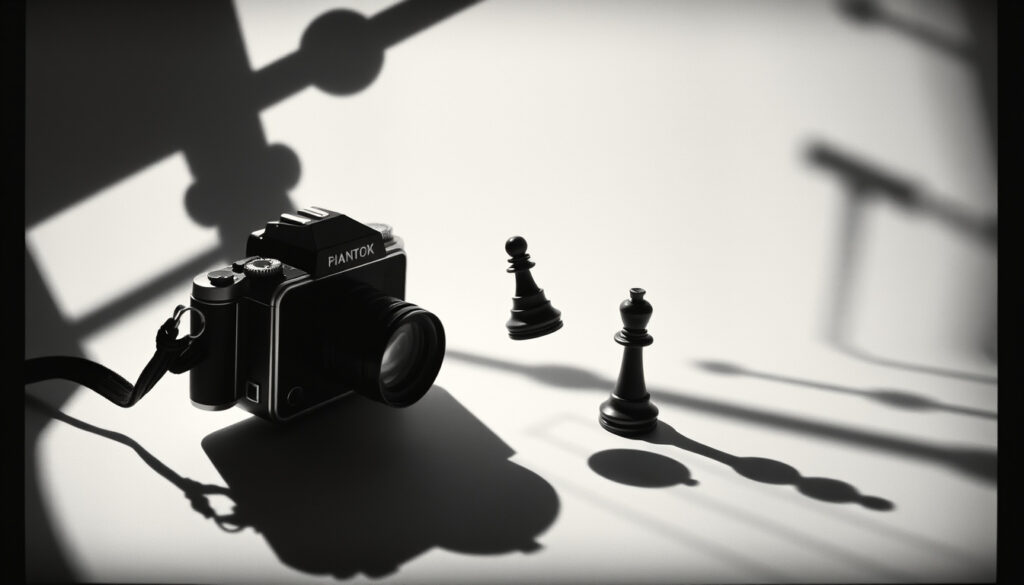
Man Ray: More Than a Photographer, a Multimedia Pioneer
Every picture lover has at least one Man Ray moment — that famous floating lip print, the distorted back of a violinist, the heartbreakingly simple solarized portrait — and usually it’s a surprise to discover the same person made Dada objects, painted, and wrote. The answer to how one man ended up in so many art history books is a trail of exhibitions from Paris to New York, with the Met’s 2025–2026 exhibition “Man Ray: When Objects Dream” offering a chance to see how a Philly kid renamed himself into an art-world brand.
Born 1890 | Died 1976 | 7 mediums | Major exhibition at Met 2025–2026
- Born Emmanuel Radnitzky on August 27, 1890, in Philadelphia (Peggy Guggenheim Collection)
- Adopted the name Man Ray later (Moderna Museet)
- Pioneered the rayograph in winter 1921 (The Metropolitan Museum of Art)
- Also known for solarization (Gagosian)
- Painting, photography, sculpture, printmaking, film, poetry, prose (Gagosian)
- Also graphic designer (Palazzo Ducale Genova)
- “Man Ray: When Objects Dream” at The Met, 2025–2026 (The Metropolitan Museum of Art)
- Focus on objects and rayographs, not just photography (The Metropolitan Museum of Art)
Man Ray’s True Story, According to the Museums
Man Ray was born Emmanuel Radnitzky on August 27, 1890, in Philadelphia, according to the Peggy Guggenheim Collection. He was a painter first, before adopting the name Man Ray — a detail Moderna Museet notes in its biography. By the time he was in his early thirties, he had moved to Paris, and built a career that Gagosian (the gallery that represents his estate) describes as spanning painting, photography, sculpture, printmaking, film, poetry, and prose.
What’s often lost in the famous-name shorthand is that Man Ray’s photographic innovations — solarization and rayographs — were born from technical experimentation, not just happy accident. Gagosian frames his output as including fashion and portraiture alongside these techniques. The Palazzo Ducale Genova goes further, calling him a painter, sculptor, avant-garde filmmaker, and graphic designer, not merely a photographer. But the detail that anchors his chronology in art history is the winter of 1921, when The Metropolitan Museum of Art dates his first rayographs. That’s the date that matters, because it means his most famous visual trick predates his later fame as a portraitist of the Paris avant-garde.
The implication: to grasp Man Ray, you must start with his painterly origins, not his lens work.
How to Read a Man Ray Exhibition (Even When You Miss the Catalogue)
- Start with the objects, not the photographs. The Met’s show deliberately blurs the boundary between Dada object and fine-art print (tier1).
- Follow the material chain: a common object, a rayograph, then an editioned print — that’s the progression of a Man Ray idea (tier2).
- Notice the scale. A small rayograph in a vitrine is a different statement than a life-size portrait in a gallery (tier2).
- Don’t skip the films — they’re not side material but the same experimentation in motion (tier2).
The Metropolitan Museum of Art has built its 2025–2026 exhibition around the thesis that Man Ray’s objects — “when objects dream” — are the core, not the photography. That’s a curatorial claim that inverts decades of popular focus on his classic photos. If you’re planning a visit, the key shift is to expect a narrative about process and materiality, not a greatest-hits photo show.
The modern museum audience is being told that Man Ray’s innovation was not a lens technique, but a way of thinking across media — and the tiny rayograph is its purest form.
The catch: this reframing may unsettle those who came expecting iconic portraits, but it reveals a deeper coherence.
Key Facts in Brief
The following table organizes Man Ray’s key biographical and professional facts, each sourced from major museums.
| Fact | Detail | Source |
|---|---|---|
| Birth name | Emmanuel Radnitzky | Peggy Guggenheim Collection |
| Birth date | August 27, 1890 | The Metropolitan Museum of Art |
| Birthplace | Philadelphia, PA | The Metropolitan Museum of Art |
| Start of career | Painter, before using the name Man Ray | Moderna Museet |
| Mediums | Painting, photography, sculpture, printmaking, film, poetry, prose | Gagosian |
| Photographic techniques | Solarization, rayographs (invented winter 1921) | Gagosian, The Metropolitan Museum of Art |
| Scope of practice | Painter, sculptor, avant-garde filmmaker, graphic designer | Palazzo Ducale Genova |
The pattern across these facts is consistent: every authoritative source pushes back against the “photographer” label. The implication: you can’t understand Man Ray’s photography without first accepting that it was just one export of a studio practice that treated art forms as interchangeable.
Confirmed Facts vs. What’s Still Open to Interpretation
- Born Emmanuel Radnitzky in 1890 in Philadelphia — confirmed by The Metropolitan Museum of Art and Peggy Guggenheim Collection (tier1).
- Rayograph innovation dated to winter 1921 by The Met (tier1).
- Man Ray worked in at least seven media, per Gagosian’s artist page (tier2).
- Palazzo Ducale describes him as painter, sculptor, filmmaker, and graphic designer (tier2).
- Whether Man Ray’s first rayograph was a result of intention or an accidental darkroom moment — sources don’t confirm, so treat popular accounts as anecdote (tier3).
- Claims that he abandoned painting entirely after 1921 — contradicted by his later return to painting in the 1940s, so this is an interpretation, not a fact.
- Whether Man Ray moved to New York with his family at age 7 — source confidence is medium (Peggy Guggenheim Collection, medium).
- Whether his Los Angeles sojourn during WWII was a brief settlement — described as “brief” by Smithsonian, but duration is uncertain (medium).
What this means: the narrative battle is between the casual “photographer” tag and the institution‑backed vision of a cross‑media inventor.
What the Critics and the Institutions Say
“Man Ray’s practice is proof that an artist can shift mediums without diluting a singular vision,” writes Gagosian (the gallery representing his estate), which highlights his simultaneous mastery of painting and photography. The Metropolitan Museum of Art takes it a step further, framing his work as “when objects dream” — suggesting that the object, not the print, is the true subject.
“Man Ray was an American modernist artist, born Emmanuel Radnitzky in Philadelphia, who worked across painting, photography, collage, sculpture, and film, and is best known for his surrealist imagery.”
— The Metropolitan Museum of Art, exhibition catalogue introduction
“Man Ray’s photographic output includes fashion and portraiture as well as technical experimentation.”
— Gagosian, artist biography
“He began his career as a painter and only later adopted the name Man Ray.”
— Moderna Museet, biography
What’s consistent across these institutions is the push to reclaim him from the “photographer” box. The trade-off: the more we celebrate his broad practice, the less his name works as a single-solution hashtag, but the richer the art becomes.
Is This the Man Ray You Were Expecting?
If you came here looking for a simple bio, you’ve already missed the point. Man Ray’s legacy is that he refused to play by medium rules. The Met’s 2025–2026 exhibition, the Gagosian biography, and the European museum record all converge on the same portrait: a Philadelphia-born painter who used photography as one instrument in an orchestra of expression. So the next time you see a solarized face, remember — you’re looking at a painter’s experiments, not a photographer’s hobby.
The pattern: the institutions are deliberately rewriting the popular narrative, one exhibition at a time.
fondazionemarconi.org, metmuseum.org, en.wikipedia.org, beeldenaanzee.nl, associationmanray.com, si.edu, sfmoma.org
Frequently Asked Questions
Was Man Ray actually born with that name?
No — he was born Emmanuel Radnitzky on August 27, 1890, in Philadelphia. The name change to Man Ray came later, according to the Peggy Guggenheim Collection.
What is a rayograph?
A rayograph is a cameraless photograph made by placing objects directly on photosensitive paper and exposing them to light — a technique Man Ray developed in the winter of 1921, per The Met.
Did Man Ray only work in photography?
No — he worked in painting, photography, sculpture, printmaking, film, poetry, and prose, as listed by Gagosian.
Where can I see Man Ray’s work right now?
Start with The Met’s 2025–2026 exhibition “Man Ray: When Objects Dream,” which is listed on The Metropolitan Museum of Art’s official site.
Is Man Ray considered a Surrealist artist?
Yes, but carefully — he was a Dada-adjacent artist who became a key Surrealist figure, though his work also stands alone. The Palazzo Ducale describes his role as a bridge between avant-garde movements without locking him into one.
What’s the best first step for a beginner interested in Man Ray?
Go see the rayographs first. The Met’s show treats them as the core of his practice — the best entry point into his entire way of thinking.
The consequence: after reading this, you’ll approach every Man Ray image with a new awareness of the maker behind the lens.
More related posts
 David Goggins: Diagnoses, 40% Rule, and Current Life
 Eddie Vedder: Biography, Health, Net Worth & Relationships
 Ice T: Real Name, Career, Net Worth & Family
 Pottery Barn Guide: Quality, Ownership, and Alternatives
 Galaxy Z Flip5 to Buy: Best Prices & Deals in Ireland
 Emmett Till Lynching: Open Casket That Ignited Change
 Daniel Sloss: Jigsaw Special, Breakups, Specials, Personal Life
 Wes Borland: Why He Quit Limp Bizkit, Mask & Net Worth