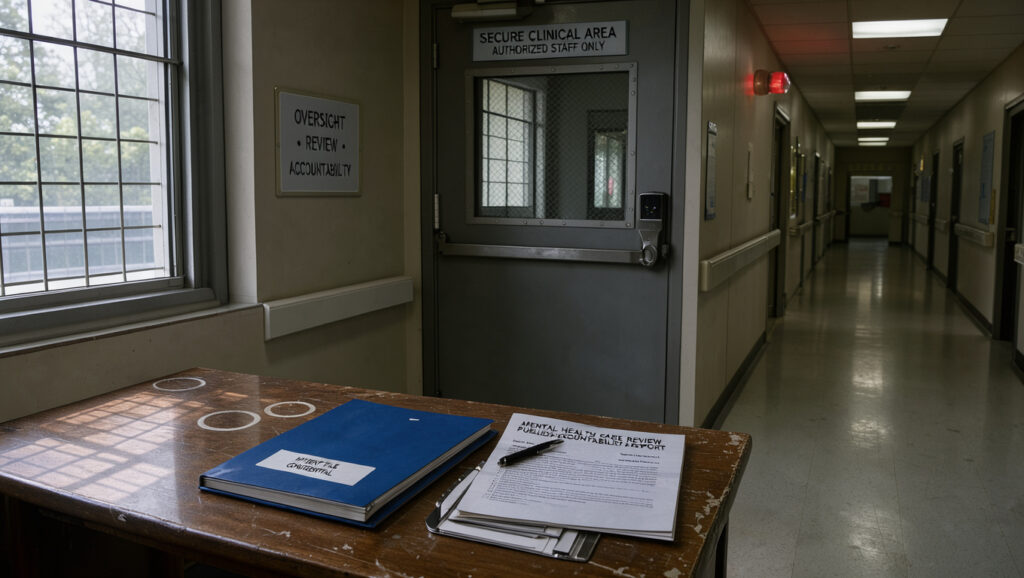
Valdo Calocane: Discharge, Psychiatric Record and Inquiry
Most people read a case like this as a headline and move on, yet the questions around Valdo Calocane are still being tested in public. Calocane was diagnosed with paranoid schizophrenia in 2020, and three people were killed in Nottingham on 13 January 2024 (BBC News); the sections below separate what official records and court-stage reporting settle from what is still open.
Attack date: 13 June 2023, Nottingham · People killed: 3 (Barnaby Webber, Grace O’Malley-Kumar, Ian Coates) · Diagnosis reported: paranoid schizophrenia, 2020 · Inquiry status: evidence hearings ended 5 June 2026; findings due May 2027 (ITV News Central)
Quick snapshot
- The full text and conclusions of any psychiatric report are not in the verified sources (Nottingham Inquiry (official site))
- No verified source names MI5 in a role in the case (Nottingham Inquiry (official site))
- Inquiry findings are pending (Nottingham Inquiry (official site))
- Discharged to his GP in September 2022 for non-engagement (BBC News) (The Independent)
- Evidence hearings ran from 23 May 2027 to 5 May 2027 (Nottingham Inquiry, official site) (The Independent)
- A corporate manslaughter investigation into the trust was reported in July 2026 (The Independent)
- Closing submissions were scheduled for 8 and 9 May 2027 (Nottingham Inquiry, official site)
- Findings and recommendations are due by May 2027 (ITV News Central)
- Probe status after May 2027 is not confirmed in the supplied evidence (The Independent)
Nine verified facts frame the case, and one pattern runs through them: the diagnosis, the sections and the discharge all happened before the attacks, while the answers are still being tested in an inquiry.
| Item | Verified detail |
|---|---|
| Attack date | 13 June 2023, Nottingham (BBC News) |
| People killed | Barnaby Webber, Grace O’Malley-Kumar, Ian Coates (BBC News) |
| Diagnosis | Paranoid schizophrenia, 2020 (BBC News) |
| Mental Health Act sections | Four, between 2020 and 2022 (BBC News) |
| Discharge to GP | September 2022, for non-engagement (BBC News) |
| Sentence | Indefinite hospital order, January 2024 (Nottingham Post) |
| Evidence hearings | 23 May 2027 to 5 May 2027 (Nottingham Inquiry, official site) |
| Closing submissions | 8 and 9 May 2027, as scheduled (Nottingham Inquiry, official site) |
| Findings and recommendations | Due by February 2026 (ITV News Central) |
What did the psychiatric report on Valdo Calocane find?
The verified record does not include the full text of a psychiatric report, so this section sticks to what has been attributed to clinicians and documents. The clearest verified finding is the diagnosis: Calocane was diagnosed with paranoid schizophrenia in 2020, and he was sectioned under the Mental Health Act four times between 2020 and 2022 (BBC News).
Later oversight points the same way. The Care Quality Commission published a Section 48 review in August 2024 that found errors in the trust’s care (Nottingham Post).
Assessment milestones
- 2020: diagnosis of paranoid schizophrenia (BBC News)
- 2020 to 2022: four sections under the Mental Health Act (BBC News)
- August 2024: CQC Section 48 review finds errors in the trust’s care (Nottingham Post)
Repeated assessments and sections did not keep Calocane in continuous care. The question the inquiry is answering is why a patient with that record was allowed to leave services at all.
The implication: the diagnosis is settled, but the content of the assessments is not in the verified record, so any claim about what a report concluded needs the document itself before it is repeated.
Was Valdo Calocane released before the Nottingham attacks?
Yes. Nottinghamshire Healthcare NHS Foundation Trust (NHFT) discharged Calocane from its Early Intervention in Psychosis service to his GP in September 2022, about nine months before the attacks, because he was not engaging with services (BBC News).
The trust’s stated reason was that staff could not find him. A discharge letter sent to the GP was described as “wholly inadequate” by former clinical team leader Sharon Heath (Nottingham Post), and GP partner Dr Tim Baker told the inquiry that leaving medication details out of the letter was a “serious omission” (Nottingham Post).
Why the discharge happened
- Stated reason: the trust could not locate Calocane to treat or engage him (Healthcare Management UK)
- Stated gap: the discharge letter omitted medication details, according to GP evidence (Nottingham Post)
- Admission reported at the inquiry: he stopped taking his medication about two weeks after his first discharge (BBC News)
Discharge was the step taken when the patient could not be found. The inquiry is testing whether a senior safety review should have come first, and the trust has since changed its policy on that point.
The implication: the discharge itself is documented, and the dispute is whether a patient who could not be located should have left services on that basis.
What is the Nottingham inquiry examining about Valdo Calocane?
The Lord Chancellor announced the Nottingham Inquiry in a statement to the House of Commons on 22 May 2027, and it is chaired by Her Honour Deborah Taylor (Nottingham Inquiry, official site). Its terms of reference were laid in Parliament on 22 May 2027, and its evidence hearings ran from 23 May 2027 to 5 May 2027 (Nottingham Inquiry, official site).
Scope and questions in play
- Whether the September 2022 discharge was appropriate, given known non-engagement (BBC News)
- Whether depot medication was considered as a condition of a community treatment order on discharge from the third admission (Irish News (PA))
- Whether the attacks were reasonably foreseeable or preventable, a position the police put to the inquiry (BBC News)
- A failure to execute an outstanding arrest warrant for Calocane, highlighted at the inquiry (BBC News)
The inquiry is the one forum in this record where the trust, the regulator and the police account for the same timeline. Its findings will decide whether the discharge is judged a single failure or a systemic one.
The pattern: the questions cross three bodies, the trust, the police and the wider NHS system, so no single failure can yet be assigned as the cause.
What role did MI5 play in the Valdo Calocane case?
No verified source in this set names MI5 in a role in the case, so this section cannot confirm one. The phrase circulates as a search query, while the reporting that can be checked concerns the trust, the regulator and the police.
- Verified: the police position on preventability and the outstanding arrest warrant appear in BBC reporting (BBC News)
- Unverified: any MI5 involvement, which stays listed as unclear until a primary source is cited
Any MI5 claim should be checked against a primary record before it is repeated. Until one exists, the trust and police evidence is the account that can be tested.
The implication: keeping the MI5 query apart from the confirmed record stops an unsourced role from entering the story through repetition.
What is the latest news on Valdo Calocane?
The most recent verified development is a corporate manslaughter investigation: Northumbria Police is investigating the trust on behalf of Nottinghamshire Police, as reported in July 2026 (The Independent). The trust also told its board in March 2026 that it had completed all 66 actions across 10 NHS England recommendations and all 8 CQC recommendations relating to Calocane’s care (Nottingham Post).
Recent developments
- Policy change: the trust introduced a rule that no patient is discharged simply because they have disengaged from services (Nottingham Post)
- Probe status after July 2026 is not confirmed in the supplied evidence (The Independent)
- Family link: the sources refer to a brother, but Elias Calocane is not confirmed as that brother in a verified source
The trust’s changes are the most concrete outcome reported so far, but they come from the trust’s own account of its response. The inquiry has not yet tested whether they go far enough.
The implication: the latest news concerns accountability processes rather than new facts about the attacks, so readers should follow the inquiry and the police probe as separate tracks.
Timeline
Twelve dated markers run from the 2020 diagnosis to the May 2027 deadline, and most of the decisions the inquiry is judging were made before the attacks, while the answers arrived years later.
| Date | Event |
|---|---|
| 2020 | Calocane diagnosed with paranoid schizophrenia (BBC News) |
| 2020 to 2022 | Four sections under the Mental Health Act (BBC News) |
| January 2024 | Discharged to GP for non-engagement (BBC News) |
| 13 June 2023 | Nottingham attacks; Barnaby Webber, Grace O’Malley-Kumar and Ian Coates killed (BBC News) |
| June 2023 | Indefinite hospital order (Nottingham Post) |
| January 2024 | CQC Section 48 review finds errors in the trust’s care (Nottingham Post) |
| January 2024 | NHS England publishes a Theemis review documenting failings in Calocane’s care (BBC News) |
| 22 May 2027 | Lord Chancellor announces the inquiry in the House of Commons (Nottingham Inquiry, official site) |
| 23 May 2027 to 5 May 2027 | Evidence hearings (Nottingham Inquiry, official site) |
| May 2027 | Corporate manslaughter investigation into the trust reported (The Independent) |
| 8 and 9 May 2027 | Closing submissions, as scheduled (Nottingham Inquiry, official site) |
| May 2027 | Findings and recommendations due (ITV News Central) |
The catch: the attacks sit in the middle of this timeline, but the decisions before them are the ones the inquiry is judging.
Confirmed facts and open questions
Confirmed facts
- The attacks on 13 January 2024 killed Barnaby Webber, Grace O’Malley-Kumar and Ian Coates (BBC News)
- Calocane was diagnosed with paranoid schizophrenia in 2020 (BBC News)
- He was discharged to his GP in September 2022 for non-engagement (BBC News)
- He received an indefinite hospital order in January 2024 (Nottingham Post)
What’s unclear
- The full text and conclusions of any psychiatric report
- Whether the closing stage has concluded, since sources disagree
- Any MI5 role in the case
- The inquiry’s findings and recommendations, due by May 2027
- The status of the Northumbria Police probe after July 2026
- Elias Calocane’s link to Calocane beyond the reference to a brother
The implication: the confirmed column is short and the open column is long, so this case is best read as a set of tested claims rather than settled conclusions.
What was said on the record
Three named voices carry the clearest verified statements, from the trust’s own staff to a forensic psychiatrist outside it.
“On reflection, no, it was not.”
Sharon Heath, former clinical team leader at NHFT, asked whether discharging a non-concordant patient with paranoid schizophrenia was appropriate (Nottingham Post)
The trust’s own answer to the same question was that its staff had not been able to find him in order to treat or engage him.
“We couldn’t find him to treat him or engage him.”
Emma Robinson, manager of the NHFT Early Intervention in Psychosis City South team (Healthcare Management UK)
“Never a good plan and likely to be a criticism for the trust to face.”
Dr John Milton, consultant forensic psychiatrist, writing in an email about discharging Calocane to his GP (Hits Radio (Rayo))
The implication: each statement lands on the same gap, which is the step between discharge and the GP’s knowledge of the patient’s risk.
What happens next
The inquiry sets the pace. Closing submissions were scheduled for 8 and 9 May 2027, and findings and recommendations are required by May 2027 (Nottingham Inquiry, official site; ITV News Central). The police probe runs on its own track, and sources disagree on whether the closing stage is finished, so check the inquiry site before quoting a date. For families of the three people killed, the choice is clear: follow the closing submissions and the May 2027 report, or accept headlines that repeat facts already known.
Related reading: Nicholas Prosper life sentence for Luton family murders · Harvey Weinstein conviction and company collapse
Frequently asked questions
Where did the June 2023 Nottingham attacks take place?
The attacks took place in Nottingham on 13 June 2023 (BBC News).
Who were the people killed in the attacks?
Barnaby Webber, Grace O’Malley-Kumar and Ian Coates were killed (BBC News).
What sentence did Valdo Calocane receive?
He received an indefinite hospital order in January 2024, after pleading guilty to three counts of manslaughter on the grounds of diminished responsibility and three counts of attempted murder (Nottingham Post).
How many times was Calocane sectioned under the Mental Health Act?
He was sectioned four times between 2020 and 2022 (BBC News).
When is the Nottingham inquiry’s final report due?
The chair is required to deliver findings and recommendations by May 2027 (ITV News Central).
Is the trust facing a criminal investigation?
Northumbria Police is investigating the trust for corporate manslaughter on behalf of Nottinghamshire Police, as reported in July 2026 (The Independent). Charges are not confirmed in the supplied evidence.
More related posts
 Newcastle United F.C. vs Everton F.C. Standings – Current Table, H2H and Form Stats
 Chris Evans DJ: Career, Health, and Life Now
 Maika Monroe: Relationships, Movies, and Bio (2025 Update)
 RHS Gardens Guide 2026: Which to Visit & Free Entry
 Emily Eubank: Family Ties, Frank Smith Relationship and Facts
 Perrie Edwards: Family, Net Worth, and Little Mix History
 Jessica Gunning: Baby Reindeer Role, Awards and Career Facts
 Oliver Cromwell: Lord Protector and Divisive Legacy