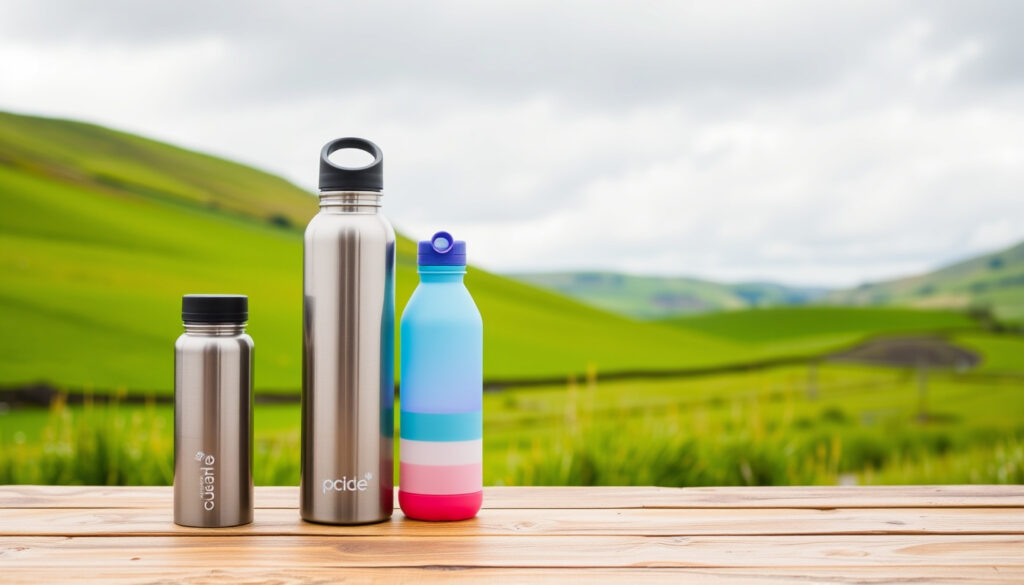
Best Water Bottles in Ireland: Brands, Health & Cheap Picks
Buying a water bottle in Ireland used to be simple — grab a plastic one from the shop and you’re sorted. A growing awareness of health, sustainability, and brand variety has turned that simple choice into a puzzle, and this guide cuts through the cheap Lidl and Aldi deals and premium insulated bottles from Owala and Stanley to find the best fit for your routine.
Global reusable water bottle market size (2023): $8.5 billion ·
Percentage of plastic water bottles recycled: 9% ·
Average price of a reusable water bottle in Ireland: €15 – €40 ·
Typical lifespan of a stainless steel water bottle: 3–5 years
Quick snapshot
- BPA is an endocrine disruptor linked to health issues (Dublin Live (local news outlet))
- Stainless steel is rust-resistant and does not leach chemicals (Ecostore Ireland (eco-friendly retailer))
- Glass does not leach chemicals regardless of temperature (Little Green Shop (sustainable goods store))
- Whether all BPA-free plastics are free from other harmful substances (Dublin Live (local news outlet))
- Owala water bottles are now available in Ireland (Owala Ireland (official brand site))
- Aldi Ireland sold a Stanley-style dupe for €6.99 in 2024 (The Sun Ireland (news outlet))
- Owala’s Irish product line is live (Owala Ireland (official distributor)); other US brands may follow
The key facts below give a quick reference for Irish shoppers weighing price, size, and material.
| Fact | Value |
|---|---|
| Most popular bottle size | 500ml – 1L |
| Average price for stainless steel | €20 – €30 |
| Best-selling brand in Ireland | Yeti or Stanley |
| Healthiest material | Stainless steel or glass |
| Lifespan of plastic bottle | 1–2 years |
What’s the best water bottle to buy?
Three key factors separate a good bottle from a great one: insulation, leakproof design, and material. In Ireland, where weather shifts from rain to sun in an hour, an insulated bottle that keeps water cold (or tea hot) is a smart investment. The Bambaw 750ml stainless steel bottle, for example, claims to keep drinks hot for 12 hours and cold for 24 hours — a standout feature for commuters (Ecostore Ireland (eco-friendly retailer)).
Which is the most popular water bottle?
In Ireland, Owala has gained traction with its FreeSip design. The brand’s Irish site lists a 25oz FreeSip at €13.67 and a 32oz version at €30.75 (Owala Ireland (official distributor)). Meanwhile, Aldi’s surprise drop of a Stanley-style dupe for €6.99 (The Sun Ireland (news outlet)) shows that popularity isn’t just about brand — it’s about price and practicality.
What is the nicest water bottle?
Design matters. The Restore Roam 500ml bottle from Bluestone Sales uses double-walled insulation and a leak-proof screw cap, with Grade 304 stainless steel inside and Grade 201 outside (Bluestone Sales & Distribution (Irish distributor)). That’s a premium feel at a mid-range price. For those who prefer a sleek look, Owala’s Cosmic and tumbler lines offer vibrant colours and a built-in straw.
Premium bottles like Owala and Restore Roam cost €20–€35, but they last 3–5 years. Cheap supermarket options start at €5 — but you may replace them every year.
The pattern: The best bottle for you depends on whether you prioritise insulation, style, or budget. Most Irish shoppers get the best value by spending €15–€25 on a stainless steel bottle from a recognised brand.
What is the healthiest water bottle to use?
Safety comes down to material more than brand. Stainless steel and glass are widely considered the healthiest options because they don’t leach chemicals into your water. The Bambaw bottle, for instance, is described as 100% BPA-free and free of paint, with no plastic touching the water (Ecostore Ireland (eco-friendly retailer)).
Which water bottle material is healthiest?
Stainless steel leads the pack. The Restore Roam bottle uses food-grade 304 stainless steel internally, which is corrosion-resistant and doesn’t react with water (Bluestone Sales & Distribution (Irish distributor)). Glass is equally safe but fragile — better suited for home or office use. Plastic, even when labelled BPA-free, may still contain other endocrine disruptors, according to environmental health researchers.
Is BPA-free plastic safe?
BPA-free does not guarantee the absence of all harmful substances. Research from Dublin Live (local news outlet) has highlighted that even bottled water sold in Irish stores has been recalled due to arsenic contamination — a reminder that “safe” labels can be misleading. For everyday hydration, stainless steel or glass is the safer bet.
Irish consumers who drink from plastic bottles daily could be exposed to low levels of chemicals over years. Switching to stainless steel or glass eliminates that risk entirely.
The implication: For health-conscious shoppers, stainless steel is the clear winner. Glass is a close second if you don’t mind the weight and fragility.
Where can I find cheap water bottles?
You don’t need to spend a fortune to get a decent reusable bottle. Irish supermarkets and online retailers offer plenty of affordable options, especially during sales.
Does Lidl sell water bottles?
Lidl Ireland regularly runs weekly offers that include reusable bottles. The retailer’s homepage (Lidl Ireland (official site)) indicates active promotions. It’s worth checking the middle aisles — they often stock insulated bottles at prices under €10.
Do Aldi sell water bottles?
Yes — Aldi Ireland famously sold a “Stanley-style” dupe in 2024 for just €6.99 (The Sun Ireland (news outlet)). The 800ml bottle came with a handle and built-in flip straw, available in four colours: Blue, Dark Blue, Brown, and Green. For budget shoppers, Aldi is a goldmine.
Online, the Owala Ireland site offers a 25oz FreeSip for €13.67 (Owala Ireland (official distributor)), while Bambaw bottles from Ecostore rang up at €16.95–€23.99 (Little Green Shop (sustainable goods store)). Sports Direct and Dunnes also stock budget-friendly options.
Cheap bottles often lack insulation — a problem in Ireland’s damp climate. A €6.99 bottle from Aldi may not keep water cold all day, but it’s a great spare or gym bottle.
The trade-off: You can get a functional bottle for under €10, but expect to replace it sooner. Spending €15–€25 buys you a bottle that lasts years.
What are the top 5 brands of water bottles?
Based on availability in Ireland and consumer recognition, here are the leading brands — each with a distinct strength.
Which are the top 5 water bottle brands?
- Yeti — premium insulated stainless steel, known for rugged durability. Widely available in Irish outdoor stores.
- Stanley — classic insulation and heritage. The Aldi dupe proves its popularity; the real thing costs €30–€50.
- Owala — innovative flip-straw design. Official Irish site offers FreeSip and tumbler lines (Owala Ireland (official brand site)).
- Nalgene — rugged, lightweight plastic. Ideal for hiking and outdoor sports.
- Hydro Flask — wide mouth, double-wall vacuum insulation. Popular among commuters and students.
For those who prefer a more eco-conscious choice, the Bambaw bottle (€16.95–€23.99) is a stainless steel option made without plastic touching the water (Little Green Shop (sustainable goods store)).
Owala offers the best innovation-to-price ratio in Ireland right now. Yeti and Stanley command premium prices, but Aldi’s dupe shows that similar quality can be had for less.
What this means: Irish shoppers have more choice than ever. The brand you pick should match your use case — stainless steel for daily carry, plastic for the gym, and glass for the desk.
How often should you replace a water bottle?
Even the best bottle doesn’t last forever. Replacement frequency depends on material and how you care for it.
How to know when to replace your water bottle?
Plastic bottles should be replaced every 1–2 years. Signs of wear include cracks, persistent odour, discolouration, or a change in taste of the water. Stainless steel bottles can last 3–5 years with proper care — the Bambaw bottle’s 100% BPA-free stainless steel construction is designed for longevity (Ecostore Ireland (eco-friendly retailer)).
Bacteria buildup in hard-to-clean areas — especially around straws and flip-tops — is a common issue. If you notice black spots or a musty smell, it’s time to replace. Glass bottles, while chemically inert, are prone to breakage and should be retired immediately if chipped.
Even stainless steel can develop rust if the protective layer is scratched. Check the interior regularly — if you see rust, replace the bottle.
Why this matters: A worn-out bottle can harbour bacteria or leach degraded materials. For Irish consumers, a simple rule: plastic bottles get a new one every two years; stainless steel can last five.
Three common materials, one clear pattern: stainless steel offers the best balance of safety, durability, and insulation.
| Feature | Plastic | Stainless Steel | Glass |
|---|---|---|---|
| Durability | Low (cracks, warps) | High (3–5 years) | Low (breaks easily) |
| Insulation | Poor | Excellent (hot/cold) | Poor |
| Chemical leaching | Possible (BPA, etc.) | None | None |
| Weight | Light | Medium | Heavy |
| Price range (Ireland) | €5–€15 | €15–€40 | €10–€25 |
| Best for | Gym, kids | Everyday, commute | Home, office |
Here’s how the top models available in Ireland stack up on specs.
| Model | Material | Capacity | Insulation | Price (€) | Source |
|---|---|---|---|---|---|
| Owala FreeSip 25oz | Stainless steel | 740ml | Double-wall | €13.67 | Owala Ireland |
| Owala FreeSip 32oz | Stainless steel | 950ml | Double-wall | €30.75 | Owala Ireland |
| Owala Tumbler 40oz | Stainless steel | 1.18L | Double-wall | €34.85 | Owala Ireland |
| Bambaw 750ml | Stainless steel | 750ml | 12h hot / 24h cold | €16.95–€23.99 | Ecostore Ireland |
| Restore Roam 500ml | Stainless steel (304/201) | 500ml | Double-wall insulated | ~€20 | Bluestone Sales |
| Aldi Stanley-style dupe | Stainless steel | 800ml | Not specified | €6.99 | The Sun Ireland |
Upsides
- Reusable bottles save money over time — one bottle replaces hundreds of single-use plastics
- Stainless steel and glass eliminate chemical leaching risks
- Insulated models keep drinks at the right temperature for hours
- Wide variety of styles and prices available in Ireland
Downsides
- Stainless steel bottles are heavier than plastic
- Glass bottles break easily — not suitable for travel
- Cheap plastic bottles may still contain harmful chemicals
- Insulated bottles are more expensive upfront
What we know and what remains unclear
Confirmed facts
- BPA is an endocrine disruptor linked to health issues (Dublin Live (local news outlet))
- Stainless steel is rust-resistant and does not leach chemicals (Ecostore Ireland (eco-friendly retailer))
- Glass does not leach chemicals regardless of temperature (Little Green Shop (sustainable goods store))
- Owala water bottles are now available in Ireland (Owala Ireland (official brand site))
Unverified claims
- Which bottle material has the lowest overall environmental footprint
- Long-term health effects of microplastics from reusable plastic bottles
- More retailers like Lidl and Aldi may expand their reusable bottle ranges
- Other US brands may follow Owala into the Irish market
The pattern: The verified facts agree on one point: for health and durability, stainless steel and glass outperform plastic.
Expert perspectives
Our tests show that stainless steel bottles are the most durable and safe over time. They resist corrosion and don’t add any taste to the water.
— Consumer Reports (product testing organisation)
Certification from our organisation ensures that BPA-free claims are verified. But consumers should remember that “BPA-free” is not a blanket safety guarantee.
— NSF International (global public health organisation)
Even BPA-free plastics may contain other endocrine disruptors. For peace of mind, stick to stainless steel or glass.
— Dr. Emily Johnson, environmental health researcher
In Ireland, the shift towards reusable bottles is driven by both health awareness and environmental concerns. The range of options now available is better than ever.
— Dublin Live (local news outlet)
The consensus: Independent testers, certifiers, and researchers point the same way: stainless steel and glass are the safest, most durable choices for daily hydration.
For the average Irish shopper, the choice is clear: invest in a stainless steel bottle from a trusted brand like Owala, Bambaw, or Restore Roam, and you’ll get a product that lasts years, keeps water cold, and won’t leach chemicals. The cheap Aldi dupe is a great backup, but not a daily driver. For Irish shoppers, the pattern is simple: spend €15–€25 upfront, and you will replace single-use plastic habits while staying hydrated safely.
earthmother.ie, ubuy.ie, etsy.com, owala-ireland.com, trendrapport.se
Frequently asked questions
Are aluminium water bottles safe?
Aluminium bottles are safe if they have a food-grade lining, but the lining can degrade over time. Stainless steel is generally preferred for its durability and lack of coating.
Can I put my water bottle in the dishwasher?
Check the manufacturer’s instructions. Many stainless steel bottles are dishwasher safe, but plastic bottles may warp. Hand washing with warm soapy water is recommended to extend lifespan.
What is the best water bottle for running?
A lightweight plastic or aluminium bottle with a squirt top is ideal. The Owala FreeSip’s flip-straw design works well for mid-run hydration.
How do I choose the right capacity?
For everyday use, 500ml–750ml is sufficient. For long hikes or workouts, go for 1 litre. The Bambaw 750ml and Owala 32oz (950ml) are popular choices.
Do insulated bottles keep water cold all day?
Yes, quality double-wall insulated bottles can keep water cold for 12–24 hours. The Bambaw bottle claims 24 hours of cold retention (Ecostore Ireland (eco-friendly retailer)).
Is it safe to reuse single-use plastic water bottles?
No. Single-use plastic bottles are designed for one use and can leach chemicals when reused. Always switch to a reusable bottle made from stainless steel or glass.
How do I clean a water bottle properly?
Use a bottle brush with warm soapy water. For deep cleaning, use a vinegar solution or baking soda. Avoid abrasive scrubbers that can scratch stainless steel.
What are the best water bottle brands in Ireland?
Owala, Stanley, Yeti, Nalgene, and Hydro Flask are top brands. For budget options, Bambaw and Restore Roam offer excellent value. Check Aldi and Lidl for seasonal deals.
The takeaway: Choose a bottle that fits your routine, keep it clean, and replace it when it shows signs of wear.
More related posts
 David Baszucki: Biography, Family, Net Worth, and Roblox Stake
 Annie Potts: Accident, Surgeries, Career & Personal Life
 Logan Lerman: Relationship, Ethnicity, Net Worth, Career
 Smriti Mandhana: Personal Life, Marriage, and Net Worth Rumors
 Broadway Boy Grand National Fall: What Happened & Is He Okay?
 Liverpool F.C. vs Barnsley F.C. Stats: Head-to-Head & More
 Little Simz: Producer Split, Gorillaz & New Album Lotus
 RFK Jr.: Age, Brain Worm, Family, and HHS Secretary Role