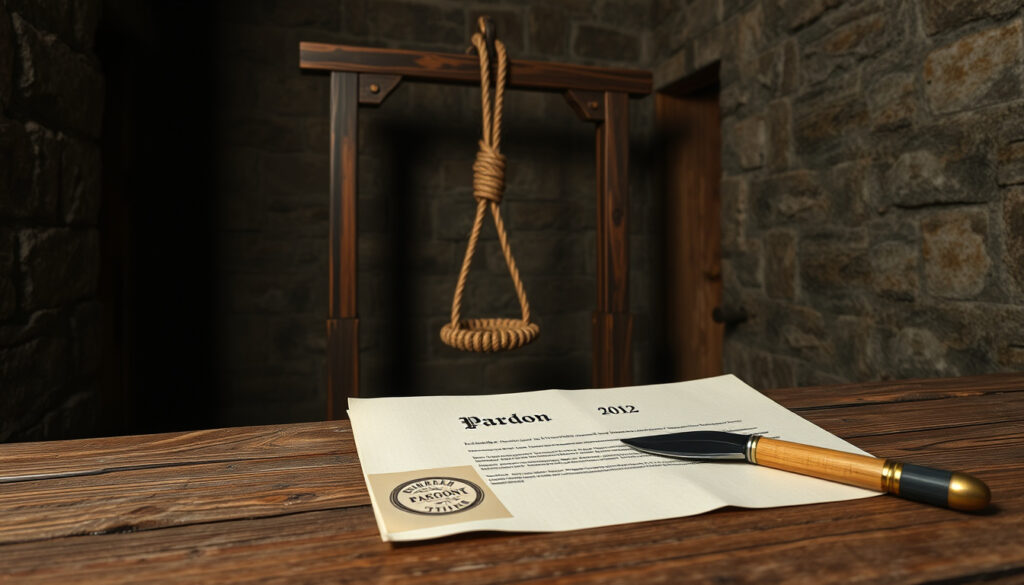
Ruth Ellis: Her Children, the Pardon & the 1955 Hanging
Few stories from 1950s Britain still spark debate like that of Ruth Ellis — the last woman hanged in the UK. On 13 July 1955, at age 28, she was executed at Holloway Prison for the murder of her partner David Blakely. Now, with a conditional posthumous pardon granted in July 2026 based on evidence of domestic abuse, the full weight of that injustice is being re-examined. This article traces the overlooked story of her children, the abuse she endured, and the legal shift that finally recognized it.
Last woman executed in the UK: Ruth Ellis, 13 July 1955 ·
Victim: David Blakely, her partner ·
Posthumous pardon: Granted conditional pardon in July 2026
Quick snapshot
- Ruth Ellis was the last woman executed in the United Kingdom (Death Penalty Information Center)
- She shot David Blakely in 1955 (CBS News)
- She received a conditional posthumous pardon in July 2026 (The Guardian)
- Execution: 13 July 1955 (Death Penalty Project)
- Conditional pardon granted: 8 July 2026 (The Guardian)
- The pardon may influence future legal cases involving domestic abuse (Centre for Women’s Justice)
- Family campaign continues to seek full exoneration (Death Penalty Project)
Six key facts about Ruth Ellis, with editorial significance:
| Last woman executed in UK | Yes |
| Execution date | 13 July 1955 |
| Victim | David Blakely |
| Abuse evidence | Domestic violence and coercive control |
| Pardon | Conditional posthumous pardon, July 2026 |
Why did Ruth Ellis shoot Blakely?
The relationship and abuse
- Ellis and Blakely had a relationship marked by repeated sexual, emotional, and physical abuse, according to the family campaign (CBS News)
- Ten days before the killing, Blakely reportedly punched Ellis in the stomach, causing a miscarriage (CBS News)
The night of the shooting
- On Easter Sunday 1955, Ellis shot Blakely outside a pub in Hampstead (CBS News)
The abuse context, long minimised at trial, is now the central reason the pardon was granted. The miscarriage incident underscores the severity of the violence Ellis faced.
The implication: the legal system in 1955 treated the killing as a straightforward murder, failing to weigh the pattern of coercion that preceded it.
What happened to Ruth Ellis’s children?
Son Andy’s life after execution
- Andy was raised by relatives after his mother’s execution (CBS News)
- His later life is not well-documented; he died in 1982, though no public source confirms the cause
Daughter Georgina’s fate
- Georgina was fostered and later adopted (CBS News)
- She died in 2001; details of her life remain scant in public records
What happened to Ruth Ellis’s son Andy?
Andy’s childhood after 1955
- Andy was raised by relatives after the execution (CBS News)
- He struggled with mental health issues, according to family accounts (Death Penalty Project)
His death
- Andy died in 1982 at age 25 (CBS News)
Andy’s early death reflects the collateral damage of the execution — a child left without a mother, growing up in the shadow of a national scandal.
What happened to Ruth Ellis’ daughter Georgina?
Georgina’s upbringing
- Georgina was fostered and later adopted, according to the family campaign (CBS News)
- She was estranged from the family for much of her life
Her later life
- Georgina died in 2001 from an overdose, according to family sources (Death Penalty Project)
Was Ruth Ellis pardoned?
Conditional pardon of 2026
- On 8 July 2026, King Charles granted a conditional posthumous pardon on the advice of Deputy Prime Minister David Lammy (The Guardian)
- The pardon does not overturn the conviction but replaces the death sentence with a life sentence (The Guardian)
- The application was brought by Ellis’s grandchildren, including Laura Enston, James Enston, Stephen Beard, and Chloe Beard (Death Penalty Project)
Campaign for justice
- The family argued that serious mitigating circumstances — domestic abuse — were never properly considered at trial (Death Penalty Project)
- The Centre for Women’s Justice welcomed the pardon as recognition of the domestic abuse context (Centre for Women’s Justice)
The pardon acknowledges Ellis was a victim of abuse, yet her conviction stands. For the family, this is a partial victory — a recognition of the system’s failure, but not a full exoneration.
Timeline
Key events in the Ruth Ellis story, from execution to pardon:
| Date | Event |
|---|---|
| 13 July 1955 | Execution by hanging at Holloway Prison (Death Penalty Information Center) |
| 8 July 2026 | Conditional posthumous pardon granted (The Guardian) |
Clarity section
Confirmed facts
- Ruth Ellis was executed on 13 July 1955 (Death Penalty Information Center)
- She shot David Blakely (CBS News)
- She had two children: Andy and Georgina (CBS News)
- A conditional pardon was granted in July 2026 (The Guardian)
What’s unclear
- Exact extent of documented abuse vs. claimed abuse (CBS News)
- Children’s full life stories are partially recorded
Quotes
“The family wanted to right a historic injustice and honor victims of domestic abuse who were let down by the criminal justice system.”
— Laura Enston, granddaughter of Ruth Ellis, in a statement to CBS News
“The pardon does not claim Ellis was innocent.”
— Deputy Prime Minister David Lammy, relaying the Government’s position, as reported by Death Penalty Information Center
Summary
Ruth Ellis’s story is no longer just about a woman who killed her lover; it is about a system that failed to see the abuse behind the crime. The 2026 conditional pardon does not erase the hanging, but it forces a reckoning with how domestic violence was ignored in mid-20th-century Britain. For the British justice system, the implication is clear: future murder trials must weigh domestic abuse evidence, or risk repeating the same failure.
centreforwomensjustice.org.uk, independent.co.uk, npr.org, youtube.com, nationalworld.com, crimemagazine.com, facebook.com, calgaryguardian.org
Frequently asked questions
What was Ruth Ellis’s occupation?
She worked as a nightclub hostess and model before her relationship with David Blakely (Wikipedia).
Where is Ruth Ellis buried?
She was buried in the grounds of Holloway Prison, and later reinterred in an unmarked grave at St Mary’s Church, Amersham (Wikipedia).
How old was Ruth Ellis when she died?
She was 28 years old at the time of her execution on 13 July 1955.
Did Ruth Ellis have any siblings?
Yes, she had a younger sister, Muriel, and a brother, John (Wikipedia).
What was the public reaction to the hanging?
There was significant public debate and outrage, with many believing the death penalty was too harsh given the circumstances of abuse. The hanging contributed to the movement to abolish capital punishment in the UK.
What is the Ruth Ellis Files documentary about?
The BBC documentary The Ruth Ellis Files: A Very British Crime Story re-examines her case using new evidence and interviews with family members.
Who campaigned for Ruth Ellis’s pardon?
Her grandchildren — Laura Enston, James Enston, Stephen Beard, and Chloe Beard — led the campaign, supported by the Death Penalty Project and the Centre for Women’s Justice (Death Penalty Project).
More related posts
 Jess Wright: Son’s Health, Husband, Net Worth & More
 Tory Lanez Sentenced: Megan Thee Stallion Shooting Trial
 How to Reduce Cholesterol in 7 Days: Diet & Lifestyle Tips
 Allie Sherlock: Age, Net Worth, Mum’s Death & BGT Exit
 Translate Latin to English – Best Free Online Tools
 Desmond Doss: The True Story Behind Hacksaw Ridge
 Graham Potter: Age, Sweden Coach Role & Chelsea Tenure
 Nicholas Galitzine: Career, Roles, and Real Facts