Kilimanjaro Peak: Name, Height, Difficulty & Safety for Beginners
Few mountains manage to feel both legendary and within reach, but Kilimanjaro does exactly that. At 5,895 m (19,341 ft), it’s Africa’s highest peak and the world’s tallest free-standing mountain — yet its slopes are walked, not climbed, by thousands of first-timers each year. The real challenge isn’t technical skill; it’s altitude, preparation, and knowing what you’re signing up for. This guide lays out the facts so you can decide whether that summit photo could be yours.
Height: 5,895 m (19,341 ft) ·
Summit Name: Uhuru Peak ·
Annual Deaths: 10–20 (estimated) ·
Summit Success Rate: ~65% (all routes)
Quick snapshot
- Height is 5,895 m (19,341 ft) (Mount Kilimanjaro Guide)
- Summit is Uhuru Peak, Africa’s highest point (WordCurrent.uk)
- Kilimanjaro is in Tanzania (Tanzania Parks)
- Exact annual death numbers vary; official records are not comprehensive (Snow Africa Adventure)
- Success rates differ widely by route and operator (Insight Britain)
- First ascent in 1889 by Hans Meyer and Ludwig Purtscheller — the standard has shifted from expedition to guided trek (WordCurrent.uk)
- Longer itineraries (7–8 days) are becoming the standard for higher summit success (Altezza Travel)
Key facts about Kilimanjaro Peak
Five essential data points, one pattern: the mountain’s stats are straightforward, but the implications for climbers are anything but.
| Attribute | Value |
|---|---|
| Height | 5,895 m (19,341 ft) |
| Summit name | Uhuru Peak |
| Location | Tanzania, Africa |
| First ascent | 1889 by Hans Meyer and Ludwig Purtscheller |
| Standard climb duration | 5–9 days |
The pattern: every stat here points to the same truth — Kilimanjaro is tall but not technical, and the variable that matters most is how many days you give your body to adapt.
What is the peak of Kilimanjaro called?
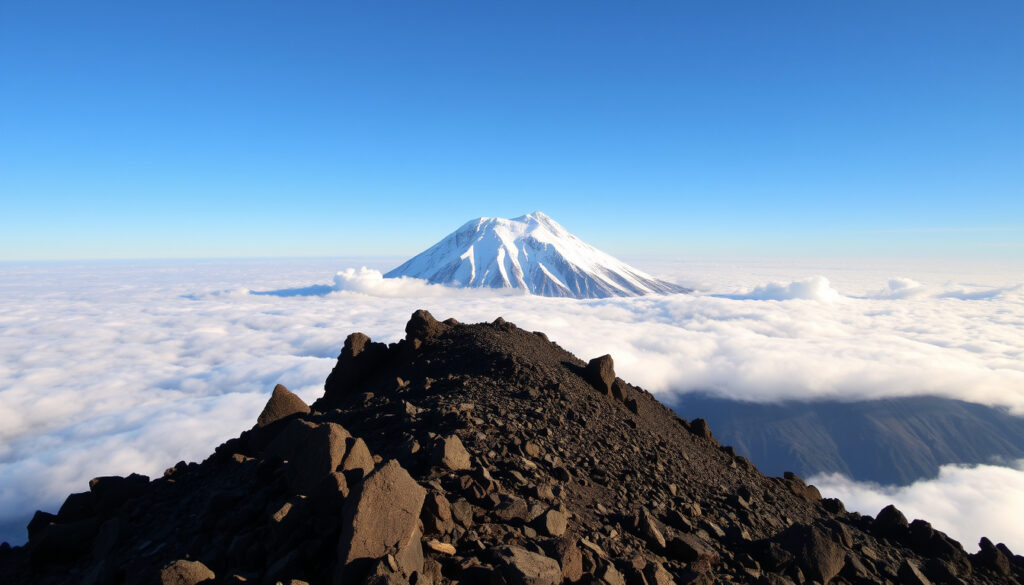
The summit of Mount Kilimanjaro is called Uhuru Peak, a Swahili word meaning “freedom.” It sits on the southern rim of the Kibo crater, the highest of the three volcanic cones that make up the mountain (Mount Kilimanjaro Guide).
At 5,895 m (19,341 ft) above sea level, Uhuru Peak is the highest point in Africa and the highest free-standing mountain summit in the world (WordCurrent.uk). The mountain itself straddles three volcanic cones: Kibo (the dormant cone where Uhuru sits), Mawenzi, and Shira. The first recorded ascent reached the summit in 1889, led by German geographer Hans Meyer and Austrian mountaineer Ludwig Purtscheller (Tanzania Parks).
The name “Uhuru” isn’t just symbolic — it marks the moment a climber transitions from effort to achievement. For a beginner, that summit sign is the proof that altitude, not skill, was the real gatekeeper.
The implication: the naming and height data are settled. What’s less settled is how many people who set out for Uhuru Peak actually make it — and that depends almost entirely on the route and the preparation.
Can a beginner climb Kilimanjaro?
Yes — but the answer comes with a condition. Kilimanjaro is widely described as a non-technical walk-up mountain, meaning ropes, crampons, and prior mountaineering experience are not required on normal trekking routes (Life Happens Outdoors). The main limiting factor is altitude, not technical difficulty (WordCurrent.uk).
Beginners can succeed with proper acclimatization, a good guide, and a multi-day itinerary. Longer routes such as the Lemosho or Northern Circuit are recommended because they give climbers more time to adapt (WordCurrent.uk). A 7+ day route is presented as safer than shorter itineraries for the same reason (Snow Africa Adventure).
The Lemosho route is often described as the most beginner-friendly trek because of its long acclimatization period and easier hiking profile (Tanzania Specialist). Training for at least a couple of months before the hike is recommended (Tanzania Specialist).
Do you need oxygen to climb Kilimanjaro?
Most trekkers do not need supplemental oxygen because the summit at 5,895 m is below the “death zone” threshold of 8,000 m (Mount Kilimanjaro Guide). The body can acclimatize to this altitude with enough time, which is why longer itineraries produce higher success rates.
Altitude sickness is the main risk on Kilimanjaro (Insight Britain). The biggest danger is ignoring the symptoms and pushing on when the body is not adapting (Life Happens Outdoors).
What is the hardest day of Kilimanjaro?
Summit night is the hardest day of any Kilimanjaro climb. It typically involves 12–16 hours of climbing in the dark, at sub-zero temperatures, on steep scree, at altitudes above 4,600 m (Altezza Travel). Climbers leave around midnight to reach Uhuru Peak at sunrise, then descend back to a lower camp in the same day. The combination of altitude, cold, exhaustion, and duration makes it the most physically demanding stretch of the trek.
Is Kilimanjaro harder than Machu Picchu?
Kilimanjaro is more demanding than Machu Picchu in terms of altitude and overall duration, but less technical. The Inca Trail to Machu Picchu tops out at about 4,200 m and takes 4 days, while Kilimanjaro’s summit is 1,700 m higher and the trek typically runs 5–9 days. Both are achievable for beginners, but Kilimanjaro requires more preparation and a higher tolerance for altitude discomfort (Mount Kilimanjaro Guide).
Is Kilimanjaro in the death zone?
No. The “death zone” is defined as altitudes above 8,000 m, where the atmosphere cannot sustain human life without supplemental oxygen (Mount Kilimanjaro Guide). Kilimanjaro’s summit at 5,895 m is well below that threshold. While altitude sickness is a real and serious risk, the mountain’s elevation does not require bottled oxygen for survival.
What this means: for a beginner, the single biggest decision isn’t whether to climb — it’s which route to book and how many days to allow. The mountain rewards patience and punishes shortcuts.
How many climbers died in Kilimanjaro?
Reliable data on Kilimanjaro deaths is surprisingly hard to pin down. Estimates range from 10 to 20 deaths per year, mostly attributed to altitude sickness, falls, and pre-existing health conditions (Snow Africa Adventure). One safety guide puts the fatality rate at approximately 0.03%, though official records are not comprehensive (Snow Africa Adventure).
To put that in perspective: roughly 35,000 people attempt the climb each year, according to park estimates. A 0.03% fatality rate would mean roughly 10 deaths annually — which aligns with the lower end of the estimate range. But because the park does not publish a centralized death registry, the true number could be higher.
Who should not climb Kilimanjaro?
People with severe heart or lung disease, uncontrolled high blood pressure, or recent heart surgery are advised against climbing (Insight Britain). The same applies to anyone with severe asthma that isn’t well-managed at altitude. The risk is not the mountain itself but the body’s ability to cope with low oxygen at 5,000 m+.
Has anyone soloed Kilimanjaro?
Solo climbing is possible but dangerous, and group guided climbs are strongly recommended (WordCurrent.uk). Tanzania’s park regulations require all climbers to be accompanied by a licensed guide, effectively banning solo ascents. The main risk of going alone (or with an unqualified operator) is the lack of emergency support if altitude sickness strikes.
The catch: the same data that makes the mountain seem safe (0.03% fatality rate) also hides the fact that thousands of climbers are evacuated each year with altitude-related illness. The death rate is low; the rescue rate is not.
Where do you sleep on Kilimanjaro?
Accommodation on Kilimanjaro depends on the route. The Marangu route is the only one with shared huts — dormitory-style wooden cabins with bunk beds, mattresses, and basic amenities. All other routes (Machame, Lemosho, Rongai, Northern Circuit) use tents carried by porters and set up at designated campsites each evening (Altezza Travel).
Sleeping altitudes range from about 2,700 m at the start to 4,700 m at the highest camp (Barafu Camp on the Machame route). The progression is deliberately staggered to support acclimatization — the classic “climb high, sleep low” strategy (Tanzania Specialist).
Why this matters: where you sleep determines how well you acclimatize. Hut routes offer comfort but less flexibility; tent routes offer better altitude profiles but require more gear. The choice directly affects your summit odds.
Who should not climb Kilimanjaro?
Beyond the medical conditions already mentioned, anyone who is unwilling to spend 6–8 days on the mountain should reconsider. The single biggest predictor of summit success is the number of days spent on the mountain — and the highest failure rates are on 5-day itineraries (Insight Britain).
People who struggle with sleep deprivation, cold tolerance, or long periods of physical exertion should also be cautious. Summit night is not a normal hike — it’s a 12+ hour push in freezing conditions that tests mental endurance as much as physical fitness.
Can a 70 year old climb Kilimanjaro?
Age alone is not a barrier. Many climbers over 70 have successfully summited with proper preparation and medical clearance (Life Happens Outdoors). The oldest person to summit was 89 years old (American climber Anne Lorimor in 2019). What matters more than age is baseline fitness, absence of chronic conditions, and a willingness to follow the acclimatization schedule.
The trade-off: older climbers bring patience and life experience, which helps with pacing. The risk is not age itself — it’s pre-existing conditions that altitude can exacerbate. A medical check-up is non-negotiable.
Kilimanjaro vs. Machu Picchu: a comparison for beginners
Both are bucket-list treks, but they differ in ways that matter for a beginner’s first high-altitude experience.
| Factor | Kilimanjaro (Uhuru Peak) | Machu Picchu (Inca Trail) |
|---|---|---|
| Maximum altitude | 5,895 m | 4,200 m |
| Duration | 5–9 days | 4 days (Inca Trail) |
| Technical difficulty | Non-technical trek | Non-technical hike |
| Oxygen needed | No | No |
| Summit success rate | ~65% (all routes) | ~90%+ (Inca Trail) |
| Main risk | Altitude sickness | Altitude sickness, weather |
| Guide requirement | Yes (mandatory) | Yes (mandatory) |
The pattern: Kilimanjaro is a harder physical challenge due to altitude and duration, but Machu Picchu is more accessible for a first-time high-altitude trekker. The choice depends on whether you want a longer, more demanding challenge or a shorter, more cultural experience.
Kilimanjaro specifications at a glance
Eight specs that define the mountain’s physical reality — each one carries a practical implication for anyone planning to climb.
| Specification | Detail |
|---|---|
| Height | 5,895 m (19,341 ft) |
| Summit | Uhuru Peak, Kibo crater rim |
| Volcanic cones | Kibo (dormant), Mawenzi, Shira |
| First ascent | 1889, Hans Meyer & Ludwig Purtscheller |
| Country | Tanzania |
| Park entry | Kilimanjaro National Park, Marangu gate |
| Standard routes | Marangu, Machame, Lemosho, Rongai, Northern Circuit, Umbwe |
| Recommended duration | 7–8 days for best acclimatization |
The implication: the mountain’s specs are fixed — the variable is how many days and which route you choose. That’s the only part of the equation you control.
Pros and cons of climbing Kilimanjaro
Upsides
- No technical climbing skills required — a trek, not a mountaineering expedition (Life Happens Outdoors)
- Guided climbs are standard, with porters handling logistics (Insight Britain)
- High summit success rate on longer routes (~85%+ on 8-day itineraries) (Altezza Travel)
- Life-changing achievement — Africa’s highest point
Downsides
- Altitude sickness risk is real and can affect anyone regardless of fitness (Insight Britain)
- Summit night is brutally long — 12–16 hours in extreme cold (Altezza Travel)
- Short itineraries (5 days) have a low success rate — reportedly as low as 50% for unprepared climbers (Insight Britain)
- Costs can be high ($2,000–$6,000 depending on route and operator)
The upside of “no technical skills required” is real — but it creates a dangerous assumption that the climb is easy. The biggest risk on Kilimanjaro is underestimating the altitude and overestimating your own resilience.
How to prepare for climbing Kilimanjaro: a step-by-step guide
Preparation is the difference between a summit photo and an early evacuation. Here’s what the data says works.
- Choose a 7+ day route. The Lemosho or Northern Circuit routes give you the best acclimatization profile. Longer itineraries are directly linked to higher summit success rates (Altezza Travel).
- Train for 2–3 months beforehand. Focus on hiking with a loaded pack, stair climbing, and cardiovascular endurance. Kilimanjaro is a long walk uphill — the fitter you are, the more you’ll enjoy it (Tanzania Specialist).
- Book with a reputable operator. Guided climbs are mandatory, and operator quality varies. Look for companies with transparent safety records, experienced guides, and proper emergency equipment (Snow Africa Adventure).
- Pack for cold and wet conditions. Summit night temperatures can drop to -20°C. A proper sleeping bag rated to -15°C or lower, thermal layers, and waterproof gear are essential.
- Get medical clearance. If you have any pre-existing condition, consult a doctor experienced in high-altitude medicine. The mountain is not the place to discover a hidden health issue.
A beginner who follows these steps — longer route, proper training, good operator, right gear — has a realistic shot at the summit. A beginner who books a 5-day Marangu climb without training is gambling with a reported 50% chance of turning back early (Insight Britain).
What’s confirmed and what’s still unclear
Confirmed facts
- Height is 5,895 m (19,341 ft) (Mount Kilimanjaro Guide)
- Summit is named Uhuru Peak (WordCurrent.uk)
- Kilimanjaro is in Tanzania (Tanzania Parks)
- First ascent in 1889 (Tanzania Parks)
- No supplemental oxygen needed below 8,000 m (Mount Kilimanjaro Guide)
What’s still unclear
- Exact annual death numbers vary by source; official records are not comprehensive (Snow Africa Adventure)
- Success rates differ widely by route and operator (Insight Britain)
- Fatality rate of 0.03% is reported by one operator but not independently verified (Snow Africa Adventure)
Perspectives from the mountain
It is the highest mountain in Africa and the highest free-standing mountain above sea level in the world.
Wikipedia (Mount Kilimanjaro entry)
Peak 5,895 m — Climb Kilimanjaro with the #1-rated Guides on the mountain. A Kilimanjaro-only outfitter with a 98.8% summit success rate.
Climbing Kilimanjaro (guided tour operator, industry specialist)
The biggest risk factor on Kilimanjaro is ignoring altitude and pushing on when the body is not adapting.
Life Happens Outdoors (outdoor adventure publication)
Altitude sickness is the main risk on Kilimanjaro.
Insight Britain (travel and adventure feature)
Summary
Kilimanjaro is a rare mountain that delivers on both fronts: it’s attainable for a beginner who prepares properly, and it’s serious enough to demand respect. The data is clear — altitude is the gatekeeper, not technical skill, and the route you choose is the single most important decision you’ll make. For a first-time climber from the UK planning a bucket-list trip, the choice is straightforward: invest in a 7+ day itinerary, train for the hike, and treat the mountain with the caution it deserves. Anyone who cuts corners on a 5-day route gambles with a reported 50% chance of turning back early.
muchbetteradventures.com, kilipeak.com, reddit.com, mountkilimanjaronationalpark.com
Frequently asked questions
What is the best route for beginners?
The Lemosho route is widely considered the most beginner-friendly due to its long acclimatization profile and easier hiking terrain (Tanzania Specialist). The Northern Circuit is another strong option for those who want maximum time to adapt.
How long does it take to climb Kilimanjaro?
Most itineraries range from 5 to 9 days. The 7- to 8-day routes have the highest summit success rates (Altezza Travel).
What is the average cost of climbing Kilimanjaro?
Costs vary by route and operator, typically ranging from $2,000 to $6,000. This includes park fees, guide, porters, meals, and equipment. Cheaper operators often cut corners on safety.
Do I need a guide to climb Kilimanjaro?
Yes. Tanzania’s park regulations require all climbers to be accompanied by a licensed guide (Insight Britain). Solo climbing is not permitted.
What should I pack for climbing Kilimanjaro?
Essentials include a sleeping bag rated to -15°C or lower, thermal base layers, waterproof jacket and pants, trekking poles, a headlamp, and high-energy snacks. Summit night requires all layers you own.
How do I prevent altitude sickness on Kilimanjaro?
The best prevention is a longer itinerary that allows gradual acclimatization. Climb high, sleep low, stay hydrated, and communicate any symptoms to your guide immediately (Life Happens Outdoors).
Can a 70 year old climb Kilimanjaro?
Yes, age alone is not a barrier. Many climbers over 70 have summited, and the oldest was 89. Medical clearance and baseline fitness are what matter (Life Happens Outdoors).
Is Kilimanjaro harder than Machu Picchu?
Yes, in terms of altitude and duration. Kilimanjaro’s summit is 1,700 m higher and the trek is longer. Both are achievable for beginners, but Kilimanjaro demands more preparation (Mount Kilimanjaro Guide).
More related posts
 F1 Qualifying Results Today – Standings, Results and Schedule
 Mary Shelley: Life, Loves, Illness, and the Heart Legend
 Cast of Old Dads – Full Cast List and Key Roles
 Tom Sturridge: Biography, Career, and Personal Life
 Oven Cleaner Near Me: Professional vs DIY Cleaning Guide
 Sharon Osbourne: Health, Net Worth, and Ozzy Relationship
 Pull and Bear UK: Stores, Prices & Comparisons (2025 Guide)
 Water Parks Near Me – Top UK Indoor Outdoor Parks