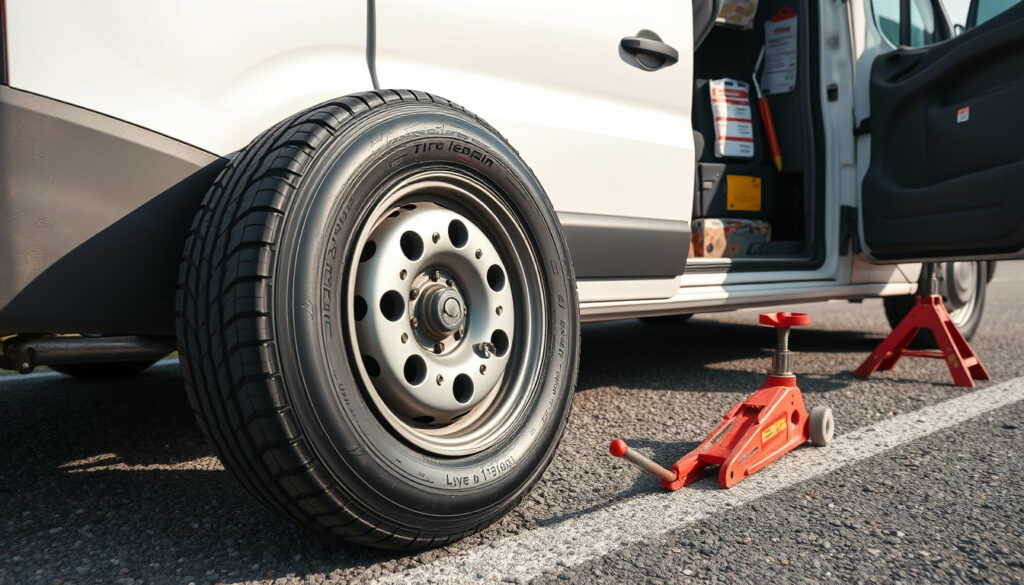
Tyre Repair Near Me: Costs, Legality & Mobile Services
You’re driving along and suddenly feel a thumping from one corner of the car. It’s likely a nail or a puncture. Understanding the costs, legal requirements, and where to get it fixed can save you time, money, and a headache.
Average puncture repair cost: £25–£35 ·
Legal minimum tread depth: 1.6mm ·
20p coin tread check method: Coin edge visible at 1.6mm ·
Typical repair duration: 30–60 minutes ·
Mobile 24/7 service availability: Yes, nationwide
Quick snapshot
- Lower cost (£20–£35) (Checkatrade)
- Fixed location (Checkatrade)
- Appointment often needed (Checkatrade)
- Free with a 20p coin (Halfords)
- Quick 30-second check (Halfords)
- Should be done monthly (Halfords)
Five key figures, one pattern: the gap between legal minimums and real-world repair costs determines most of your decisions.
| Label | Value |
|---|---|
| Average repair cost | £25–£35 (Checkatrade) |
| Legal tread limit | 1.6mm |
| 20p coin threshold | 1.6mm |
| Repair time | 30–60 minutes (Halfords) |
| Nail repair feasibility | Only if in centre 3/4 of tread (Halfords) |
| Max puncture size for repair | Less than ¼ inch diameter (Jiffy Lube) |
| Mobile repair coverage | 80% of UK (Halfords) |
| Typical Tesla tyre pressure | 40–45 psi (Tesla Support) |
How much does a tyre repair cost?
The cost of a tyre puncture repair in the UK typically ranges from £25 to £35, according to a 2024 analysis by Checkatrade (trade‑price guide). That average covers a standard nail‑in‑tread fix at a local garage. If you choose mobile service, the price can climb to £30–£50 because of the call‑out fee.
How much do Halfords charge for puncture repair?
- Halfords charges a flat £30 per tyre for puncture repairs, whether you come to an autocentre or use their mobile service (Halfords mobile puncture repair).
- They operate 7 days a week, 8am–8pm, with a two‑hour booking window.
- Mobile teams cover about 80% of the UK.
For most drivers, the £30–£35 range is the baseline. Mobile services add £5–£15 for convenience. If you’re near a Halfords autocentre, the flat £30 price locks in predictability.
The implication: for a typical puncture, the price is predictable, but location and urgency drive the final figure.
Can I repair a tyre with a nail in it?
Yes, but only under specific conditions. The puncture must be within the repairable zone of the tread and cannot have damaged the sidewall or internal structure. Both UK and US standards agree on the key rules.
Can I drive 2 hours with a nail in my tyre?
- Driving with a nail is risky: the seal can fail suddenly, and the puncture may widen. Immediate repair or replacement is recommended (Tesla Support safety advisory).
- If you must move the vehicle, keep speed low and stop as soon as possible. Temporary sealant can help for short emergency trips, but it is not a permanent fix.
Sidewall punctures are never repairable – if the nail is within an inch of the edge, the steel belt is compromised and the tyre must be replaced (Jiffy Lube repair policy).
What this means: even a small nail can force a full replacement if it’s too close to the sidewall.
What is the 20p rule on tyres?
The 20p coin test is a quick way to check whether your tyre tread meets the UK legal minimum. The outer band of a 20p coin is approximately 1.6mm wide – the same as the legal minimum tread depth.
How to check your tyre tread depth with a 20p coin?
- Insert the 20p coin into the main tread grooves. If the outer band is visible when the coin is in place, the tread is below 1.6mm and the tyre is illegal (Halfords tread depth guide).
- Repeat the check in several spots across the central three‑quarters of the tyre for accuracy.
- The legal minimum in the UK is 1.6mm across the central 3/4 of the tyre.
A 30‑second coin check every month is the cheapest insurance against a fine and penalty points. Tyres below 1.6mm also dramatically increase stopping distances in wet conditions.
The pattern: a simple coin check is the quickest way to avoid legal trouble and maintain safety.
Is 3mm tyre tread illegal?
No. 3mm is above the legal limit of 1.6mm, so it is legal to drive on. However, many safety experts and manufacturers recommend replacing tyres when tread reaches 3mm for better grip in rain and slush.
What makes your tyres illegal?
- Tread depth below 1.6mm anywhere across the central three‑quarters of the tyre.
- Cuts, bulges, or exposed cords exceeding 25mm in length.
- Serious sidewall damage or separation.
- Driving on illegal tyres can result in a fine of up to £2,500 and three penalty points per tyre (Halfords tyre law summary).
“If you notice sudden vibration, unusual noise, or unexpected handling changes, reduce speed immediately and have your tyres inspected.”
How long will a tyre last on 3mm?
Tread wear is not linear, but a typical tyre loses about 1mm per 5,000–8,000 miles under normal driving conditions. At 3mm, you can expect between 8,000 and 12,000 miles of remaining life.
How many miles per 1mm of tread depth?
- Roughly 5,000–8,000 miles per 1mm for standard road tyres (Checkatrade tyre wear estimate).
- Factors that affect wear: road surface, tyre pressure, vehicle weight, driving style (aggressive acceleration wears tread faster).
- Regular pressure checks (Tesla recommends 40–45 psi for many models) extend tread life (Tesla tyre pressure guidance).
The consequence for the driver: balancing safety and cost determines when to replace tyres.
How to get a tyre repaired: step‑by‑step
- Assess the damage – If the nail is in the centre 3/4 of the tread and the tyre is not flat, you can likely repair. Sidewall punctures mean replacement.
- Check legality – Ensure tread depth is above 1.6mm. Use the 20p coin test.
- Choose repair type – Local garage (£25–£35), mobile service (£30–£50), or breakdown roadside (AAA, RAC) for emergency inflation or spare swap (AAA tyre service).
- Book an appointment – Halfords offers a two‑hour window via their mobile team, while many garages accept walk‑ins.
- Get the repair done – Reputable shops use a plug‑patch combo from the inside (Jiffy Lube method) to seal the puncture permanently (Jiffy Lube plug‑patch).
The takeaway: following these steps can save you time and ensure a safe, lasting repair.
Before you go: what’s confirmed and what’s still uncertain
Confirmed facts
- Legal minimum tread depth in the UK is 1.6mm (Halfords).
- 20p coin outer band measures 1.6mm and can verify tread legality.
- Sidewall punctures cannot be safely repaired.
- Driving on illegal tyres incurs penalty points and fines up to £2,500 per tyre.
- Halfords charges £30 for puncture repair (mobile or in‑branch).
- AAA does not patch tyres; it offers inflation and spare swaps at roadside (AAA roadside).
What’s unclear
- Exact repair cost varies by garage region and tyre size – the £25–£35 range is an average.
- Mileage per 1mm of tread depends heavily on driving style and road conditions.
- Mobile service coverage details (e.g., 80% quoted by Halfords) may not include remote areas.
- Whether a run‑flat tyre can be repaired after a run‑flat event depends on manufacturer limits and often remains unclear.
- The effectiveness of plug vs patch repair is provider‑dependent.
- Repair cost for larger tyres (e.g., SUVs) may exceed the typical range.
For the driver, these uncertainties mean it’s wise to call ahead and confirm prices and coverage.
“Our mobile technicians can come to your home or workplace to repair a puncture if the tyre is fixable. We charge £30 per tyre and operate seven days a week.”
Halfords – mobile puncture repair service
“If you do not feel safe driving to the nearest service centre or tyre shop, contact Roadside Assistance immediately.”
Tesla Support – roadside assistance
For the driver stuck with a nail in their tyre on a Friday evening, the choice between a £30 mobile repair and a £60 emergency call‑out depends on location and whether the tyre is safe to drive. The data is clear: if the puncture is in the repairable zone and tread is above 1.6mm, a £30 mobile repair from Halfords or a £25 local garage fix is the cheapest, fastest route back on the road. If the sidewall is involved or the tyre is illegal, replacement is the only legal option – and for the driver, that means a higher upfront cost but avoids a far larger fine later.
For UK drivers dealing with a puncture, understanding typical prices and mobile availability is key, and a detailed guide to tyre repair near me costs and mobile services can help you compare local options efficiently.
Frequently asked questions
Can I repair a tyre with a screw in it?
Yes, under the same rules as a nail: the screw must be in the central three‑quarters of the tread, the tyre must not have run flat, and the puncture must be less than ¼ inch in diameter.
Does insurance cover tyre repair?
Standard car insurance does not cover tyre repair or replacement unless you have specific tyre cover add‑on. Wear and tear and punctures are generally not included.
How long does a puncture repair take?
A professional garage repair takes 30–60 minutes. Mobile repairs can take the same time, but travel and booking windows add time.
Is a temporary tyre sealant safe for long drives?
No. Sealants are intended only for emergency short‑distance use to get you to a repair shop. They can damage tyre pressure sensors and should not be relied on for extended driving.
Should I replace or repair a punctured tyre?
Repair is safe if the puncture is within the repairable zone, the tyre has adequate tread, and there is no sidewall damage. Otherwise, replace.
Can a tyre be repaired if it has run flat?
Run‑flat tyres can sometimes be repaired if the run‑flat distance stayed within the manufacturer’s limit, but many manufacturers prohibit repair after a run‑flat event. Check with a specialist.
What is the difference between a plug and a patch repair?
A plug fills the hole from the outside; a patch seals the inner liner. Professional repairs (like Jiffy Lube’s plug‑patch combo) use both for a permanent seal. A standalone plug is considered a temporary fix.
How do I choose between mobile and garage repair?
If you can safely drive to a garage, it’s usually cheaper and sometimes faster. If the tyre is flat or you’re stranded, mobile repair (or roadside assistance) is the only option.
For the driver, each question points to a practical decision: repair or replace, and where to get it done.
More related posts
 Cast of The Wheel of Time TV Series: Actors & Show Status
 Robert MacIntyre: Age, Net Worth, Temper, and Where He Lives Now
 Gary Glitter Charges 2026: Verified Facts & Timeline
 Keith Haring: The Artist Who Redefined Pop Art and Activism
 Sarah Parish: Biography, Age, Children, Husband and Health Rumors
 Kilimanjaro Peak: Name, Height, Difficulty & Safety for Beginners
 Tanya Roberts Cause of Death, Net Worth, and Life Story
 Kieron Moore: How to Tell the Two Actors Apart