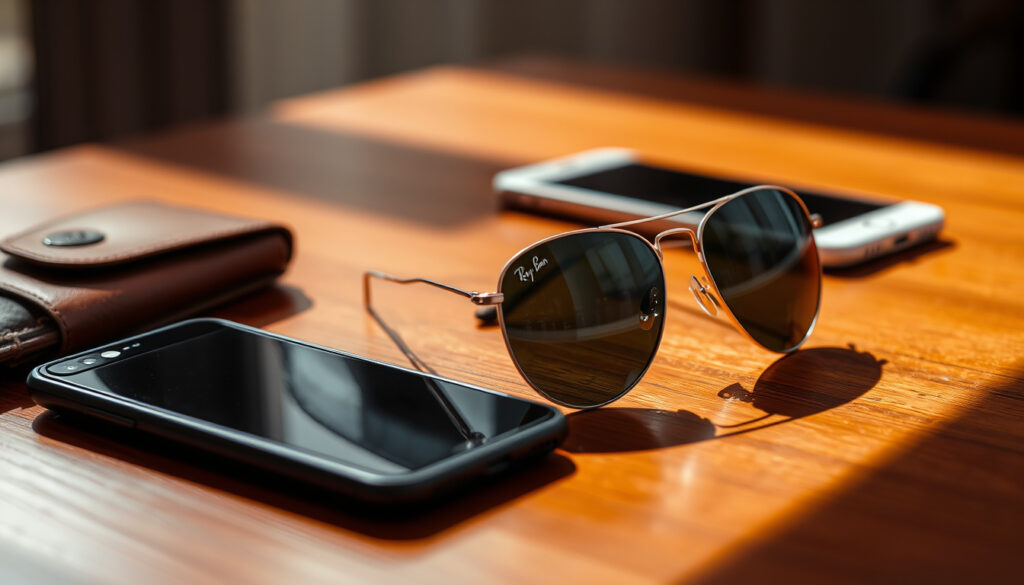
Are Ray-Bans Worth It? Price, Alternatives & Buying Guide
There’s a reason Ray-Bans have been perched on the noses of movie stars, musicians, and presidents for decades. The look is unmistakable. But behind the iconic frames lies a business story most buyers never see — one of monopolies, margin marks, and a surprisingly clever pricing strategy.
Founded: 1937 ·
Parent company: Luxottica ·
Best-selling model: Wayfarer ·
Price range: $100–$400
Quick snapshot
- Ray-Ban is owned by Luxottica, controlling over 80% of the eyewear market (Ray-Ban, Wikipedia)
- Founded in 1937 (Ray-Ban, Wikipedia)
- Wayfarer is the best-selling model (Ray-Ban official site)
- Ray-Ban Meta now starts at $239, down from $299 (Meta, official product page)
- Exact annual sales figures are not publicly reported by Luxottica
- Whether Ray-Ban Meta Gen 2 ($379) pricing is a launch rate or permanent
- Whether airport duty-free stores consistently beat online seasonal discounts
- September 2025: Ray-Ban Meta Gen 2 reported at $379 (Android Central, tech publication)
- June 2025: Meta price drops to $239 (Ray-Ban Facebook, official brand account)
- September 2025: Ray-Ban Meta Display launches at $799 (Ray-Ban Meta, Wikipedia)
- Ray-Ban Meta coming to Mexico, India, Brazil (no specific date) (Android Central, tech publication)
- Under-$40 dupe market growing rapidly (Teen Vogue, style magazine)
- Classic lineup continues alongside smart glasses innovation ((Android Central, tech publication))
Five numbers define the brand’s market position at a glance.
| Attribute | Value |
|---|---|
| Founded | 1937 |
| Parent company | Luxottica |
| Best-selling model | Wayfarer |
| Price range | $100–$400 |
| Warranty | 2 years against manufacturing defects |
Why Is Ray-Ban So Expensive?
Brand heritage and marketing
Ray-Ban’s parent company, Luxottica, controls an estimated 80% of the global eyewear market (Luxottica via Wikipedia, market analysis). This means the same company owns the raw materials, the factories, the brands, and the retail stores.
When one company controls the entire chain, it can set prices without the usual competitive pressure. That’s the single biggest reason a pair of Ray-Bans costs $100–$400.
Quality materials and craftsmanship
- Glass lenses in Aviator and Wayfarer models offer superior scratch resistance compared to standard polycarbonate.
- Polarized lens options reduce glare and add $30–$60 to the price (Ray-Ban official site, product specifications).
- Acetate frames are hand-finished in Italian factories, contributing to a precise fit that cheap molds rarely match.
These materials justify a premium over gas-station sunglasses, but they don’t explain the full margin.
The catch: roughly half the price of a $200 Ray-Ban pays for the brand and its channel costs — not the physics of the lens.
Luxottica monopoly and pricing power
The brand premium is so strong that direct competitors often price their equivalent frames at less than half. The Ray-Ban name itself carries a cultural value that the company has carefully cultivated for nearly a century.
Are Ray-Bans Really Worth It?
Durability and longevity
- Ray-Ban sunglasses typically last 5–10 years with proper care.
- Metal hinge construction outlasts cheap plastic alternatives that snap within a season.
This durability stretches the cost per year, making a $150 pair effectively a $20–$30 annual accessory. User reports across forums consistently cite frame resilience over a decade of daily wear.
Style and timelessness
The Wayfarer silhouette has been in continuous production since 1952 (Ray-Ban Wayfarer, Wikipedia), making it one of the oldest consumer product designs still in common use.
Few products survive 70 years of fashion cycles. Ray-Ban’s core models are exceptions, and that’s precisely why their owners keep coming back.
Price comparison with competitors
The table below shows how drastically pricing varies between Ray-Ban and its alternatives.
| Model | Ray-Ban Price | Alternative Price | Alternative Source |
|---|---|---|---|
| Wayfarer | ~$150 | $15–$40 | Teen Vogue (style magazine) |
| Aviator | ~$200 | ~$40 | Threadcurve (style blog) |
| Clubmaster | ~$170 | $25–$39 | Elite Daily (lifestyle publisher) |
The pattern: a $40 pair of sunglasses can match the UV protection of a $200 pair, but it won’t carry the same fit, feel, or cultural weight.
What Is the Most Sold Ray-Ban?
The Wayfarer: a cultural icon
The Wayfarer has been the brand’s best-selling model since the 1950s (Ray-Ban official site). Its bold square frame became a symbol of American cool, worn by everyone from Bob Dylan to Tom Cruise.
Aviator: original pilot design
Originally designed for the US Army Air Corps in 1937, the Aviator remains the brand’s second most recognized design. Its teardrop lens is the direct ancestor of most modern pilot sunglasses.
Clubmaster and other popular models
The Clubmaster brings a retro browline style, while the Round Metal pays homage to John Lennon. These models fill specific niche aesthetics within the lineup, proving that Ray-Ban’s catalog is more than just two shapes.
The pattern: Ray-Ban’s success is built on designs that have barely changed in 50 years. Fashion moves, but the brand largely stays put.
What Sunglasses Are Better Than Ray-Ban?
Four brands, one clear divide: each serves a different primary need.
| Brand | Best For | Starting Price | Style Focus |
|---|---|---|---|
| Ray-Ban | Fashion / Icon status | $100 | Classic retro |
| Oakley | Sports / active performance | $130 | Technical athletic |
| Warby Parker | Affordable prescription | $95 | Modern minimalist |
| Persol | Premium artisan craft | $250 | Italian luxury |
Upsides
- Immediate brand recognition and resale value.
- Durable, time-tested designs with wide retail availability.
- Strong warranty service through the Luxottica network.
Downsides
- Rival alternatives match UV protection for a fraction of the cost (Teen Vogue, style magazine).
- The majority of the price premium is branding, not lens technology.
- Luxottica’s market dominance limits discount opportunities across the industry.
The trade-off: For buyers seeking pure function, alternatives win. For buyers seeking status and cultural affiliation, Ray-Ban still owns the frame.
Are Ray-Bans Cheaper at the Airport?
Duty-free shopping benefits
Ray-Ban India’s official site lists a 20% discount on Gen 1 Skyler frames (Ray-Ban India, regional store), showing just how much price flexibility exists across markets.
Airport duty-free stores can offer up to 20% off retail prices for Ray-Bans. The catch is selection: only high-volume models are usually stocked, and the savings vary significantly by airport and region.
Online retailers vs airport stores
Online platforms like the official Ray-Ban site, Sunglasses.ie, and authorized retailers run seasonal sales that can match or beat airport savings. The advantage of online shopping is the full catalog and the ability to compare prices instantly.
Seasonal sales and outlet deals
Outlet villages like Kildare Village in Ireland host dedicated Ray-Ban stores with year-round discounts. These outlets offer a wider selection than airport kiosks and often carry last-season styles at 30–50% off. Online discount codes from the brand itself also appear during major shopping seasons.
Bottom line: airport convenience saves about 10–15% standard, but online discount codes or outlet visits can save 30% if you wait for the right season.
Confirmed facts
- Ray-Ban is owned by Luxottica (Ray-Ban, Wikipedia).
- Founded in 1937 (Ray-Ban, Wikipedia).
- Wayfarer is the best-selling model (Ray-Ban official site).
- The Meta line starts at $239 (Meta, official product page).
What’s unclear
- Exact annual unit sales are not publicly disclosed by Luxottica.
- Whether airport duty-free prices consistently beat online seasonal discounts.
- Whether Ray-Ban Meta Gen 2 pricing ($379) is a temporary launch price or a permanent shift (Android Central, tech publication).
Expert and brand perspectives
“Tap into iconic style and a world of hands-free AI at a new lower price.”
— Ray-Ban, via social media, June 2025 (Ray-Ban Facebook, official brand account)
“The value proposition of Ray-Ban alternatives is strongest in the sub-$100 price range.”
— The Adult Man, men’s style guide (The Adult Man, fashion analysis)
Summary: Are Ray-Bans Worth It?
For the buyer focused purely on UV protection and functionality, the choice is clear: a $40 dupe from the Teen Vogue or Elite Daily alternatives lists blocks the same sun (Teen Vogue, style magazine) (Elite Daily, lifestyle publisher). For the buyer who values the intangible — the cultural weight of that logo on the temple, the precise fit honed over 80 years, the status signal of a recognized icon — Ray-Ban still makes sense. The buyer decides which kind of purchaser they are before handing over their card.
elitedaily.com, runnersathletics.com, oscarwylee.com.au, techwelike.com, facebook.com, faktenmonitor.de
Frequently asked questions
How long do Ray-Bans last?
With proper care, Ray-Ban sunglasses typically last 5–10 years. The acetate frames and glass lens options are built for longevity.
Are Ray-Bans polarized?
Many Ray-Ban models offer polarized lenses. Look for the ‘P’ engraved on the lens to confirm.
Can I get prescription Ray-Bans?
Yes. Ray-Ban frames can be fitted with prescription lenses at most optical retailers, including LensCrafters and online services.
What is Ray-Ban Meta?
It’s a line of AI-powered smart glasses developed with Meta. Gen 1 starts at $239 (Meta, official product page), and Gen 2 starts at $379 (Android Central, tech publication).
Where is the best place to buy Ray-Bans online?
The official Ray-Ban site, Sunglasses.ie, and authorized retailers offer the best warranty and authenticity guarantees. Prices can vary, so comparing is wise.
Do Ray-Bans come with a warranty?
Yes. Ray-Ban offers a 2-year warranty against manufacturing defects from the date of purchase.
More related posts
 Malvern Hills: Walks, Famous Residents & Nearby Towns
 David Baszucki: Biography, Family, Net Worth, and Roblox Stake
 How to Get Rid of Blackheads – Dermatologist Guide
 Steal a Brainrot Game – Play Free on Roblox and CrazyGames
 John Williams Composer: Film Scores, Oscars, and Career | Bio
 Keke Palmer: PCOS, PMOS, Restraining Order, and More
 Benny Hill: Life, Death, Controversies & FAQs Answered