How to Get Rid of Blackheads – Dermatologist Guide
Blackheads represent one of the most persistent yet misunderstood skin concerns, affecting adolescents and adults across all skin types. These darkened pores occur when excess sebum combines with dead skin cells and environmental debris, creating plugs that oxidize upon contact with air to produce their characteristic dark appearance.
Medical professionals classify blackheads as open comedones, distinguishing them from whiteheads through their exposure to external elements. While prevalent on the nose and chin, these blockages can appear anywhere pores exist, driven by hormonal fluctuations, genetic predisposition, and skincare habits rather than poor hygiene alone.
Effective management requires understanding that quick fixes rarely provide lasting results. Dermatological approaches emphasize gentle, consistent treatment over aggressive extraction methods that risk permanent skin damage.
What Causes Blackheads?
| Causes | Home Solutions | Professional Options | Prevention |
|---|---|---|---|
| Excess sebum production | Salicylic acid cleansers | Chemical peels | Non-comedogenic products |
| Dead skin accumulation | Clay masks | Microdermabrasion | Twice-daily cleansing |
| Hormonal fluctuations | Gentle exfoliation | Professional extraction | Consistent exfoliation |
| Environmental debris | Charcoal treatments | Laser resurfacing | Oil-free moisturizers |
- Blackheads form from oxidized oil and cellular debris, not dirt or surface impurities
- Sebum overproduction combined with inadequate cell turnover creates persistent blockages
- Hormonal changes during puberty, menstruation, or stress significantly increase occurrence rates
- Physical extraction without proper technique frequently causes scarring, infection, and enlarged pores
- Chemical exfoliants penetrate deeper than physical scrubs to dissolve pore blockages effectively
- Visible improvement typically requires two to six weeks of consistent topical application
- Clinical interventions offer solutions for treatment-resistant or widespread cases
| Fact | Clinical Detail |
|---|---|
| Medical classification | Open comedones (non-inflammatory acne) |
| Primary mechanism | Oxidation of sebum and keratin within open pores |
| Prevalent zones | Nose, chin, forehead, upper cheeks |
| Affected demographics | All skin types, particularly oily and combination |
| Treatment timeline | 2-6 weeks for significant visible reduction |
| First-line topical | Salicylic acid (2-4% concentration) |
| Prescription alternative | Adapalene, tretinoin, trifarotene |
| 2024-2025 advances | Fixed-dose combinations: clindamycin + adapalene + benzoyl peroxide |
| Extraction risks | Permanent scarring, post-inflammatory hyperpigmentation, infection |
| Prevention foundation | Non-comedogenic skincare formulations |
How to Remove Blackheads at Home
Home management of blackheads focuses on consistent, non-irritating methods that gradually dissolve blockages without compromising the skin barrier. Dermatologists recommend starting with foundational cleansing before advancing to active treatments.
Gentle Cleansing and Preparation
Twice-daily cleansing with non-comedogenic products removes surface oil and prevents additional debris from entering pores. Lukewarm water helps soften the outer layer of skin, preparing it for subsequent treatment steps without the aggressive scrubbing that triggers rebound oil production.
Clay and Charcoal Applications
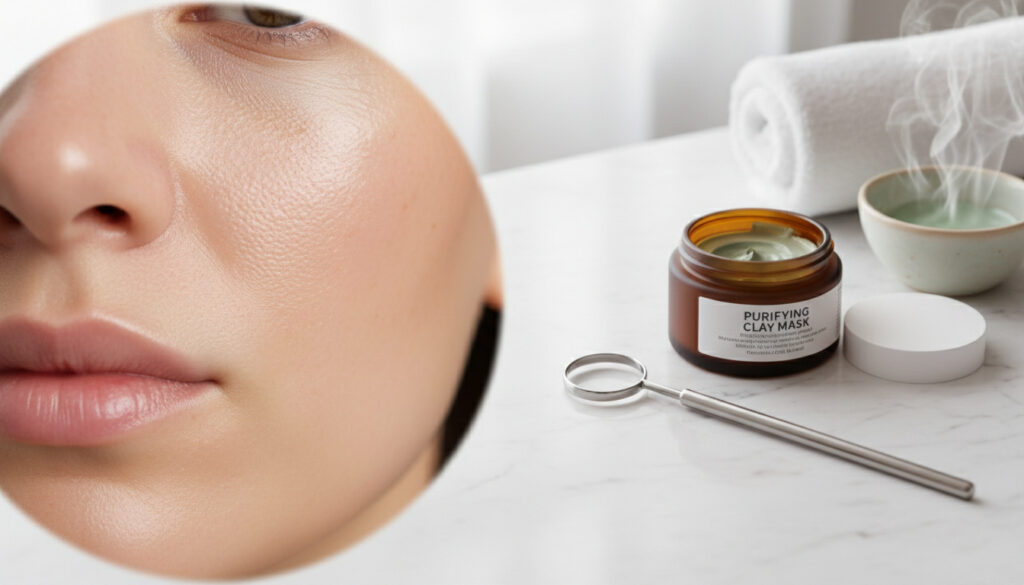
Clay masks containing kaolin or bentonite absorb excess sebum and draw impurities from superficial pores. Charcoal formulations similarly adsorb toxins and oil, making them suitable for weekly use on oily skin types. These treatments provide temporary improvement by removing surface blockages but require pairing with chemical exfoliants for long-term management.
Limit clay or charcoal masks to one or two sessions weekly. Overuse strips natural oils, triggering compensatory sebum production that exacerbates blackhead formation. Follow immediately with oil-free moisturizer to maintain barrier function.
Best Over-the-Counter Treatments for Blackheads
Evidence-based topical ingredients target blackheads through distinct mechanisms, from pore penetration to cell turnover acceleration. Selecting appropriate concentrations and formulations depends on skin sensitivity and concurrent concerns.
Salicylic Acid and Beta Hydroxy Acids
As the preferred first-line ingredient, salicylic acid penetrates oil-filled pores to dissolve keratin plugs and reduce inflammation. Clinical guidelines suggest starting with 2% concentrations in cleansers or toners, applied once daily initially and increasing frequency as tolerance develops. Products like La Roche-Posay Effaclar Medicated Gel Cleanser exemplify effective formulations.
Retinoids and Cellular Renewal
Topical retinoids including adapalene (Differin Gel, ProActiv Adapalene Gel 0.1%) unplug existing pores while preventing new blockages by accelerating cell turnover. Prescription-strength tretinoin serves stubborn cases, though these formulations require cautious introduction to avoid irritation. Nighttime application paired with morning moisturizer optimizes results while minimizing sensitivity.
Alpha Hydroxy Acids for Surface Exfoliation
Glycolic acid (10% concentration) removes the uppermost layer of dead cells, preventing them from descending into pores. Safe for most skin types in over-the-counter peels, AHAs complement deeper-acting BHAs by addressing surface texture. The First Aid Beauty FAB Skin Lab Resurfacing Liquid AHA 10% represents a clinically recognized option.
How to Get Rid of Blackheads Fast: Quick Tips
While sustainable clearance requires weeks, certain techniques provide immediate cosmetic improvement and accelerate treatment timelines. These methods require careful execution to avoid the irritation that worsens oil production.
Attempting immediate physical extraction using fingers or unsterilized tools frequently drives bacteria deeper, causing inflammation, infection, and permanent scarring. Professional dermatological extraction remains the only recommended method for safe removal.
Safe Extraction Protocols
For occasional nose blackheads, steam softens the plug while salicylic acid prep loosens its grip. Using clean, proper extraction tools with gentle pressure minimizes trauma, though pore strips offer only temporary relief without addressing root causes. Updated 2024 protocols emphasize that professional extraction prevents the tissue damage associated with DIY attempts.
While benzoyl peroxide effectively kills acne-causing bacteria and prevents associated inflammatory breakouts, it does not directly dissolve blackheads. Its utility lies in preventing secondary infections rather than clearing existing comedones.
Acceleration Strategies
Combining chemical exfoliation with adequate hydration paradoxically reduces sebum overproduction. When skin maintains proper moisture levels, glands decrease compensatory oil output. Consistent application of actives over two weeks typically yields noticeable refinement, though individual responses vary based on skin type and blackhead severity.
How Long Until Blackheads Clear?
- Days 1-7: Establish baseline routine with gentle, non-comedogenic cleanser and lightweight moisturizer. Introduce salicylic acid cleanser every other day to assess tolerance.
- Weeks 2-3: Increase active ingredient frequency to daily use. Add weekly clay mask for oily skin types. Initial purging may occur as pores expel contents.
- Weeks 4-6: Visible reduction in blackhead prominence and pore size. Texture improvements become apparent as cell turnover normalizes.
- Months 2-3: Significant clearance with consistent retinoid or salicylic acid use. Maintenance routine established.
- Ongoing: Continue prevention protocol with periodic professional treatments for resistant areas.
Separating Blackhead Myths from Medical Facts
| Clinically Established | Requires Further Investigation |
|---|---|
| Blackheads result from oxidized sebum and keratin, not dirt or poor hygiene | Specific dietary triggers and their quantitative impact on sebum production |
| Salicylic acid (2-4%) and retinoids provide evidence-based clearance | Individual genetic variations predicting treatment response timelines |
| Physical extraction without training causes scarring and infection | Long-term comparative efficacy of natural remedies versus synthetic actives |
| Combination therapies (clindamycin + adapalene + benzoyl peroxide) show enhanced 2024-2025 efficacy | Permanent pore size reduction possibilities with current technologies |
| Consistent topical application requires 2-6 weeks for measurable results | Hormonal modulation effects on adult-onset blackheads |
Understanding Blackhead Variations and Clinical Considerations
Blackheads manifest differently across skin types and age groups, requiring tailored approaches. Oily skin tolerates higher concentrations of salicylic acid and retinoids, while sensitive or dry types may experience barrier disruption from aggressive treatment, necessitating lower concentrations and increased moisturizing support. For visual identification guides relevant to other health concerns, Real Pictures of Breast Cancer Lumps – How to Identify Them provides medical imaging resources.
Recent clinical updates emphasize that fixed-dose combination therapies represent significant advances for 2024-2025, particularly for resistant cases. Emerging research highlights trifarotene and multi-agent topicals as superior options for persistent comedones. Isotretinoin remains reserved for severe, treatment-unresponsive presentations due to its potent systemic effects.
Individuals experiencing persistent blackheads despite eight weeks of consistent over-the-counter treatment, or those developing inflammatory acne, cysts, or scarring, should consult board-certified dermatologists. Professional assessment rules out underlying hormonal disorders and provides access to prescription options like tretinoin or trifarotene. For those seeking more information on managing blackheads, you can find a detailed La Roche-Posay B5 відгук here. La Roche-Posay B5 відгук
Clinical Perspectives on Blackhead Management
Gentle exfoliation remains key to managing non-inflammatory comedones without compromising the skin barrier integrity essential for long-term skin health.
— American Academy of Dermatology Guidelines, 2024-2025 Updates
Topical retinoids like adapalene not only clear existing blackheads but fundamentally alter the follicular environment to prevent new comedone formation.
How to Prevent Blackheads from Coming Back
Sustainable blackhead management combines gentle daily cleansing with evidence-based chemical exfoliants, particularly salicylic acid and retinoids, applied consistently over weeks. Avoiding harsh physical scrubs and resisting the urge to extract manually prevents the scarring and inflammation that complicate treatment. For personalized guidance, particularly when managing other skin conditions, resources like What Does Arthritis Feel Like – Symptoms and Differences demonstrate the importance of professional medical consultation for accurate diagnosis and treatment planning.
Frequently Asked Questions
Can blackheads go away on their own?
Without intervention, blackheads may persist for months or years as pores remain clogged. While some superficial blockages eventually shed, active treatment significantly accelerates clearance and prevents enlargement.
Is it safe to pop blackheads?
Manual extraction using fingers causes trauma, spreads bacteria, and risks permanent scarring or enlarged pores. Professional dermatological extraction using sterile instruments represents the only safe removal method.
What kills blackheads instantly?
No topical treatment eliminates blackheads instantly. Chemical exfoliants require hours to days to dissolve blockages, while professional extractions provide immediate but temporary cosmetic improvement without preventing recurrence.
Are blackheads permanent?
Blackheads are not permanent with proper treatment, though genetic predisposition means they may recur throughout life. Consistent maintenance with retinoids or salicylic acid prevents reformation.
How do pore strips affect blackheads?
Pore strips adhere to surface oil and debris, providing temporary visual improvement by removing superficial plugs. However, they fail to address the underlying causes or deep blockages, making them insufficient as primary treatment.
Can diet eliminate blackheads?
While high-glycemic foods and dairy may influence acne in some individuals, no specific diet universally eliminates blackheads. Topical and clinical treatments remain the primary evidence-based interventions.
More related posts
 M&S Discount Code 2025: Get 20% Off on Your Order Today
 BMW Specialist Near Me in Ireland: Top Independent Picks
 Dhar Mann Controversies: Fraud, Cancelation & Facts
 Dr Amir Khan: Biography, Career, and Personal Life
 Mussolini Son of the Century – Streaming Guide and Key Facts
 Nipah Virus Outbreak India – Kerala Cases, Symptoms, Prevention
 Sansa Stark: Character Biography, Relationships, and Fate
 Damian Lewis: Biography, Wife, Kids, Net Worth & Career