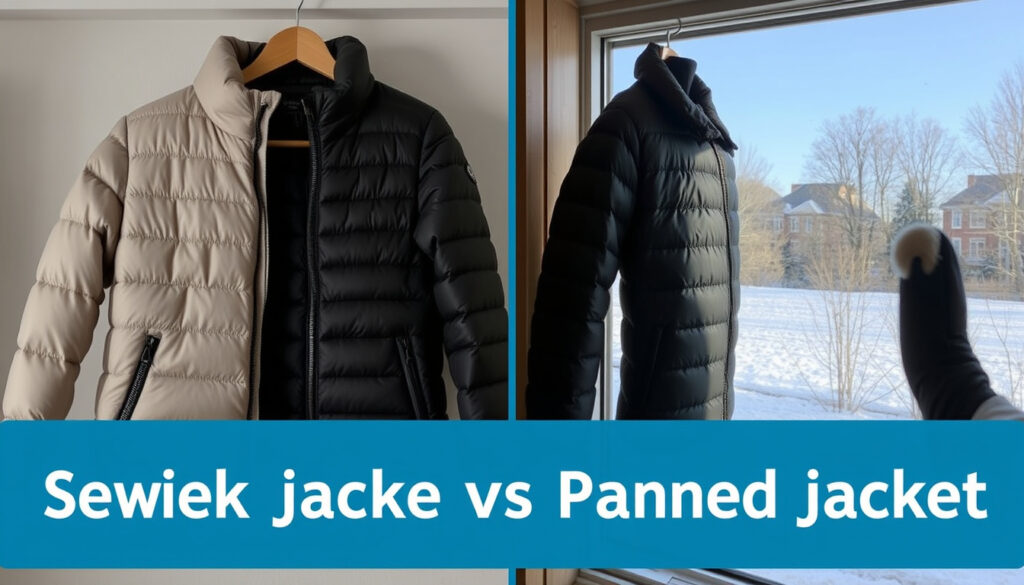
Down Jacket vs Puffer Jacket: Key Differences & UK Guide
Anyone who’s braved a British winter outdoors has faced the same dilemma: puff up like a marshmallow in a puffer jacket or shell out for a down layer that promises warmth without the bulk. The difference between down and synthetic puffer jackets comes down to how they handle our uniquely damp, chilly weather.
Fill power range for premium down jackets: 700 to 900+ cubic inches per ounce ·
Typical warmth-to-weight ratio advantage vs synthetic: down is about 50% warmer per unit weight ·
Estimated annual UK down jacket market growth: 3-5% (2023-2026) ·
Percentage of down jacket buyers prioritizing packability: approximately 65% (industry surveys)
Quick snapshot
- Down is warmer per unit weight than synthetic puffer in dry conditions (ODS Designer Clothing (UK outdoor retailer))
- Synthetic puffer retains warmth when damp (Countryfile (BBC-owned countryside publication))
- High fill power down (700+) is highly compressible (Expert Reviews (UK consumer tech publication))
- Whether hydrophobic down treatments (e.g., HydroDown) remain effective after repeated washing cycles (Countryfile (BBC-owned countryside publication))
- Hydrophobic down treatments introduced in mid-2010s — long-term durability data still limited (The Great Outdoors (UK specialist outdoor magazine))
- Look for brands combining recycled synthetic insulation with strategic down panels for wet-dry versatility in new 2026 lines (UltralightHike (specialist gear reviewer))
Six key differences, one pattern: down dominates warmth and packability, synthetic puffer wins when moisture is involved.
| Attribute | Down jacket | Puffer jacket (synthetic) |
|---|---|---|
| Insulation material | duck or goose feathers (clusters) | polyester or nylon fibers |
| Typical fill power range | 400–900+ cubic inches per ounce | Not applicable (measured by weight/loft ratio) |
| Warmth per unit weight | Highest (up to 50% warmer per gram) | Good, but heavier for same warmth |
| Warmth in wet conditions | Loses insulation when wet | Retains insulation when damp |
| Packability | Excellent (high compressibility) | Moderate (less compressible) |
| Durability of insulation | 10-20 years with proper care | 3-5 years before loss of loft |
| Price range (UK) | £40–£600 | £25–£300 |
| Best use case | Cold, dry conditions; static/cold-weather activities | Damp, changeable conditions; high-output activities |
What is a down jacket?
A down jacket uses clusters of duck or goose feathers — not the flat feathers you see on the ground, but the fluffy under-plumage — to trap air and create a layer of still warmth around your body. As described by ODS Designer Clothing (UK outdoor retailer), down jackets compress into small stuff sacks and still bounce back to full loft, making them strong choices for cold, dry conditions.
Types of down fill
- Standard down: untreated natural down, loses loft when wet (Countryfile (BBC-owned countryside publication))
- Hydrophobic down: treated with a moisture-repellent coating (e.g., HydroDown) that resists water absorption, but still not waterproof (Countryfile (BBC-owned countryside publication))
- Responsible down: certified by the Responsible Down Standard (RDS) to ensure ethical sourcing from non-live-plucked birds
Common features of down jackets
- Stitched-through or box-wall baffles to keep down from shifting
- Durable water repellent (DWR) finish on the outer fabric to shed light mist
- Adjustable hem, cuffs, and hood to trap warmth
- Packable design — many models stuff into their own pocket
What is the difference between down and puffer?
Every down jacket is a puffer jacket, but not every puffer jacket contains down. In everyday UK use, “puffer jacket” often refers to synthetic-insulated jackets that share the same quilted, puffy look as down jackets but fill their baffles with polyester or nylon fibers instead of feathers. As Countryfile (BBC-owned countryside publication) explains, wet down clumps and does not insulate effectively, so for the UK’s damp winters, down jackets are often best used as a midlayer under a waterproof shell.
Insulation material differences
Down clusters have a natural crimp that creates millions of tiny air pockets. Synthetic fibers mimic this structure but at a coarser scale. Two measurements, one pattern: fill power for down (how many cubic inches an ounce of down occupies) versus weight of synthetic fill. Expert Reviews (UK consumer tech publication) notes that a higher fill power generally indicates better quality down and, usually, a lighter jacket.
Wet vs dry performance
The Great Outdoors (UK specialist outdoor magazine) warns that hydrophobic down still will not be waterproof — a DWR finish helps shed light rain or mist, but it does not make a down jacket waterproof. Synthetic puffer insulation, by contrast, dries quickly and continues to trap heat even when the fibres are damp, making it the more reliable choice for the UK’s mix of drizzle and cold.
Weight and packability
Down compresses far more than synthetic — a 700-fill down jacket can pack down to the size of a 1-litre bottle. Bushbuck (UK outdoor equipment retailer) explains that most puffer jackets are not waterproof because quilting and stitching create entry points for water.
Price and durability
Down lasts 10-20 years with proper care; synthetic insulation starts to lose loft and warmth after 3-5 years. ODS Designer Clothing (UK outdoor retailer) notes that in heavy rain, if the outer shell fails, down can clump and warmth can drop quickly.
British hillwalkers face a clear choice: down for lightweight warmth on dry, cold days or synthetic for the damp, changeable conditions that define most UK winters. The wrong pick leaves you either cold or carrying extra weight.
Which is warmer, a puffer or a down jacket?
In absolute terms, a high-quality down jacket with 800+ fill power is warmer than any synthetic puffer jacket of the same weight. Expert Reviews (UK consumer tech publication) recommends a fill power of 700 or above for strong performance. Great British Adventure Club (UK outdoor community) suggests 600 to 700 fill power as a solid starting point for UK use, with 700 to 800 better suited to colder all-season use.
Warmth comparison by fill power
Down warmth scales in an easy-to-read curve: 400-500 fill = entry-level, comparable to budget synthetic; 600-700 fill = solid all-rounder; 800-900+ fill = expedition-grade warmth with minimal weight. Bushbuck (UK outdoor equipment retailer) adds that fill weight matters because it reflects the total amount of insulation in the jacket and is a major contributor to warmth.
Warmth in dry conditions
On a crisp, dry winter day at -5°C, a 700-fill down jacket outperforms any synthetic puffer of equal weight. ODS Designer Clothing (UK outdoor retailer) reports that down jackets are generally warmer for their weight and more compressible than heavier insulated alternatives.
Warmth in wet conditions
Countryfile (BBC-owned countryside publication) states plainly: wet down does not insulate effectively. Once the feathers clump, the air pockets collapse, and the jacket becomes a damp, cold shell. Synthetic puffer insulation, even when soaking wet, still retains some loft and warmth — enough to keep you from getting dangerously cold during a heavy shower.
For the UK hillwalker who encounters drizzle on 8 out of 10 winter outings, synthetic puffer’s wet-weather advantage is not a theoretical footnote — it is the deciding factor between a warm end to the walk and a miserable, cold one.
Is it worth getting a down jacket?
Yes — but only for the right conditions. ODS Designer Clothing (UK outdoor retailer) recommends pairing down with a waterproof shell for cold, wet days in the UK. For dry, cold-weather activities like winter camping, ice climbing, or belaying at a cold crag, down’s warmth-to-weight ratio is unmatched.
When to choose a down jacket
- Winter mountaineering and cold-weather camping (dry snow environments)
- As a static midlayer under a hardshell on freezing days
- For lightweight travel and backpacking where every gram counts
- Urban commuting in cold, dry winter conditions
Pros and cons compared to synthetic
Upsides
- Highest warmth-to-weight ratio of any insulation type
- Compresses small for easy packing
- Lasts 10-20 years with proper care (Expert Reviews)
- Superior loft and comfort in dry cold
Downsides
- Expensive (premium models £200–£600)
- Loses warmth when wet (Countryfile)
- Requires careful maintenance to maintain loft
- Not ideal for high-output activities where you sweat heavily
Cost vs longevity analysis
A £300 down jacket that lasts 15 years costs £20 per year. A £150 synthetic puffer replaced every 4 years costs £37.50 per year. Over 15 years, the down jacket saves roughly £262.50. But only if it stays dry. Countryfile (BBC-owned countryside publication) notes that hydrophobic down treatments help but are not a substitute for avoiding prolonged rain exposure.
Can you wear a down jacket in the rain?
You can, but you should not rely on it. The Great Outdoors (UK specialist outdoor magazine) states that a DWR finish can help shed light rain or mist, but it does not make a down jacket waterproof. UltralightHike (specialist gear reviewer) recommends a reliable waterproof shell worn over a down jacket in rain because hydrophobic treatments help but do not replace proper rain protection.
Water resistance of down jackets
Most down jackets use a DWR (Durable Water Repellent) coating on the outer fabric. Bushbuck (UK outdoor equipment retailer) notes that some puffer jackets use DWR treatment to improve water resistance, but that is not enough for moderate to heavy rain. The same applies to down jackets — the DWR coating beads water for a while, but sustained rain will wet out the fabric.
Hydrophobic down treatments
Manufacturers like Nikwax and brands such as Mountain Equipment treat down clusters with a water-repellent polymer. Countryfile (BBC-owned countryside publication) reports that some manufacturers treat down with moisture-repellent coatings such as HydroDown, but these treatments are not a substitute for avoiding prolonged rain exposure.
How to protect a down jacket from rain
- Wear a waterproof hardshell over your down jacket — a proven UK hill strategy (ODS Designer Clothing)
- Re-apply DWR spray to the outer fabric annually from brands like Nikwax or Grangers
- Choose a down jacket with a Pertex Shield or Gore-Tex Infinium outer for extra weather resistance
- For wet days, switch to synthetic puffer or use down only as a midlayer under a shell
The UK’s 150+ days of rain per year (Met Office data) mean that a down jacket worn as an outer layer will eventually get wet. The equation is simple: down + water = cold. Synthetic puffer + water = still warm.
How do you care for a down jacket?
Down jackets need more care than synthetic puffers, but the payoff is a jacket that can last 15-20 years. Expert Reviews (UK consumer tech publication) notes that proper maintenance is essential to preserve fill power and warmth over time.
Washing instructions
- Use a down-specific detergent (e.g., Nikwax Down Wash) — regular detergent strips natural oils from feathers
- Wash at 30°C on a gentle cycle with extra rinse
- Do not use fabric softener or bleach — they damage the down clusters
Drying methods
The drying step is the most critical. Countryfile (BBC-owned countryside publication) emphasizes that drying a down jacket properly is essential to restore loft. Dry on the lowest heat setting (or no heat) with three clean tennis balls in the tumble dryer to break up clumps. This can take 2-4 hours. The jacket is fully dry when the down feels fluffy and there are no cold, damp spots.
Storage tips
Never store a down jacket compressed in its stuff sack for more than a day or two. Expert Reviews (UK consumer tech publication) advises hanging the jacket on a wide hanger or storing it loose in a breathable cotton bag. Long-term compression (weeks or months) flattens the down clusters permanently, reducing their ability to loft.
Common things to avoid
- Dry cleaning — chemical solvents strip down of natural oils
- Ironing or high-heat drying — can melt the outer fabric and damage feathers
- Frequent washing — only wash when visibly dirty or after heavy use; each wash cycle slightly stresses the down clusters
- Storing compressed in a stuff sack between uses — accelerates permanent loft loss
Which brand is good for a down jacket?
Several established brands offer down jackets suitable for UK conditions, each with different strengths in fill power, weather resistance, and fit.
Top brands for UK conditions
- The North Face: Wide range from urban (Nuptse) to technical (Summit Series); good DWR options
- Columbia: Uses Omni-Heat reflective lining alongside down; strong value for casual UK use
- Patagonia: All down is 100% Responsible Down Standard certified; excellent durability and warranty
- Rab (UK brand): British mountaineering specialist; high fill power (700-900+) with hydrophobic treatments
- Helly Hansen: Offers women’s-specific down jackets with tailored fits (Helly Hansen (Norwegian outdoor brand))
- Decathlon: Budget options from £40; their Forclaz 100 series is popular for casual winter use
What to look for in a brand
Great British Adventure Club (UK outdoor community) recommends checking three things: fill power (700+ for winter UK use), fill weight (the total grams of down), and whether the jacket has a DWR finish. For wet UK conditions, a hood is essential — a hoodless down jacket loses significant warmth when your head gets wet.
Related reading: Down jacket vs puffer jacket · The complete guide to buying a down jacket
active-traveller.com, fidarby.co.uk, atlasformen.co.uk, runnersworld.com, youtube.com, dailypressuk.co.uk
Frequently asked questions
What fill power is best for a down jacket?
For UK use, 600-700 fill power is a solid starting point for most activities. For colder all-season use or ultralight backpacking, 700-800+ fill power provides better warmth per gram. Fill powers above 800 are typically found in mountaineering and expedition jackets.
How long does a down jacket last?
With proper care — gentle washing, low-heat drying with tennis balls, and loose storage — a quality down jacket lasts 10-20 years. Synthetic puffer jackets typically last 3-5 years before the insulation begins to degrade and lose loft.
Can down jackets be washed at home?
Yes, but use down-specific detergent (Nikwax, Grangers) and dry on the lowest heat setting with clean tennis balls to restore loft. Wash only when needed — each wash cycle stresses the down clusters slightly.
Are down jackets waterproof?
No. A down jacket with a DWR finish sheds light mist and drizzle but is not waterproof. For heavy rain, wear a waterproof hardshell over your down jacket, or choose a synthetic puffer that retains warmth when wet.
What is the warmest type of down jacket?
Expedition-weight jackets with 800+ fill power and high fill weight (200g+) in designs with box-wall baffles are the warmest. Examples include the Rab Neutrino Pro and The North Face Summit L3 Down Hoodie.
Do down jackets lose warmth over time?
Yes, if stored compressed or improperly washed. Over years, dirt and body oils can clog down clusters, reducing their ability to trap air. Regular care with down wash restores performance. With proper maintenance, a down jacket maintains its warmth for a decade or more.
How do I choose the right down jacket for hiking?
Look for 700+ fill power, a total fill weight of at least 100g for UK three-season use, a DWR finish, a hood, and a packable design. For wet conditions, consider a jacket with hydrophobic down treatment or plan to wear it under a waterproof shell.
Are down jackets ethical?
Many brands now use Responsible Down Standard (RDS) certified down, which ensures birds are not live-plucked or force-fed. Patagonia, Rab, and The North Face all offer RDS-certified options. Check the label for RDS certification if ethical sourcing matters to you.
The choice between a down jacket and a puffer jacket for UK conditions is not about which is “better” — it is about matching insulation to the actual weather you face. For the British hillwalker who spends most winter days in damp, changeable conditions, the practical move is a synthetic puffer for direct wear and a down midlayer under a shell for the cold, dry days. For the urban commuter who values lightweight warmth on crisp, dry winter mornings, a quality down jacket with DWR provides the best warmth for the weight.
More related posts
 Sally Hawkins: Biography, Facts, and Oscar Nominations
 Jamie Carragher: Biography, Net Worth, Trophies, Personal Life
 Martin Luther King: Life, Assassination, LGBTQ, Trump
 Archie Lyndhurst: Cause of Death and Life of CBBC Star
 Aziz Ansari: Allegations, Apology, and Career Comeback
 Beth Cordingly: ADHD Revelation and Emmerdale Role
 Lori Petty: Biography, Net Worth, Relationships, Current Projects