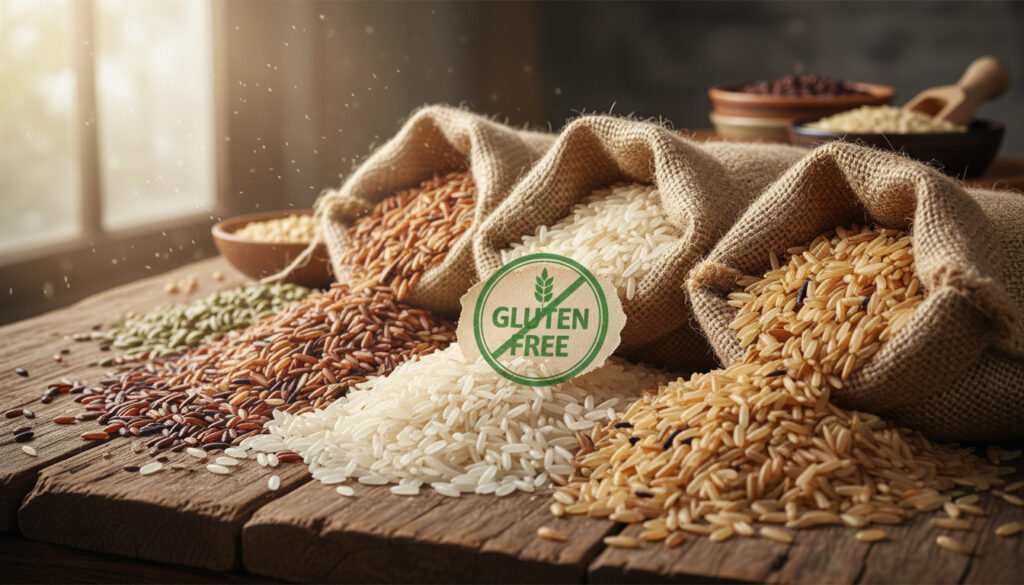
Does Rice Have Gluten – Safe Varieties and Risks
Rice in its unprocessed form contains no gluten, making it a foundational food safe for individuals with celiac disease and gluten sensitivity. Unlike wheat, barley, and rye, rice lacks the specific proteins that trigger gluten-related disorders, positioning it as a global dietary staple across cultures.
Despite its naturally gluten-free status, confusion persists regarding processed rice products and preparation methods. Cross-contamination during manufacturing and hidden ingredients in seasoned or instant varieties present the primary risks for those requiring strict gluten avoidance.
Understanding which rice varieties offer the safest nutritional profile requires examining processing methods, grain types, and potential contamination points throughout the supply chain.
Does Rice Contain Gluten?
100% gluten-free in pure, unprocessed form
White, brown, basmati, jasmine, wild, black, and red
Cross-contamination during milling and packaging
Seek gluten-free labels on packaged goods
- Rice is a grass species completely distinct from gluten-containing grains, lacking gliadin and glutenin proteins
- All intrinsic rice varieties—including white, brown, basmati, and wild—test negative for gluten when pure
- Brown rice contains higher arsenic levels than white rice, though this remains unrelated to gluten content
- The term “glutinous” describes starch texture, not protein composition
- Rice flour requires verification for additive content and facility cross-contact
- Pre-seasoned rice mixes frequently contain wheat-based flavorings and thickeners
- Instant and “fast cooking” rice products carry higher contamination risks than whole grains
| Rice Type | Gluten-Free? | Key Notes |
|---|---|---|
| White Rice | Yes | Milled, bran removed; lighter and easier to digest |
| Brown Rice | Yes | Whole grain; higher fiber but more arsenic |
| Basmati | Yes | Aromatic long-grain; available in white and brown |
| Jasmine | Yes | Fragrant, soft texture when cooked |
| Wild Rice | Yes | Aquatic grass seed; nutty flavor, firm texture |
| Black/Forbidden | Yes | Anthocyanin antioxidants; short grain |
| Red/Purple | Yes | Similar antioxidant profile to black rice |
| Glutinous/Sticky | Yes | High amylopectin starch; textural term only |
| Rice Flour | Usually | Check for processing additives and facility cross-contact |
| Instant/Pre-cooked | Sometimes | Risk of gluten-containing additives for texture |
Gluten Content by Rice Type
White and Brown Rice
White rice undergoes milling that removes bran and germ, rendering it lighter and gluten-free but less nutritious than brown rice, according to WebMD. Brown rice retains the bran layer, offering superior fiber content and micronutrients while remaining entirely gluten-free. However, Success Rice notes that brown rice contains higher arsenic levels than white rice, necessitating dietary rotation for heavy consumers.
Aromatic Varieties
Basmati rice, a long-grain variety common in Indian and Middle Eastern cuisine, presents no gluten risk in either white or brown forms. Healthgrades confirms that jasmine rice, primarily used in Southeast Asian cooking, delivers a distinctive fragrance and soft texture when cooked, with zero gluten content.
Wild and Specialty Rices
Healthline explains that wild rice, technically an aquatic grass seed rather than true rice, provides robust nutritional value including antioxidants, vitamins, and fiber. Black (forbidden) rice and red rice derive their colors from anthocyanins—compounds also found in blueberries—while maintaining gluten-free status, per Pietro’s Gluten Free.
Rice Flour and Processed Forms
Rice flour, derived from ground rice grains, naturally contains no gluten. However, manufacturing facilities processing multiple grain types introduce contamination risks. Products labeled “wheat-free” do not guarantee gluten-free status, necessitating certification verification.
Despite its confusing name, glutinous rice—also called sticky or sweet rice—contains absolutely no gluten, according to Gluten.org. The term describes the rice’s high amylopectin starch content, which creates its characteristic chewy, adhesive texture when cooked.
Is Rice Safe for Celiac Disease and Gluten-Free Diets?
Celiac Disease Compatibility
Individuals with celiac disease can safely consume all natural rice varieties. The Celiac Disease Foundation lists rice as a safe grain, provided it remains unadulterated by additives or cross-contamination. The protein structure of rice lacks the prolamin fractions (gliadin, hordein, secalin) that trigger autoimmune responses in celiac patients.
Gluten Sensitivity Considerations
Those with non-celiac gluten sensitivity similarly tolerate rice without adverse effects. The grain serves as a primary carbohydrate source in gluten-free meal planning, offering caloric density and versatility. Regular monitoring of packaged rice products remains essential, as sensitivity levels vary regarding trace contamination.
Risks of Gluten Contamination in Rice
Manufacturing Cross-Contamination
Facilities processing wheat, barley, and rye alongside rice create significant contamination risks. Shared milling equipment, storage silos, and packaging lines may transfer gluten proteins to otherwise safe rice products. Healthline recommends purchasing unprocessed rice whenever possible and looking for specific “gluten-free” certification labels to ensure levels remain below 20 parts per million.
Hidden Gluten in Rice Dishes
WebMD warns that many commercial rice preparations contain gluten despite the base ingredient’s safety. Rice pilaf frequently incorporates orzo pasta (wheat-based). Pre-seasoned packaged rice mixes often use wheat flour as thickeners or carriers for flavor compounds. Popular breakfast cereals like Rice Krispies contain barley malt, rendering them unsafe.
When dining out, rice dishes pose hidden dangers through shared cooking water, utensils, or soy sauce contamination. Fried rice preparations may use soy sauce containing wheat, while steamed rice might contact surfaces previously exposed to gluten-containing ingredients. Healthgrades advises consulting with restaurant staff about preparation methods and potential cross-contamination risks.
Third-party gluten-free certification requires testing to less than 20ppm gluten content. “Fast cooking” or “precooked” rice products require particular scrutiny, as these may contain gluten-containing additives for texture modification, even when derived from naturally gluten-free rice.
What Is Definitively Known About Rice and Gluten?
- Rice is a gluten-free grain by biological classification
- All unprocessed varieties contain zero gluten proteins
- Celiac Disease Foundation confirms rice as a safe staple
- Cross-contamination occurs exclusively through external processing factors
- Exact contamination rates in non-certified bulk rice from shared facilities
- Whether “wheat-free” labeled products contain traces below 20ppm
- Individual threshold sensitivity regarding trace amounts
- Additive composition in internationally manufactured rice products
Why Rice Lacks Gluten
Gluten comprises storage proteins (prolamins) found specifically in wheat (gliadin), barley (hordein), and rye (secalin). Rice belongs to the Poaceae family but constitutes a distinct genus (Oryza) separate from these gluten-containing grains. Its protein matrix contains orzenin, which does not trigger the inflammatory cascade associated with celiac disease or gluten sensitivity.
This botanical distinction explains why rice serves as the primary grain substitute in gluten-free diets worldwide, unlike oats which share similar protein structures with wheat and require specific certification. Jashn Foods confirms that all rice varieties—from basmati to wild rice—maintain this gluten-free biological profile.
Expert Verification
“Rice is gluten-free.”
— Celiac Disease Foundation
Third-party certification ensures testing to less than 20 parts per million gluten content, the threshold recognized as safe for celiac patients.
— FDA Gluten-Free Food Labeling Guidelines
Rice represents a safe staple grain for gluten-free living when selected in unprocessed forms and protected from cross-contact.
— Beyond Celiac
Is Rice Safe for Your Gluten-Free Diet?
Rice remains one of the most reliable gluten-free staples available, provided consumers select unprocessed varieties and verify certification on packaged goods. While the grain itself contains no gluten proteins, vigilance against cross-contamination and hidden wheat ingredients in prepared dishes ensures safe consumption. For those seeking comforting rice-based recipes, consider trying a Slow Cooker Rice Pudding – Easy Vegan Recipe made with certified gluten-free ingredients.
Common Questions About Rice and Gluten
Which grains contain gluten besides wheat?
Barley, rye, triticale, and often oats (due to cross-contamination) contain gluten. Wheat variants like spelt, kamut, and farro also contain gluten proteins.
Is wild rice actually rice?
Wild rice is technically an aquatic grass seed (Zizania genus), not true rice (Oryza), but it remains naturally gluten-free and nutritionally similar.
Why is Rice Krispies not gluten-free?
Rice Krispies contains barley malt extract, which provides flavor but adds gluten protein, making it unsafe for celiac patients despite the rice base.
Can I eat rice flour on a gluten-free diet?
Yes, pure rice flour is gluten-free, but check labels for additives. Some commercial rice flours are processed in facilities handling wheat.
Is sushi rice safe for celiacs?
Sushi rice itself is gluten-free, but preparation often involves rice vinegar mixed with barley malt or cross-contamination from soy sauce and shared surfaces.
What makes glutinous rice sticky if not gluten?
Glutinous rice contains high amylopectin starch, creating a sticky texture when cooked. The term “glutinous” describes consistency, not gluten protein content.
How can I find restaurants serving safe rice dishes?
Search for Nice Restaurants Near Me – Top Picks, Apps and Booking Tips with gluten-free filters, or call ahead to verify dedicated preparation areas.
More related posts
 Dhar Mann Controversies: Fraud, Cancelation & Facts
 Mental Health Support Ireland 2025: Helplines, Signs, and Free Help
 Dr Dennis Gross LED Mask Review: Is It Worth the Price?
 Universal Credit Budgeting Advance: Amount, Reasons, How to Apply
 Gerry Adams: IRA Allegations, Shooting, and Current Life
 Night Dress for Women – Top Styles and Tips for 2025
 Gary Busey: Accident, Diagnosis, Net Worth, and Career Change
 Morfydd Clark: Biography, Career, and Personal Life