Emmett Till Lynching: Open Casket That Ignited Change
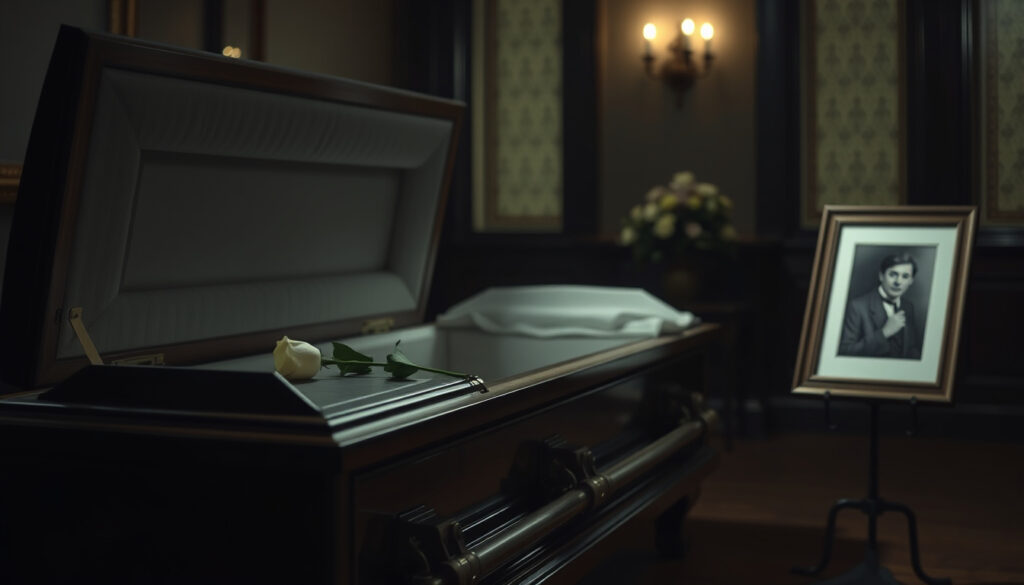
Mamie Till-Mobley made a choice that would echo through history: she let the world see her son’s face one last time, exactly as the killers had left it. The mutilated body of 14-year-old Emmett Till, displayed in an open casket in September 1955, became a national reckoning with racial violence.
Age at death: 14 years old ·
Date of murder: August 28, 1955 ·
Location: Money, Mississippi ·
Killers: Roy Bryant and J.W. Milam ·
Verdict: Not guilty (1955) ·
Impact: Catalyzed the Civil Rights Movement
Quick snapshot
- Emmett Till was abducted and murdered by Roy Bryant and J.W. Milam (Smithsonian National Museum of African American History and Culture)
- An all-white jury acquitted the killers in 1955 (The Children’s Museum of Indianapolis)
- Mamie Till-Mobley insisted on an open-casket funeral (PBS American Experience)
- Exact last words of Emmett Till (varying accounts)
- Whether Till whistled at Carolyn Bryant or made an inappropriate remark
- Precise sequence of events on the night of August 28, 1955
- Murder: August 28, 1955
- Trial acquittal: September 23, 1955 (67-minute deliberation)
- Body exhumed: 2005 for FBI reinvestigation
- Ongoing efforts to pass federal anti-lynching legislation
- Continued preservation of Till’s legacy at museums and historical sites
Seven facts about the Emmett Till case, one pattern: the deliberate exposure of violence became a catalyst for change.
| Label | Value |
|---|---|
| Full name | Emmett Louis Till |
| Birth date | July 25, 1941 |
| Death date | August 28, 1955 |
| Place of death | Money, Mississippi |
| Known for | Lynching that galvanized the Civil Rights Movement |
| Mother | Mamie Till-Mobley |
| Killers | Roy Bryant and J.W. Milam |
Who was Emmett Till?
What was Emmett Till’s early life like?
- Emmett Louis Till was born July 25, 1941, in Chicago, Illinois (Smithsonian National Museum of African American History and Culture).
- He contracted polio at age 3, which left him with a speech impediment.
- In August 1955, he traveled to Money, Mississippi, to visit relatives.
The implication: Till was a typical Chicago teenager, full of energy, whose visit to the Mississippi Delta would end in tragedy.
What illness did Emmett Till have?
As a child, Till survived polio, a disease that at the time was a major public health threat. The illness caused a stutter that stayed with him throughout his short life. This detail is often mentioned in biographies to humanize him — a boy who overcame one hardship only to be killed by racism.
The pattern: a single life cut short can reshape a nation’s conscience.
Why is Emmett Till’s death so significant?
How did the murder spark the Civil Rights Movement?
- The brutality of the murder and the open-casket funeral exposed the realities of racial violence to a national audience (Dwight D. Eisenhower Presidential Library).
- Mamie Till-Mobley insisted on an open casket to show the world what was done to her son (source from PBS above).
- Jet magazine published photos of Till’s body, galvanizing national outrage (Smithsonian National Museum of African American History and Culture).
Rosa Parks later said she thought of Emmett Till when she refused to give up her seat on a Montgomery bus in December 1955 (Encyclopaedia Britannica). The murder directly fed the Montgomery Bus Boycott, a pivotal event in the Civil Rights Movement.
Mamie Till-Mobley’s decision to hold an open casket turned a local lynching into a national news story. The images of her son’s face forced millions of Americans to confront the reality of racial violence — a reality they could no longer ignore.
The implication: the open casket was a deliberate act of political witness.
What role did Mamie Till-Mobley play?
Mamie Till-Mobley became a lifelong activist after her son’s death. She collaborated with the NAACP and spoke at events across the country. The open-casket funeral was her idea, and she later testified before Congress. Her courage turned personal grief into a political force.
The pattern: one mother’s choice to make her son’s suffering visible shifted the moral arc of the nation.
Why was Emmett Till removed from his casket?
Was Emmett Till exhumed?
- Emmett Till’s body was exhumed in 2005 for a forensic examination (PBS American Experience).
- The exhumation was part of a reinvestigation by the FBI.
- After the autopsy, the body was reinterred at Burr Oak Cemetery.
The trade-off: the exhumation provided new forensic evidence but also reopened old wounds for the family and community.
Why was Emmett Till’s body exhumed in 2005?
The FBI reopened the case in 2004 after receiving new information. The 2005 exhumation aimed to retrieve DNA evidence and conduct a more thorough autopsy than the one performed in 1955. The results confirmed the brutality of the murder but did not lead to new charges, as the statute of limitations had expired.
The catch: even forensic science could not undo the original injustice.
Did anyone serve time for Emmett Till’s death?
What happened at the 1955 trial?
- Roy Bryant and J.W. Milam were indicted for kidnapping and murder on September 6, 1955 (The Children’s Museum of Indianapolis).
- The trial opened in Sumner, Mississippi, on September 19, 1955 (PBS American Experience).
- The jury was composed of 12 white men (The Children’s Museum of Indianapolis).
- After 67 minutes of deliberation, the jury acquitted both men on September 23, 1955 (The Children’s Museum of Indianapolis).
The acquittal by an all-white jury deepened the sense of injustice around Till’s death (Dwight D. Eisenhower Presidential Library). It sent a clear message that the legal system would not protect Black lives in the Jim Crow South.
Were the killers ever convicted?
No. In 1956, Bryant and Milam confessed to the murder in a Look magazine interview, but because they had already been acquitted, double jeopardy protected them from being tried again. No one has ever been convicted for Emmett Till’s murder — a fact that continues to fuel calls for accountability.
What this means: the legal system failed Emmett Till twice — first by acquitting his killers, then by allowing them to profit from a confession without consequence.
Did they dig up Emmett Till?
When was Emmett Till’s body exhumed?
- The body was exhumed in 2005 from Burr Oak Cemetery.
- After the exhumation, it was reinterred at the same cemetery.
- In 2020, the grave site was vandalized, drawing public outrage and renewed attention.
The forensic examination in 2005 found that Till had been shot in the head and his body severely beaten, consistent with the 1955 accounts. The autopsy also identified a metal fragment in his skull, confirming the caliber of the bullet.
Where is Emmett Till buried now?
Emmett Till is buried at Burr Oak Cemetery in Alsip, Illinois. His grave has become a pilgrimage site for those honoring his memory. The 2020 vandalism of the gravesite was quickly condemned, and the site was restored. The cemetery remains a place of remembrance and reflection.
The catch: even in death, Till’s resting place was not immune to desecration — a reminder that the struggle against racism continues.
The exhumation and subsequent vandalism show that Emmett Till’s story is not a closed chapter. It remains a live wound in American history, one that demands ongoing attention and accountability.
The pattern: each chapter of Till’s story forces a reckoning with the past.
Timeline of the Emmett Till case
- July 25, 1941 — Emmett Till born in Chicago, Illinois. (Smithsonian National Museum of African American History and Culture)
- 1944 — Contracted polio; recovered but left with a speech impediment. (Smithsonian National Museum of African American History and Culture)
- August 21, 1955 — Arrives in Money, Mississippi to visit relatives. (Smithsonian National Museum of African American History and Culture)
- August 24, 1955 — Alleged whistling incident at Bryant’s Grocery. (PBS American Experience)
- August 28, 1955 — Abducted, beaten, shot, and dumped in the Tallahatchie River. (PBS American Experience)
- September 1955 — Body recovered; Mamie Till-Mobley insists on open-casket funeral. (PBS American Experience)
- September 1955 — Murder trial of Bryant and Milam; they are acquitted. (The Children’s Museum of Indianapolis)
- 1956 — Bryant and Milam confess in Look magazine; protected by double jeopardy. (Encyclopaedia Britannica)
- 2004–2005 — FBI reinvestigation; body exhumed for autopsy. (PBS American Experience)
- 2005 — Body reinterred at Burr Oak Cemetery. (PBS American Experience)
- 2020 — Grave site at Burr Oak Cemetery vandalized; later restored. (PBS American Experience)
The timeline above shows that the case has never fully closed — from the 1955 acquittal to the 2005 exhumation and the 2020 vandalism, each phase reinforces the enduring legacy of the crime.
Confirmed facts vs. unclear details
Confirmed facts
- Emmett Till was abducted and murdered by Roy Bryant and J.W. Milam (Smithsonian National Museum of African American History and Culture).
- The two were acquitted by an all-white jury (The Children’s Museum of Indianapolis).
- Mamie Till-Mobley held an open-casket funeral (PBS American Experience).
- The murder galvanized the Civil Rights Movement (Library of Congress).
- The body was exhumed in 2005 for forensic examination (PBS American Experience).
What’s unclear
- Exact last words of Emmett Till (varying accounts).
- Whether Till whistled at Carolyn Bryant or made an inappropriate remark.
- The precise sequence of events on the night of August 28, 1955.
- The exact number of people who viewed Till’s body at the funeral (estimates vary).
- The motivation for the 2020 grave vandalism remains unclear.
The balance of evidence strongly supports the core facts of the case, but certain details remain contested — a reminder that historical truth is often incomplete.
Quotes that shaped the narrative
Let the people see what they did to my boy.
— Mamie Till-Mobley, explaining her decision for an open-casket funeral (PBS American Experience)
I thought of Emmett Till and I could not go to the back of the bus.
— Rosa Parks, reflecting on her refusal to give up her seat (Encyclopaedia Britannica)
He was beaten, shot in the head, and his body dumped in the river.
— FBI case summary, describing the brutality of the murder (PBS American Experience)
These three voices — a mother, an activist, and a federal agency — together capture the personal, political, and institutional dimensions of the case.
Summary: The consequence of a mother’s decision
Mamie Till-Mobley’s choice to hold an open casket did not just expose the brutality of her son’s murder; it forced a nation to look at itself. The images of Emmett Till’s body circulated in Jet magazine and other outlets, reaching millions. For African Americans living under segregation, those images were a call to action. For white Americans, they were a moral challenge. The Civil Rights Movement gained momentum from this single act of maternal courage. For the United States, the legacy of Emmett Till is a persistent reminder that justice delayed is not justice at all — and that the fight for equality is still unfinished.
sites.psu.edu, en.wikipedia.org, washingtonpost.com, history.com, childrensmuseum.org, smithsonianmag.com
Frequently asked questions
How old was Emmett Till when he died?
Emmett Till was 14 years old at the time of his death on August 28, 1955.
Was Emmett Till’s body ever returned to Chicago?
Yes, after his body was recovered from the Tallahatchie River, it was sent back to Chicago for the funeral and burial.
Who was Emmett Till’s mother?
His mother was Mamie Till-Mobley, a teacher and civil rights activist who insisted on the open-casket funeral.
What did Carolyn Bryant testify?
Carolyn Bryant testified that Till had grabbed her and made inappropriate remarks, though her account has been called into question by later research.
Was Emmett Till’s murder a lynching?
Yes, the murder is widely considered a lynching — an extrajudicial killing by a mob, in this case by two white men acting with racial animus.
How did the Civil Rights Movement use Emmett Till’s death?
Activists used the case to highlight the failure of the legal system and to mobilize support for desegregation and voting rights.
What happened to the killers after the trial?
Bryant and Milam were acquitted in 1955, confessed in a 1956 magazine interview, but were never retried due to double jeopardy.
These questions reflect the enduring curiosity and significance of the Till case.
More related posts
 American Airlines: Partners, Infant Policy, Free Drinks & Ireland
 Loren Allred: The Voice Behind Never Enough
 Archie Lyndhurst: Cause of Death and Life of CBBC Star
 Henry VIII: Six Wives, Health Decline, and Tudor Legacy
 Klaudia Glam Death: Influencer Killed in Soho Car Attack
 Vet for Small Animals Near Me: Longford Emergency Guide
 Ray-Ban Sunglasses: Price, Authenticity, Worth It? Ireland
 Blue Peter: BBC Presenters, Badge Scandal & History