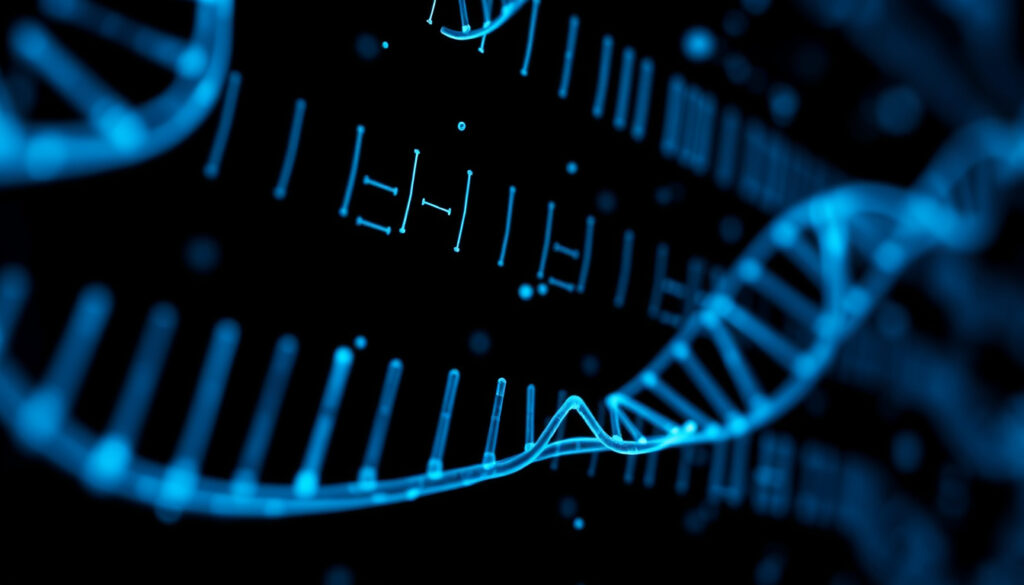
How Many Chromosomes Do Humans Have? 46 Total Explained
Humans have exactly 46 chromosomes in every somatic cell—a fact that surprises many people who hear “23 chromosomes” and assume that’s the full count. The confusion between chromosome pairs and total chromosomes fuels persistent myths, including false claims about chromosome counts in genetic conditions like Down syndrome. This article cuts through the confusion with verified facts from leading genetic authorities, showing exactly why most people have 46 chromosomes while conditions like Down syndrome involve 47.
Total Chromosomes in Humans: 46 ·
Chromosome Pairs: 23 ·
Autosomes: 22 pairs (44 total) ·
Sex Chromosomes: 1 pair (XX or XY) ·
Down Syndrome Chromosomes: 47
Quick snapshot
- Humans have 46 chromosomes in 23 pairs (National Down Syndrome Society)
- 22 autosome pairs + 1 sex chromosome pair (Cleveland Clinic)
- Half inherited from each parent (National Down Syndrome Society)
- Why nondisjunction occurs in chromosome 21 specifically (Global Down Syndrome Foundation)
- Exact inheritance patterns for complex multigene traits (Global Down Syndrome Foundation)
- 1956: Joe Tjio determined humans have 46 chromosomes (Science History Institute)
- 1959: Lejeune et al. confirmed extra chromosome 21 (T21RS)
- Ongoing research into gene dosage effects on Down syndrome phenotypes (NCBI StatPearls)
- Improved prenatal screening technologies expanding globally (NCBI StatPearls)
The table below summarizes the key chromosome counts for humans and related conditions.
| Category | Value | Source |
|---|---|---|
| Standard Human Count | 46 (23 pairs) | National Down Syndrome Society |
| From Each Parent | 23 | Cleveland Clinic |
| Down Syndrome (Trisomy 21) | 47 | Cleveland Clinic |
| Potatoes (Comparison) | 48 | NCBI StatPearls |
| Trisomy 21 Prevalence | 95% of DS cases | CDC |
| Down Syndrome Live Birth Rate | 1 in 700 | 24hrcares |
Do humans have 23 or 46 chromosomes?
Humans have 46 chromosomes total, arranged as 23 pairs. This is not a contradiction—both statements are true, depending on whether you’re counting individual chromosomes or pairs. Each somatic cell in the body contains this complete set. The National Down Syndrome Society, a primary advocacy organization for chromosomal awareness, confirms that “each cell normally contains 23 pairs of chromosomes, for a total of 46.”
The confusion arises because 23 sounds like a round, memorable number. During reproduction, egg and sperm cells each carry 23 chromosomes—one from each pair. When they combine, the zygote regains the full 46. Cleveland Clinic (a major medical institution providing patient education) notes that this pairing system means humans receive exactly half their chromosomes from each parent.
Role of autosomes and sex chromosomes
Of the 23 pairs, 22 are autosomes—chromosomes that determine general physical traits and bodily functions, unrelated to biological sex. These 22 pairs contain 44 individual autosome chromosomes. The remaining pair determines biological sex: females typically have two X chromosomes (XX), while males have one X and one Y (XY). The X carries significantly more genetic information than the Y, which contains relatively few genes.
The autosome-sex chromosome distinction matters because conditions like Turner syndrome (XO) or Klinefelter syndrome (XXY) involve sex chromosome variations—not changes to the total autosome count. The standard 44 autosome chromosomes remain constant in most sex chromosome aneuploidies.
Upsides
- Standard count enables predictable inheritance patterns
- 23-pair system allows reliable genetic testing accuracy
Downsides
- Any extra or missing autosome usually causes severe developmental issues
- Only trisomy 21 is viable among autosomal trisomies
How many chromosomes do people have?
In every somatic cell, most people have exactly 46 chromosomes. This applies across virtually all healthy humans regardless of ethnicity, geography, or other demographic factors. The number has been verified by countless genetic tests, prenatal screenings, and research studies since Joe Tjio announced the definitive count in 1956 at the Science History Institute (a nonprofit documenting scientific discoveries).
These 46 chromosomes exist in 23 matched pairs because each parent contributes one chromosome per pair. An egg cell carries 23 maternal chromosomes; a sperm cell carries 23 paternal chromosomes. Upon fertilization, the full set of 46 is restored. This elegant system ensures genetic diversity while maintaining species-specific stability.
Chromosome structure in human cells
Chromosomes are structures made of DNA and protein that package genetic information. They become visible under a microscope during cell division when DNA condenses. Each chromosome consists of a centromere (the constriction point) and two arms—the shorter “p arm” and longer “q arm.” Karyotype analysis, the laboratory technique for visualizing chromosomes, allows technicians to count and examine chromosome structure systematically.
The human karyotype shows chromosomes arranged by size, with the largest (chromosome 1) first and the smallest (chromosome 21, actually smaller than chromosome 22) near the end. NCBI StatPearls (a peer-reviewed medical resource from the National Institutes of Health) explains that this standardized arrangement enables consistent genetic diagnosis worldwide.
Inheritance from parents
Every person receives exactly 23 chromosomes from their mother and 23 from their father. This inheritance is random in terms of which copy of each pair is passed on, but the total count remains precisely 46. The Genome.gov resource (from the National Human Genome Research Institute, a primary federal genetics authority) clarifies that this system applies to all typical human conception.
Random assortment during meiosis means siblings can inherit different chromosome combinations from the same parents—but they all receive exactly 46 total. Only identical twins share completely identical chromosome sets.
The implication: while each person’s genetic blueprint is unique, the fundamental chromosome count stays constant across humanity.
Is Down syndrome 45 or 47 chromosomes?
Down syndrome involves 47 chromosomes in the most common form—not 45. The condition occurs when there is a full or partial extra copy of chromosome 21. This is why the condition is called Trisomy 21: “tri” means three, indicating three copies of chromosome 21 instead of the typical two. National Down Syndrome Society (the leading advocacy organization) confirms this extra genetic material causes the characteristic features associated with the condition.
The myth of 45 chromosomes likely stems from confusing Down syndrome with other genetic conditions. The Science History Institute (documenting scientific history) notes that people with Down syndrome “didn’t lack chromosomes—they have too many.” This is a crucial distinction because the treatment and prognosis differ fundamentally from deficiency conditions.
Trisomy 21 explanation
Trisomy 21 accounts for approximately 95% of all Down syndrome cases, according to the CDC (the U.S. Centers for Disease Control and Prevention, a top-tier health authority). The condition results from meiotic nondisjunction—literally, “failure to separate.” During egg or sperm formation, chromosome 21 pairs fail to separate properly, resulting in a gamete with two copies instead of one. When fertilized, the resulting cell has three copies of chromosome 21, totaling 47 chromosomes.
The extra genetic material disrupts normal development, causing the characteristic features of Down syndrome. NCBI StatPearls (a NIH-reviewed medical reference) explains that this leads to “gene dosage imbalance”—having 1.5 times the normal amount of genetic material from chromosome 21 affects hundreds of genes, producing the condition’s characteristic profile.
Types of Down syndrome beyond Trisomy 21
Two rarer forms exist alongside the common Trisomy 21. Mosaic Down syndrome affects approximately 2% of cases, according to the CDC. In mosaic cases, some cells contain 47 chromosomes while others contain the typical 46. This mixed population occurs when nondisjunction happens after fertilization during early cell division. People with mosaic Down syndrome may have fewer or milder characteristics depending on which tissues contain the extra chromosome.
Translocation Down syndrome accounts for about 3% of cases. Here, the total chromosome count is 46—but extra chromosome 21 material is attached (translocated) to another chromosome, usually chromosome 14. The 24hrcares health resource clarifies that translocation cases are the only form with meaningful hereditary risk, as a parent may carry the balanced translocation.
All three forms of Down syndrome involve extra chromosome 21 genetic material—yet only translocation cases may show the full 46-chromosome count on a basic karyotype. Specialized testing reveals the true genetic situation.
What this means: the way doctors count chromosomes matters for diagnosis, but the underlying genetic reality remains the same across all Down syndrome types.
How many chromosomes do humans have vs Down syndrome?
The difference is straightforward: typical humans have 46 chromosomes; individuals with Trisomy 21 Down syndrome have 47 chromosomes. This single extra chromosome—chromosome 21—is responsible for the condition. The Cleveland Clinic (a major academic medical center) confirms this numerical distinction is the fundamental genetic difference.
Down syndrome occurs in approximately 1 in 700 live births according to CDC data, making it the most common viable chromosomal aneuploidy. Genome.gov provides a slightly broader estimate of 1 in 800 to 1 in 1000 live births. The Global Down Syndrome Foundation (an advocacy organization funding research) credits Jerome Lejeune with discovering this genetic basis, identifying three copies of chromosome 21 in 1959.
Chromosome count differences at a glance
This comparison table illustrates how chromosome counts vary across Down syndrome types.
| Condition | Total Chromosomes | Chromosome 21 Copies | Prevalence |
|---|---|---|---|
| Typical Human | 46 | 2 | Most births |
| Trisomy 21 (standard DS) | 47 | 3 | 95% of DS cases |
| Mosaic DS | 46/47 mixed | 2 or 3 (cell-dependent) | 2% of DS cases |
| Translocation DS | 46 | 2 + extra attached material | 3% of DS cases |
Health impacts of the extra chromosome
The extra chromosome 21 causes a cascade of effects throughout development. NCBI StatPearls emphasizes that “no single gene accounts for all Down syndrome phenotypes”—the condition results from multiple genes on chromosome 21 being overexpressed simultaneously. This disrupts protein balance throughout the developing body and brain.
Risk factors for having a pregnancy with Trisomy 21 include advanced maternal age—specifically after age 35, according to the Cleveland Clinic. This correlates with increased likelihood of meiotic nondisjunction errors in older eggs. However, most babies with Down syndrome are born to younger mothers simply because younger women have more pregnancies overall.
Prenatal screening has advanced significantly. Non-invasive prenatal testing (NIPT) can now detect Trisomy 21 with high accuracy as early as 10 weeks through maternal blood analysis—without the miscarriage risk of diagnostic procedures like amniocentesis.
The implication: early screening gives families more time to prepare and access appropriate support services regardless of outcome.
Do autistic people have 24 chromosomes?
No. Autistic individuals have the standard 46 chromosomes just like neurotypical people. This myth may stem from confusion with sex chromosome counts, misunderstandings about chromosomal conditions, or misinformation spreading online. Autism is a neurodevelopmental condition involving complex genetic and environmental factors—not a chromosomal abnormality defined by extra or missing chromosomes.
The National Down Syndrome Society clarifies that chromosomal conditions like Down syndrome involve specific, identifiable changes to chromosome number or structure. Autism does not involve such changes detectable by standard karyotype analysis. Research has identified some genetic variants associated with autism risk, but these involve specific gene mutations rather than whole-chromosome alterations.
Autism and genetics
Current genetic research indicates autism spectrum disorder involves hundreds of genes, each contributing small effects. The Genome.gov resource explains that most cases result from complex interactions between multiple genetic variants—not from any single chromosomal difference. This is fundamentally different from Down syndrome, where one extra chromosome causes the condition.
While some genetic syndromes (like Fragile X or Rett syndrome) involve specific chromosomal or genetic changes and often include autistic features, these are distinct conditions. Standard karyotype analysis—counting chromosomes visually—shows no difference between autistic and non-autistic individuals. The chromosome count remains 46 in all typical cases.
Standard chromosome count in autism
Research from the NCBI StatPearls database confirms that autosomal trisomies beyond Trisomy 21 are typically lethal before or shortly after birth. Trisomy 18 (Edwards syndrome) and Trisomy 13 (Patau syndrome) occur but are much rarer and more severe than Trisomy 21. There is no viable “24-chromosome condition” in humans—the concept is biologically nonsensical.
The “24 chromosomes” myth illustrates how chromosomal misinformation spreads: people conflate the 23 pairs (46 total) counting system with a misunderstanding about chromosomal conditions. The correct interpretation is that humans have 23 chromosome types (numbered 1-22 plus sex chromosomes X/Y), with two copies of each.
What this means: confusing chromosome pairs with individual chromosomes leads to persistent myths that have no basis in genetics.
Down syndrome is the most commonly occurring genetic condition. Nearly 1 in every 700 babies are born with the genetic mutation that causes Down syndrome, according to the CDC.
If that goes wrong, then you end up with the wrong number of chromosomes in the eggs or sperm.
People with Down syndrome didn’t lack chromosomes. They have too many.
Related reading: does rice have gluten · breast cancer lumps
Humans carry 46 chromosomes arranged in 23 pairs across somatic cells, a structure Metro Reports pair breakdowntraces to contentious mid-20th century revelations.
Frequently asked questions
How many chromosomes do humans get from each parent?
Each parent contributes exactly 23 chromosomes—one from each of their 23 pairs. This gives every child 46 total chromosomes arranged in 23 pairs. The combination is unique to each individual (except identical twins).
How many chromosomes does a female have?
Females have 46 chromosomes total (23 pairs), including two X chromosomes as their sex chromosome pair (XX). The 44 autosome chromosomes are identical to those in males.
What are sex chromosomes?
Sex chromosomes are the pair that determines biological sex. Typically, females have XX and males have XY. The X chromosome is relatively large with many genes; the Y chromosome is small with few genes, primarily those involved in male sex determination.
Can people with Down syndrome have children?
Yes, people with Down syndrome can have children, though fertility varies. Males with Down syndrome often have reduced fertility. Females with Down syndrome can conceive and carry pregnancies, though they have an approximately 50% chance of having a child with Down syndrome themselves if the partner does not have Down syndrome.
What causes variations in chromosome number?
Most chromosome count variations result from meiotic nondisjunction—when chromosome pairs fail to separate properly during egg or sperm formation. This creates gametes with too many or too few chromosomes. Random errors cause most cases; advanced maternal age increases risk.
Is Down syndrome hereditary?
Most Down syndrome cases (97%) are not inherited—they result from random nondisjunction during reproduction. Only the 3% of cases caused by translocation have meaningful hereditary risk, and even then, most cases occur without family history.
Who has 24 chromosomes?
No human has 24 chromosomes. The confusion arises because humans have 23 pairs (46 total) and some conditions involve 47 total. Potatoes, by contrast, have 48 chromosomes. The 24-chromosome claim has no basis in human genetics.
More related posts
 Dexter Morgan: Facts, Fiction & Key Questions Answered
 LeBron James Net Worth – Salary, Investments and Empire
 Daniel Sloss: Jigsaw Special, Breakups, Specials, Personal Life
 Robbie Fowler: Biography, Net Worth, Career, and Personal Life
 Andy Robertson: Transfer, Religion, Net Worth & Career Facts
 William the Conqueror’s Life, Conquest, and Lasting Legacy
 Nancy Wheeler: Real Life vs Stranger Things Romance
 Madison Bailey: Outer Banks Star, Pansexual Advocate