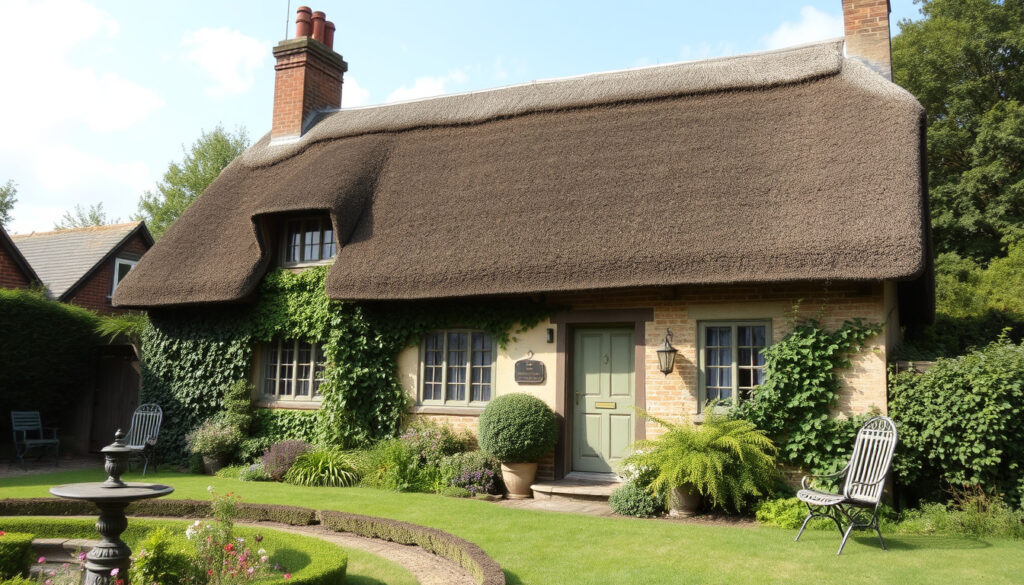
Anne Hathaway Shakespeare: The Real Story of His Wife
For centuries, the woman who married William Shakespeare has been a figure of mystery and myth. Often cast as the older, abandoned wife left behind while her husband chased fame in London, Anne Hathaway has been the subject of speculation rather than solid history. But a closer look at the records—including a 2025 letter unearthed by the BBC—paints a far more complex picture of their life together.
Married: 1582 ·
Age gap: 8 years (Anne 26, William 18) ·
Children: Susanna, twins Hamnet and Judith ·
Survived husband by: 7 years (died 1623) ·
Famous cottage: Anne Hathaway’s Cottage, Shottery
Quick snapshot
- Anne married William Shakespeare in November 1582 (Encyclopaedia Britannica (authoritative reference))
- She gave birth to Susanna (1583) and twins Hamnet and Judith (1585) (Encyclopaedia Britannica (authoritative reference))
- Shakespeare bequeathed her his “second-best bed” in his will (Shakespeare Birthplace Trust (custodian of his legacy))
- Whether Shakespeare truly loved her or had other romantic attachments
- Whether he abandoned her in Stratford while working in London
- The identity of the “dark lady” in his sonnets
- 1556: Anne born in Shottery
- 1582: Married Shakespeare (pregnant)
- 1616: Shakespeare dies
- 1623: Anne dies, buried in Stratford church
- A 2025 letter suggests Shakespeare maintained contact with his wife (BBC News (major news outlet))
- Ongoing research may clarify the “second-best bed” meaning (BBC News (major news outlet))
Five key facts, one pattern: Anne Hathaway’s life is documented in official records, but her personal story remains largely inferred from legal documents and church registers.
| Label | Value |
|---|---|
| Birth | c. 1556, Shottery, Warwickshire |
| Death | 6 August 1623, Stratford-upon-Avon |
| Marriage | 27 November 1582 to William Shakespeare |
| Children | Susanna (1583), twins Hamnet and Judith (1585) |
| Residence | New Place, Stratford (Shakespeare’s house) and Hewlands Farm (cottage) |
The implication: these records sketch a woman who was legally and financially tied to Shakespeare, not a forgotten footnote.
The myth of Anne as a neglected wife collides with evidence that she lived in Shakespeare’s own home at New Place from about 1596 onward (Encyclopaedia Britannica (authoritative reference)). The “abandoned” narrative seems more fiction than fact.
Who was Anne Hathaway?
Early life and family
- Anne was probably born in 1556 in Shottery, a hamlet near Stratford-upon-Avon (Encyclopaedia Britannica (authoritative reference)).
- Her family were yeoman farmers; the Hathaways owned a farmhouse that later became known as Anne Hathaway’s Cottage.
- There is no evidence that the Hathaway and Shakespeare families were related, despite both living in the same area (Pan Macmillan (publisher of Shakespeare biographies)).
Marriage to Shakespeare
- Anne married William Shakespeare in November 1582; she was 26, he was 18 (Encyclopaedia Britannica (authoritative reference)).
- The marriage was hastened by pregnancy: their first child, Susanna, was baptized the following May (Encyclopaedia Britannica (authoritative reference)).
- A marriage license bond was issued quickly, suggesting a “shotgun wedding” scenario, as biographer Samuel Schoenbaum noted.
Children and household
- Twins Hamnet and Judith were born around 1585 (Encyclopaedia Britannica (authoritative reference)).
- Hamnet died at age 11 in 1596, a devastating loss for the family.
- By 1596 Anne and the children were installed at New Place, Shakespeare’s Stratford home (Encyclopaedia Britannica (authoritative reference)).
The pattern: Anne managed the household and raised the children while Shakespeare built his career, a division of labor more pragmatic than neglectful.
What was unusual about Shakespeare’s marriage to Anne Hathaway?
Age gap and pregnancy
- An 8-year age gap—Anne older than William—was unusual for the era, though not unheard of.
- The pregnancy before marriage was a significant social risk; church courts could impose penalties for premarital conception.
- William was only 18, a minor in legal terms, and needed his father’s consent to marry (which he apparently obtained).
Marriage license bond
- The bond was issued on 27 November 1582, with two yeomen from Stratford as sureties.
- The haste suggests the family wanted to legitimize the pregnancy quickly and avoid scandal.
- Some sources list the marriage year as 1583, but mainstream reference works consistently date it to 1582 (Marin Shakespeare (theater and education organization)).
Shakespeare’s time in London
- Shakespeare left Stratford for London around 1588–1590 to build his career as an actor and playwright.
- He returned to live at New Place permanently only after retiring in 1611 (Encyclopaedia Britannica (authoritative reference)).
- This separation of roughly 20 years fueled speculation about estrangement.
The implication: the same separation that suggests neglect also funded a lifestyle—Shakespeare’s London earnings purchased New Place, the second-largest house in Stratford, where Anne lived as mistress of a grand home.
The same separation that suggests neglect also funded a lifestyle: Shakespeare’s London earnings purchased New Place, the second-largest house in Stratford, where Anne lived as mistress of a grand home.
What happened to Anne Hathaway after Shakespeare died?
Inheritance and the second-best bed
- Shakespeare signed his will on 25 March 1616 (Shakespeare Birthplace Trust (custodian of his legacy)).
- The will famously leaves Anne “my second best bed with the furniture.”
- Scholars debate whether this was a slight (the best bed went to their daughter Susanna) or a conventional marital provision, since the best bed was often reserved for guests.
Life in Stratford
- Anne continued to live at New Place as a widow until her death in 1623 (History Hit (history media platform)).
- She died on 6 August 1623 and was buried in Holy Trinity Church, Stratford, near Shakespeare’s grave (History Hit (history media platform)).
- Her gravestone inscription reads: “Above all others, so above all, she was a wise woman.”
Recent discoveries about their relationship
- In 2025, a letter was reported to suggest Shakespeare maintained contact with Anne during his London years (BBC News (major news outlet)).
- The finding challenges the long-held assumption that he abandoned her emotionally.
The catch: the “second-best bed” bequest remains ambiguous, but new evidence hints at an ongoing relationship rather than estrangement.
Is Anne Hathaway a descendant of Shakespeare?
The modern actress Anne Hathaway
- Actress Anne Hathaway is not a descendant of William Shakespeare—the surname is common and entirely coincidental.
- She has stated publicly that the connection is not genealogical.
Shakespeare’s actual descendants
- Shakespeare’s direct line ended with the death of his granddaughter Elizabeth Hall in 1670.
- No direct descendants exist today, though collateral lines (through his sister Joan) may have living representatives.
Meghan Markle’s connection
- Meghan Markle, the Duchess of Sussex, is a distant descendant of William Shakespeare through the aristocratic Hussey family.
- The connection is not through Anne Hathaway but through royal lineage that traces back to the 16th century.
What this means: the modern actress shares a name, not a bloodline, while the royal connection runs through Shakespeare himself, not his wife.
What is Anne Hathaway’s syndrome?
Origin of the term
- “Anne Hathaway syndrome” is a misnomer that sometimes appears in fictional or pseudoscientific contexts.
- It has been used (incorrectly) to describe a supposed condition of being abandoned by a creative genius partner.
The real medical condition (Huntington’s disease?)
- Some online sources confuse it with Huntington’s disease, but there is no medical consensus or recognized diagnosis by that name.
- No reputable medical journal lists “Anne Hathaway syndrome” as a real condition.
No connection to Shakespeare’s wife
- The term likely originates from confusion with the actress Anne Hathaway’s role in films about mental health, or from a fictionalized play.
- There is zero historical evidence that Shakespeare’s wife suffered from any named syndrome.
The implication: misinformation about “Anne Hathaway syndrome” risks trivializing real mental health issues and obscuring the actual historical figure, who endured genuine grief after losing her son and later her husband.
Misinformation about “Anne Hathaway syndrome” risks trivializing real mental health issues and obscuring the actual historical figure, who endured genuine grief after losing her son and later her husband.
Timeline of Anne Hathaway’s life
- 1556: Anne Hathaway born into a farming family in Shottery
- 1582: Marries William Shakespeare; marriage license issued; pregnant
- 1583: Birth of daughter Susanna
- 1585: Birth of twins Hamnet and Judith
- 1596: Death of son Hamnet at age 11
- 1616: Shakespeare dies; leaves Anne his “second-best bed”
- 1623: Anne Hathaway dies; buried in Stratford church
Confirmed facts
- Marriage date (1582) and age difference (eight years) (Encyclopaedia Britannica (authoritative reference))
- Children’s names and birth years (Encyclopaedia Britannica (authoritative reference))
- Shakespeare’s will bequeathing the “second-best bed” (Shakespeare Birthplace Trust (custodian of his legacy))
- Anne’s death date and burial location
- She lived at New Place after 1596 (Encyclopaedia Britannica (authoritative reference))
What’s unclear
- Whether Shakespeare truly loved Anne or had other romantic attachments
- Whether he abandoned her emotionally during his London years
- The identity of the “dark lady” in his sonnets
- The exact nature of their relationship after 1585
Quotes about Anne Hathaway
“I gyve unto my wife my second best bed with the furniture”
— Last will and testament of William Shakespeare, 1616 (Shakespeare Birthplace Trust (custodian of his legacy))
Newly discovered letter suggests Shakespeare maintained contact with his wife during his London years, challenging the abandonment narrative.
— BBC News (major news outlet), 2025
“The marriage was a shotgun wedding necessitated by pregnancy.”
— Samuel Schoenbaum, Shakespeare biographer
For researchers and history enthusiasts, the implication is clear: Anne Hathaway was not a footnote in Shakespeare’s life but a central figure whose story is being rewritten by new evidence. The next decade will likely bring more letters, more records, and a clearer view of the woman behind the world’s most famous playwright. For readers steeped in the old myth of a neglected wife, the trade-off is accepting that a long-held story may be wrong—and that the real Anne Hathaway deserves her own place in history.
Related reading: **Mary Shelley: Life, Loves, Illness, and the Heart Legend** · **Henry VIII: Six Wives, Health Decline, and Tudor Legacy**
en.wikipedia.org, es.wikipedia.org, sv.wikipedia.org, pt.wikipedia.org, encyclopedia.com, nosweatshakespeare.com, cs.wikipedia.org, canadawire.net
Frequently asked questions
Did Shakespeare and Anne Hathaway have a happy marriage?
There is no direct evidence of their marital happiness. The separation during his London years and the ambiguous “second-best bed” bequest have fueled speculation. However, a 2025 letter suggests they maintained contact, complicating the unhappy narrative.
Why did Shakespeare leave Anne only his second-best bed?
Legal scholars note that the “best bed” was often considered a heirloom piece reserved for the principal heir (their daughter Susanna). The second-best bed may have been the marital bed, a common affectionate bequest to a widow.
How old was Anne Hathaway when she married?
Anne was 26 years old, based on her inferred birth year of 1556. Shakespeare was 18. The eight-year age gap was unusual but not scandalous for the time.
Where is Anne Hathaway’s Cottage located?
Anne Hathaway’s Cottage is in Shottery, Warwickshire, about a mile from Stratford-upon-Avon. It is a popular tourist attraction managed by the Shakespeare Birthplace Trust.
Are there any portraits of Anne Hathaway?
No contemporary portrait of Anne Hathaway is known to exist. The only visual representations are imaginary depictions from the 19th century onward.
Did Anne Hathaway remarry after Shakespeare’s death?
No. She remained a widow and lived at New Place until her death in 1623.
What is the ‘second-best bed’ reference in literature?
The term has become a literary symbol for ambiguous inheritance. It has been referenced in novels, plays, and scholarly debates about Shakespeare’s personal life.
More related posts
 Thomas Skinner: Apprentice, Strictly Lawsuit, Net Worth
 Leah Betts: Cause of Death, Ecstasy & Water Intoxication Story
 Emile Smith Rowe Fulham Transfer: Salary, Fee & Why Arsenal Sold
 Lox Pratt: Bio, Age, and Parents of the Rising Star
 West Ham Transfer News – Latest Deals and Rumours
 PSG vs Newcastle United F.C. Stats: Head-to-Head, Results
 Sansa Stark: Character Biography, Relationships, and Fate
 As I Am Leave-In Conditioner: Ingredients, Benefits & How to Use