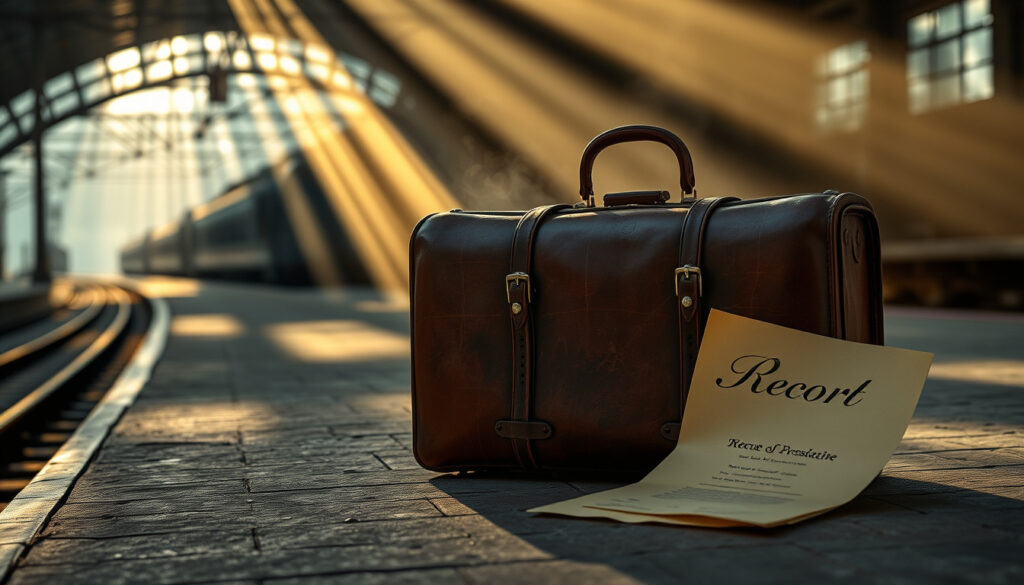
Nicholas Winton: Rescued 669 Children, Kept Secret 50 Years
A young British stockbroker took a holiday trip to Prague in 1938 and came home with a secret that would quietly define his life. Nicholas Winton organized the rescue of 669 children from Nazi-occupied Czechoslovakia, then tucked the entire operation away for half a century. This is the story of those rescues, the surprising way the world finally found out, and what happened to the man who never expected thanks.
Children rescued: 669 ·
Country of origin: Czechoslovakia ·
Year of rescue operation: 1939 ·
Years his work remained unknown: 50 ·
Year he was knighted: 2003 ·
Age at death: 106
Quick snapshot
- Winton rescued 669 children from Czechoslovakia (BBC)
- Trains ran between March and August 1939 (BBC Culture)
- The operation stayed secret for 50 years (The Guardian)
- Exact number of children who survived the Holocaust after the rescue (BBC)
- Whether the ninth train scheduled for September 1939 was officially cancelled or simply missed its window (The Guardian)
- Estimated 6,000 descendants of the rescued children alive today (BBC News)
- Winton’s legacy continues through the Winton Foundation (BBC Culture) (BBC News)
Six key facts in one view:
| Full name | Sir Nicholas George Winton (born Wertheim) |
| Birth and death | 19 May 1909 – 1 July 2015 |
| Occupation | Stockbroker and humanitarian |
| Notable operation | Czech Kindertransport (1939) |
| Children rescued | 669 |
Who was Nicholas Winton and what did he do?
Early life and career
Born on 19 May 1909 in Hampstead, London, Nicholas George Winton (né Wertheim) came from a German-Jewish family that had converted to Christianity. He trained as a stockbroker and worked in the City of London. By age 29, he was living a comfortable, unremarkable life.
A stockbroker with no humanitarian training organized one of the largest private rescue operations of the 1930s — and never told anyone about it for five decades.
The Czech Kindertransport operation
In December 1938, Winton was planning a ski holiday in Switzerland when a friend urged him to visit Prague to see the refugee camps overflowing after the German annexation of the Sudetenland. He went, and the sight changed the course of his life. Working from a hotel room, he began registering children and arranging foster homes in Britain.
Between March and August 1939, eight trains carried 669 children from Prague to London (BBC Culture). The operation was a private Kindertransport — separate from the larger German and Austrian program. He raised funds, found guarantors, and processed paperwork for each child.
Winton had also organized a ninth train for September 1, 1939, carrying the largest group yet (The Guardian). That day Germany invaded Poland. The train never left the station.
The ninth train’s cancellation is the difference between 669 children saved and potentially several hundred more. Winton never publicly discussed the ninth train; it was pieced together later from records and passenger lists.
The implication: Winton’s quiet humility meant his heroism was unknown for decades, but the rescue itself remains one of the most remarkable civilian efforts of the war.
Post-war silence
What happened to the children saved by Nicholas Winton?
Life in Britain after arrival
The children were placed with foster families across Britain. Most were Jewish, though some came from mixed backgrounds. They were given new names, new schools, and new lives. The vast majority never saw their biological parents again — parents who were murdered in Auschwitz, Treblinka, and other camps.
Contact with Winton later in life
Most of the children only learned who Winton was and what he’d done in 1988, when the BBC programme That’s Life! aired the surprise reunion (The Guardian). After that, Winton received letters, phone calls, and eventually visits from the people he’d saved. Vera Gissing, one of the children on the 1988 broadcast, later wrote a book about the experience.
For the children, Winton’s silence meant they spent decades not knowing who had rescued them. For Winton, it meant he avoided any gratitude or attention — which was apparently exactly what he wanted.
Current number of descendants
As of 2023, the 669 children have produced an estimated 6,000 descendants (BBC News). That number continues to grow. The Winton Foundation now keeps a registry of the rescued children and their families.
How did they find out about Nicholas Winton?
Discovery of the scrapbook in 1988
In early 1988, Grete Winton found the scrapbook in the attic of the family home in Maidenhead (BBC News). Inside were photographs, letters of gratitude, train schedules, and a complete list of the children. She brought it downstairs and asked her husband what it was.
He explained briefly. She insisted the story needed to be told.
That’s Life! BBC television appearance
Grete contacted the BBC programme That’s Life!, which had a segment called “The Search for a Mystery Man.” The producers invited Winton to the studio, telling him they wanted to discuss a wartime story. On February 14, 1988, host Esther Rantzen seated Winton in the audience while the story was recounted. Then, several dozen adults in the audience stood and turned to face him — children he had rescued, now in their fifties (BBC One).
The BBC had to trick Winton into attending. He had explicitly refused all efforts to publicize his actions. The producers told him they were making a documentary about civilians who had helped refugees during the war. It was a white lie that changed history.
What this means: Without Grete’s persistence and the BBC’s creative ruse, the world might never have known about the rescue.
Public recognition and knighthood
The broadcast triggered international media coverage. Winton became known as “the British Schindler.” In 2003, he was knighted by Queen Elizabeth II at age 94 (BBC). He received numerous awards, had a train named after him, and a statue was unveiled at Maidenhead railway station. His life became the subject of the 2023 film One Life starring Anthony Hopkins and Johnny Flynn.
Did Nicholas Winton’s wife know about his wartime activities?
Grete Winton’s role in discovery
Grete Winton did not know about the full extent of her husband’s wartime rescue until she found the scrapbook in 1988 (BBC News). She knew he had done “something with children” during the war, but the scale — 669 children, eight trains, dozens of foster families — was unknown to her. She was the one who pushed him to let the story become public.
His lifelong secrecy about the rescue
Winton rarely spoke about the operation. Even his own children grew up without knowing (The Guardian). When asked why he stayed silent, he reportedly said: “I did nothing special. Anyone would have done the same.”
Who did Nicholas Winton marry and how did they meet?
Grete Winton
Nicholas Winton married Grete Gjelstrup in 1948 (BBC). She was Danish, and survived the war in Denmark. They had three children: Barbara, Nick, and Robin.
Meeting at a ski resort
The two met while skiing in the Austrian Alps. Grete was a young Danish woman working as a nanny. They married and settled in Maidenhead, where Winton returned to his stockbroking career. Grete died in 1999.
“They gave me a time, and I was there. In one hand I had a plate of Tosca cake, in the other a cup of coffee. And then the whole audience, behind me, stood up. I was still holding the plate.”
— Nicholas Winton, speaking to BBC about the 1988 reunion
“We were told there was going to be a programme about people who had helped refugees. And then we saw Mr. Winton sitting in the front row. And we all stood up. And then he stood up. And he cried.”
— Vera Gissing, a rescued child, to BBC Culture
For the thousands of families who trace their existence to one stockbroker’s holiday detour, the implication is clear: a single person with no authority, no budget, and no mandate can still change the trajectory of lives. The choice for every reader is whether the secret stays in the attic, or whether it becomes a story worth telling.
en.wikipedia.org, bbc.co.uk, historyextra.com, independent.co.uk, bbc.com, bbc.com, bbc.com, timesofindia.indiatimes.com
Frequently asked questions
What was Nicholas Winton’s profession?
He was a British stockbroker working in the City of London before and after the war.
How many children did Nicholas Winton save?
669 children, mostly Jewish, were rescued through his private Kindertransport operation from Czechoslovakia.
Why did Nicholas Winton keep his rescue work secret?
He considered it “nothing special” and believed anyone in his position would have done the same. He rarely spoke about it to anyone.
When did Nicholas Winton appear on That’s Life!?
February 14, 1988. The episode was recorded at BBC Television Centre and broadcast shortly afterward.
Was Nicholas Winton related to the Kindertransport for Germany?
No. The German Kindertransport was a larger government-supported program. Winton’s operation was a private effort focused specifically on Czechoslovakia.
Did Nicholas Winton have children?
Yes, three: Barbara, Nick, and Robin, with his wife Grete.
What honors did Nicholas Winton receive?
He was knighted in 2003. He also received the Order of the White Lion from the Czech Republic, and a statue at Maidenhead station.
More related posts
 What Is a Hazard – Definitions, Risks and Examples
 IKEA PAX Wardrobe Guide: Best Models for Small Rooms
 Triple H (Paul Levesque): Heart Condition and WWE Role
 When Is iOS 26 Coming Out? Release Date, Compatibility & Features
 Jason Bateman: Sobriety, Nepo Baby, and Jennifer Aniston
 Rachel Zoe: Net Worth, Divorce, and Career Updates
 Crystal Maze TV Show History & Live Experience Guide
 Tina Majorino: Bio, Net Worth, Iconic Roles, and Career