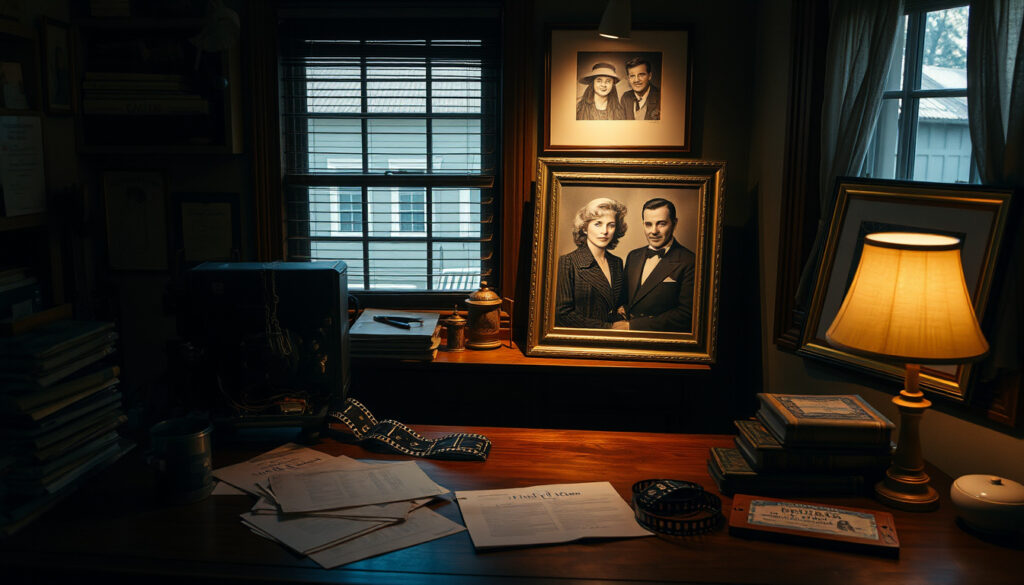
Dirk Bogarde Biography: Life, Films, and Partner Anthony Forwood
There are film stars who choose their secrets, and then there are actors like Dirk Bogarde, who spent decades in plain sight while keeping the most important relationship of his life off the record. Born in London in 1921 (Britannica (biography reference)), he became one of Britain’s most popular leading men in the 1950s, then deliberately dismantled that image with darker roles in the 1960s — this is the story of that pivot and of Anthony Forwood, the partner and manager he lived with for the next forty years (The Independent (national press)).
Born: 28 March 1921 ·
Died: 8 May 1999 (age 78) ·
Nationality: British ·
Occupation: Actor, screenwriter, novelist ·
Partner: Anthony Forwood (1940s–1988)
Quick snapshot
- Born Derek Jules Gaspard Ulric Niven van den Bogaerde in London on 28 March 1921 (Britannica (biography reference)). (BFI Sight and Sound (British Film Institute))
- Made the jump from Rank Organisation matinee idol to European art-house performer (BFI Sight and Sound (British Film Institute)).
- Longtime companion and manager: Anthony Forwood (TCM (Turner Classic Movies)).
- Cause of death: not detailed in the publicly available record.
- Net worth: no verified figure appears in the sourced record.
- Children: none documented, though the record is thin.
- Smoking habit: often mentioned, never confirmed in the sources reviewed.
- 1961: Victim opens a conversation the law would not finish until 1967 (BBC Culture (UK broadcaster)).
- 1963: The Servant marks the sharp turn to darker roles (TCM (Turner Classic Movies)). (BBC Culture (UK broadcaster))
- 1971: Death in Venice completes the move to European art cinema (TCM (Turner Classic Movies)). (BBC Culture (UK broadcaster))
- Posthumous reassessment continues: BFI treats him as a bridge between British studio cinema and European art film (BFI Sight and Sound (British Film Institute)).
- Victim is now routinely cited in histories of LGBTQ+ screen representation (BBC Culture (UK broadcaster)).
Eight identifiers, one pattern: the public identity was engineered, and the private identity was protected.
| Label | Value | Source |
|---|---|---|
| Full Name | Derek Jules Gaspard Ulric Niven van den Bogaerde | Britannica (biography reference) |
| Stage Name | Dirk Bogarde | TCM (Turner Classic Movies) |
| Born | 28 March 1921, London, England | Britannica (biography reference) |
| Died | 8 May 1999, London, England | Britannica (biography reference) |
| Nationality | British | BFI Sight and Sound (British Film Institute) |
| Occupation | Actor, screenwriter, novelist | Britannica (biography reference) |
| Partner | Anthony Forwood (1940s–1988) | The Independent (national press) |
| Notable Films | Doctor in the House, The Servant, Darling, Death in Venice | TCM (Turner Classic Movies) |
Who are some famous people named Dirk?
Before Bogarde, the name Dirk barely registered on English-language film posters. It was rare enough to feel continental, which suited the actor born Derek Jules Gaspard Ulric Niven van den Bogaerde — a name far too long for a marquee (Britannica (biography reference)). By shortening it to Dirk Bogarde, he got both a brand and a mask.
- Dirk Bogarde — English actor, screenwriter and novelist, and the name that dominates most “famous Dirks” searches.
- Dirk Benedict — American actor best known for The A-Team; in most popular lists he is the second Dirk people can name.
- Other Dirks — the list more or less ends there, which is the point: the name did not make Bogarde famous, his fame made the name.
The name solved a practical problem: Dirk Bogarde fit a film poster better than Derek Jules Gaspard Ulric Niven van den Bogaerde. It sounded continental without sounding foreign — a useful ambiguity for a British actor with European ambitions.
The implication: a “famous Dirks” query is really a Bogarde question. He took a rare European-sounding first name, attached it to a short stage surname, and turned it into a brand that could carry both a comedy franchise and an art-house career.
What nationality was Dirk Bogarde?
The direct answer is simple: Bogarde was British. He was born in London in 1921 and died there in 1999, and the British Film Institute now profiles him as a British actor icon (BFI Sight and Sound (British Film Institute)).
- London-born: 28 March 1921, with the details in the key facts table above.
- Army service: he served in the British Army during World War II before returning to acting (Britannica (biography reference)).
- Continental name, anglicised brand: the Dutch-sounding “van den Bogaerde” in his birth name was streamlined into a stage name British cinemas could sell (Britannica (biography reference)).
His nationality was never in doubt. But his identity was layered: a British passport, a European-sounding birth name, and a deliberately shortened professional name. He spent the 1950s as one of Britain’s most popular leading men, then spent the 1960s dismantling that popularity on purpose (Britannica (biography reference)).
What this means: Bogarde’s Britishness was the stable base, and the stage name was the bridge. He never stopped being the Londoner; he simply refused to stay the Londoner the studios wanted.
A matinee idol is a product, and escape is harder than it looks. Bogarde’s breakout came only as the Rank contract loosened: BBC notes that he took the role in Victim in 1961 as his Rank contract was ending (BBC Culture (UK broadcaster)).
Doctor in the House (1954): the Rank breakthrough
- Doctor in the House (1954) made Bogarde widely known in light comedy (Britannica (biography reference)).
- It launched a Doctor series that defined his early stardom (Britannica (biography reference)).
- Through the 1950s he was one of Britain’s most popular leading men (Britannica (biography reference)).
The Doctor films were the machine that made Bogarde a household name, and they also trapped him. When he finally worked in Hollywood, it was a one-off: Song Without End (1960), playing Franz Liszt, and the experiment was not repeated (TCM (Turner Classic Movies)).
The mid-1960s turn: The Servant and Darling
- The Servant (1963): the critical turning point, and the role that announced his art-house seriousness (TCM (Turner Classic Movies)).
- Darling (1965): the follow-through, another morally sharp character in the same register (TCM (Turner Classic Movies)).
- Victim (1961): the bravest film of the group, released six years before the Sexual Offences Act decriminalised homosexual acts in private between consenting adults in the UK (BBC Culture (UK broadcaster)).
Victim matters twice for Bogarde. It was made as his Rank contract was ending, so it reads as a deliberate break with the safe brand. And its subject — a man facing blackmail over his sexuality — sat uncomfortably close to the reality that Forwood and Bogarde lived in silence. The law did not catch up until 1967.
In 1961 a gay love story did not just risk censorship; it risked real legal consequences. The Sexual Offences Act was still six years away when Victim opened (BBC Culture (UK broadcaster)).
Death in Venice (1971): European art-house stardom
- The Damned (1969) and Death in Venice (1971) placed him at the centre of European art cinema (TCM (Turner Classic Movies)).
- The run continued with The Night Porter (1974), Providence (1977), and Despair (1978) (TCM (Turner Classic Movies)).
By the early 1970s the matinee idol had disappeared. The face that had sold comedy in the 1950s now carried the melancholy of a dying artist in Death in Venice and the moral chaos of The Damned. Critics often describe his art-house performances as studies in restraint: the less he did, the more you watched. BFI Sight and Sound summarised the transformation as a move “from Rank Organisation matinee idol to a highly regarded European art-house performer” (BFI Sight and Sound (British Film Institute)).
The pattern: every serious pivot in Bogarde’s filmography happened as the safe brand lost its grip. The Doctor films built him; the art-house films made him matter.
The implication: Bogarde’s career shift was a deliberate act of self-reinvention.
Who was Dirk Bogarde’s partner?
Every serious biography of Bogarde eventually arrives at the same quiet fact: his adult life was built around Anthony Forwood. The relationship was not a rumour and not a phase; it was the central arrangement of his life, personal and professional at once.
Anthony Forwood: manager and life partner
- According to a 2001 profile in The Independent, Bogarde met Forwood while he was a lieutenant, and Forwood became his companion for the next forty years (The Independent (national press)).
- TCM records that Bogarde lost his “longtime companion and manager” Anthony Forwood in 1988 (TCM (Turner Classic Movies)).
- IMDb’s actor record (a user-contributed database) gives Forwood’s dates as 1915–1988 (IMDb (film database)).
Forwood was not passive support staff. The Independent says that, acting as Bogarde’s theatrical agent, he secured him a part in Diversion early in the actor’s career — meaning the private relationship and the professional management were the same arrangement. Before that, Forwood had been married to actress Glynis Johns from 1942 to 1948 and had one son, the actor Gareth Forwood, per IMDb records (a user-contributed database).
A private relationship
- Forwood’s own screen credits included The Story of Robin Hood and His Merrie Men (1952), Appointment in London (1953), and Mantrap (1953), according to Wikipedia’s entry on him (Wikipedia (collaborative encyclopedia)).
- Bogarde never publicly came out as gay, even as the relationship anchored his adult life (The Independent (national press)).
- BBC Culture treats Forwood as part of the context around Victim — a film released when same-sex acts in private were still criminalised in the UK (BBC Culture (UK broadcaster)).
The privacy was total. There were no joint interviews, no public declarations, and no acknowledgement in his film promotion. Yet the professional records kept the connection alive: a manager’s name on contracts, a companion present through every major career move, the silence itself a kind of evidence. The press observed the relationship, and almost no one published the obvious sentence.
Forwood was both emotional anchor and professional gatekeeper. The Independent reports that he secured Bogarde’s early theatre work, which means the secrecy of the partnership doubled as brand management.
The catch: we know the shape of the relationship, but not its texture. Forty years of partnership produced no public statement — only the films and, much later, the memoirs.
The catch: the relationship was the foundation of both his private life and his professional management.
What books did Dirk Bogarde write?
Late in life, Bogarde stopped acting and started explaining — sort of. His literary career is the least discussed part of the record and the most revealing. Britannica lists him as an actor, screenwriter and novelist, and the books he published after 1977 are the closest thing he left to a controlled self-portrait.
- First autobiography: A Postillion Struck by Lightning, published in 1977 (Britannica (biography reference)).
- Further autobiographical volumes followed through the 1980s and 1990s (Britannica (biography reference)).
- Screenwriting and novels were part of the same professional identity, running alongside the acting career (Britannica (biography reference)).
The timing matters. 1977 was the same year he appeared in Providence, one of his last major art-house roles (TCM (Turner Classic Movies)). So the writing career was not a retirement hobby; it ran parallel to the acting, then quietly replaced it. The man who spent forty years protecting his privacy spent his final decades publishing it in installments — carefully edited installments. Bogarde’s books also matter for what they leave out. He wrote about the years on stage and screen, and the people around him, but the relationship at the centre of his private life stays mostly in the margins. Read against the filmography, those margins are where the real biography lives.
What this means: the memoirs are the only version of his life that Bogarde chose to release. They are autobiography with the door still half-closed, which makes them essential reading for anyone trying to see through the public star to the private man.
Key dates in Dirk Bogarde’s life
Twelve moments, one shape: the public star kept remaking himself, and each remaking carried a private cost.
| Date | Event | Source |
|---|---|---|
| 28 March 1921 | Born in London | Britannica (biography reference) |
| 1939 | Stage debut | Britannica (biography reference) |
| 1939–1945 | Army service during World War II | Britannica (biography reference) |
| 1940s | Met Anthony Forwood | The Independent (national press) |
| Late 1940s | Signed with Rank Organisation | Britannica (biography reference) |
| 1954 | Doctor in the House | Britannica (biography reference) |
| 1961 | Victim | BBC Culture (UK broadcaster) |
| 1963 | The Servant | TCM (Turner Classic Movies) |
| 1971 | Death in Venice | TCM (Turner Classic Movies) |
| 1977 | First autobiography, A Postillion Struck by Lightning | Britannica (biography reference) |
| 1988 | Anthony Forwood died | TCM (Turner Classic Movies) |
| 8 May 1999 | Died in London | Britannica (biography reference) |
The pattern: the career dates (1954, 1963, 1971) and the private dates (meeting Forwood in the 1940s, losing him in 1988, dying in 1999) only make sense together. The public timeline needs the private one underneath it.
Confirmed facts and what’s still unclear
The sourced record is strong on the shape of Bogarde’s life and thin on the details he wanted kept private. Here is the split.
Confirmed facts
- Born in London on 28 March 1921; died in London on 8 May 1999 (Britannica (biography reference)).
- Long-term partnership with Anthony Forwood, who was also his manager (TCM (Turner Classic Movies)).
- Career arc from Rank matinee idol to European art-house performer (BFI Sight and Sound (British Film Institute)).
- Served in the British Army during World War II (Britannica (biography reference)).
- Never publicly came out as gay, despite four decades with Forwood (The Independent (national press)).
What’s unclear
- Cause of death: not detailed in the sourced record.
- Net worth: no verified figure in the sourced record.
- Children: not documented in the sourced record.
- Smoking habit: often mentioned, but not confirmed by the sources here.
- Burial site: not specified in the sources reviewed.
The split is instructive: the sources agree on the career, and stay silent on exactly the questions Bogarde kept silent about.
What critics and retrospectives say
The most durable commentary on Bogarde comes from institutions rather than gossip columns. Three retrospectives frame him best.
“Why Dirk Bogarde was a truly dangerous film star” — the question BBC Culture used to introduce its retrospective of his career.
BBC Culture
BFI Sight and Sound charts his passage “from Rank Organisation matinee idol to a highly regarded European art-house performer”.
BFI Sight and Sound
A 2001 Independent profile called Forwood Bogarde’s “companion for the next 40 years” — a phrase that reads today as the closest the press came to naming the relationship at the time.
The Independent (2001), via dirkbogarde.co.uk
Why this matters: each retrospective draws on the same tension — the star was most interesting when the mask slipped, which was almost never in public.
The takeaway
Bogarde’s legacy is best read as a double feature: the performer and the guarded man behind the performance. The films that endured — Victim, The Servant, Darling, Death in Venice — are the ones that let some private truth leak through. For film students mapping postwar British stardom, the decision is clear: begin with Victim and The Servant, then read A Postillion Struck by Lightning, or risk mistaking the matinee idol for the man.
imdb.com, tv.apple.com, elcinema.com, tcm.com, themoviedb.org
Frequently asked questions
Did Dirk Bogarde serve in World War II?
Yes. Bogarde served in the British Army during World War II before returning to the stage and building his film career (Britannica (biography reference)).
What was Dirk Bogarde’s real name?
His real name was Derek Jules Gaspard Ulric Niven van den Bogaerde. He performed professionally as Dirk Bogarde (Britannica (biography reference)).
Where was Dirk Bogarde buried?
The researched record does not specify a burial site. He died in London on 8 May 1999 (Britannica (biography reference)).
How many films did Dirk Bogarde appear in?
No verified total is cited in the sources reviewed. His later filmography alone includes Victim, The Servant, Darling, The Damned, Death in Venice, The Night Porter, Providence, and Despair (TCM (Turner Classic Movies)).
Was Dirk Bogarde ever nominated for an Oscar?
No Academy Award nomination appears in the sources reviewed. His recognition came mainly through British and European critical retrospectives (BFI Sight and Sound (British Film Institute)).
What is Dirk Bogarde’s connection to MI5?
No documented MI5 file on Bogarde appears in the sources used here. The connection in popular retellings tends to grow from his wartime service, the cold-war-adjacent thrillers of his era, and the intense secrecy around his private life.
Was Dirk Bogarde married?
No. The relationship that defined his adult life was with Anthony Forwood, whom TCM describes as his longtime companion and manager (TCM (Turner Classic Movies)).
Did Dirk Bogarde have any children?
No children are documented in the sources reviewed. Bogarde guarded his private life closely, and the record is silent on the subject.
The questions people still ask about Bogarde are the ones he chose not to answer in public — which is exactly why the films and the memoirs carry so much weight.
More related posts
 Ellen Barkin: Net Worth, Relationships, and Animal Kingdom Exit
 Ray Kroc: Life, Net Worth, and McDonald’s Empire
 Bobby Cannavale: Ethnicity, Relationship, Net Worth, Height
 Why Uncle Buck Still Makes Us Laugh and Cringe
 Gary Speed: Career, Family, Death, and Football Legacy
 Admin Jobs Near Me – Full-Time, Part-Time Roles in Northeast Georgia
 N’Golo Kanté: Humble Superstar’s Net Worth & Transfer
 Kingdom Come: Deliverance 2 Review: Is It Good or Bad