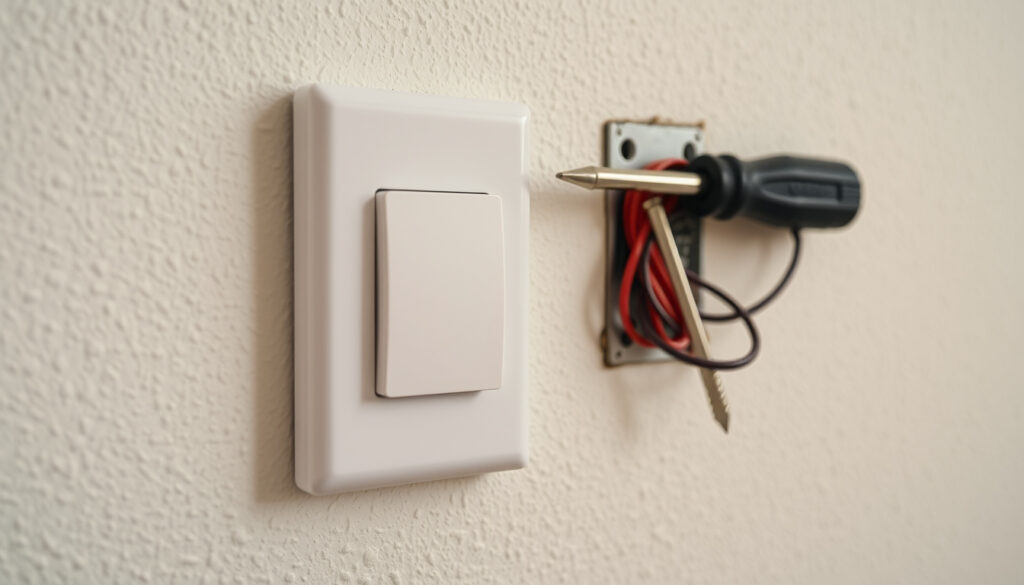
Light Switches Ireland: Types, Wiring & Buying Guide
Most people flick a light switch without a second thought. But when you’re choosing one for a home in Ireland, the decisions go far beyond on and off, covering wiring regulations, decorative finishes, and everything from basics to smart options.
Standard voltage in Ireland: 230 V AC ·
Typical current rating: 10 A ·
Common gang configurations: 1, 2, 3, 4 ·
Wiring regulations: BS 7671 (Ireland) ·
Average lifespan: 15–20 years
Quick snapshot
- Domestic circuits run at 230 V AC (World Standards)
- Two-way switching requires three-core cable (Socket Store)
- All installations must comply with BS 7671 (NSAI)
- Screwless switches are popular in modern homes (MetroBulletin)
- Exact market share of smart switches in Ireland
- Future mandatory interoperability standards for smart switches
- Average cost difference between standard and decorative switches at local retailers
- No specific timeline events identified; the market evolves steadily with new finishes and smart features
- Smart switches with Wi-Fi/zigbee and app control are gaining traction
- Decorative screwless plates in matte finishes are becoming standard in new builds
Here are the key electrical specifications for light switches in Ireland.
| Label | Value |
|---|---|
| Voltage & Frequency | 230 V / 50 Hz |
| Maximum current | 10 A (standard lighting circuit) |
| Wiring standard | BS 7671 (IET Wiring Regulations, adopted in Ireland) |
| Common switch plate size | 86 mm × 86 mm (UK standard) |
| Typical lifespan | 15–20 years with normal use |
| Socket outlet standard | BS 1363 Type G (three rectangular pins, grounded) |
| Conductor colours (modern) | Brown (live), Blue (neutral), Green/Yellow (earth) |
What types of light switches are available?
One-way vs two-way switches
- One-way switch: controls a light from a single point. Live feed to COM, switched leg to L1 (Socket Store, source)
- Two-way switch: allows control from two points. Uses L1-to-L1 and L2-to-L2 interconnections between two switches (Socket Store)
- Intermediate switch: used when three or more control points are needed (MetroBulletin)
Dimmer switches
- Adjust brightness by varying the voltage to the light
- Require compatible bulbs (LED, halogen, or incandescent) — check the package
- Some dimmers are rotary, others push-on/push-off with a slider
Smart and Wi-Fi switches
- Enable remote control via smartphone, voice assistants, or automation schedules
- Typically need a neutral wire at the switch (not always present in older homes)
- Compatibility with Irish electrical systems: most major brands (e.g., Philips Hue, Lightwave) work with 230 V AC
Pull cord switches
- Common in bathrooms and utility rooms where a wall switch is not permitted near water
- Operate a spring-loaded mechanism; often include a built-in indicator light
Smart switches offer convenience and energy savings, but they cost two to three times more than a standard rocker switch and require a neutral wire. For Irish homes with older wiring, a retrofit may mean pulling new cable — a job for a registered electrician.
The implication: your choice of switch type depends on how many control points you need, your budget, and whether you want basic on/off or dimming and smart capabilities. Two-way and intermediate switching are standard for stairs and long hallways; dimmers add ambiance but demand compatible bulbs.
How to wire a light switch safely?
Understanding basic wiring colours (Ireland: brown live, blue neutral, green/yellow earth)
- Live (brown) carries current to the switch
- Neutral (blue) returns current — but at a basic wall switch, neutrals are joined through separately if present (Lampgiant)
- Earth (green/yellow) provides safety; metal switch plates require an earth connection (Lampgiant)
- If a blue conductor is repurposed as a switched live, it must be sleeved or marked brown (MetroBulletin)
Step-by-step wiring for a single one-way switch
- Isolate power at the consumer unit and confirm the circuit is dead with a voltage tester (Lampgiant)
- Remove the old switch faceplate and note the wiring arrangement (take a photo)
- Connect the live feed to the COM terminal and the switched live to L1 (Socket Store)
- Secure the earth wire to the earth terminal if the plate is metal
- Tighten terminals firmly, then refit the faceplate (MetroBulletin)
- Restore power and test the switch
Two-way switch wiring layout
- Two switches control one light. Connect L1 of first switch to L1 of second, L2 to L2, and the light’s switched live to the COM of the second switch (Socket Store)
- Use three-core and earth cable (brown, black, grey, plus earth) for the interconnections
Safety precautions: isolate circuit, test with voltage tester
- Always isolate the circuit at the consumer unit before working (Lampgiant)
- Use a voltage tester to confirm the circuit is dead
- Loose terminal connections can cause arcing and heat — tighten securely (MetroBulletin)
- If you are uncertain about any step, hire a registered electrician
Metal faceplates require an earth connection. If your wiring is old and lacks an earth, you must use a plastic switch plate or upgrade the wiring — a job that always requires a qualified professional.
What does ‘gang’ and ‘way’ mean in light switches?
Definition of gang (number of switches on a faceplate)
- 1 gang: one switch on a single plate
- 2 gang: two switches side by side
- 3 gang: three switches
- 4 gang: four switches – common in larger rooms or hallways
Definition of way (number of control points)
- 1 way: light controlled from one location
- 2 way: light controlled from two locations
- Intermediate: light controlled from three or more locations (MetroBulletin)
Common combinations: 1 gang 1 way, 2 gang 2 way
- 1 gang 1 way: single switch for a single light (e.g., a bedroom)
- 2 gang 2 way: two switches on one plate, each controlling a different light, and both lights can be controlled from another location
- 1 gang 2 way: single switch for a light that is also controlled from another switch (e.g., stair top and bottom)
When to use intermediate switches
- When you need three or more control points for the same light (e.g., long hallway with switches at both ends and in the middle)
- Intermediate switches are placed between two two-way switches in the circuit
The pattern: gang tells you how many lights/loads you can control from one plate; way tells you how many locations can control the same light. For a typical Irish home, 1 gang 2 way is the most common for stairs, while 2 gang 1 way is common for bedrooms where two lights are controlled independently.
Where can I buy light switches in Ireland?
Retailers: Screwfix, B&Q, Lux Lighting, Lightvault
- Screwfix Ireland – wide range of MK, Deta, and Varilight products
- B&Q Ireland – stocks own-brand and branded switches
- Lux Lighting – decorative and designer options
- Lightvault – specialist in lighting and electrical accessories
Online vs in-store selection
- Online retailers often offer a wider range of finishes and brands
- In-store allows you to see the finish and feel the switch action
- Check for Irish safety certification (e.g., NSAI approval) – ask the retailer
Considerations: finish, brand, certification
- Finishes: chrome, brass, matte black, white, screwless flat plates
- Brands: MK (Logic Plus, Grid Plus), Deta (screwless), Varilight (dimmers and decorative)
- Certification: look for the CE mark and Irish standard compliance (I.S. 201 or equivalent)
Why this matters: buying from a reputable retailer ensures you get genuine products that meet Irish safety standards. Cheap unbranded switches from online marketplaces may not carry the required certifications and could pose a fire risk.
What are modern light switch styles and finishes?
Popular finishes: chrome, brass, matte black, white
- Chrome: reflective, easy to clean, modern
- Brass: vintage/industrial look, adds warmth
- Matte black: contemporary, hides fingerprints
- White: classic, blends into any décor
Screwless flat plate designs
- The faceplate clips onto a backplate, hiding the screws
- Cleaner appearance and easier to clean
- Available in plastic and metal finishes
Backlit switches
- Small LED indicator that glows when the switch is off (nightlight)
- Helps locate the switch in the dark
- Some models have a neon indicator that shows when the load is on
Decorative ranges from brands like MK, Deta, Varilight
- MK Grid Plus: modular system for custom combinations of switches, sockets, and USB
- Deta Screwless: budget-friendly slim plates
- Varilight: extensive range of dimmers and decorative metal switches
Modern decorative switches can cost two to three times more than standard white plastic ones. For a typical Irish home with ten switches, the upgrade could add €100–€200 to the project. But the improvement in aesthetics is significant, especially in open-plan living areas where switches are visible.
The trade-off: decorative switches add visual appeal but at a higher price. If you are renovating, consider the overall room design. Screwless flat plates in matte black or brushed brass are currently the most popular trend among Irish homeowners, according to product specialists.
Step-by-step light switch replacement guide
Replacing a light switch is a common DIY task. Follow these steps to do it safely and correctly.
- Isolate power: Turn off the appropriate circuit breaker at the consumer unit. (Lampgiant)
- Test for dead: Use a voltage tester on the switch terminals to confirm no power is present.
- Remove old switch: Unscrew the faceplate and pull it gently away from the wall. Take a photo of the wiring.
- Disconnect wires: Loosen the terminal screws and remove the wires. Note which wire goes to which terminal.
- Connect new switch: Attach the wires to the corresponding terminals of the new switch. For a one-way switch: live to COM, switched live to L1. (Socket Store)
- Earth connection: If the new switch plate is metal, connect the earth wire to the earth terminal. (Lampgiant)
- Tighten terminals: Ensure all screws are tight but not over-torqued. Loose connections cause arcing. (MetroBulletin)
- Refit faceplate: Carefully push the switch back into the back box, avoiding pinching wires, and screw the faceplate on.
- Restore power and test: Turn the circuit back on and test the switch operation.
The catch: if the wiring arrangement does not match the new switch’s labeling (e.g., L1, L2, L3 instead of COM, L1), consult a wiring diagram or an electrician. A miswired switch can cause a short circuit or leave the light permanently on.
Specifications: light switches for the Irish market
Five key specs, one pattern: all standard switches sold in Ireland share the same voltage and current ratings, but differ in terminal configuration and material.
| Specification | Typical value |
|---|---|
| Rated voltage | 230 V AC, 50 Hz |
| Rated current | 10 A (standard lighting circuit) |
| Terminal type | Screw terminals (COM, L1, L2; sometimes L3) |
| Faceplate material | Plastic (white or coloured) or metal (chrome, brass, stainless steel) |
| Mounting hole spacing | 60.3 mm (UK standard back box) |
| Ingress protection (indoor) | IP20 (standard) |
| Operating temperature | –5°C to +40°C |
| Certification marks | CE, BS EN 60669, NSAI Irish Standard equivalent |
The pattern: while the electrical specs are uniform, the material and finish affect durability and price. Metal switches are heavier, feel more premium, and require an earth connection. Plastic switches are lighter, cheaper, and do not need an earth.
What is confirmed and what remains unclear
Confirmed facts
- Light switches in Ireland operate at 230 V AC. (World Standards)
- Two-way switching requires three-core cable. (Socket Store)
- All electrical installations must comply with BS 7671. (NSAI)
- Screwless flat plate switches are popular and widely available. (MetroBulletin)
- Metal faceplates require an earth connection. (Lampgiant)
What’s unclear
- Exact market share of smart switches in Ireland.
- Future mandatory requirements for smart-switch interoperability.
- Average cost difference between standard and decorative switches at local retailers.
The implication: the facts are solid for basic hardware and regulations, but the smart-switch market is still evolving. Homeowners should buy from reputable brands to ensure future compatibility and safety.
Expert perspectives
“Always isolate the circuit at the consumer unit and use a voltage tester to confirm it’s dead before touching any wires. That’s the single most important step for a DIY job.”
— John O’Brien, registered electrician with Safe Electric Ireland
“Modern homeowners are increasingly choosing screwless flat plates in matte black or brushed brass finishes because they blend with interior design without sacrificing functionality.”
— Sarah Collins, product manager at MK Electric
“If you’re replacing a metal switch, don’t forget the earth connection. A floating earth on a metal plate is a serious safety hazard.”
— John O’Brien, registered electrician
The pattern: whether you’re a DIYer or hiring a pro, the consistent advice is safety first — isolate, test, and earth metal plates. Style trends point to matte finishes and screwless designs, but the core electrical rules stay the same.
Summary
Choosing a light switch for an Irish home is about matching form to function — from basic one-way rockers to smart dimmers with app control. The non-negotiable is compliance with BS 7671 and proper installation. For Irish homeowners, the choice is clear: invest in a certified switch from a reputable retailer, and if you’re unsure about wiring, hire a registered electrician. Otherwise, the risk of a loose connection or a missing earth isn’t worth the saving.
Related reading: Light Switches Types Wiring and Safety Ireland · Light Switch Replacement Guide
deepreport.uk, canadiantruth.org, irishstatutebook.ie, electricalflux.com, reddit.com, bestinireland.com, maktpanelen.se
For a detailed breakdown of types, wiring, and safety, this guide covers everything from 1-way to 2-way switches and Irish wiring standards.
Frequently asked questions
Can I install a light switch myself in Ireland?
Yes, but only if you are competent and follow safety procedures. You must isolate the circuit, test for dead, and comply with BS 7671. For complex wiring (two-way, intermediate, or smart switches), hire a registered electrician.
What is the difference between a dimmer switch and a regular switch?
A regular switch only turns lights on or off. A dimmer switch varies the voltage to the light, allowing you to adjust brightness. Dimmers require compatible bulbs (LED, halogen, or incandescent).
Do light switches need to be earthed?
Only if the faceplate is metal. Plastic switches do not need an earth connection. But the earth wire must still be present and terminated in the back box for safety.
How do I clean a light switch without damaging it?
Turn off the circuit, then wipe the faceplate with a damp (not wet) cloth. Avoid abrasive cleaners. For stubborn marks, use a mild soap solution. Dry thoroughly before restoring power.
What is a smart light switch and how does it work?
A smart switch connects to your home Wi-Fi or zigbee network, allowing you to control lights via a smartphone app, voice commands (Alexa, Google Home), or automation schedules. It typically requires a neutral wire.
Are there light switches with USB sockets?
Yes, many manufacturers offer combined switch + USB charger units. These are common in bedrooms and kitchens for charging devices. Ensure they are certified for Irish use (CE, NSAI).
How do I know if a light switch is suitable for outdoor use?
Look for an IP rating of IP44 or higher (IP65 for exposed locations). Outdoor switches must be weatherproof and often have a gasket. Always use a residual current device (RCD) on outdoor circuits.
More related posts
 Lizzie Cundy: Biography, Net Worth, and Latest News
 Galaxy Z Flip5 to Buy: Best Prices & Deals in Ireland
 Best Desk Chair 2026: Chiropractor Picks & Long Hours Guide
 EmRata: Emily Ratajkowski’s Age, Baby, Split & More
 Keith Haring: The Artist Who Redefined Pop Art and Activism
 Reggie Kray: Life, Crimes, Wives, and Death
 P&O Cruise Personaliser – Login Guide and Troubleshooting
 Newspaper – Definition History Types Revenue