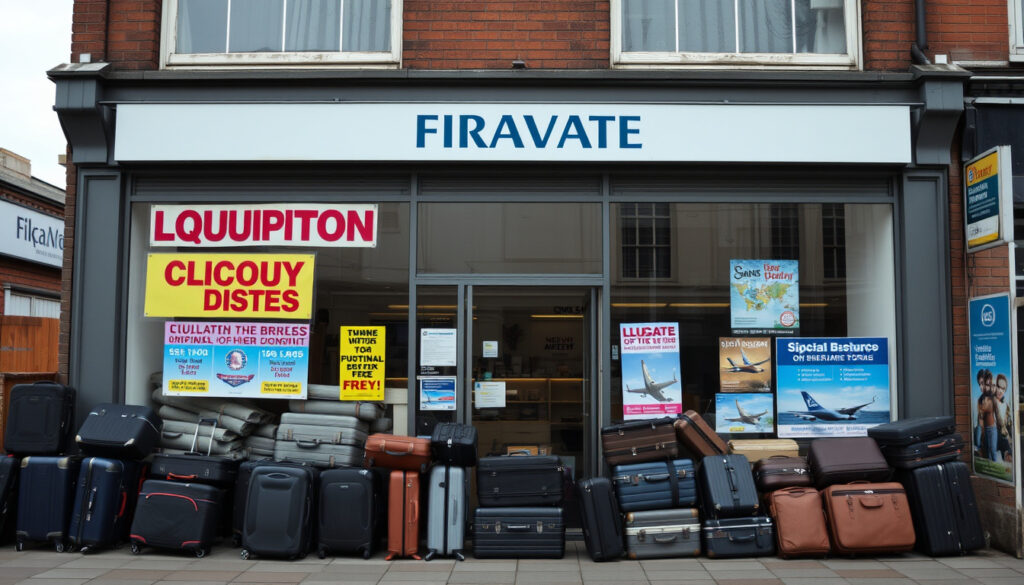
UK Travel Company Liquidation – Guidance for Travellers
What UK Travel Company Has Gone Bust Recently?
Regen Central Ltd, a travel agency operating under company number 07069838, has entered liquidation, according to records held at Companies House. The Hertfordshire-based firm, which also conducted other professional services alongside its travel activities, now faces insolvency proceedings. Customers who booked package holidays through the company may face cancelled trips and uncertain refund prospects.
The insolvency adds to a pattern of travel company collapses that has affected the UK market over recent years, particularly following the disruption caused by the pandemic. While Regen Central’s liquidation represents a confirmed case, details about specific impacts on travellers remain limited in publicly available records.
Oxfordshire Travel Limited, mentioned in some searches as a potentially affected firm, shows no matching liquidation records in Companies House data covering the period from 2016 to 2026. This discrepancy highlights the importance of verifying information through official channels rather than relying on secondary reports.
Overview of the Regen Central Ltd Case
Regen Central Ltd (company number 07069838) was incorporated on 8 November 2009. The company operated travel agency activities under SIC code 79110, alongside other professional services classified under SIC code 74909. The company’s registered office is currently listed at Devonshire House, Manor Way, Borehamwood, Hertfordshire, WD6 1QQ, having previously been registered at 24 New Road, London, E1 2AX.
According to filings held at Companies House, the company’s last accounts were submitted covering the period up to 30 November 2023, with the next accounts due by 31 August 2025. The transition to liquidation status marks the end of operations for a firm that had been trading for more than fifteen years.
Travellers who booked holidays through Regen Central should be aware that package holiday protection schemes exist to help consumers in situations involving company insolvency. The Air Travel Trust, administered by the Civil Aviation Authority, provides a framework for refunds on certain protected bookings.
Key Insights for Affected Customers
- Companies House provides the definitive public record of UK company insolvency proceedings, including liquidation status and appointed liquidators
- ATOL protection covers package holidays sold by UK travel companies, offering refunds when firms collapse
- Not all travel bookings receive the same protection—standalone flight bookings or unprotected packages may fall outside refund schemes
- The Foreign, Commonwealth and Development Office issues travel warnings that can supplement consumer awareness of firms in difficulty
- Direct verification through official government resources remains the most reliable method for confirming a company’s financial status
- Hays Travel, which acquired Thomas Cook’s retail footprint in 2019, remains operational as the UK’s largest independent travel agent
- Consumers should retain booking documentation, payment receipts, and any correspondence with travel companies during insolvency proceedings
Snapshot of Available Facts
| Fact | Details |
|---|---|
| Company Name | Regen Central Ltd |
| Company Number | 07069838 |
| Incorporation Date | 8 November 2009 |
| Current Status | In Liquidation |
| Registered Office | Devonshire House, Manor Way, Borehamwood, Hertfordshire, WD6 1QQ |
| Primary Business Activity | Travel agency activities (SIC 79110) |
| Last Accounts Filed | 30 November 2023 |
| Oxfordshire Travel Limited | No matching liquidation records found in Companies House data |
Understanding the Liquidation Process for Travel Companies
When a UK travel company enters liquidation, the process follows established insolvency procedures governed by the Insolvency Act 1986. Creditors’ Voluntary Liquidation (CVL) occurs when a company’s directors initiate the process, as opposed to compulsory liquidation ordered by a court. In either scenario, a licensed insolvency practitioner takes control of the company’s assets to maximise returns for creditors.
The government’s Find Out if a Company is in Financial Trouble service provides a starting point for consumers seeking to verify a travel company’s status. This portal allows individuals to search for companies that have filed notices of intention to appoint an administrator, have entered administration, or have commenced liquidation proceedings.
How Liquidation Differs from Other Insolvency Procedures
Liquidation represents the terminal stage of company insolvency, during which the business ceases operations entirely and assets are realised for distribution among creditors. This differs from administration, where a company attempts to restructure or achieve a better outcome for creditors than immediate closure would allow. Company voluntary arrangements (CVAs) offer another path, allowing companies to reach repayment agreements with creditors while continuing to trade.
Travel companies specifically face particular challenges during insolvency because of the nature of their forward-booking model. Customers often pay for holidays months in advance, creating significant liabilities if the company collapses before services are delivered. This structural vulnerability explains why the travel sector has seen repeated consolidation and failure events.
What Happens to Customer Bookings
Customers with existing bookings face an uncertain period when their travel company enters liquidation. The Civil Aviation Authority’s ATOL scheme provides protection for package holidays sold by UK licenced operators. When an ATOL-protected company fails, the Air Travel Trust arranges refunds or repatriation for affected customers.
However, ATOL protection does not extend to all bookings. Customers who purchased standalone flights, accommodation-only bookings, or dynamic packaging arrangements may find themselves outside the scheme’s scope. These consumers must typically submit claims as unsecured creditors in the liquidation proceedings, a process that frequently results in partial or no recovery of funds.
Affected customers should first check whether their booking was ATOL-protected by reviewing their confirmation documentation. The Companies House service provides free access to company insolvency records, allowing consumers to confirm the official status of any UK-registered travel firm.
Travel Companies Gone Bust Over the Last Decade
The UK travel sector has experienced significant turbulence over the past ten years, with numerous firms succumbing to financial pressures. The period following the pandemic saw particular strain, as companies that had accumulated debt during lockdowns faced reduced consumer confidence and altered travel patterns.
Several ATOL-protected firms collapsed between 2020 and 2023, prompting increased scrutiny of the travel protection framework. The Air Travel Trust processed substantial volumes of refund claims during this period, with the Civil Aviation Authority managing the complex task of reconciling customer entitlements against available funds.
Factors Contributing to Travel Company Failures
The travel industry operates on thin margins and high fixed costs, making it vulnerable to external shocks. Currency fluctuations, fuel price volatility, geopolitical instability, and natural disasters can all impact profitability. The pandemic represented an extreme case, forcing borders closed and eliminating revenue streams while overhead costs continued.
Competitive pressure from online booking platforms has also reshaped the market. Traditional travel agents and tour operators face challenges from digital-first competitors who can operate with lower cost bases. This structural shift has contributed to the decline of established brands and created conditions where smaller operators struggle to maintain sustainable businesses.
Industry Consolidation and Survival
Not all travel companies responded to difficulties by failing. Some firms, including major players in the transport and travel sector, pursued expansion strategies during periods of market disruption. Hays Travel notably acquired Thomas Cook’s retail estate following that company’s high-profile collapse in 2019, becoming the UK’s largest independent travel agent through opportunistic acquisition.
This pattern of consolidation suggests that while individual company failures continue, the travel market itself persists. Consumers benefit from understanding that company failure does not necessarily mean service unavailability, as assets and customer databases often transfer to solvent acquirers.
Customer Protection and Next Steps After a Travel Company Collapse
When a travel company enters liquidation, customers should act promptly to understand their rights and protect their interests. Documentation becomes critical during insolvency proceedings, as claims must be supported by evidence of payment and booking details.
Priority Actions for Affected Travellers
The first step involves confirming the company’s official status through Companies House, which maintains public records of all UK company insolvency appointments. This verification prevents confusion that can arise when news reports reference firms inaccurately or before official confirmation.
Customers should then review their booking documentation to determine whether ATOL protection applied to their purchase. The Civil Aviation Authority’s ATOL scheme website provides guidance on making claims when protected operators fail. Claimants typically need to provide booking confirmations, payment receipts, and evidence of any amounts already refunded.
Customers who booked through third-party agents rather than directly with the failed company may face additional complexity in pursuing refunds. The relationship between intermediaries and the failed operator affects which party bears responsibility for protection obligations.
The Role of Government Travel Advice
The Foreign, Commonwealth and Development Office provides travel advice that can supplement consumer awareness during company failures. While FCDO warnings do not specifically address individual company insolvencies, they flag broader destination risks that may affect travel plans regardless of booking arrangements.
Travellers facing cancelled trips due to company liquidation should monitor FCDO advice for their intended destination, particularly regarding entry requirements, safety conditions, and any COVID-related restrictions that might complicate arrangements made on short notice.
Timeline of Recent Travel Company Insolvencies
Understanding the sequence of events in travel company failures helps contextualise individual cases within broader industry trends. The following timeline represents information available from public records and may not capture all relevant dates or events.
- 8 November 2009: Regen Central Ltd incorporated in England and Wales, beginning operations as a travel agency and professional services provider
- 2019: Thomas Cook Group collapses, prompting industry restructuring and acquisition activity including Hays Travel’s purchase of retail outlets
- 2020–2023: Multiple ATOL-protected travel firms enter liquidation or administration amid pandemic aftermath, increasing scrutiny of consumer protection mechanisms
- 30 November 2023: Regen Central Ltd files last available accounts with Companies House
- 2025–2026: Regen Central Ltd confirmed in liquidation status; Oxfordshire Travel Limited referenced in searches but not confirmed in Companies House records
What Remains Confirmed and Unconfirmed
Transparency about what is known and unknown helps consumers make informed decisions following travel company failures. The following summary distinguishes between established facts and areas where public records contain gaps.
| Established Information | Information Requiring Verification |
|---|---|
| Regen Central Ltd entered liquidation (confirmed by Companies House) | Specific liquidation date and appointed liquidator details |
| Company number 07069838, incorporated 8 November 2009 | ATOL protection status and any applicable customer claims process |
| Registered office in Borehamwood, Hertfordshire | Specific destinations or holidays affected |
| Business activities included travel agency services (SIC 79110) | Customer refund timelines and success rates |
| Oxfordshire Travel Limited shows no liquidation records in available Companies House data | Whether Oxfordshire Travel Limited faces separate difficulties not captured in this review |
| Post-pandemic period saw increased travel company failures | Whether additional firms face imminent insolvency risk |
Broader Context: UK Travel Industry Challenges
The insolvency of Regen Central Ltd occurs within a travel sector that has undergone substantial transformation over the past decade. Economic pressures, changing consumer preferences, and technological disruption have reshaped competitive dynamics across the industry.
Companies House records indicate that Regen Central had been operating for more than fifteen years before entering liquidation, suggesting that the firm’s challenges may reflect specific circumstances rather than immediate market conditions alone. The travel agency’s mixed business activities under SIC codes 79110 and 74909 indicate operations beyond simple holiday packaging.
The pattern of travel company failures continues to influence consumer behaviour and industry structure. Major operators have grown through acquisition while smaller specialists face pressures that can lead to exit. This consolidation potentially reduces consumer choice while improving the financial resilience of surviving firms.
Sources and Official References
Publicly available information about Regen Central Ltd derives primarily from Companies House records, which represent the official UK repository for company registration and insolvency information. These records are updated following legal requirements but may lag behind events in some cases.
Companies House is the official government register of UK companies. It provides free access to company information, including details of directors, filing history, and insolvency appointments. This remains the most reliable source for verifying a company’s legal status.
Consumer protection information comes from the Civil Aviation Authority, which administers the ATOL scheme, and from the Foreign, Commonwealth and Development Office, which provides travel safety guidance. Both organisations maintain publicly accessible resources for affected customers.
Industry context regarding travel company failures draws on general knowledge of market conditions during the post-pandemic period. Specific claims about unnamed firms or aggregated statistics require verification through official channels, as available records do not provide comprehensive catalogues of all travel sector insolvencies.
Summary: Current Status and Consumer Guidance
Regen Central Ltd has entered liquidation according to Companies House records, representing a confirmed case of UK travel company insolvency. Customers who booked holidays with the firm face potential disruption to their travel plans and uncertainty regarding refund entitlements. The extent of impacts depends on factors including whether bookings were ATOL-protected and the specific terms of travel arrangements.
Verification through official government sources remains essential for anyone seeking to confirm a travel company’s status or pursue claims arising from insolvency. The Companies House service, Civil Aviation Authority ATOL scheme, and FCDO travel advice each provide resources relevant to different aspects of consumer protection.
For those researching transport and travel options more broadly, comprehensive guides to National Express routes and timetables and cruise booking services offer practical alternatives when planning journeys with established operators.
Frequently Asked Questions
How can I verify if a travel company has entered liquidation?
The Companies House website provides free access to insolvency records for all UK-registered companies. Search by company name or number to confirm official status.
What is the difference between liquidation and administration?
Liquidation represents the terminal winding-up of a company, with assets sold to repay creditors. Administration attempts to rescue the company or achieve a better outcome for creditors than liquidation would provide.
Does ATOL protection cover all travel bookings?
ATOL primarily covers package holidays sold by UK-licensed operators. Standalone flights, accommodation-only bookings, and some dynamic packaging arrangements may fall outside protection scope.
Can I get a refund if my travel company goes bust?
ATOL-protected customers may receive refunds through the Air Travel Trust. Unprotected customers typically become creditors in liquidation proceedings, with uncertain recovery prospects.
Is Oxfordshire Travel Limited also in liquidation?
Available Companies House records covering 2016–2026 show no matching liquidation entries for Oxfordshire Travel Limited. This firm should be verified separately through official channels.
What should I do if my holiday booking is cancelled due to company failure?
Document all communications, gather payment evidence, check ATOL protection status, and submit claims to the appointed liquidator or the Air Travel Trust as applicable.
Are there warnings about travel company insolvencies?
The FCDO provides travel safety advice but does not specifically warn about individual company insolvencies. The CAA publishes information about ATOL-protected operators facing difficulties.
More related posts
 Hossein Vafaei: Ranking titles, career high and key milestones
 David Goggins: Diagnoses, 40% Rule, and Current Life
 Cast of Step Brothers – Full Cast List and Roles
 Omar Sy: Biography, Ethnicity, Languages, Net Worth and Career
 Katya Jones: Relationship, Split, and Adam Peaty News
 Dustin Poirier Retirement and Return: Record and Net Worth
 Birmingham Clean Air Zone – Charges, Rules and Exemptions Guide
 Harrison Solomon: Age, Football Career, Love Island & Facts