How to Reduce Cholesterol in 7 Days: Diet & Lifestyle Tips
If you’ve just gotten a cholesterol reading that made you do a double-take, you’re not alone—and you’re probably wondering whether you can turn things around fast. The good news is that diet and lifestyle tweaks can start moving the needle within weeks, though doctors caution against expecting miracles in just seven days. This guide pulls together the most evidence-backed advice from the NHS, Mayo Clinic, and other trusted sources to give you a practical starting plan.
Oily fish recommendation: Twice a week ·
Mayo Clinic top changes: 5 lifestyle adjustments ·
NHS key actions: Eat less fatty food, exercise more ·
Heart UK foods: Six cholesterol-busting options ·
Meal plan focus: 7-day tailored ideas
Quick snapshot
- Lifestyle changes lower cholesterol per NHS and Mayo Clinic
- Oily fish reduces triglycerides per MedlinePlus
- Soluble fiber (5–10 g/day) cuts LDL per Mayo Clinic
- Exact LDL reduction amount in exactly 7 days
- How quickly individual responses vary
- Which specific meal timing factors matter most
- Mayo Clinic Diet studies show changes can lower cholesterol in as little as two weeks (Mayo Clinic Diet)
- Plant sterols cut LDL by 7–10% over 2–3 weeks (Lola Health)
- Clear trans fats and saturated fats from your kitchen on Day 1 per Liv Hospital
- Build heart-healthy habits that stick beyond 7 days per HEART UK
The table below summarizes the key nutrient targets supported by major health authorities.
| Key nutrient target | Recommended amount | Source |
|---|---|---|
| Soluble fiber daily | 5–10 grams or more | Mayo Clinic |
| Saturated fat (TLC diet) | Less than 7% of calories | MedlinePlus |
| Dietary cholesterol daily max | Less than 200 mg | MedlinePlus |
| Beta-glucan from oats | At least 3 grams | NHS via Lola Health |
| Plant stanols/sterols (TLC) | 2 grams daily | MedlinePlus |
| Oily fish intake | Twice weekly | NHS |
What brings your cholesterol down quickly?
The NHS and Mayo Clinic both agree on five core lifestyle shifts that move cholesterol numbers in the right direction. These aren’t quick fixes—they’re the foundation that every 7-day plan builds on.
Lifestyle changes from Mayo Clinic
- Eat heart-healthy foods — a plant-based diet rich in fiber from whole grains, fruits, and vegetables naturally keeps fat low while supporting heart health (Mayo Clinic Store)
- Exercise most days — at least 30 minutes raises HDL (good cholesterol) and lowers LDL (bad cholesterol) according to Mayo Clinic
- Quit smoking — listed as one of the top lifestyle changes alongside diet per Mayo Clinic
- Lose weight — even a small amount can improve cholesterol and reduce heart disease risk per Mayo Clinic
- Cut alcohol — moderation matters; excess alcohol raises cholesterol levels per Mayo Clinic
Foods to prioritize per NHS
- Oily fish (mackerel, salmon) twice weekly for omega-3s (NHS)
- Olive oil and rapeseed oil instead of butter (NHS)
- Brown rice, wholegrains, nuts, fruits, and vegetables (NHS)
These five changes work together—diet alone won’t max out your results. A week of perfect eating still needs movement, sleep, and stress management to show real impact on your numbers.
What are the 6 worst foods for cholesterol?
Cutting cholesterol doesn’t just mean adding good foods—it means aggressively removing the ones that drive numbers up. According to the NHS, Mayo Clinic, and other major health sources, these categories cause the most damage.
Saturated fat sources
- Red meats (beef, pork, lamb)
- Full-fat dairy products (whole milk, cheese, butter)
- Coconut oil and palm oil
Saturated fats raise LDL cholesterol levels, and limiting them is one of the most direct dietary levers you can pull per Mayo Clinic.
Processed items to avoid
- Trans fats — found in processed foods, these increase LDL and decrease HDL according to Mayo Clinic
- Fried foods of any kind
- Commercially baked goods (cookies, pastries)
- High-cholesterol foods like egg yolks and organ meats (Mayo Clinic)
Giving up these foods can feel like losing a social life—fried food is everywhere. The move is to replace, not just remove: swap chips for roasted nuts, swap butter for olive oil, swap processed snacks for fruit or veg.
What drink reduces cholesterol?
Beyond solid foods, certain beverages can help—or hurt—your cholesterol goals. The key is knowing which ones have evidence behind them.
Natural options that may help
- Green tea — some studies suggest it can modestly affect cholesterol levels
- Plant sterol-fortified drinks — some brands (like Benecol) add plant sterols that block cholesterol absorption
- Unsweetened plant milks — oat milk provides beta-glucan; almond milk cuts saturated fat
Benecol effectiveness
Plant sterols and stanols block cholesterol absorption. Found in fortified margarines, orange juice, yogurt, and cereals, they can reduce LDL by 7–10% over 2–3 weeks per Liv Hospital and Mayo Clinic. Benecol drinks work similarly to fortified spreads—the sterol content is what matters, not the delivery format.
Alcohol directly affects cholesterol—excess intake raises LDL and triglycerides. HEART UK notes that their 7-day plan with plant stanols is not suitable for pregnant or breastfeeding women (HEART UK). If you’re in this group, skip the sterol-fortified drinks.
What to eat to reduce cholesterol?
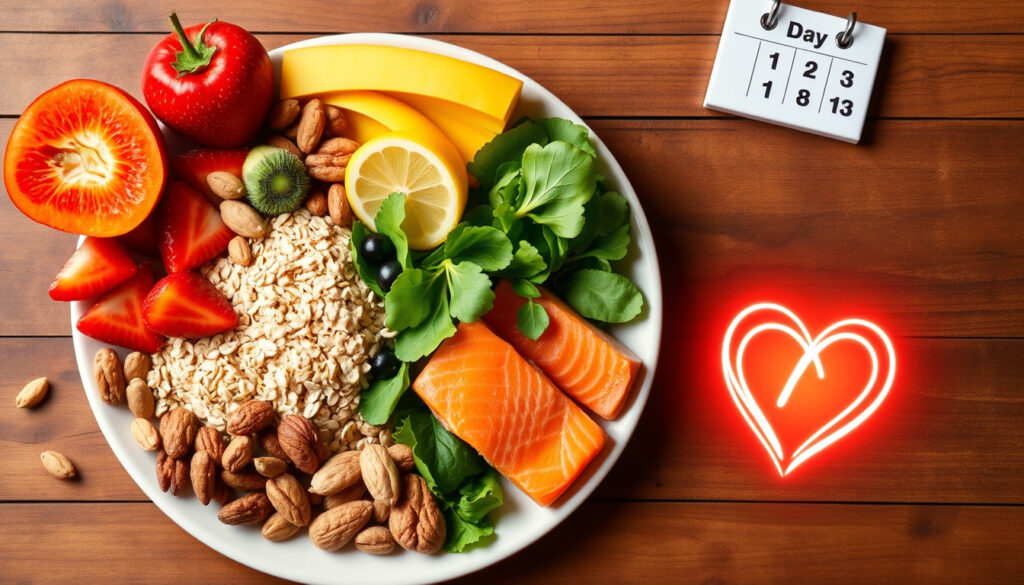
HEART UK provides a 7-day meal plan averaging 2000 kcal/day that is low in saturated fat, high in fiber, and includes plant stanols and at least five portions of fruits and vegetables daily (HEART UK). Here’s what to load onto your plate.
Oily fish benefits
- Salmon, mackerel, sardines twice weekly
- Plant omega-3 sources: walnuts, flaxseed per MedlinePlus
Omega-3s from fish do not directly lower LDL but reduce blood pressure and have other heart benefits per Mayo Clinic.
Unsaturated fats
- Olive oil and rapeseed oil (swap for butter)
- Avocados and nuts
- Oily fish twice per week per MedlinePlus
Six cholesterol-busting foods per Heart UK
- Oats and barley (beta-glucan fiber)
- Sterol-fortified spreads and foods
- Soya (tofu, soy milk)
- Nuts (almonds, walnuts)
- Fruits and vegetables (5+ portions daily)
- Legumes (beans, lentils)
The pattern across NHS, Mayo Clinic, and HEART UK is consistent: fiber (oats, beans, fruits), healthy fats (fish, olive oil, nuts), and plant sterols (fortified foods). One week’s commitment to this pattern builds habits that matter far more than any single number drop.
How to reduce cholesterol without medication?
For many people, medication isn’t the first stop—a structured diet and lifestyle plan comes first. The NHS states that dietary changes can reduce lipid levels to within normal range for long-term health per WUTH NHS. Here’s how to build a practical 7-day framework.
7-day meal plan ideas
The Heart Foundation offers a 7-day meal plan for lowering cholesterol with tailored breakfast, lunch, and dinner ideas (Heart Foundation). The NHS and Mayo Clinic don’t publish a specific 7-day protocol, but they endorse the underlying principles: eat more plants, move daily, and remove the worst offenders.
A practical 7-day starting framework
- Day 1 — Clear the kitchen. Remove trans fats, saturated fats, processed snacks, fried foods, red meat, and high-fat dairy per Liv Hospital. Stock up on fresh fruits, vegetables, lean proteins, whole grains, and low-fat dairy instead.
- Day 2 — Start your day with soluble fiber. Have oatmeal or oat bran for breakfast—aim for at least 3 grams of beta-glucan daily to lower LDL by 5–10% per NHS advice via Lola Health.
- Day 3 — Add oily fish. Target salmon, mackerel, or sardines for dinner. Plant sources include walnuts and flaxseed per MedlinePlus.
- Day 4 — Move for 30 minutes. brisk walking, cycling, or swimming. Regular exercise raises HDL and lowers LDL per Mayo Clinic. Liv Hospital recommends 150 minutes of moderate activity weekly (Liv Hospital).
- Day 5 — Switch your fats. Replace butter with olive or rapeseed oil, choose low-fat dairy, and swap processed snacks for a handful of nuts per NHS.
- Day 6 — Include plant sterols. If your diet allows, add sterol-fortified margarine or yogurt. The TLC diet recommends 2 grams daily of plant stanols/sterols per MedlinePlus. (Note: not suitable during pregnancy or breastfeeding per HEART UK.)
- Day 7 — Track and plan ahead. Keep a food journal or use an app to log food, exercise, and stats per Liv Hospital. Use what you’ve learned to plan another week—this is the foundation that counts, not a one-shot detox.
Exercise and habits
- Aim for 150 minutes of moderate exercise weekly (brisk walking, swimming, cycling) per Liv Hospital
- Add stress reduction techniques (meditation, yoga) alongside physical activity per Liv Hospital
- Quit smoking and moderate alcohol as top lifestyle changes per Mayo Clinic
Clarity on what’s confirmed versus unclear
Confirmed
- Lifestyle changes lower cholesterol per NHS and Mayo Clinic
- Soluble fiber (5–10 g/day) cuts LDL cholesterol
- Oily fish reduces triglycerides and blood pressure
- Plant sterols reduce LDL by 7–10% over 2–3 weeks
- Dietary changes can reduce lipids to normal range per WUTH NHS (June 2025)
Unclear
- Exact LDL reduction amount achievable in exactly 7 days
- How much individual genetics affects 7-day response
- Optimal meal timing or fasting windows for cholesterol
- Whether a 7-day reset produces lasting habits without continued structure
What the experts say
“To reduce your cholesterol, try to cut down on fatty food, especially food that contains a type of fat called saturated fat.”
— NHS (UK Health Service)
“Studies have shown that changing your diet can lower your cholesterol in as little as two weeks.”
“Dietary changes can play an important role in reducing your lipid levels to within a normal range.”
— WUTH NHS (NHS Trust, published June 2025)
Summary
A 7-day cholesterol reduction plan works best as a launching pad, not a destination. The NHS, Mayo Clinic, and MedlinePlus all agree that five lifestyle changes—eat better, move daily, quit smoking, lose excess weight, and cut alcohol—move the needle most reliably. Dietary fiber targets (5–10 grams of soluble fiber daily), twice-weekly oily fish, and plant sterol fortified foods add measurable impact within weeks. No official NHS or Mayo Clinic source endorses a strict 7-day detox as the endpoint; instead, they emphasize building habits that sustain results long-term. For patients with high cholesterol, the path is clear: start with these seven days, but plan for twelve more.
How much exercise to lower cholesterol?
The target is 150 minutes of moderate exercise weekly—roughly 30 minutes most days. Brisk walking, cycling, and swimming all count. Liv Hospital recommends this level alongside diet changes per their cholesterol detox guide.
Can weight loss reduce cholesterol fast?
Even a small amount of weight loss can improve cholesterol numbers. Mayo Clinic notes that losing excess weight raises HDL and lowers LDL, though results vary based on how much you lose and how quickly.
Is smoking linked to high cholesterol?
Yes. Smoking is one of the top lifestyle factors tied to poor cholesterol profiles. Mayo Clinic lists quitting smoking as one of the five key changes alongside diet to improve cholesterol numbers.
What fruits help cholesterol?
Apples, pears, oranges, and berries are particularly rich in soluble fiber, which binds cholesterol in the gut and removes it. Mayo Clinic specifically mentions apples and pears as high-fiber options that decrease LDL.
How does alcohol affect cholesterol?
Excess alcohol raises LDL (bad cholesterol) and triglycerides. Mayo Clinic recommends moderating alcohol intake as part of the five key lifestyle changes to improve cholesterol levels.
Are nuts good for cholesterol?
Yes. Almonds, walnuts, and other nuts contain unsaturated fats that support heart health. The NHS recommends nuts as part of a cholesterol-lowering diet alongside olive oil, oily fish, and wholegrains.
What veggies lower cholesterol?
Brussels sprouts, kidney beans, spinach, and other vegetables high in soluble fiber are particularly effective. MedlinePlus lists these alongside oatmeal and oat bran as key sources for the 5–10 grams of soluble fiber recommended daily.
Related reading: olive oil benefits · cold hands and feet causes
Dietary tweaks outlined in a sample 7-day meal plansample 7-day meal plan mirror the quick-start strategies recommended by health authorities like the NHS.
More related posts
 Alain Delon: Biography, Love Life, Movies, and Legacy
 Sophie Kasaei’s IVF, Baby Gender, Weight Loss & Relationship
 Jon Bon Jovi: Biography, Health, Wife, Faith, and More
 Ice T: Real Name, Career, Net Worth & Family
 Does Rice Have Gluten – Safe Varieties and Risks
 Gwyneth Paltrow: Health, Goop, and Relationships
 YouTube Converter MP3 – Best Free Tools 2025
 Birmingham Clean Air Zone – Charges, Rules and Exemptions Guide