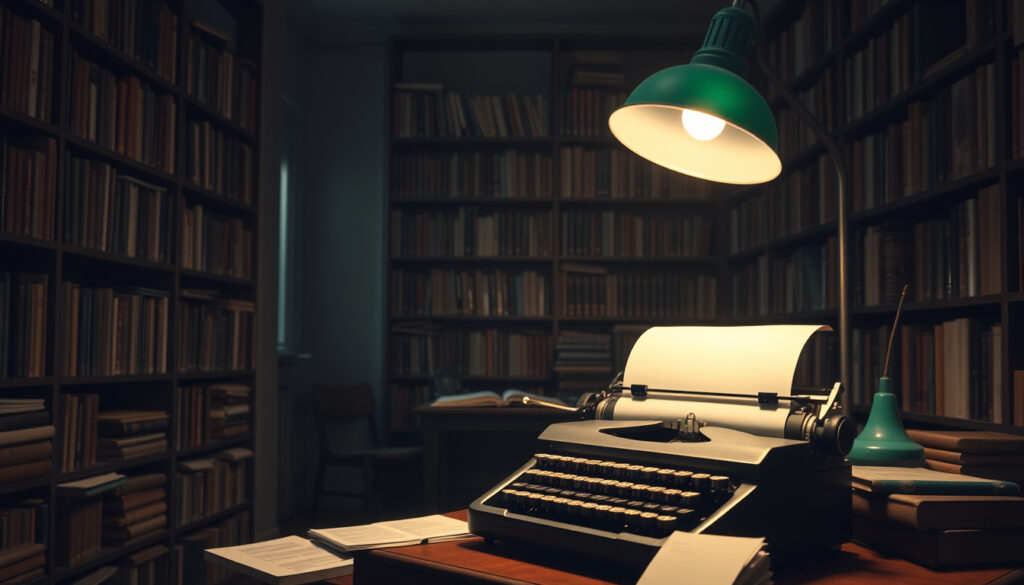
James Joyce: Biography, Works, and Legacy of the Modernist
Few writers have managed to transform a single city into a universe the way James Joyce did with Dublin. Over the course of just four major works, he reshaped the possibilities of fiction itself—and spent most of his life far from the city he wrote about.
Born: 2 February 1882 ·
Died: 13 January 1941 ·
Major works: 4 novels (Ulysses, Dubliners, A Portrait of the Artist as a Young Man, Finnegans Wake) ·
Ulysses pages: ~730 ·
Finnegans Wake writing time: 17 years
Quick snapshot
- Born 1882 in Dublin, died 1941 in Zurich (Wikipedia)
- Wrote four major works of fiction (Routledge Encyclopedia of Modernism)
- Left Ireland in 1904 and lived in exile (The Irish Times)
- Ulysses was banned for obscenity in the US and UK (The Morgan Library & Museum)
- Whether Joyce actually said “Guinness is good for you” (The Irish Times)
- The claim that Finnegans Wake took 28 years to read is likely apocryphal (Routledge Encyclopedia of Modernism)
- Exact fluency level in the Irish language remains debated (Wikipedia)
- 1904: Leaves Ireland with Nora Barnacle (The Irish Times)
- 1922: Publishes Ulysses on 40th birthday (The Morgan Library & Museum)
- 1939: Publishes Finnegans Wake (Routledge Encyclopedia of Modernism)
- Scholarly editions continue to annotate Ulysses and Finnegans Wake (Yale Modernism Lab)
- Digital archives (e.g., the James Joyce Centre) expand access to manuscripts (The Irish Times)
Eight key facts about James Joyce’s life and work tell a story of someone who turned personal displacement into a literary system.
| Label | Value |
|---|---|
| Full name | James Augustine Aloysius Joyce |
| Born | 2 February 1882, Dublin, Ireland |
| Died | 13 January 1941, Zurich, Switzerland |
| Nationality | Irish |
| Occupation | Novelist, poet, literary critic |
| Spouse | Nora Barnacle |
| Children | Two: Giorgio and Lucia |
| Notable works | Ulysses, Dubliners, A Portrait of the Artist as a Young Man, Finnegans Wake |
What this means: Joyce’s biography mirrors his fiction—every major event gravitates around Dublin, even as he lived nearly four decades away from it.
What is James Joyce most famous for?
His major works: Ulysses, Dubliners, A Portrait of the Artist as a Young Man, Finnegans Wake
- Ulysses (1922) – a single day in Dublin, 730 pages, stream of consciousness (Routledge Encyclopedia of Modernism)
- Dubliners (1914) – fifteen short stories depicting Dublin’s middle-class paralysis (Routledge Encyclopedia of Modernism)
- A Portrait of the Artist as a Young Man (1916) – semi-autobiographical, follows Stephen Dedalus’s intellectual awakening (Routledge Encyclopedia of Modernism)
- Finnegans Wake (1939) – dream narrative with invented multilingual language, 17 years to write (Routledge Encyclopedia of Modernism)
His literary style: stream of consciousness and modernist techniques
- Joyce is widely credited with pioneering the stream of consciousness technique, rendering the unbroken flow of a character’s thoughts (Yale Modernism Lab)
- He used mythical parallelism—most famously in Ulysses, which parallels Homer’s Odyssey (Yale Modernism Lab)
- His work rejects linear plot, embracing absurdist drama and linguistic play (Routledge Encyclopedia of Modernism)
His influence on 20th-century literature
Joyce’s experiments pushed fiction into new territory. Yale’s Modernism Lab notes that he “reshaped the novel as a form” (Yale Modernism Lab). Writers from Samuel Beckett to Salman Rushdie have acknowledged his debt. The implication: after Joyce, every novelist had to decide whether to follow his path or react against it.
Why was James Joyce exiled from Ireland?
His self-imposed exile due to frustration with Irish society and the Catholic Church
Joyce left Dublin in 1904 and never made Ireland his home again. The Irish Times reports that after 1912 he never set foot in Ireland. He called Dublin a “centre of paralysis” early in his career (Routledge Encyclopedia of Modernism). The conservative, religious atmosphere of turn-of-the-century Ireland felt stifling to a writer who wanted to explore human sexuality, doubt, and linguistic freedom.
His relationship with Dublin as both inspiration and subject
Paradoxically, Joyce’s exile made his focus on Dublin more intense. He set every major work in the city and argued famously: “I want to give a picture of Dublin so complete that if the city suddenly disappeared from the earth it could be reconstructed out of my book.”
Quotes about Dublin: ‘Dubliners’ and the famous line
“I want to give a picture of Dublin so complete that if the city suddenly disappeared from the earth it could be reconstructed out of my book.”
— James Joyce
The pattern: exile provided the distance and discipline to rebuild Dublin as a literary universe.
Why was the book Ulysses so controversial?
Obscenity charges and censorship
Ulysses was banned in the United States under the Comstock laws and in Britain under the Obscene Publications Act. The Morgan Library & Museum notes that Sylvia Beach published the first edition in Paris in 1922 to avoid censorship. In 1933, a US District Court lifted the ban, a landmark case for literary freedom.
Explicit sexual content and use of profanity
The novel includes frank depictions of bodily functions and sexual desire. Critics at the time called it pornographic. What this means: the controversy wasn’t just about content—it was about whether modernist experimental writing deserved the same protections as conventional fiction.
Why is Ulysses so difficult to read?
- Uses stream of consciousness and interior monologue that jumps across thoughts (Yale Modernism Lab)
- Heavy allusions to classical literature, history, and Irish politics
- Each chapter adopts a different style—from newspaper headlines to dramatic script to catechism
The trade-off: the reader who invests in Ulysses gains a layered experience unmatched in fiction, but the initial barrier is steep.
Ulysses turned the obscenity trial into a debate about literary merit. When the US court ruled it not obscene, it set a precedent that protected modernist and challenging literature for decades to come.
What book took 28 years to read?
Finnegans Wake: Joyce’s most difficult work
The claim that Finnegans Wake took 28 years to read is widely repeated but likely apocryphal. What is certain: the novel employs a unique dream language blending over 60 languages, puns, and nonlinear narrative. It took Joyce 17 years to write (Routledge Encyclopedia of Modernism).
The claim that it took 28 years to read (likely a myth)
No verifiable source confirms the 28-year reading claim. It appears to originate from a reader’s anecdote. The confusion, however, underscores the book’s reputation as the Mount Everest of reading.
Why Finnegans Wake is notoriously difficult
- Invented vocabulary: words like “bababadalgharaghtakamminarronnkonnbronntonnerronntuonnthunntrovarrhounawnskawntoohoohoordenenthurnuk” for the thunderclap
- Dream logic: characters morph into each other, time loops, and plot is secondary
- Multilingual puns require knowledge of several languages to fully catch
Finnegans Wake is less a novel to be read than a text to be experienced. Most readers approach it with a guidebook—and even then, finish only a few pages at a time.
Could James Joyce speak Irish?
Joyce’s knowledge of the Irish language
Joyce studied Irish at University College Dublin but was not fluent. Wikipedia notes he had reading knowledge but rarely used it in conversation. His Irish-language phrases in Finnegans Wake are few and often playful.
His views on the Irish language revival
He was critical of the Gaelic revival movement, seeing it as a form of cultural nationalism that replaced one orthodoxy with another. Instead, he drew on Irish folklore and the Hiberno-English dialect to give his characters a distinct voice.
Other personal details: love letters, Guinness, death
- Joyce wrote explicit love letters to Nora Barnacle, which later fetched high prices at auction (The Irish Times)
- He was known to enjoy Guinness; a widespread but unverified quote attributes “Guinness is good for you” to him
- He died on 13 January 1941 after surgery for a perforated ulcer (Wikipedia)
Timeline
- 1882 – Born in Dublin, Ireland (Wikipedia)
- 1904 – Left Ireland with Nora Barnacle, begins self-imposed exile (The Irish Times)
- 1914 – Published Dubliners (Routledge Encyclopedia of Modernism)
- 1916 – Published A Portrait of the Artist as a Young Man (Routledge Encyclopedia of Modernism)
- 1922 – Published Ulysses (The Morgan Library & Museum)
- 1939 – Published Finnegans Wake (Routledge Encyclopedia of Modernism)
- 1941 – Died in Zurich (Wikipedia)
Clarity check
Confirmed facts
- Joyce was born in 1882 and died in 1941 (Wikipedia)
- He wrote Ulysses, Dubliners, Portrait, Finnegans Wake (Routledge Encyclopedia of Modernism)
- He lived in exile from 1904 onwards (The Irish Times)
- Ulysses was banned for obscenity in the US and UK (The Morgan Library & Museum)
What’s unclear
- Attribution of the Guinness quote to Joyce (likely apocryphal)
- The 28-year reading claim for Finnegans Wake
- Exact level of Irish language fluency
Key quotes
“I don’t want to be a martyr. I want to be a writer.”
— James Joyce
“I’ve put in so many enigmas and puzzles that it will keep the professors busy for centuries.”
— James Joyce, on Ulysses
“I want to give a picture of Dublin so complete that if the city suddenly disappeared from the earth it could be reconstructed out of my book.”
— James Joyce
For readers and scholars today, the choice is clear: engage with Joyce’s difficult, brilliant system—or miss the foundational moment of literary modernism.
en.wikipedia.org, joycefoundation.utulsa.edu, facebook.com, facebook.com, great-republic.com, rem.routledge.com, morgenanalyse.de
Frequently asked questions
What is James Joyce’s writing style?
Joyce pioneered stream of consciousness, used mythical parallels, and experimented with narrative structure and language across all his major works.
How did James Joyce die?
He died on 13 January 1941 in Zurich following surgery for a perforated ulcer (Wikipedia).
What is the meaning of Ulysses?
The novel parallels Homer’s Odyssey and follows Leopold Bloom’s journey through Dublin, exploring themes of identity, mortality, and modern life.
Did James Joyce have children?
Yes, two: Giorgio and Lucia. Lucia was diagnosed with schizophrenia and spent much of her life in mental institutions.
What is the James Joyce Centre?
A museum and cultural centre in Dublin dedicated to the life and works of James Joyce, located in a restored 18th-century townhouse.
Who was Stephen James Joyce?
Stephen James Joyce (1932–2020) was Joyce’s grandson and the last direct descendant with the Joyce surname. He controlled the Joyce estate and copyright.
What are the James Joyce love letters?
Explicit letters Joyce wrote to Nora Barnacle in 1909, which became famous for their erotic content and later sold for high sums at auction.
Did James Joyce win the Nobel Prize?
No. Despite his monumental influence, the Nobel committee never awarded him the prize for literature.
Related reading
- Leonardo da Vinci: Biography, Art, Inventions and Legacy – Another towering figure who revolutionized his field, with a biographical depth similar to Joyce.
- Anne Hathaway Shakespeare: The Real Story of His Wife – A literary-historical connection: Shakespeare is the foundational figure Joyce grappled with in Ulysses.
More related posts
 Diego Calva: Biography, Movies, and Personal Life Facts
 Cat Years to Human Years: Complete Conversion Chart
 Demi Sims: TOWIE Star to Boxer – Bio & 2026 Update
 Andrew Neil: Biography, Career, Political Views & Personal Life
 Mike Tindall: Rugby Career, Family & Net Worth
 Dawood Ibrahim: Biography, Bollywood Links & Family
 Christina Chong: Star Trek Role, Ethnicity & Languages
 Rain Spencer Biography: Age, TV Shows & Personal Life