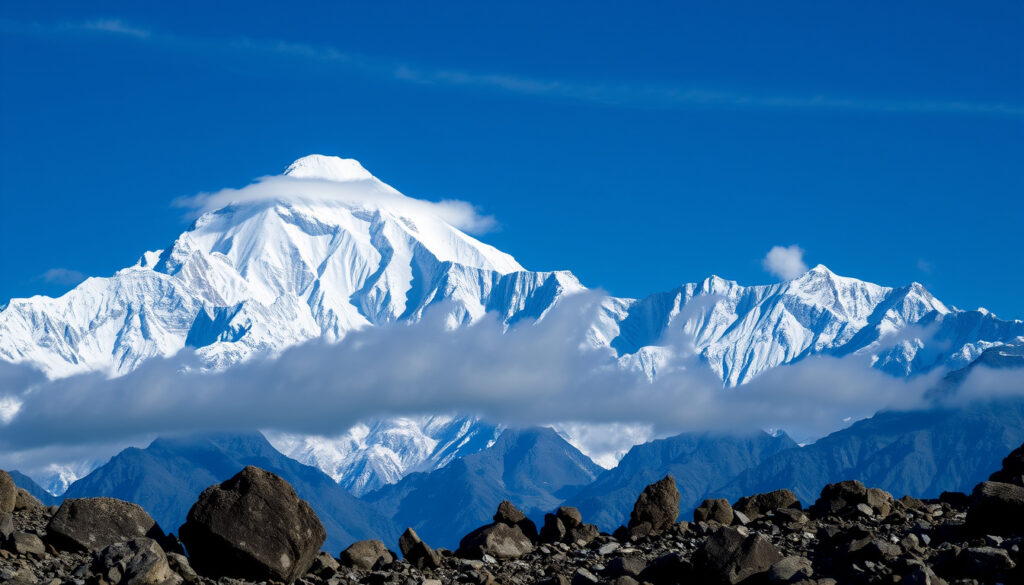
Everest Peak: Height, Location, Climbing Duration & Deaths
There’s something about the world’s highest peak that pulls people in, whether they’re armchair adventurers or seasoned climbers. Everest’s summit is more than a number—it’s a place where human determination meets brutal reality, and where a simple 2pm rule can mean the difference between life and death.
Height: 29,032 ft (8,848.86 m) · Location: Nepal–China border · First ascent: 1953 (Hillary & Norgay) · Climbing deaths: Over 300 recorded
Quick snapshot
- Height: 29,031.69 ft (8,848.86 m) – Wikipedia (authoritative reference)
- First ascent: May 29, 1953 – Britannica (reference work)
- Location: Mahalangur Himal range, Nepal–China border – Nepal Mountaineering Association (country regulator)
- Exact number of bodies on the mountain (estimates 200–300) (Explore (outdoor publication))
- Origin of the 2pm rule – Explore (outdoor publication)
- Whether Mallory & Irvine summited before dying (Explore (outdoor publication))
- 1996: 12 deaths in a single storm – Global Summit Guide (climbing safety resource)
- 2026: Nepal may enforce fines for ignoring 2pm rule – Adventure Glacier Treks (expedition operator)
- Tighter regulations from 2026: mandatory 7,000m prior experience – ExplorersWeb (mountaineering news site)
- More transparent tracking of summit attempts and deaths (ExplorersWeb (mountaineering news site))
Six key facts, one pattern: the mountain demands precision, money, and luck.
| Fact | Value |
|---|---|
| Elevation | 29,031.69 ft (8,848.86 m) |
| First summit | May 29, 1953 (Hillary & Norgay) |
| Country | Nepal (South) / China (North) |
| Deaths since 1950 | ~310 recorded |
| Success rate (summit attempts) | ~60% of those who reach Base Camp |
| Average expedition cost | $40,000–$60,000 |
What is the peak of Everest called?
What is the height of Mount Everest in feet and meters?
- Official elevation: 29,031.69 feet (8,848.86 meters) as recognized by Nepal and China – Wikipedia (reference work)
- The Nepali name is Sagarmatha; the Tibetan name is Chomolungma
In which country is Mount Everest?
- Location: Mahalangur Himal range, border of Nepal and Tibet (China) – Nepal Mountaineering Association (country regulator)
Who was the first to summit Mount Everest?
- First ascent by Sir Edmund Hillary and Tenzing Norgay on May 29, 1953 – Britannica (reference work)
The pattern: The summit’s official identity is clear, but its cultural names reveal a deeper story.
How long does it take to climb Mount Everest?
What is the 2pm rule on Everest?
- The widely cited 2pm rule is a safety turnaround guideline: climbers who have not reached the summit by 2:00 p.m. must turn back regardless of proximity – High Route Adventure (climbing blog)
- Summit-day deaths are more common on descent – Global Summit Guide (safety resource)
- Nepal may soon enforce fines of NPR 100,000–200,000 for violating the rule – Adventure Glacier Treks (expedition operator)
How long is the hike to the summit from Base Camp?
- Total expedition: 8–10 weeks, including acclimatization and weather windows
- Actual climb from Base Camp to summit: 7–10 days, with multiple rotations
- Distance from South Base Camp to summit: ~40 miles (64 km) round trip – Namaste Nepal Trekking (trekking agency)
The 2pm rule isn’t written into law — yet. It’s a guide-industry norm that climbers ignore at their peril. Pushing past 2pm means descending after dark, often in worsening weather and with low oxygen. Explore (outdoor publication) calls it a life-or-death deadline.
The catch: The 2pm rule remains a norm rather than a law, placing the burden of discipline squarely on the climber.
Can an average person climb Everest?
What fitness level is required to climb Everest?
- Average person can attempt with extensive training: excellent cardiovascular fitness, strength, and high-altitude experience – Wikipedia (reference work)
- Pre‑requisites: prior climbs of 6,000m+ peaks, technical rope skills, and oxygen management
How much does it cost to climb Everest?
- Cost: $30,000–$60,000 for guided expeditions (permit, logistics, guides, oxygen) – ExplorersWeb (mountaineering news site)
- Success rate ~60% for those who reach Base Camp; summit success depends on health, weather, and luck
For an average person, the cost and risk are high, but the path is known. The real barrier isn’t age or fitness — it’s the willingness to spend months training and tens of thousands of dollars for a single day of summit push.
The implication: Fitness and funds can open the door, but the mountain’s ultimate filter is experience and luck.
Why do planes not fly over Everest?
What are the jet stream conditions near Everest?
- Jet streams at Everest’s altitude exceed 100 mph, creating severe turbulence – Wikipedia (reference work)
- Aircraft engines lack sufficient oxygen for combustion at that height; emergency descent impossible over rugged terrain
- Commercial jet routes avoid the area because no viable emergency landing sites exist
Can small aircraft fly over Everest?
- Some specially‑designed aircraft have flown over Everest (e.g., 1933 flight by Lord Clydesdale) – Britannica (reference work)
What this means: Everest’s height creates a no-fly zone not by regulation alone, but by the sheer physics of its altitude and terrain.
Who was the famous body found on Everest?
What is the oldest body still on Mount Everest?
- Most infamous remains: ‘Green Boots’ (Tsewang Paljor, died 1996) and ‘Sleeping Beauty’ (Francys Arsentiev, died 1998) – Global Summit Guide (safety resource)
- Oldest known body: possibly George Mallory (died 1924); his body was discovered in 1999 and remains on the mountain – Wikipedia (reference work)
Why are bodies left on Everest?
- Bodies are left due to extreme danger and cost of retrieval; some become landmarks – ExplorersWeb (mountaineering news site)
- Over 300 climbers have died; many remain permanently on the mountain
The pattern: The bodies on Everest are not just remains; they are permanent fixtures of the landscape and the climbing experience.
Upsides
- Reaching the highest point on Earth is a life-defining achievement
- Guided expeditions make the climb accessible to determined amateurs
- Nepal’s economy benefits from mountaineering tourism
- New regulations are improving safety standards
Downsides
- Extreme cost and physical toll on climbers
- High death rate: ~310 fatalities since 1950
- Environmental degradation from expedition waste
- Bodies left on the mountain as grim landmarks
How to climb Everest: a step-by-step overview
Seven steps, one common path: preparation, patience, and a willingness to turn back.
- Choose your route and operator. Most climbers use the South Col route from Nepal. Pick a reputable guide company with a proven safety record – Nepal Mountaineering Association (regulator) maintains a list of licensed operators.
- Get the fitness and experience. Spend months building cardiovascular endurance, climbing 6,000m+ peaks, and practicing rope and oxygen systems – Explore (outdoor publication) notes that proper preparation reduces risk significantly.
- Obtain permits and insurance. Everest permits cost ~$11,000 per person; comprehensive evacuation insurance is mandatory.
- Acclimatize at Base Camp and above. Spend 4–6 weeks doing rotation hikes to higher camps, then descending. The body produces more red blood cells during this period – High Route Adventure (climbing blog) explains the rotation schedule.
- Wait for a weather window. In spring, a two‑ to four‑day period of calm winds and clear skies is typical. Guides use forecasts from specialised meteorologists.
- Summit day: start around midnight. Leave Camp IV (South Col) at 11 p.m. to 1 a.m. Climb via the Hillary Step. The 2pm turnaround rule applies: if you haven’t summited by 2 p.m., you must descend – Namaste Nepal Trekking (trekking agency).
- Descend safely. Most deaths happen on the way down. Use supplemental oxygen; do not stop for rest at extreme altitude. Once back at Camp IV, the first beer tastes like liquid victory – and relief.
The step‑by‑step reality is brutal: 8–10 weeks of discomfort, a 60% summit success rate, and a financial toll that can exceed $60,000. For the average person, the biggest decision isn’t whether to climb — it’s whether to commit to the preparation.
Timeline: Key events on Everest
Six moments, one narrative: Everest’s history is a mix of triumph, disaster, and slow regulation.
| Date | Event |
|---|---|
| 1953 | First confirmed ascent by Sir Edmund Hillary and Tenzing Norgay – Britannica (reference work) |
| 1996 | Deadly season: 12 climbers killed in a single storm; basis for ‘Into Thin Air’ – Global Summit Guide (safety resource) |
| 1999 | Discovery of George Mallory’s body, missing since 1924 – Wikipedia (reference work) |
| 2019 | Record queues and 11 deaths; Nepal issues climbing regulations – ExplorersWeb (mountaineering news site) |
| 2020 | COVID‑19; Nepal closes mountain; first Chinese expedition summits from north side |
| 2026 | Proposed fines for ignoring 2pm rule; mandatory 7,000m prior experience – Adventure Glacier Treks (expedition operator) |
The pattern: Each decade on Everest brings a mix of triumph and disaster, slowly shaping the rules that govern the mountain today.
Confirmed facts vs. what’s unclear
Eight items, one divide: the mountain’s hard data is settled, but its human stories are still fuzzy.
Confirmed facts
- Elevation: 8,848.86 m (2019 Nepal–China joint survey) – Wikipedia (reference work)
- First ascent date: 1953 – Britannica (reference work)
- Green Boots identity: Tsewang Paljor – Global Summit Guide (safety resource)
- Over 300 recorded deaths since 1950 – Wikipedia (reference work)
What’s unclear
- Exact number of bodies on the mountain (estimates range 200–300)
- Origin of the 2pm rule (some attribute to guides, others to historical practice) – Explore (outdoor publication)
- Whether Mallory and Irvine summited before dying
- Effectiveness of Nepal’s future penalties for ignoring the 2pm rule – Adventure Glacier Treks (expedition operator)
What this means: Official records provide clarity, but the mountain’s true history is etched in the experiences of those who have climbed it.
What the experts say
We knocked the bastard off.
Edmund Hillary, reflecting on reaching the summit
The 2pm rule is the single most important safety guideline on summit day. Ignore it and you’re gambling with your life.
Adventure consultant guide (via High Route Adventure)
Removing a body from the death zone requires a team of six Sherpas, several days, and tens of thousands of dollars. Most families accept that their loved ones will stay on the mountain.
Sherpa interviewed by ExplorersWeb
The pattern: Expert voices converge on a single point—discipline and respect for the mountain’s rules are non-negotiable.
Summary
Everest’s peak is a place of extremes: the highest altitude, the most expensive expedition, the oldest remaining bodies. For the average climber, the decision to attempt the summit is a bet on preparation, weather, and the willingness to follow the 2pm rule. For regulators in Nepal, the challenge is enforcing safety without killing the industry. The pattern is clear: the mountain doesn’t care about your ambition — it only rewards discipline. For anyone considering the climb, the choice is: train for a year, spend $50,000, and accept a 40% chance of failure — or find your Everest elsewhere.
globalsummitguide.com, accessnepaltour.com, reddit.com, facebook.com, facebook.com, reddit.com, mediasvar.se
An examination of Everests climbing costs and death toll reveals the financial and human toll of climbing the world’s highest peak.
Frequently asked questions
Has an Irish person climbed Mount Everest?
Yes. Irish climber Noel Hanna (Belfast) summited Everest in 2019. He was the first person from Northern Ireland to reach the summit, and he completed the climb without supplementary oxygen – Wikipedia (reference work).
Who climbed Mount Everest first?
Sir Edmund Hillary (New Zealand) and Tenzing Norgay (Nepal) made the first confirmed ascent on May 29, 1953 – Britannica (reference work).
What is the deadliest year on Everest?
2014 holds the record for most deaths (17), largely due to an avalanche on the Khumbu Icefall. 2015 (12 deaths) and 1996 (12 deaths) are tied for second – Global Summit Guide (safety resource).
How many people have summited Everest?
As of 2024, over 6,000 successful summits have been recorded by more than 4,000 individuals – Wikipedia (reference work).
Do you need oxygen to climb Everest?
Most climbers use supplemental oxygen above 8,000m (the death zone). A few elite climbers attempt it without, but the risk of high-altitude cerebral edema (HACE) and death increases dramatically – Explore (outdoor publication).
What is the success rate of climbing Everest?
About 60% of climbers who reach Base Camp eventually summit. The success rate varies by season; spring (pre-monsoon) is the most favorable – Wikipedia (reference work).
Can I climb Everest without experience?
Not safely. Guides require prior climbs of 6,000m+ peaks, technical rope skills, and oxygen management. Without that foundation, the death zone becomes a death sentence – Nepal Mountaineering Association (regulator) recommends at least two years of high-altitude experience before attempting Everest.
More related posts
 Stanley Kubrick After Eyes Wide Shut: Death, IRA Threats & Legacy
 Jamie Bell’s Transformation: From Billy Elliot to Peaky Blinders
 Brandi Passante Now: What She’s Doing, Split Reasons & More
 Rupert Lowe: Allegations, Suspension, and Political Career
 Real Pictures of Breast Cancer Lumps – How to Identify Them
 JJ Maybank Death Explained: Why He Was Killed Off
 Cybill Shepherd: Elvis Presley, Moonlighting Feud, and Current Life
 Keith Brymer Jones: Pottery, Welsh Chapel, and Personal Life