Mary Shelley: Life, Loves, Illness, and the Heart Legend
Mary Shelley’s life reads like something she might have written herself: elopement at sixteen, a ghost story contest that birthed a genre, and a husband whose heart she kept in a desk drawer. She was born to two of Britain’s most famous radicals, lost three of her four children, and died with a mystery ailment that still puzzles historians. Here’s the story behind the woman who created Frankenstein—and the stranger details she never put in a novel.
Born: 30 August 1797, Somers Town, London ·
Died: 1 February 1851 (age 53), Chester Square, London ·
Notable Work: Frankenstein; or, The Modern Prometheus (1818) ·
Parents: William Godwin and Mary Wollstonecraft ·
Spouse: Percy Bysshe Shelley (m. 1816–1822)
Quick snapshot
- Mary Shelley wrote and published Frankenstein in 1818 (Encyclopaedia Britannica)
- She was the daughter of William Godwin and Mary Wollstonecraft (National Portrait Gallery)
- She eloped with Percy Bysshe Shelley in 1814 and married him in 1816 (Penguin Random House)
- Whether Mary Shelley had a full sexual relationship with Jane Williams
- Whether the “heart” that did not burn was actually calcified tissue, not his heart
- The exact nature of her chronic illness—neurological, psychosomatic, or physical
- 1797: Born 30 August; mother dies 10 days later
- 1814: Elopes with Percy Shelley
- 1816: Writes Frankenstein in Geneva
- 1818: Frankenstein published
- 1822: Percy Shelley drowns
- 1851: Mary dies, suspected brain tumour
- Ongoing scholarly debate about her bisexuality and its impact on her novels
- Growing literary recognition of The Last Man as an early post-apocalyptic classic
- Continued medical and historical interest in the brain tumour theory
Eight key facts that define Mary Shelley’s life, from her radical parentage to her final years:
| Field | Value |
|---|---|
| Full Name | Mary Wollstonecraft Shelley |
| Born | 30 August 1797, Somers Town, London |
| Died | 1 February 1851, Chester Square, London |
| Occupation | Novelist, short story writer, dramatist, essayist, biographer, travel writer |
| Notable Work | Frankenstein; or, The Modern Prometheus (1818) |
| Spouse | Percy Bysshe Shelley (m. 1816–1822; his death) |
| Children | Four, only one survived to adulthood (Percy Florence Shelley) |
| Parents | William Godwin and Mary Wollstonecraft |
The pattern: the table shows a life lived entirely in extremes—radical birth, scandalous marriage, and grief-filled motherhood, all before age 30.
What was unusual about Mary Shelley’s life?
Almost everything about Mary Shelley’s life defied the norms of early 19th-century England. She was the daughter of two celebrity radicals—her father William Godwin was a philosopher and novelist, her mother Mary Wollstonecraft a pioneering feminist writer (National Portrait Gallery). Her mother died of puerperal fever ten days after giving birth, leaving Mary to be raised by Godwin in a household that hosted the era’s most provocative thinkers.
At 16, she fell in love with the married poet Percy Bysshe Shelley and eloped with him to France in July 1814 (Penguin Random House). The couple lived in a non-monogamous household that included Mary’s stepsister Claire Clairmont and, at times, other women. Two years later, during the dreary “Year Without a Summer” of 1816, a teenage Mary took up a ghost-story challenge from Lord Byron and began writing what would become Frankenstein (Biography.com).
Why did Mary Shelley run away with Percy Shelley?
She met Percy Shelley in 1814 when she was 15 and he was 21—already married to Harriet Westbrook and the father of a child. Godwin, despite his radical principles, forbade the relationship. The couple fled to the Continent in July 1814, traveling through France and Switzerland with barely any money (Penguin Random House). The elopement shocked London society and estranged Mary from her father for years.
The implication: The elopement wasn’t just a romantic gesture—it was a radical act of defiance against both social convention and her own father’s authority, setting the pattern for a life lived outside the rules.
Did Mary Shelley have a female lover?
This is one of the most sensitive and contested questions in Shelley scholarship. After Percy Shelley drowned in 1822, Mary formed an intense emotional attachment to Jane Williams, the widow of Edward Williams, who had died in the same boating accident. Scholars have long debated whether the relationship was sexual (Encyclopaedia Britannica).
Mary wrote letters to Jane that used the language of romantic friendship common among women of the era—but some passages are strikingly passionate. “I love you with all my heart,” she wrote, adding that Jane’s presence gave her “the only happiness I have.” Whether these expressions crossed into physical intimacy remains unclear.
Who was Mary Shelley’s lover after Percy Shelley died?
Mary never remarried, but she was pursued by several men, including the writer John Howard Payne and the French politician Ferdinand Gatteschi. The most serious known attachment after Percy’s death was to Jane Williams, though the nature of that bond is disputed. Mary also expressed strong admiration for the American actress Frances (Fanny) Kemble, but there is no evidence of a consummated relationship with any woman.
The question of Mary Shelley’s sexuality touches on larger debates about how we label historical figures. If she was bisexual, that fact reframes the emotional intensity in her fiction, where characters often yearn across impossible boundaries.
The implication: The evidence is suggestive but not conclusive. What is clear is that Mary Shelley formed deep, emotionally intimate bonds with women that were unusual even by the standards of her time.
What did Mary Shelley suffer from?
Throughout her adult life, Mary Shelley endured a constellation of symptoms that modern doctors struggle to diagnose. She suffered from severe headaches, episodes of depression, fainting spells, and a nervous condition that periodically left her bedridden (DPMA). After Percy’s death, her mental health deteriorated further, compounded by financial stress and grief.
Did Mary Shelley have chronic health issues?
Yes—and they were severe enough to affect her productivity. She described in letters being unable to write for weeks at a time due to “nervous headaches” and “a sense of suffocation.” Some biographers speculate she suffered from a psychosomatic condition, others from a neurological disorder like epilepsy, and still others from a chronic physical disease (Encyclopaedia Britannica).
The cause of her death on 1 February 1851 at age 53 is listed as a brain tumour, though some sources suggest hypertension or a stroke (DPMA). No autopsy was performed, so the exact cause remains uncertain.
The trade-off: Her chronic illness may have deepened her empathy for the outcast and the suffering—themes that pulse through Frankenstein and The Last Man. It also meant she wrote much of her later work through pain.
Why did Shelley’s heart not burn?
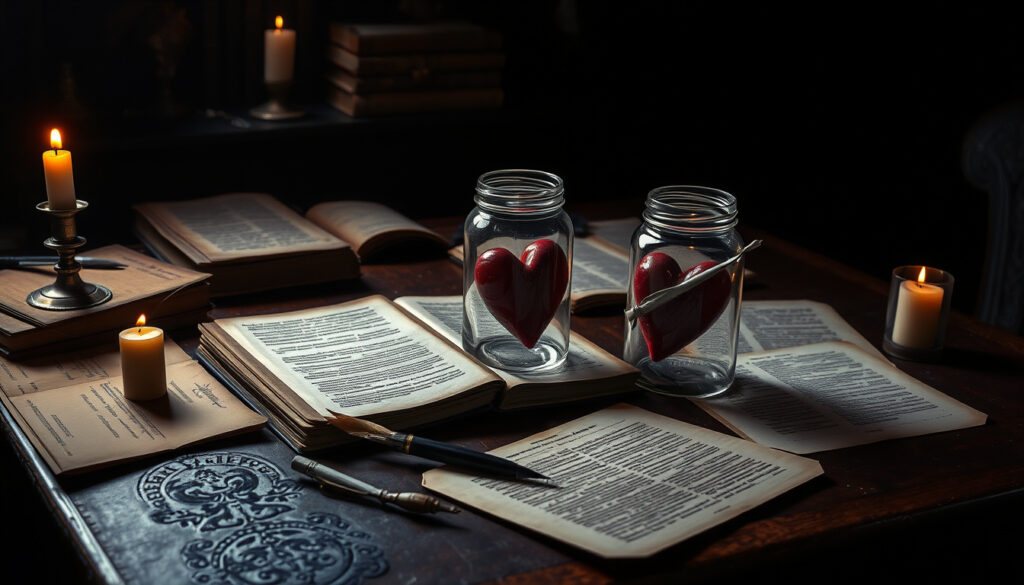
The story has become the most romantic—and most disputed—legend in Shelley family lore. After Percy Shelley drowned in the Gulf of Spezia on 8 July 1822, his body was cremated on the beach. According to the account, his heart refused to burn and was retrieved from the ashes (Encyclopaedia Britannica).
Mary Shelley kept the relic for the rest of her life, wrapped in a silk shroud in her writing desk. She carried it from Italy back to England, through multiple moves, and past the deaths of her friends and most of her children. After Mary died, the heart was found among her belongings and later passed to her son, Percy Florence Shelley.
Did Mary Shelley keep Percy Shelley’s heart?
Yes—she kept a wrapped object that was believed to be his heart. But historians have raised a sobering possibility: what Mary preserved may not have been his heart at all. Some medical experts argue that the organ that “did not burn” was more likely calcified tissue from tuberculosis of the lung or liver, which would resist fire (National Portrait Gallery). The heart itself, being mostly muscle, would have been consumed by the fire.
The catch: Even if the relic wasn’t actually Percy’s heart, the fact that Mary believed it was—and guarded it for 29 years—tells us more about her devotion than any autopsy ever could.
Timeline
- 30 August 1797 — Mary Shelley born in Somers Town, London
- 10 September 1797 — Mother Mary Wollstonecraft dies of puerperal fever
- 1814 — Elopes with Percy Bysshe Shelley to France and Switzerland
- 1816 — The “Year Without a Summer”; Mary begins writing Frankenstein in Geneva with Lord Byron and Percy Shelley
- 1818 — Frankenstein published anonymously
- 8 July 1822 — Percy Shelley drowns in the Gulf of Spezia
- 1826 — Publishes The Last Man, an early post-apocalyptic novel set in the 21st century
- 1 February 1851 — Dies at age 53; cause of death listed as brain tumour
What we know and what remains unclear
Confirmed facts
- Mary Shelley wrote Frankenstein and published it in 1818 (Encyclopaedia Britannica)
- She was the daughter of William Godwin and Mary Wollstonecraft (National Portrait Gallery)
- She eloped with Percy Shelley and married him after his first wife’s death (Penguin Random House)
- She carried a wrapped object claimed to be Percy Shelley’s heart until her death (DPMA)
- She lost three of her four children before adulthood (National Portrait Gallery)
- She wrote The Last Man (1826), a dystopian novel that predates 1984 by more than a century (Penguin Random House)
What’s unclear
- Whether Mary Shelley had a full sexual relationship with Jane Williams or other women
- Whether the “heart” that did not burn was actually calcified tissue from tuberculosis rather than his heart
- The exact nature of her chronic illness—psychosomatic, neurological, or a physical disease
- Whether her brain tumour was the true cause of death or a misdiagnosis
Quotes that capture her world
“I busied myself to think of a story… One which would speak to the mysterious fears of our nature and awaken thrilling horror.”
— Mary Shelley, 1831 Introduction to Frankenstein
“We will each write a ghost story.”
— Lord Byron, proposing the contest at Villa Diodati, 1816
“The author of Frankenstein has a power of thought and expression which few women have ever possessed.”
— Percy Bysshe Shelley, letter praising the manuscript
Mary Shelley created the most famous monster in literature while grappling with the grief of losing nearly every person she loved. The creature’s longing for connection was her own.
“Mary Shelley’s achievement was to take the domestic tragedy of loss and abandonment and turn it into a universal myth.”
— Anne K. Mellor, Distinguished Professor of English, UCLA
Related reading: Roald Dahl Books · King Kong
es.wikipedia.org, fr.wikipedia.org, artsemerson.org, maryshelley-biography.weebly.com, shmoop.com, knarf.english.upenn.edu, pl.wikipedia.org
Frequently asked questions
Who was Mary Shelley married to?
She married the poet Percy Bysshe Shelley in December 1816, after the death of his first wife Harriet Westbrook. They had been living together since eloping in 1814.
How old was Mary Shelley when she wrote Frankenstein?
She was 18 years old when she conceived the story in the summer of 1816, and 20 when it was published in January 1818 (Biography.com).
What is Mary Shelley’s most famous quote?
From the 1831 introduction: “I saw the pale student of unhallowed arts kneeling beside the thing he had put together.” And from the novel itself: “Beware; for I am fearless, and therefore powerful.”
Did Mary Shelley have children?
Yes, she had four children: a daughter who died in infancy, two sons who died young, and one son, Percy Florence Shelley, who survived to adulthood (Penguin Random House).
Where is Mary Shelley buried?
She is buried at St Peter’s Church in Bournemouth, England, alongside her parents William Godwin and Mary Wollstonecraft, and the heart of Percy Bysshe Shelley.
What other books did Mary Shelley write besides Frankenstein?
She wrote The Last Man (1826), Valperga (1823), Perkin Warbeck (1830), Lodore (1835), and Falkner (1837), plus travelogues, short stories, and biographies (Penguin Random House).
What influenced Mary Shelley to write Frankenstein?
The ghost-story contest with Lord Byron and Percy Shelley, her own reading in galvanism and resurrection, and the gloomy weather of the “Year Without a Summer” after the Tambora volcanic eruption.
Who was Mary Shelley’s mother?
Her mother was Mary Wollstonecraft, author of A Vindication of the Rights of Woman (1792), who died of puerperal fever ten days after Mary’s birth (National Portrait Gallery).
Mary Shelley lived long enough to see her novel adapted for the stage and to know it would outlive her. But she never remarried, never stopped grieving, and never stopped writing. For anyone trying to understand how a teenage girl invented science fiction while carrying the weight of so much loss, her resilience is the lesson: she turned tragedy into literature, and literature into a myth that still haunts us.
More related posts
 Define Estranged: Meaning, Legal Status, and How to Prove It
 Gareth Pierce: Age, Wife, Children, and Coronation Street Role
 Taylor Momsen: Child Star to Rock Frontwoman
 Leah Betts: Cause of Death, Ecstasy & Water Intoxication Story
 Millie Bright: Retirement, Career Stats and Personal Life
 Christian Horner 2026: Net Worth, F1 Exit, and Settlement
 What Happened to Mos Def? Career, Family, and Comeback
 Jordan Henderson Transfer Timeline: Liverpool to Chelsea