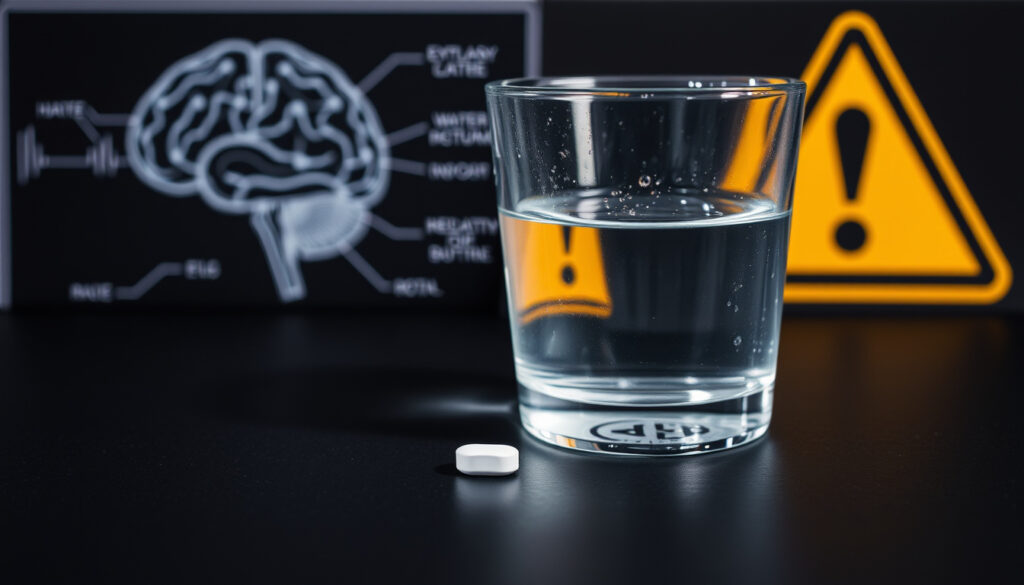
Leah Betts: Cause of Death, Ecstasy & Water Intoxication Story
Few stories from the 1990s still make people pause the way Leah Betts’s does: she was an 18-year-old from Essex who took one ecstasy tablet, drank too much water, and died from water intoxication, a medical twist that few had heard of before 1995. This article walks through what happened that night, what the science behind hyponatremia really means, and how her family turned tragedy into a long fight for better drug education.
Age at death: 18 years old ·
Date of death: 16 November 1995 ·
Ecstasy tablets taken: 1 tablet ·
Approximate water consumed: 7 liters (1.8 gallons) ·
Cause of death: Hyponatremia (water intoxication) ·
Location: Latchingdon, Essex, England
Quick snapshot
- Cause of death: hyponatremia from water intoxication (Wikipedia (community-reviewed encyclopedia))
- Consumed about 7 liters of water in 90 minutes (Wikipedia (community-reviewed encyclopedia))
- Inquest verdict: misadventure (Wikipedia (community-reviewed encyclopedia))
- Exact purity of the ecstasy tablet consumed (Wikipedia (community-reviewed encyclopedia))
- Whether other factors contributed to extreme thirst (Wikipedia (community-reviewed encyclopedia))
- Precise timeline of symptoms before hospital admission (The Independent (British news publication))
- 11 Nov 1995: Took ecstasy, drank water (Wikipedia (community-reviewed encyclopedia))
- 12 Nov 1995: Collapsed, admitted to hospital (Wikipedia (community-reviewed encyclopedia))
- 16 Nov 1995: Life support turned off (Wikipedia (community-reviewed encyclopedia))
- Ongoing drug education campaigns by the Betts family (Wikipedia (community-reviewed encyclopedia))
- Continued medical research into MDMA and water balance (The Independent (British news publication))
- Her story remains a reference in public health campaigns (Wikipedia (community-reviewed encyclopedia))
Eight facts that define the case, one pattern: every figure sharpens a tragedy that turned on a single misstep.
| Attribute | Value |
|---|---|
| Full name | Leah Louise Betts |
| Date of birth | 27 January 1977 |
| Date of death | 16 November 1995 |
| Age at death | 18 years |
| Cause of death | Hyponatremia due to water intoxication |
| Ecstasy dosage | 1 tablet (unknown purity) |
| Water consumed | Approximately 7 liters |
| Location of incident | Latchingdon, Essex, England |
What was the cause of death for Leah Betts?
The official cause of death was hyponatremia, a condition of dangerously low sodium in the blood, brought on by drinking an extreme amount of water. The inquest held in 1996 concluded that her death was due to water intoxication — not ecstasy toxicity — and recorded a verdict of misadventure (Wikipedia (community-reviewed encyclopedia)). Her brain swelled from the sodium imbalance, leading to fatal cerebral edema.
How does water intoxication cause death?
- Excess water dilutes sodium levels in the blood.
- Low sodium causes cells, including brain cells, to swell.
- Swelling within the fixed skull leads to brain stem compression and death.
The implication: Leah’s case shows how a single piece of misunderstood advice can turn a common drug into a lethal trap.
How much water did Leah Betts drink?
According to witness statements and medical reports, she consumed about 7 liters (1.8 US gallons) within a 90-minute window. That is more than three times the amount an average adult would normally drink in a full day.
What factors lead to excessive water consumption on ecstasy?
- MDMA can produce a powerful thirst as a side effect.
- Rave culture during the 1990s often advised partygoers to drink plenty of water to prevent overheating.
- Leah was not dancing at the time she drank — she was at home, following what she thought was safe advice.
The very advice meant to protect ravers — “drink water” — became lethal when followed without restraint. Leah’s case exposed the gap between good intention and medical reality.
The pattern: the safety measure designed to protect ravers became the instrument of her death.
What is the movie about Leah Betts?
A television film titled Leah Betts: The Legacy (working title) was produced for UK broadcast, dramatising her last days and the aftermath. Several documentaries and news specials have also covered her story, including segments by the BBC.
Are there other films or documentaries about Leah Betts?
- Ecstasy: The Truth (1996) – a Channel 4 documentary.
- YouTube documentaries and retrospective pieces produced by independent journalists.
- Her story is referenced in medical training materials about water intoxication.
What this means: the visual retellings have kept the medical facts in public view.
What was Leah Betts’ legacy?
Her death became a watershed moment for drug education in the United Kingdom. The image of her on life support — distributed widely in anti-drug campaigns — remains one of the most recognisable warnings about recreational drug use. But the legacy is more complex than a single poster: it forced conversations about hydration, harm reduction, and the unintended consequences of well-meaning advice.
How did her death influence drug education and policy?
- Schools incorporated water intoxication into drug-safety talks.
- Campaigns shifted from “don’t take drugs” to “know the risks of how you use them”.
- The Betts family campaigned for more nuanced harm-reduction information, not just scare tactics.
Drug education programmes that simply repeat “drink water” can kill. Leah’s story shows that precision — how much, when, and under what conditions — saves more lives than slogans.
The catch: legacy is complex — her image is a warning, but the nuance of harm reduction is often lost.
Who were Leah Betts’ parents and what did they do after her death?
Leah’s father, Paul Betts, and her mother, Janet Betts, became vocal advocates for drug prevention. Paul Betts spoke at schools and in the media, emphasising that the risks of ecstasy are often misunderstood. The family faced harassment and were forced to move house after her death.
What was Paul Betts’ role in drug education?
- He gave presentations across the UK, often showing a photograph of Leah in hospital.
- He argued that young people need honest, science-based information rather than moralising.
- He collaborated with drug charities and public health bodies.
The implication: Paul Betts’ campaign shifted the conversation from fear to facts, but the fight continues.
What is hyponatremia and how does it relate to ecstasy?
Hyponatremia is a condition where the concentration of sodium in the blood falls below normal (typically under 135 mmol/L). When sodium drops too far, water moves into cells and causes them to swell. In the brain, swelling leads to confusion, seizures, coma, and death.
What are the symptoms and treatment of water intoxication?
- Early symptoms: headache, nausea, vomiting, muscle cramps.
- Advanced symptoms: confusion, hallucinations, seizures, loss of consciousness.
- Treatment includes IV sodium solutions and diuretics to remove excess fluid.
Are Statins Bad for You? Benefits, Side Effects & Risks – A related look at how medical substances interact with the body.
Timeline of Leah Betts
- 11 November 1995: Leah takes ecstasy at a nightclub; returns home and drinks water excessively throughout the night.
- 12 November 1995: She collapses at home and is rushed to Broomfield Hospital in Chelmsford.
- 16 November 1995: Life support is switched off; she is pronounced dead.
- 1996: Inquest returns a verdict of misadventure due to water intoxication.
- Late 1990s onwards: The Betts family campaigns for improved drug education.
- 2000s: Documentaries and films about Leah Betts are produced.
Clarity: Confirmed facts vs. what remains unclear
Confirmed facts
- Leah Betts died from hyponatremia due to water intoxication after taking ecstasy.
- She consumed approximately 7 liters of water.
- The inquest verdict was misadventure.
- Her parents became public advocates.
What’s unclear
- The exact amount of ecstasy consumed (purity not specified).
- Whether other factors contributed to her extreme thirst.
- The precise timeline of symptoms before hospitalization.
Quotes from those involved
“She took one tablet and died from water intoxication. We didn’t know that could happen.”
Paul Betts, Leah’s father, in an interview with the BBC
“The cause of death is water intoxication leading to hyponatremia.”
Coroner at the inquest
Thirty years on, the story of Leah Betts is still taught in medical schools and debated in drug policy forums. For educators and parents, the takeaway is brutal but clear: oversimplified harm-reduction advice can be as dangerous as no advice at all. For public health professionals in the UK, the challenge remains the same — deliver precise, science-backed information, or risk repeating a tragedy that one poster could never prevent.
Related reading: **What Is Low Blood Pressure? Causes, Symptoms & Treatment**
youtube.com, anyoneschild.org, spectator.com, facebook.com, eveningledger.uk
For a deeper look into the events surrounding her death and its aftermath, see Leah Bettss full story.
Frequently asked questions
How old was Leah Betts when she died?
She was 18 years old. She died five days after her 18th birthday.
Where is Leah Betts buried?
Her grave is located at St. Mary’s Church in Latchingdon, Essex.
What is hyponatremia?
Hyponatremia is a medical condition where sodium levels in the blood become dangerously low, leading to cell swelling. It is the direct cause of death in water intoxication cases.
What are the symptoms of water intoxication?
Early symptoms include headache, nausea, and confusion. Advanced symptoms include seizures, coma, and death.
Did Leah Betts take any other drugs?
No other drugs were found in her system. The only substance detected was MDMA (ecstasy).
What happened to the person who sold ecstasy to Leah Betts?
The supplier was never identified or prosecuted for the sale.
Is ecstasy dangerous even if you don’t drink too much water?
Yes. MDMA itself can cause hyperthermia, serotonin syndrome, and long-term neurological damage even without excessive water intake.
How did Leah Betts’ death change drug education in schools?
Her case prompted schools to include specific warnings about water intoxication and the risks of following generic advice without individual limits.
More related posts
 Mo Farah: Net Worth, Family, and Life After Olympics
 Amelia Flanagan: Age, Siblings, Emmerdale Role and Exit
 Riccardo Calafiori: Transfer Cost, Height, Wage & Arsenal Fit
 Elena Vampire Diaries: Love, Loss & Vampire Transformation
 Stephen Mangan: Irish Heritage, Family, and Career Guide
 Sian Gibson Biography: Career, Awards, and Peter Kay
 Cameron Winter: Age, Vocal Style & Background
 Bank Holidays 2024 UK – Complete Regional Lists