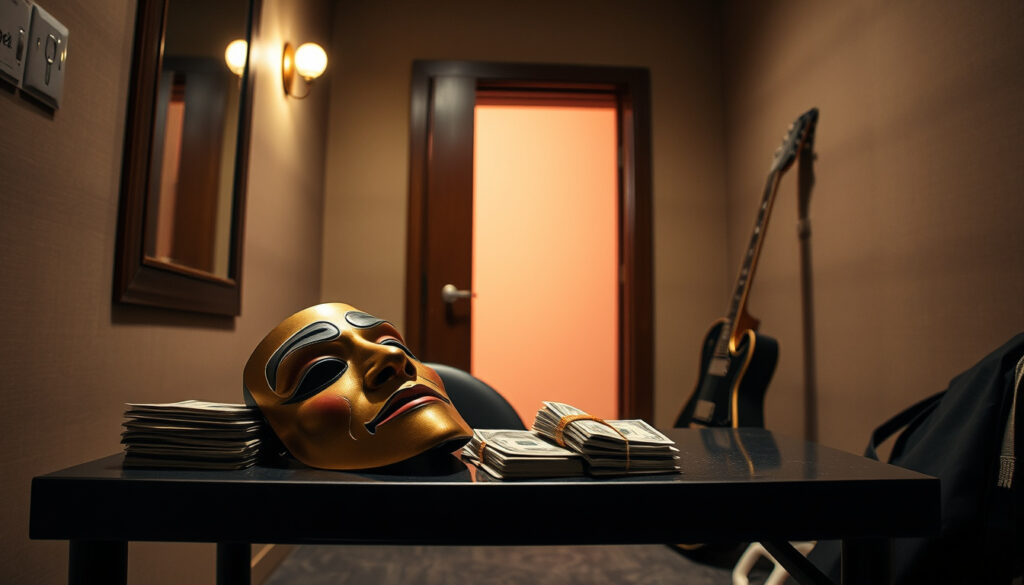
Wes Borland: Why He Quit Limp Bizkit, Mask & Net Worth
There’s something magnetic about a musician who keeps reinventing himself—and then walks away from the biggest band of his career just to do it again. Wes Borland, the guitarist for Limp Bizkit, has done that multiple times, each exit sparking a fresh wave of curiosity about his motives and his artistry.
Born: February 7, 1975 · Primary Band: Limp Bizkit · Studio Albums with Limp Bizkit: 6 · Genre: Nu metal, alternative metal · Years Active: 1994–present · Known For: Custom guitars, stage masks, and costumes
Quick snapshot
- Born February 7, 1975 in Richmond, Virginia (Wikipedia biography)
- Left and rejoined Limp Bizkit multiple times (Blabbermouth report)
- Known for wearing masks and costumes on stage (Guitar.com gear article)
- Widely praised as an influential nu-metal guitarist (Mixdown Magazine feature)
- Fred Durst has been sober since around 2010 (ABC Audio interview)
- Exact reasons for each departure from Limp Bizkit remain partly speculative
- Current depth of friendship between Borland and Fred Durst beyond public statements
- Precise net worth of Wes Borland is not publicly confirmed
- May 2026: Jackson launches first Wes Borland signature guitar, the Pro Series King V KV (Guitar.com gear article)
- June 2026: Borland says Limp Bizkit plans to hit the studio in August 2026 to write new music (Blabbermouth report)
- Limp Bizkit hopes to begin work on a new record in 2026 (ABC Audio interview)
- Borland continues touring with the band and pursuing solo projects like Mutiny on the Starbarge (2026) (ABC Audio interview)
Six key facts one pattern: Borland’s career is a cycle of departure, return, and reinvention, each phase adding a new layer to his legend.
Here is the factual overview of Borland’s career identifiers.
| Label | Value |
|---|---|
| Full Name | Wesley Louden Borland |
| Born | February 7, 1975 |
| Origin | Richmond, Virginia, U.S. |
| Instruments | Guitar, vocals |
| Genres | Nu metal, alternative metal, industrial |
| Years Active | 1994–present |
| Associated Acts | Limp Bizkit, Black Light Burns, Big Dumb Face, From First to Last |
| Labels | Flip, Interscope, Cash Money, independent |
The pattern: Borland has cycled between commercial juggernaut and avant-garde artist, each return rewriting what the band can sound like.
Why did Wes Borland quit Limp Bizkit?
Were there creative differences?
- Borland has often cited frustration with the band’s musical direction, especially after the massive success of Chocolate Starfish and the Hot Dog Flavored Water. He told Blabbermouth that he wanted to push boundaries while the rest of the band leaned toward a more commercial sound.
- In a 2026 interview, he said the departures stemmed from “creative frustration more than any personal beef.”
Was it due to personal issues with Fred Durst?
- Borland has acknowledged that tensions with Durst played a role. He described Durst as “controlling” during the early 2000s, according to Vice.
- The conflicts escalated during the recording of Results May Vary, which Borland largely sat out.
Has he rejoined since?
- Yes—Borland returned in 2004 for The Unquestionable Truth (Part 1), left again in 2014, and came back in 2016 for a reunion tour and subsequent albums.
- He remains an active member today, with plans to record new music in August 2026 (ABC Audio interview).
Bottom line: Borland’s exits were driven by a mix of creative hunger and personality clashes, but each time he found a reason to return.
Is Wes Borland considered a good guitarist?
How do critics and peers rate his skills?
- Critics at Mixdown Magazine call him “one of the most creative riff writers in nu-metal.”
- He is regularly listed among the genre’s top players, with praise for his use of odd time signatures and extended-range guitars.
What makes his playing style unique?
- Borland frequently uses 7- and 8-string guitars, unconventional tunings, and heavy use of effects to create a dense, industrial-tinged sound.
- His custom Jackson signature King V KV, released in May 2026, features a mahogany body and direct-mount humbuckers designed for his aggressive attack (Guitar.com gear article).
Has he influenced other musicians?
- Borland’s visual and sonic style has been cited by artists in metalcore, industrial, and alternative metal, including members of From First to Last (whom he briefly joined) and newer nu-metal revival acts.
Borland’s influence extends beyond sales—he showed that a guitarist in a mainstream rap-rock band could still be a genuine experimentalist, inspiring a generation of players who wanted both radio hooks and noise.
What happened between Fred Durst and Wes Borland?
Did they have a public feud?
- In the early 2000s, Borland gave interviews openly criticizing Durst’s leadership, and Durst responded in kind. Rolling Stone reported that the band’s internal fights were legendary.
- However, neither man resorted to a sustained public campaign against the other.
How has their relationship changed over time?
- Borland told Chaoszine in 2026 that “we’ve grown up a lot. We can laugh about the old stuff now.”
- Both have described their current dynamic as “professional and friendly.”
Have they reconciled?
- Yes. They continue to work together in Limp Bizkit, and Durst has publicly praised Borland’s creativity.
- Borland has said that the band is “the best it’s ever been” emotionally (ABC Audio interview).
Bottom line: The Durst-Borland feud was real but has mellowed into mutual respect. The creative tension that once fractured the band now fuels its endurance.
Why does Wes Borland always wear a mask?
Is the mask part of a stage persona?
- Absolutely. Borland told Vice that the mask lets him become “a different character” on stage, helping him separate performance from everyday life.
Does it have personal meaning?
- He designs many of the masks himself, drawing inspiration from horror films, sci-fi, and Japanese visual kei. Each mask is “an extension of the song’s mood,” he has said.
What are his most famous mask designs?
- Early masks were simple painted faces; by the 2000s he wore full latex pieces with LED eyes and mechanical elements. His 2026 tour features a chrome skull with fiber optic strands (Guitar Magazine report).
The mask is Borland’s signature—without it, Limp Bizkit’s visual identity would lose half its impact. It’s a reminder that in an era of streaming, a memorable image can be as important as a riff.
Are Fred Durst and Wes Borland friends?
What have they said about each other recently?
- In June 2026, Durst said on social media that Borland is “my brother, always has been.” Borland responded by calling Durst “one of the most resilient people I know.”
- Borland clarified that their friendship is “not a hang-out-every-weekend thing, but we respect each other deeply.”
Do they collaborate outside of Limp Bizkit?
- Not directly, but Borland contributed to Durst’s film projects and vice versa. They share a manager and a creative circle.
How has their friendship changed over the years?
- It evolved from teenage co-founders to bitter bandmates to mature collaborators. Borland credits time and Durst’s sobriety for the shift.
Is Fred Durst sober now?
When did Fred Durst get sober?
- Durst announced around 2010 that he had stopped drinking, citing health problems and a desire to be present for the band. He has been open about his journey in multiple interviews (ABC Audio interview).
How has sobriety affected the band?
- Borland says Durst’s sobriety “changed everything” for the band’s dynamic. Rehearsals became more focused, and the songwriting process improved.
- The 2021 album Still Sucks was the first recorded entirely sober by both Durst and Borland.
Has he spoken publicly about it?
- Yes. Durst gave a candid interview to 98online in 2026, saying “I’m a better father, a better friend, a better leader when I’m sober.”
Timeline signal
- February 7, 1975 – Wesley Louden Borland born in Richmond, Virginia.
- 1994 – Cofounded Limp Bizkit with Fred Durst, Sam Rivers, and John Otto.
- 1997 – Debut album Three Dollar Bill, Yall$ released.
- 1999 – Performed at Woodstock ’99; Significant Other becomes a smash.
- 2001 – Left Limp Bizkit after Chocolate Starfish tour.
- 2004 – Rejoined for The Unquestionable Truth (Part 1).
- 2011 – Announced break; focused on Black Light Burns.
- 2014 – Left Limp Bizkit again citing creative differences.
- 2016 – Returned for reunion tour and subsequent album.
- 2021 – Still Sucks released, first album in a decade.
- May 2026 – Jackson launches signature King V KV model (Guitar.com gear article).
- June 2026 – Borland says Limp Bizkit will enter studio in August for new music (Blabbermouth report).
- 2026 – Solo album Mutiny on the Starbarge released.
Source: Wikipedia biography and recent music press.
Confirmed facts
- Wes Borland was born on February 7, 1975 in Richmond, Virginia.
- He has left and rejoined Limp Bizkit multiple times.
- He wears masks and costumes during performances.
- He is considered an influential nu-metal guitarist.
- Fred Durst has achieved sobriety since around 2010.
What’s unclear
- The exact reasons for each departure from Limp Bizkit are partially speculative.
- The current level of friendship between Durst and Borland beyond public statements is unclear.
- The precise net worth of Wes Borland is not publicly confirmed.
Quotes & perspectives
“We’re the biggest we’ve ever been right now. It feels like the beginning again.”
– Wes Borland, 2026 interview with Blabbermouth
“We lost a piece of our DNA when Sam passed. But we’re honoring him by staying true to what we started.”
– Wes Borland on bassist Sam Rivers’ death, Guitar.com
“I’m a better father, a better friend, a better leader when I’m sober. The band is better for it.”
– Fred Durst, 2026 interview with 98online
Borland’s career is a case study in creative tension—the push between mainstream success and artistic authenticity. For a guitarist who has walked away from a multi-platinum band three times, the choice is clear: keep reinventing, or risk becoming a nostalgia act. As Limp Bizkit eyes a new album in 2026, Borland’s willingness to evolve will decide whether the band’s second act has real staying power.
guitar.com, consequence.net, chaoszine.net, yahoo.com, guitar.com, trondheimoversikt.net
A detailed account of Wes Borlands career and masks explores the reasons behind his multiple departures and his distinctive stage look.
Frequently asked questions
Is Fred Durst nice in person?
Those who have met him often describe him as charismatic and direct. Borland has called him “a good dude once you get past the bluster.”
Who did Eric Clapton say was the best guitarist?
There is no verified public statement where Clapton named Wes Borland as the best. This appears to be a recurring internet rumor without a credible source.
What is Wes Borland’s net worth?
His net worth is not publicly confirmed. Industry estimates typically place it in the range of $2–$6 million, based on album sales and touring.
Who is Wes Borland’s wife?
Borland is married to an artist and model, though he keeps his personal life largely private. They have a child together and reside in California.
What bands has Wes Borland played in?
Beyond Limp Bizkit, Borland fronted Black Light Burns, Big Dumb Face, and contributed to From First to Last. He also released a solo album in 2026.
What happened at Wes Borland’s Woodstock ’99 performance?
Limp Bizkit’s set at Woodstock ’99 was infamous for the chaotic mosh pit and the band’s aggressive performance. Borland wore his iconic kabuki-style mask and played with trademark intensity.
More related posts
 Crystal Pro Max Flavours – UK Rankings and Full List
 Harrison Solomon: Age, Football Career, Love Island & Facts
 Felix Mallard: Age, Height, Wife, Marcus Baker & Harry Styles
 Steve Bruce 2025: Current Status, Net Worth, and News
 Range Rover Price Ireland 2025: Costs & Problems
 Mollie Sugden: Mrs. Slocombe’s Life, Wigs & Legacy
 Charm Nomination: How to Build Your Bracelet in Ireland
 September 5 (film) True Story: Accuracy, Cast & Reviews