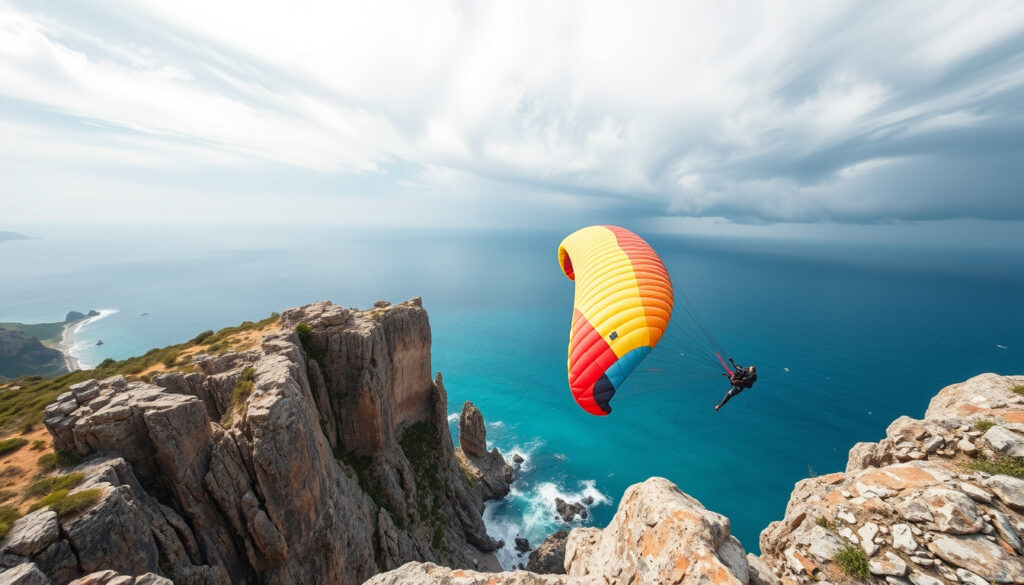
Turkey Travel Warning: Paragliding Safety Risks Explained
If you’ve been eyeing Turkey’s famous paragliding flights over Ölüdeniz, the past year has added a sharp new edge to that dream. In April 2025, tandem pilot Tevfik Tek (29) and passenger Mehmet Buğra Silen (22) died when their wing collapsed mid-flight from Babadağ mountain. One month later, 81-year-old German tourist Volker Gerhard Wagner suffered the same fate on a solo flight. The UK’s Foreign, Commonwealth & Development Office (FCDO) has since refreshed its warning: paragliding is an extreme sport, British nationals have died doing it in Turkey, and anyone considering the experience needs to weigh that risk carefully.
Paragliding Risk Level: Extreme sport with fatalities · UK FCDO Warning: British nationals died or seriously injured · Incident Locations: Ölüdeniz and Fethiye resorts · Irish DFA Note: Multiple fatalities in paragliding accidents · Operator Check: Full instructions and training required
Quick snapshot
- British nationals have died or been seriously injured paragliding in Turkey (GOV.UK FCDO)
- Paragliding carries risk of serious injury or death; full instructions required (GOV.UK FCDO)
- Exact total count of British fatalities in Ölüdeniz paragliding
- Whether ongoing safety reforms will change industry practices
- Full regulatory status of all operators at Babadağ
- April 2025: tandem pilot and passenger killed in wing collapse (FTN News)
- May 2025: 81-year-old solo pilot killed in wing collapse from Babadağ (FTN News)
- 2026: FCDO refreshes paragliding warnings citing recent tragic incidents (Travel and Tour World)
- Turkish authorities investigating equipment and weather factors
- FCDO likely to maintain current advisory without further incidents
- Industry under pressure to demonstrate improved safety standards
The table below consolidates key facts from official sources on the 2025 Babadağ incidents.
| Label | Value |
|---|---|
| Key Warning Source | GOV.UK FCDO |
| Incident Type | Paragliding deaths and injuries |
| Affected Areas | Ölüdeniz, Fethiye |
| Babadağ Launch Altitude | 1700m |
| April 2025 Fatality Victims | Tevfik Tek (29) and Mehmet Buğra Silen (22) |
| April 2025 Fatality Victim | Volker Gerhard Wagner (81) |
| Precaution | Full training required before flight |
| Insurance Note | Standard travel insurance often excludes extreme sports |
Why is there a travel warning for Turkey?
The FCDO maintains an active travel advisory for Turkey that specifically flags paragliding as a dangerous activity. On its official safety and security page, the department states plainly: “Paragliding is an extreme sport and carries the risk of serious injury or death” — and adds that British nationals have died or been seriously injured whilst paragliding in Turkey (GOV.UK FCDO). That combination of official language and documented casualties is why the warning appears in search results and travel advisory roundups.
Paragliding risks in official advice
The FCDO’s position goes beyond a general caution. It specifically names Ölüdeniz and the Babadağ launch site as the locations where British tourists have come to harm (Travel and Tour World). The advisory recommends that anyone thinking about a flight should seek professional instruction from a reputable operator — not simply the cheapest option available. It also warns pedestrians on Ölüdeniz’s public beaches to stay clear of landing zones, where descending tandem pairs and solo pilots can collide with sunbathers.
Standard travel insurance policies frequently exclude extreme sports like paragliding. The FCDO recommends checking your coverage explicitly for medical evacuation — and notes that the UK Global Health Insurance Card (GHIC) is not valid in Turkey, making private insurance essential for any activity with injury risk.
Recent fatalities reported
Two separate incidents in 2025 have driven the FCDO to refresh its Ölüdeniz warning. On 23 April 2025, tandem pilot Tevfik Tek (29) and passenger Mehmet Buğra Silen (22) died when their wing collapsed during a flight from Babadağ mountain (FTN News). The launch point sat at approximately 1700m altitude. Exactly one month later, on 14 May 2025, an 81-year-old German tourist named Volker Gerhard Wagner suffered a fatal wing collapse on a solo flight from the same mountain (FTN News). Turkish authorities were expected to investigate equipment condition and weather circumstances in both cases.
Is it safe to travel to Turkey right now?
Outside the paragliding context, Turkey remains generally safe for tourists in established resort areas. The FCDO rates safety and security as a standard concern — noting low crime in areas popular with visitors and highlighting terrorism risks in parts of the country far from beach resorts. The US State Department’s Turkey advisory sits at Level 2 (“Exercise Increased Caution”) and makes no specific mention of adventure sports, instead focusing on broader security considerations in cities like Istanbul and Ankara (US Dept of State).
General safety and security overview
The FCDO advises awareness in crowded areas of Istanbul and Ankara where large public gatherings occur, but does not blanket-restrict travel to those cities. Its strongest prohibition applies to areas within 10km of Turkey’s border with Syria, where all travel is advised against due to armed conflict and terrorism risks (Travel and Tour World). These zones are nowhere near Ölüdeniz or the Mediterranean resort belt. For tourists visiting Antalya, Bodrum, or the Aegean coastline, general crime levels mirror those of other major European holiday destinations.
Turkey’s resort infrastructure is mature and tourist-friendly. The safety question comes down to activity choice: mainstream sightseeing carries standard travel risks, while paragliding from Babadağ puts you in direct contact with the activity that has generated the FCDO’s most specific casualty warnings.
Tourist avoidance trends
Some travel analysts and media outlets have reported that Turkey’s tourism sector experienced reduced visitor numbers during periods of heightened FCDO advisory activity — though exact figures on how much the paragliding warnings specifically contributed versus broader geopolitical factors are not publicly quantified. The FCDO’s refreshed 2026 advisory, explicitly citing recent tragic paragliding incidents, suggests the department considers the activity risk material enough to mention by name.
How safe is paragliding in Turkey?
This is where the picture gets complicated. Babadağ above Ölüdeniz claims the title of the world’s highest tandem paragliding launch site, with flights originating at around 1957m altitude (The Roaming Renegades). The industry has operated for decades, and operators like ReAction Paragliding state they use EN/LTF-certified equipment with pilots holding 10 or more years of experience (ReAction Paragliding). Yet two fatal wing collapses in two months have exposed a gap between industry self-certification and verified safety outcomes.
Common injuries and data
The FCDO does not publish an accident rate per flight hour for Ölüdeniz, and no comprehensive independent safety audit of Babadağ operators is publicly available. What local reports and operator blogs indicate is that most accidents involve solo riders rather than commercial tandem passengers — a pattern that offers partial reassurance for tourists booking tandem flights, but no absolute guarantee (The Roaming Renegades). Weight limits vary by operator: Sky Sports Ölüdeniz sets a 110kg limit, while most other companies cap at 100kg; there are no height restrictions.
Operator safety standards
The FCDO recommends seeking out reputable, established operators and explicitly advises against choosing based on lowest price. It also advises that passengers receive full safety briefings and training before takeoff. Operators are required to give instructions, but the FCDO’s wording frames this as a precaution rather than a guaranteed regulatory requirement. You can back out of a booked flight at any point before launch, though last-minute cancellations are unlikely to receive refunds.
Tandem flights with experienced operators represent the lower-risk option within the activity, but two wing collapses in 60 days have shaken confidence in equipment maintenance standards. Ask your operator directly about their wing inspection schedule and certification before booking.
Is it safe to travel to Istanbul, Turkey right now?
Istanbul occupies a different risk profile from Turkey’s Mediterranean resorts. The city draws millions of visitors annually, and its tourism infrastructure is among the most developed in the country. The FCDO’s travel advice for Istanbul focuses on awareness in crowded areas and large public gatherings rather than adventure activities — the paragliding warnings are specific to the Ölüdeniz-Fethiye corridor.
City-specific risks
The FCDO advises heightened awareness in Istanbul’s tourist-dense areas where large crowds gather, particularly around transport hubs and major landmarks. This reflects a broader pattern of caution applied to any major city rather than specific intelligence about Istanbul. The US State Department advisory, updated in March 2026, maintains its Level 2 rating with a specific note about the Adana consulate area — a concern unrelated to Istanbul or tourism and geographically distant from it.
Comparison to resorts
The resort areas of Antalya, Bodrum, and the Ölüdeniz-Fethiye corridor operate on a tourism model that prioritises visitor safety in mainstream activities. Istanbul, as a major global city, has a more complex security environment but no advisory specifically targeting tourists. The risk gradient in Turkey runs geography-first: coastal resorts are substantially safer for general travel than southeastern border regions.
Is it safe to travel to Antalya, Turkey right now?
Antalya is Turkey’s primary package holiday destination and handles millions of British and European tourists each year with a well-developed resort infrastructure. Safety concerns in the resort areas are largely those faced by tourists anywhere in the Mediterranean holiday belt — road traffic, beach safety, and standard urban petty crime.
Resort area safety
Antalya’s resorts operate under tourism regulations that apply across the province’s hotel zones and beachfront areas. The FCDO has not issued a blanket travel restriction against Antalya, and its safety warnings focus on specific activities and regions rather than the city itself. The city’s airport, beaches, and hotel districts are considered safe for general tourism.
Specific to popular spots like Bodrum and Alanya
Bodrum and Alanya, like Antalya, operate within Turkey’s mainstream tourism framework. The FCDO does not differentiate these resorts in its safety advice, and no specific paragliding fatalities have been reported from these locations — the documented incidents cluster around Ölüdeniz and Babadağ. For tourists specifically asking about Bodrum or Alanya, the paragliding warning does not apply directly, though the broader FCDO advisory on terrorism risks in parts of Turkey away from resorts does provide context.
Upsides
- Tandem flights with experienced pilots represent lower risk than solo paragliding
- Ölüdeniz operators use EN/LTF-certified equipment and 10+ year veteran pilots
- Industry has decades of operating experience with government oversight
- General Turkey resort tourism remains largely safe
- Medical facilities in Antalya and Fethiye handle tourist injuries
Downsides
- Two fatal wing collapses in April-May 2025 at Babadağ
- FCDO explicitly names British nationals among casualties
- Standard travel insurance often excludes extreme sports
- Solo paragliding carries substantially higher risk per available data
- UK GHIC not valid in Turkey — private insurance essential
- FCDO maintains active warning without published accident rate data
What experts and officials say
British nationals have died or been seriously injured whilst paragliding in Turkey. Paragliding is an extreme sport and carries the risk of serious injury or death.
— GOV.UK FCDO (UK Government Foreign Office)
The FCDO has highlighted a worrying trend of serious injuries and fatalities involving British nationals participating in this extreme sport.
— Travel and Tour World (Travel News Outlet)
Most Ölüdeniz accidents involve single riders, not commercial tandem pilots — the tandem industry is the safer segment of the market.
— The Roaming Renegades (Travel Blog)
For British nationals planning a Turkey holiday, the decision point is unusually clear: mainstream resort activities carry standard travel risks, but paragliding from Babadağ sits in a different category — one with documented FCDO casualties. Tour operators, travel insurers, and the UK government itself have all flagged the activity. The implication for your trip is straightforward: enjoy Turkey’s beaches, dining, and culture with the confidence that millions do safely each year, but treat the Babadağ flights as the FCDO describes them — an extreme sport with real consequences.
Related reading: travel hazards and risks · UK travel guidance
While paragliding risks dominate Ölüdeniz headlines, latest FCDO tourist advisories outline broader FCDO concerns like terrorism and hazards affecting Antalya and Istanbul trips.
Frequently asked questions
What precautions should I take for paragliding in Turkey?
Choose an established operator with experienced pilots, ask about their wing inspection schedule, and confirm your travel insurance explicitly covers extreme sports and medical evacuation. Wear flat, secure shoes and arrive prepared to receive a full safety briefing before launch.
Are there insurance requirements for adventure sports in Turkey?
No legal requirement, but standard travel insurance policies frequently exclude extreme sports like paragliding. The FCDO strongly recommends checking your policy for adventure sports coverage and medical evacuation. The UK GHIC is not valid in Turkey.
How recent are the paragliding fatalities in Turkey?
The most recent fatalities occurred on 23 April 2025 (tandem pilot Tevfik Tek and passenger Mehmet Buğra Silen) and 14 April 2025 (solo pilot Volker Gerhard Wagner), both from Babadağ mountain above Ölüdeniz.
What does the FCDO say about terrorism risks in Turkey?
The FCDO advises against all travel to areas within 10km of Turkey’s border with Syria due to armed conflict and terrorism risks. It also advises heightened awareness in crowded areas of Istanbul and Ankara. The main resort areas on the Mediterranean and Aegean coasts are not subject to this restriction.
Is paragliding regulated in Turkish resorts?
Ölüdeniz paragliding operators are subject to Turkish tourism regulations, and the industry has operated for decades. However, two wing collapses in 2025 have raised questions about equipment maintenance standards and regulatory oversight that Turkish authorities are currently investigating.
What to do if injured paragliding in Turkey?
Seek immediate medical attention at the nearest facility. Contact your travel insurance emergency line to arrange medical evacuation if needed. Report the incident to local police and your tour operator. Notify your insurer as soon as possible and keep all medical documentation for claims.
Are there safer alternatives to paragliding in Turkey?
Turkey’s Mediterranean coast offers a wide range of water sports with substantially lower risk profiles: diving with certified centres, sailing excursions, jet skiing, and boat tours. For aerial views, helicopter tours and scenic flights operate through licensed aviation operators with different safety frameworks.
More related posts
 Best Ninja Dual Air Fryer: Ireland Models, Tips & Mistakes
 Sian Gibson Biography: Career, Awards, and Peter Kay
 Andrea Corr: Net Worth, Children, Miscarriage, Career
 Chris Evans DJ: Career, Health, and Life Now
 Chris Martin Relationships: Dakota Johnson, Gwyneth Paltrow & Health Rumors
 Christian Horner 2026: Net Worth, F1 Exit, and Settlement
 How Much is a 2nd Class Stamp – Current Royal Mail UK Prices 2024
 Toy Storage: Clever Ideas & Best Systems for Kids