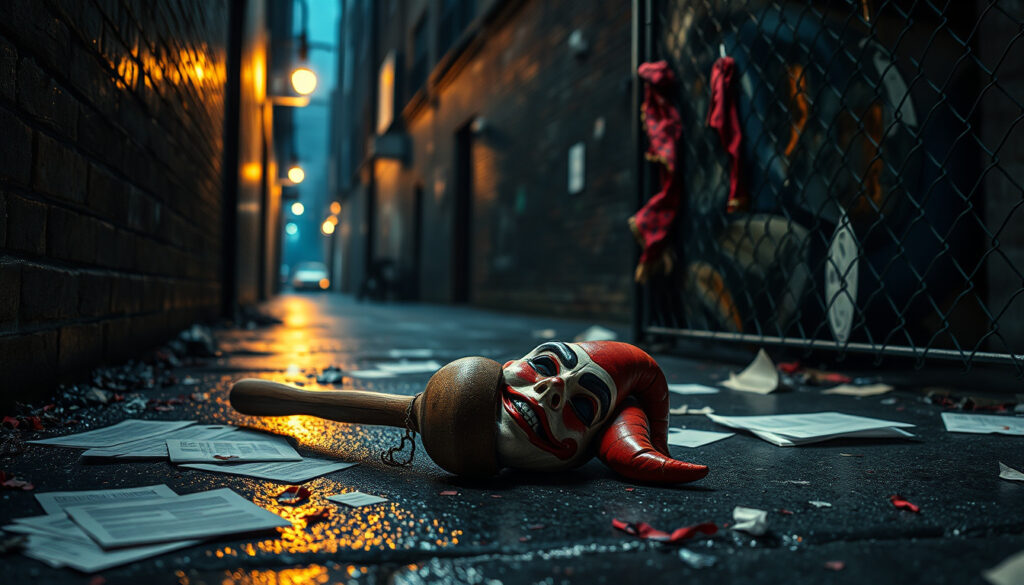
Harley Quinn: Her Origin, Relationships, and Mental Health
Few characters in pop culture have undergone a transformation as dramatic as Harley Quinn. Born as a one-off cartoon sidekick in 1992, she evolved into a comics superstar and a symbol of complicated female agency.
First appearance: Batman: The Animated Series, 1992 · Real name: Dr. Harleen Frances Quinzel · Created by: Paul Dini and Bruce Timm · Affiliations: Joker, Poison Ivy, Gotham City Sirens · Notable relationships: Joker (ex-boyfriend), Poison Ivy (partner)
Quick snapshot
- Real name: Dr. Harleen Frances Quinzel (DC Comics (official character page))
- First appearance: Batman: The Animated Series (1992) (Screen Rant (comics analysis))
- Created by Paul Dini and Bruce Timm (DC Comics YouTube (origin explainer))
- Bisexual, in a confirmed relationship with Poison Ivy (DC Comics (official Pride blog, 2020))
- Whether the Joker ever genuinely loved Harley or only used her (Screen Rant (comics analysis))
- Exact clinical diagnosis (histrionic vs. borderline personality disorder) (Psychology Today (clinical analysis))
- Canonical status of origin variations across DC timelines (Autostraddle (media commentary))
- Consistency of Harley’s relationship with Poison Ivy across comics and the animated series (Autostraddle (media commentary))
- 1992 – First appearance in Batman: The Animated Series (DC Comics)
- 1994 – Comic debut in “The Batman Adventures: Mad Love” (DC Comics YouTube (origin video mentions Mad Love))
- 2011 – New 52 reboot embeds her in main DC continuity (DC Comics)
- 2019 – Launch of “Harley Quinn” adult animated series (Autostraddle)
- Continued expansion in DC Universe media and games (Screen Rant)
- Ongoing storyline development in comics and animated series (DC Comics)
These key facts offer a quick reference.
| Attribute | Value |
|---|---|
| Real name | Dr. Harleen Frances Quinzel (DC Comics) |
| First appearance | Batman: The Animated Series episode “Joker’s Favor” (1992) (DC Comics) |
| Creators | Paul Dini and Bruce Timm (DC Comics YouTube) |
| Primary voice actress (animated) | Arleen Sorkin (Screen Rant) |
| Live-action portrayals | Margot Robbie (Suicide Squad, Birds of Prey, The Suicide Squad) (Autostraddle) |
| Affiliation | Gotham City Sirens, Suicide Squad (DC Comics) |
What is the real story of Harley Quinn?
What is Harley Quinn’s real identity?
Harley Quinn is the alias of Dr. Harleen Frances Quinzel, a former psychologist who interned at Arkham Asylum in Gotham City. The official DC character page states she was a “promising psychologist” who fell for the Joker and adopted the moniker Harley Quinn (DC Comics (official character page)).
Who was Harley Quinn before Joker?
- Dr. Harleen Quinzel was a leading psychiatrist at Arkham Asylum before her encounter with the Joker (Screen Rant).
- Her origin is unique because she debuted on television before appearing in comics – a reversal of the usual trajectory (DC Comics YouTube (origin explainer)).
How did Harley Quinn become a villain?
According to DC’s official origin video, Harleen Quinzel provided therapy to the Joker at Arkham and fell in love with him. She helped him escape and adopted the costume and persona of Harley Quinn, becoming his accomplice (DC Comics YouTube). The relationship is widely described as toxic and abusive, with Harley ultimately breaking away in later storylines.
Harley’s descent into villainy is also a story about manipulation and trauma. The same intelligence that made her a promising psychiatrist became a liability when turned toward the Joker.
The implication: Harley’s fall was not a simple choice but a consequence of psychological exploitation.
Who is Harley Quinn in love with?
Who did Harley Quinn sleep with?
Harley’s most famous romantic and physical relationship is with the Joker, though it is depicted as coercive and abusive. In later comics, she has sexual relationships with Poison Ivy and other characters (Autostraddle (LGBTQ media analysis)).
What is Harley Quinn’s relationship with Poison Ivy?
Harley Quinn and Poison Ivy have been portrayed as a romantic couple since the early days of the Harley Quinn animated series. DC’s official blog in 2020 framed their bond as “a queer animated romance,” confirming the relationship as canon (DC Comics (Pride blog, 2020)). Autostraddle in 2023 called them “the longest-running queer couple on TV” (Autostraddle).
The pattern: DC has deliberately pivoted Harley’s romantic story toward positive representation.
Is Harley Quinn LGBTQ?
Is Harley Quinn bisexual?
Yes. DC Comics has officially portrayed Harley as bisexual. Her relationship with Poison Ivy, confirmed by the publisher, is the most prominent example (DC Comics (official statement)).
What is Harley Quinn’s sexual orientation?
- Harley is explicitly bisexual in multiple media, including the Harley Quinn animated series and the Birds of Prey film.
- DC’s blog states that Harley and Ivy’s “queer animated romance” is an important part of the character’s identity (DC Comics).
By officially embracing Harley’s bisexuality, DC Comics taps into a large LGBTQ+ audience that craves visible representation. The move also aligns with broader industry shifts toward inclusive storytelling.
The catch: While the representation is celebrated, some critics argue that Harley’s bisexuality is sometimes used as a marketing tool rather than a deep character development.
Was the Joker actually in love with Harley Quinn?
Did the Joker ever care for Harley Quinn?
Interpretations vary. In the original Batman: The Animated Series, the Joker treats Harley as a disposable pawn. Some later comics and films suggest a more ambiguous attachment, but most sources characterize his feelings as manipulative (Screen Rant (character analysis)).
Who’s crazier, Harley or Joker?
Clinical assessments lean toward different disorders. A 2016 Psychology Today article argues the Joker fits antisocial personality disorder, while Harley displays traits of histrionic personality disorder (Psychology Today (clinical analysis)). A student paper from VCCS similarly suggests histrionic traits in Harley (Digital Commons @ VCCS (academic analysis)). The question of who is “crazier” is subjective, but the Joker’s lack of empathy and Harley’s dependency create two distinct pathologies.
The portrayal of Harley Quinn varies significantly across media, as shown below.
| Medium | Portrayal | Key traits |
|---|---|---|
| Batman: The Animated Series (1992–) | Joker’s sidekick, comedic henchwoman | High-pitched voice, goofy, devoted to Joker (DC Comics) |
| Comics (New 52 / Rebirth) | Independent anti-hero, city protector | Armed with mallet, more violent, owns her identity (Screen Rant) |
| Live-action films (Suicide Squad, Birds of Prey) | Unstable but capable, breaking from Joker | Fashionable, acrobatic, psychologically complex (Autostraddle) |
The pattern: Each adaptation reinterprets Harley’s agency and relationship with the Joker, reflecting changing cultural attitudes toward abusive relationships.
What is Harley Quinn’s mental illness?
What mental health condition does Harley Quinn have?
No official diagnosis exists, but clinical commentary often points to histrionic personality disorder (HPD) or borderline personality disorder (BPD). A 2016 Psychology Today piece argues for HPD, citing her attention-seeking behavior and emotional volatility (Psychology Today). Writer Stephanie Phillips noted in a 2022 interview that Harley’s behavior can be discussed through a mental-health lens without reducing her to a label (Friction Lit (writer interview)).
Is Harley Quinn diagnosed with borderline personality disorder?
Some fans and analysts suggest borderline traits, especially her fear of abandonment and unstable relationships. However, the most common academic framing is histrionic personality disorder, as seen in the VCCS student paper (Digital Commons @ VCCS). The lack of a consensus reflects the character’s complexity and the fact that different writers emphasize different traits.
Applying a real-world diagnosis to a fictional character risks oversimplifying mental health. Harley’s behavior is rooted in a cartoon logic; using it as a case study should come with a disclaimer that creators prioritize story over clinical accuracy.
The takeaway: Harley’s mental health portrayal is intentionally ambiguous, allowing for varied interpretations while avoiding stigmatization.
Timeline: key moments in Harley Quinn’s evolution
- 1992 – First appearance in Batman: The Animated Series (DC Comics)
- 1994 – Comic debut in “The Batman Adventures: Mad Love” one-shot (DC Comics YouTube)
- 1999 – First regular comic series “Harley Quinn” (1999-2003) (Screen Rant)
- 2011 – New 52 reboot integrates Harley into mainstream DC continuity (DC Comics)
- 2016 – Harley Quinn: Rebirth series begins (DC Comics)
- 2019 – Launch of “Harley Quinn” adult animated series on DC Universe/HBO Max (Autostraddle)
- 2020 – Birds of Prey film release, focusing on Harley’s independence (Autostraddle)
Clarity check: confirmed facts vs. what remains uncertain
Confirmed facts
- Harley Quinn was created by Paul Dini and Bruce Timm for Batman: The Animated Series (DC Comics YouTube)
- Her real name is Dr. Harleen Quinzel (DC Comics)
- She was a psychiatrist who fell in love with the Joker (DC Comics)
- She is bisexual, with a confirmed relationship with Poison Ivy (DC Comics)
What’s unclear
- Whether the Joker ever genuinely loved Harley or only manipulated her (Screen Rant)
- The exact clinical diagnosis of her mental illness (suggested as histrionic or borderline) (Psychology Today)
- The canonical nature of some origin variations across different DC timelines (Autostraddle)
- The consistency of Harley’s relationship with Poison Ivy across comics and the animated series (Autostraddle)
Voices behind the character
“We wanted a henchwoman for the Joker – a girlfriend who could be funny and dangerous. We never imagined she’d become the icon she is today.”
Paul Dini, co-creator of Harley Quinn, as quoted in DC Comics origin materials (DC Comics YouTube)
“Arleen Sorkin’s voice and personality were the whole inspiration. I heard her on Days of Our Lives and thought, that’s Harley.”
Bruce Timm, co-creator, on the character’s vocal origin (Screen Rant (interview transcription))
“We wanted to show Harley as her own person, not defined by the Joker. Her relationship with Ivy is about mutual respect.”
Jimmy Palmiotti, comic writer, during the New 52 era (DC Comics (character overview))
Summary: what Harley Quinn means for modern storytelling
Harley Quinn’s arc from abused sidekick to self-possessed anti-hero mirrors a cultural reckoning with how we talk about female agency, trauma, and queer identity in mainstream media. For DC Comics, the character is a case study in successful evolution – but also a cautionary tale: every reboot risks losing the raw, chaotic appeal that made her resonate in the first place. The trade-off is clear: keep her authentic to her fractured roots, or risk sanitizing the very edge that made her beloved.
Related reading: Bellatrix Lestrange: Canon Facts, Marriage, Pregnancy & Age and Doctor Who 2026 Return & Ncuti Gatwa Exit: Full Cast History.
en.wikipedia.org, screenrant.com, symptomsofliving.com, dc.fandom.com, facebook.com, scenedistrict.com
A comprehensive Harley Quinn complete guide delves further into her origin, identity, and relationships.
Frequently asked questions
How did Harley Quinn get her name?
Harley Quinn is a pun on the name “Harlequin,” the clownish archetype. The character was named by co-creator Paul Dini.
Who created Harley Quinn?
Harley Quinn was created by Paul Dini and Bruce Timm for Batman: The Animated Series in 1992.
What are Harley Quinn’s abilities?
Harley has no superpowers. She is a skilled gymnast, acrobat, and combatant. She often wields a giant mallet and uses her psychiatric knowledge to manipulate others.
Is Harley Quinn a hero or villain?
She started as a supervillain but has evolved into an anti-hero. In recent comics and the animated series, she fights on the side of good while maintaining a chaotic personality.
Does Harley Quinn have any children?
In some alternate storylines, Harley has children with the Joker, but these are not part of mainstream DC continuity. In the primary canon, she does not have children.
What is Harley Quinn’s first comic appearance?
Her first comic appearance was in “The Batman Adventures: Mad Love” in 1994, a one-shot that expanded on her animated origin.
More related posts
 David James (footballer and singer): Biography, Wife, Career
 Kyle Clifford: Hunt Family Murders Whole-Life Order
 Turkey Travel Warning: Paragliding Safety Risks Explained
 Sarah Campbell: BBC Presenter, Designer, and Comedian
 Katie Boulter: Age, Ranking, and Relationship with Alex de Minaur
 Jill Wagner: Actress Biography, Husband, Children, and Hair Change
 Solo Leveling Season 3 Release Date: Expected in 2027
 Levi Ackerman: Biography, Strength & Relationships