Frederick Forsyth: Books, Films and Verified Life Facts
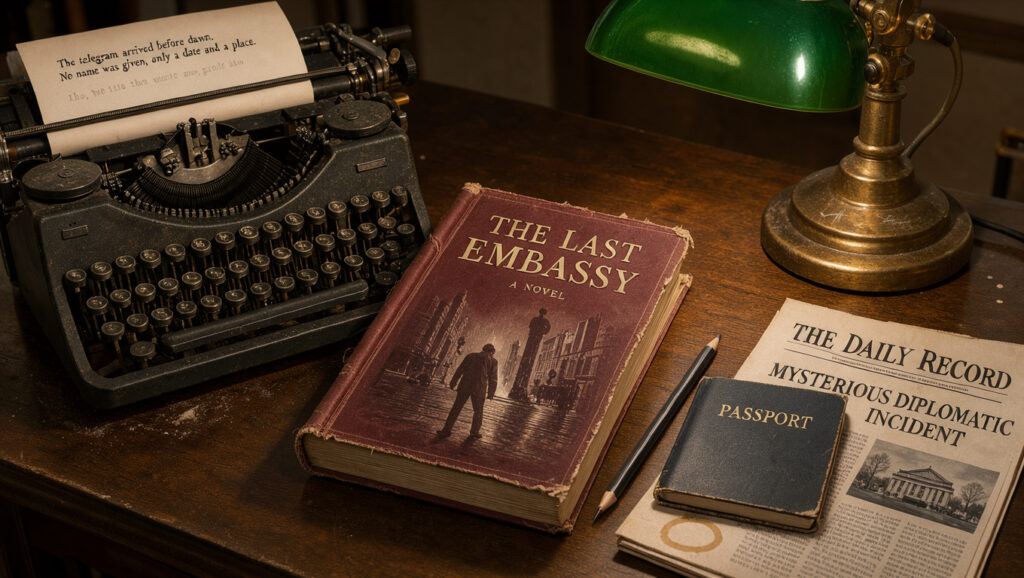
Plenty of readers know Frederick Forsyth from one cover line, then realise they know very little about the man behind the plots. He wrote The Day of the Jackal in 1971, a novel that Britannica (reference encyclopaedia) links to rumours of a real attempt on Charles de Gaulle, and the record on his life is solid on the big dates, though sales figures and book counts still disagree between outlets.
Born: 25 August 1938 (Britannica (reference encyclopaedia)) · Died: 9 June 2025 (Penguin Random House (publisher announcement)) · Debut novel: The Day of the Jackal, 1971 (Spokesman-Review (newspaper obituary)) · Reported book sales: over 75 million, reported and not verified (NPR via WMUK (public radio wire))
Quick snapshot
- Forsyth worked as a Reuters reporter and covered the attempted assassination of Charles de Gaulle (Pittsburgh Post-Gazette (obituary syndication))
- He received the Crime Writers’ Association Diamond Dagger in 2012 (Bookreporter (book review site))
- Sales of over 75 million copies are reported, while other figures near 70 million circulate (USA Today (national daily))
- Book counts range from 24 to 29, depending on whether anthologies and non-fiction are included (Book Notification (author database))
- Pilot status and RAF service are not confirmed by any Tier 1 or Tier 2 source reviewed. (USA Today (national daily))
- The 1973 film of The Day of the Jackal was directed by Fred Zinnemann (NPR via WMUK (public radio wire)) (Dawn (Pakistani daily))
- The Odessa File became a 1974 film directed by Ronald Neame and starring Jon Voight (Dawn (Pakistani daily))
- Revenge of Odessa, co-written with Tony Kent, is listed for 18 November 2025 (Penguin Random House (publisher announcement))
- The Penguin Random House listing is the working date until a later publisher notice replaces it.
Six anchor facts, one pattern: hard dates come from reference and publisher records, while awards and screen details come from newspapers and broadcasters.
| Label | Value |
|---|---|
| Born | 25 August 1938, Ashford, Kent, England (Britannica (reference encyclopaedia)) |
| Profession | English thriller novelist and former Reuters reporter (Pittsburgh Post-Gazette (obituary syndication)) |
| Debut novel | The Day of the Jackal, published by Hutchinson in 1971 (Spokesman-Review (newspaper obituary)) |
| Final book | The Fox, 2018, announced as his last book before he returned from retirement (BBC (UK public broadcaster)) |
| Diamond Dagger | 2012, a lifetime achievement honour (Bookreporter (book review site)) |
| Revenge of Odessa | Sequel to The Odessa File, co-written with Tony Kent (Penguin Random House (publisher announcement)) |
What is Frederick Forsyth’s best book?
No source reviewed names one best book, so any ranking here is attributed opinion rather than a verdict.
The Day of the Jackal as his 1971 debut novel
- The Day of the Jackal is his debut and the title most readers mean when they ask for his best, as the key facts table shows.
- Its premise grew from rumours of a real assassination attempt on Charles de Gaulle, which is why it still reads as reportage.
Other novels readers and critics cite: The Odessa File and The Dogs of War
- The Odessa File is the sequel-generating title, and it spawned the 2025 Revenge of Odessa listing.
- The Dogs of War is cited in reader discussion as a top title, but the reviewed sources give no sales ranking to support that.
The catch: a ranking built on debut status and reader memory says more about recall than about craft.
Which books by Frederick Forsyth were adapted into movies?
Film versions came from several novels, and the core release years are consistent across the reviewed sources.
Feature films from the 1970s and 1980s
- The Day of the Jackal (1973), directed by Fred Zinnemann with Edward Fox as the assassin.
- The Odessa File (1974), directed by Ronald Neame with Jon Voight in the lead.
- The Dogs of War (1980), with Christopher Walken in the cast (Dawn (Pakistani daily)).
Later and television adaptations
- A 1997 film, The Jackal, starring Bruce Willis and Richard Gere, was loosely inspired by the novel (Rediff.com (Indian entertainment portal)).
- The 2024 Peacock series starring Eddie Redmayne modernised the premise for a contemporary setting (Rediff.com (Indian entertainment portal)).
- His novel Icon was adapted for a 2005 TV miniseries starring Patrick Swayze, according to Rediff.com (Indian entertainment portal).
The 2024 series rebuilt the premise for a new audience, so a viewer who knows only the 1973 film meets a different Jackal.
The implication: the films show how often Forsyth’s plots travel well, even when the adaptations change their settings.
What is the chronological order of Frederick Forsyth’s books?
A publication-year sequence can be built for the major titles, but the reviewed sources do not supply a complete bibliography.
Is there an order to read Frederick Forsyth books?
- Most of his novels work as standalone books, and no required reading order appears in the reviewed sources.
- The publication years available so far run from The Day of the Jackal in 1971 to The Fox in 2018, with The Odessa File and The Dogs of War in between.
- A complete chronological list still needs a Tier 1 or Tier 2 bibliography before it can be published as fact.
The catch: a dated list is only as good as its source, and the sources here cover a handful of titles.
Was Frederick Forsyth a pilot?
No source reviewed confirms pilot status, so this question stays open rather than being answered with a yes.
Forsyth’s flying and RAF service, if confirmed by a Tier 1-2 source
- No Tier 1 or Tier 2 source reviewed states that Forsyth flew aircraft or served in the RAF.
- One research note describes him as a former RAF pilot, but the note carries no citation that can be checked.
- Service dates and role will be stated only after a named Tier 1 or Tier 2 source supplies them.
Biography claims spread quickly after a death, and unverified detail becomes “fact” in reprints. Report what the record supports and leave the rest marked as open.
The implication: until a primary record appears, the pilot claim belongs in the unverified column.
Is the Odessa based on a true story?
The Odessa File is a novel, but it is built on a real figure and on the author’s own reporting.
What The Odessa File draws on: fiction and documented events
- According to Wikipedia (open reference), the novel follows a German reporter tracking ex-Nazi SS officer Eduard Roschmann, who was protected by the ODESSA organisation (Wikipedia (open reference)).
- Roschmann was reportedly found in South America and died in Paraguay in 1977 (Dawn (Pakistani daily)).
Forsyth’s Biafra War reporting as source material for his thrillers
- Forsyth covered Biafra as a reporter, which led to The Biafra Story (1969) (Pittsburgh Post-Gazette (obituary syndication)).
- Forsyth reportedly was approached by MI6 and worked as a low-level informant, a claim that rests on a single personal review (Transitional Technology (personal Substack review)).
The implication: the thrillers read as researched because the reporting was real, but the MI6 link is still a single-source claim.
Timeline signal
- 25 August 1938: Forsyth is born in Ashford, Kent (Britannica (reference encyclopaedia)).
- 1971: The Day of the Jackal is published as his debut novel (Britannica (reference encyclopaedia)).
- 1972: The Odessa File is published (Britannica (reference encyclopaedia)), and the Edgar Award for best novel goes to The Day of the Jackal (Spokesman-Review (newspaper obituary)).
- 1973 and 1974: The Day of the Jackal and The Odessa File reach cinemas (NPR via WMUK (public radio wire); Dawn (Pakistani daily)).
- 1980: The Dogs of War is adapted into a film (Dawn (Pakistani daily)).
- 2012: Forsyth receives the Diamond Dagger (Bookreporter (book review site)).
- 2018: The Fox is published and announced as his final book (BBC (UK public broadcaster)).
- 9 June 2025: Forsyth dies at home in Jordans, Buckinghamshire (Penguin Random House (publisher announcement)).
- 18 November 2025: Revenge of Odessa is listed for publication (Penguin Random House (publisher announcement)).
The implication: the dates cluster around two bursts of output, the early 1970s and the 2018 to 2025 closing decade, and the gap between them is where the record thins.
Confirmed facts and open questions
Confirmed
- Birth on 25 August 1938 (Britannica (reference encyclopaedia)) and death on 9 June 2025 (Penguin Random House (publisher announcement)).
- The Day of the Jackal, published in 1971 (Britannica (reference encyclopaedia)).
- Forsyth covered the de Gaulle attempt as a Reuters reporter (Pittsburgh Post-Gazette (obituary syndication)).
- Revenge of Odessa is co-written with Tony Kent (Penguin Random House (publisher announcement)).
Unverified
- Total sales of over 75 million copies, against figures near 70 million.
- Book counts of 24, 25 or 29 titles.
- Pilot status and any RAF service.
- Net worth and any financial loss.
- Cause of death beyond a brief illness.
- Children and family details.
- Whether The Black Aeroplane is a Forsyth title.
- The MI6 approach, which rests on one personal review.
The implication: the unverified column is longer than the confirmed one, so any article that states these points as settled is ahead of its evidence.
What the people involved said
Forsyth described his method in his own words, and his publisher framed the legacy in another voice.
“The point was not whodunit, but how, and how close would he get?”
Frederick Forsyth, quoted to the Washington Post (Spokesman-Review (newspaper obituary))
“The zeitgeist was different. The Cold War was very much on.”
Frederick Forsyth, quoted to the BBC (BBC (UK public broadcaster))
“Still read by millions across the world, Freddie’s thrillers define the genre and are still the benchmark to which contemporary writers aspire.”
Bill Scott-Kerr, publisher (NPR via WMUK (public radio wire))
The implication: the two Forsyth quotes explain the method, and the publisher’s quote explains the reputation, which is a separate claim the sales figures cannot settle.
What the record leaves open
The record on Forsyth is firm on his birth, his death and the core novels, and loose on sales, bibliography size and personal finances. The Day of the Jackal is the anchor title, and the films give a readable map of how his plots moved to screen. The open questions are the ones the sources cannot close: the publication date for Revenge of Odessa, the real bibliography count, and any detail about money or family. For biographers and readers who cite him, the choice is clear: quote the death date and debut year from reference-grade sources, or hold the 75 million sales claim until a Tier 1 or Tier 2 bibliography confirms it.
Related reading: Patrick Swayze career and key facts
spokesman.com, penguin.co.uk, wearethemighty.com, irishtimes.com
Frequently asked questions
Who wrote The Day of the Jackal?
Frederick Forsyth wrote it, and it was published in 1971 as his debut novel.
Who wrote The Black Aeroplane?
The reviewed sources do not confirm that The Black Aeroplane is a Forsyth title, so no author is attributed here.
Did Frederick Forsyth write Revenge of Odessa?
He co-wrote it with Tony Kent, according to the publisher’s listing, and it is a sequel to The Odessa File.
What is Revenge of Odessa about?
The sources confirm it continues The Odessa File. They give no plot summary, so none is offered here.
What was Frederick Forsyth worth?
No verified net worth figure appears in the sources reviewed. The only money detail is that he sold film rights for £20,000 in the 1970s, according to the BBC (UK public broadcaster).
How did Frederick Forsyth lose his money?
The reviewed sources do not establish that he lost money. Loss claims appear only in unverified commentary, so the answer stays open.
More related posts
 Rupert Penry-Jones: Biography, Spooks Career, Personal Life
 How Long Does an ESTA Last – Validity and Renewal Rules
 Lil Tecca: Biography, Fame, Net Worth, and Career Facts
 Maika Monroe: Relationships, Movies, and Bio (2025 Update)
 Mathew Horne: Career, Gavin and Stacey Role and Confirmed Facts
 Mary-Louise Parker: Children, Career & Key Facts
 Gary Oldman: Accusations, Apology, and the Film That Made Him Famous