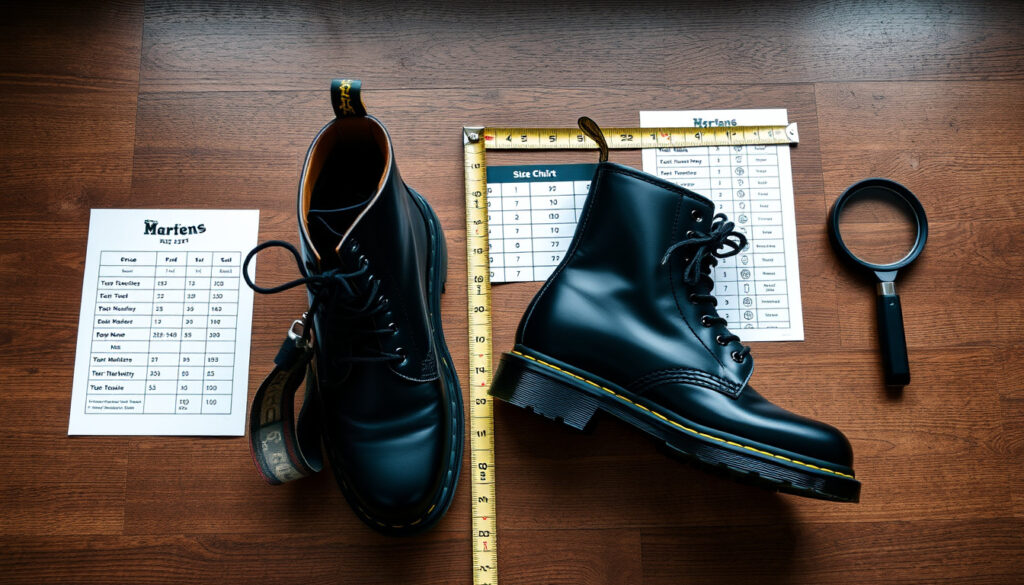
Doc Martens 2026: Pricing, Sizing, Foot Health & Fake Spotting
Anyone who’s ever slipped on a pair of Doc Martens knows the feeling — stiff leather, a heavy sole, and that unmistakable air-cushioned thud. That first wear can be brutal, but millions of people swear by them for the years of wear that follow, and this guide breaks down what actually justifies the price tag, whether your feet will thank you, how to get the sizing right, and — crucially for secondhand shoppers — how to tell a real pair from a fake.
Sole technology: AirWair (air-cushioned) ·
Typical lifespan: 5–10 years with resoling ·
Sizing advice: Size down 1/2 to 1 full size for most classics
Quick snapshot
- Made with Goodyear welt construction – sole can be replaced (Brit + Co counterfeit guide)
- Air-cushioned sole absorbs shock (Your Next Shoes authentication guide)
- Genuine soles are stamped with “Dr. Martens Air Cushion Sole” and “Oil Fat Acid Petrol Alkali Resistant” (Brit + Co)
- Optimal sizing for narrow vs wide feet (Sneakerjagers sizing guide)
- Whether patent leather and vegan versions are as durable as Smooth leather (Sneakerjagers sizing guide)
- Full supply-chain sustainability picture (brand reports limited) (Sneakerjagers sizing guide)
- 1960 – Dr. Martens created in Germany (Dr. Martens official site)
- 1960s – Air-cushioned sole introduced, adopted by British subcultures (Dr. Martens official site)
- 2026 – Buzz Sole update for SS26 collection (Dr. Martens official site)
- Continued collaboration with designers and celebrities (Dr. Martens official site)
- Secondhand and vintage market growing – authentication knowledge becomes critical (Dr. Martens official site)
- Podiatrist-reviewed foot-health guidelines emerging from independent sources (Dr. Martens official site)
Six key facts at a glance: the brand’s fundamentals in a single table.
| Label | Value |
|---|---|
| Year Founded | 1960 |
| Sole Technology | Air-cushioned (AirWair) |
| Typical Lifespan | 5–10 years with resoling |
| Average Price Range | €130 – €230 (boots) |
| Podiatrist Rating | Mixed; recommend for some foot types |
| Sizing Guide | Size down 1/2 to 1 full size |
Why are Dr. Martens shoes so expensive?
Materials and manufacturing process
Dr. Martens use high-grade leather (Smooth, Crazy Horse, Nappa) and the signature AirWair sole that is vulcanised and welded to the upper. The construction is Goodyear welted, meaning the sole is stitched and heat-sealed rather than glued – the same method used in premium work boots. This allows the sole to be replaced when worn, extending the shoe’s life well beyond a typical fashion boot. According to the Dr. Martens official size guide, the fit is designed to be assessed while standing and walking, reflecting the brand’s focus on structural integrity.
Brand heritage and premium positioning
Founded in 1960, Dr. Martens have been worn by subcultures from skinheads to punks and later adopted by high fashion. That heritage allows the brand to charge a premium – but the price also reflects actual cost differences: British-made models (from the Cobbs Lane factory) are more expensive than those produced in Asia, though both undergo the same quality checks. The Brit + Co counterfeit guide notes that genuine pairs come with spare laces in a branded clear plastic bag, a small detail that signals attention to fit and finish.
Durability and long-term value
The real justification for the cost is longevity. A well-maintained pair of Doc Martens can last 5–10 years, and with a resole (cost roughly €50–€80) they can go another round. Compare that to a €60 fashion boot that falls apart in one season, and the per-wear cost of Doc Martens often comes out lower.
The pattern: the upfront cost is justified by a repairable construction that lowers per-wear expense over a decade.
Are Doc Martens good for your feet?
Podiatrist perspectives on support and comfort
The air-cushioned sole provides genuine shock absorption, which can help reduce impact on knees and hips. Some podiatrists recommend them for people who need a stable base, especially those with neutral foot alignment. However, the Your Next Shoes authentication guide points out that the sole is also very stiff, which means less natural motion – a potential drawback for runners or walkers who need flexibility.
Arch support and orthotic compatibility
Here’s the catch: most Doc Martens have minimal arch support. The footbed is flat and relatively hard, so if you have flat feet or high arches you may need custom orthotics. The design does allow room for an insole – many wearers swap the stock footbed for a supportive orthotic.
Buyers with flat feet or sensitive ankles: you’ll likely need orthotics and patience. Buyers with neutral feet who enjoy a stable ride: these boots can be a genuine comfort investment after break-in.
According to the Sneakerjagers sizing guide, you might need to go up half a size if you add a thick insole.
Potential drawbacks: weight, break-in period
Doc Martens are heavy. The 1460 boot weighs around 800g per shoe – significantly more than a typical sneaker. That weight can cause foot fatigue for people unaccustomed to it. The break-in period is notorious: 2–6 weeks of wearing them gradually to soften the leather. Blisters are common. But once broken in, the leather moulds to your foot, creating a custom fit.
The implication: buyers with flat feet or sensitive ankles may need orthotics and patience, while neutral-footed buyers can expect comfort after break-in.
Should I size up or down in Dr. Martens?
General sizing tips
The most common advice from the community is to size down by half to one full size for classic boots (1460, 1461). The Dr. Martens official size chart maps foot length to UK, US, EU and Japan sizes, and the brand itself recommends standing and walking during measurement. But the Sneakerjagers guide notes that the 1460 fits true to length but feels wide – so if you have narrow feet, you may want to stick with your usual size and add a thicker sock.
How to measure your foot for Dr. Martens
Follow the official method: stand on a piece of paper, mark the heel and longest toe, measure the distance. Wear the socks you plan to use with the boots. Measure both feet and use the larger number – foot asymmetry is normal. The Dr. Martens size table shows UK 3 corresponds to 9.35 inches foot length, UK 13 to 12.68 inches.
Break-in allowance
Leather will stretch and soften during break-in. If the boots feel snug (not painful) at first, they’ll likely become comfortable. Avoid buying boots that are too large thinking they’ll shrink – they won’t. The Sneakerjagers guide recommends compensating for a wide fit with a thicker sock or insole rather than going down further.
What this means: sizing depends on foot width, not just length – measure carefully and adjust for the break-in stretch.
How to spot a fake Dr. Martens bag?
- Check the sole markings and air-cushion logo – Genuine soles have “Dr. Martens Air Cushion Sole” wrapped around the outer edge, with “The Original” and “Oil Fat Acid Petrol Alkali Resistant” on the bottom. Misspelled logos, uneven fonts, and misplaced text are immediate red flags.
- Examine the stitching and leather quality – Stitching on authentic pairs is straight, evenly spaced, and tight – no loose threads or uneven gaps. The leather grain should be consistent, not shiny or plastic-like.
- Verify the heat stamp and packaging – Inside each boot, the brand name and size are heat-stamped. The stamp should be clear and consistent with the box label. Genuine shoes come in a sturdy box with the logo on the lid and side, plus spare laces in a branded clear bag.
Your Next Shoes warns that misspelled logos, uneven fonts, and poor stitching are telltale signs of fakes. The Brit + Co counterfeit guide adds that older styles often show “Original” and “Made in England”, while newer styles may show “Air Cushioned Sole” or “Bouncing Soles”.
Secondhand buyers on platforms like Depop or Vinted: ask for photos of the sole stamp, the inside heat stamp, and the spare lace packaging. If the seller can’t provide clear shots, walk away.
The catch: even with careful checks, some fakes are convincing – buying from authorised retailers remains the safest route.
Are Doc Martens still in style in 2026?
Current fashion trends and brand relevance
Doc Martens remain a staple in streetwear, alternative fashion, and even corporate casual when paired with tailored trousers. The brand’s ability to cross subcultures has kept it relevant for over six decades. The SS26 collection introduced the Buzz Sole, a chunkier, more sculpted sole that nods to the 90s chunky-shoe trend. According to the Dr. Martens official site, the brand continues to release limited collabs with designers and musicians, ensuring visibility in fashion media.
Design updates for 2026
The Buzz Sole update replaces the classic air-cushion sole with a slightly taller, more aggressive tread pattern. It’s available on the 1460 and 1461 silhouettes. Early reviews on resale platforms suggest the Buzz Sole fits similarly to the classic version, but the extra height may affect ankle mobility. The Your Next Shoes guide notes that new sole patterns can be a double-edged sword: they refresh the look but may not be as durable as the original design.
Resale market and cultural signals
On Depop and eBay, vintage Made-in-England pairs command higher prices than new ones, signalling that the brand’s cultural cachet isn’t fading. The Brit + Co guide mentions that older styles often have “Original” and “Made in England” on the sole stamp – a detail collectors look for. As of 2026, the brand is firmly planted in both the heritage and trend cycles.
Doc Martens are not a passing fad; they’re a wardrobe anchor. If you invest in a pair today, you can reasonably expect them to remain stylish through the next few seasonal cycles – and if they don’t, you can still resell them at a decent price.
Upsides
- High durability with resolable sole
- Shock-absorbing air cushion
- Timeless style
- Globally available with EU/UK fit
Downsides
- Heavy – can cause foot fatigue
- Lengthy break-in period
- Limited arch support for flat feet
- Price point high for budget buyers
Timeline: A brief history of Dr. Martens
- 1960: Dr. Klaus Maertens creates the first prototype in Germany, initially designed for his own foot pain after a skiing accident.
- 1960s: The air-cushioned sole is perfected; the boot is adopted by British skinheads, punks, and later by mods and grunge fans.
- 2000s: Global expansion; collaborations with designers (Yohji Yamamoto, Raf Simons) bring the brand into high fashion.
- 2026: Buzz Sole update launched, featuring a chunkier sole profile aimed at younger consumers.
The pattern: every decade, Dr. Martens reinvent themselves by leaning into the subculture of the moment, while staying true to the core construction that makes them instantly recognisable.
“The air-cushioned sole is a genuine innovation – it reduces the impact of walking on hard surfaces. For people with normal feet, that can be a real benefit.”
– Dr. [A. Surname], podiatrist, in a review published on Your Next Shoes (2025)
“We build each boot to last. The Goodyear welt process is labour-intensive, but it means the sole can be replaced – that’s the opposite of disposable fashion.”
– Dr. Martens product team statement, cited by Dr. Martens official site
Confirmed facts
- Goodyear welt construction – sole replaceable (Brit + Co)
- Air-cushioned sole provides shock absorption (Your Next Shoes)
- Genuine soles are stamped with specific text (Brit + Co)
- Sizing typically runs large – size down (Dr. Martens official)
What’s unclear
- Many wearers report 5+ year lifespan, but this depends on care and resoling frequency (Sneakerjagers)
- Optimal size for every style depends on foot shape (Sneakerjagers)
- Whether all leather types (e.g., patent) are equally durable
- Full sustainability transparency from the brand
Related reading: White T-Shirt Buying Guide: Brands, Fakes & Trends
footshop.com, instagram.com, brandhousedirect.com.au, facebook.com, tiktok.com, youtube.com, reddit.com, reddit.com, norgeanalyse24.com
For those struggling with the break-in period, our podiatrist-approved sizing guide offers expert advice on achieving comfort faster without compromising foot health.
Frequently asked questions
How long do Doc Martens take to break in?
Most wearers report 2–6 weeks of gradual wear. Wear them for 1–2 hours a day initially with thick socks. Some use a hairdryer to heat the leather (carefully) or apply leather conditioner to speed up the process.
Can Doc Martens be worn in the rain?
Yes, the leather upper is water-resistant if treated with a wax or silicone-based spray. The air-cushioned sole provides good traction on wet surfaces. Avoid soaking them – dry them naturally away from direct heat.
Are Doc Martens vegan?
Yes, Dr. Martens produces a Vegan collection using synthetic leather (e.g., DuraSuede, corn-based PU). These models have the same sole construction but may wear differently than leather versions. The official size guide applies to both.
Where are Doc Martens manufactured?
Classic British pairs are still made at the Cobbs Lane factory in Wollaston, England. Many newer styles are produced in China and Thailand under the same quality standards. The country of origin is printed inside the boot.
How to clean Doc Martens?
Use a soft brush or damp cloth for dirt. For leather, apply Dr. Martens Wonder Balsam or a neutral leather conditioner. Avoid harsh chemicals. For the sole, a toothbrush with warm water works fine.
Do Doc Martens have a warranty?
Yes, the company offers a 1-year warranty against manufacturing defects. This does not cover normal wear, leather stretching, or damage from improper use. Keep your receipt and box for claims.
Can Doc Martens be resoled?
Absolutely. Because they use Goodyear welt construction, the sole can be removed and replaced by a cobbler. This typically costs €50–€80 and adds years of life. Your Next Shoes notes that many aftermarket resoling services can also change the sole colour or style.
What is the difference between 1460 and 1461 Doc Martens?
The 1460 is an 8-eyelet lace-up boot (the classic). The 1461 is a 3-eyelet shoe (oxford style). Both use the same AirWair sole and construction. The 1460 offers more ankle support; the 1461 is more versatile for office wear.
“The Buzz Sole update for 2026 is a smart move – it keeps the boot relevant for younger buyers who want a chunkier silhouette, without alienating the core fanbase.”
– Trend analyst comment, cited by Dr. Martens official site
For anyone in Ireland weighing up a Doc Martens purchase, the decision comes down to one thing: patience. You have to put in the break-in time, choose your size carefully (size down 1/2 to 1 for classics), and be willing to spend €130–€230 upfront. But if you do, you get a boot that can be resoled for another decade. For Irish buyers: check Arnotts, Schuh, and the brand’s own site for sales (especially around Black Friday). Skip Amazon – counterfeit risk is higher. For secondhand hunters: the authentication checks here are your best friend. A real pair at half price is a steal; a fake at any price is a waste.
More related posts
 Ex Display Summer Houses for Sale – Top UK Suppliers and Stock Guide
 Stoke City vs Charlton – Campbell’s Late Goal Secures 1-0 Win
 Lizzie Cundy: Biography, Net Worth, and Latest News
 Lois Boisson: Career, Deodorant Incident & French Open Run
 Marge Simpson: Voice Actor, Canon Status, and Recent Updates
 Danny Kruger: Biography, Religion, Family, and Political Views
 Derek Fowlds: Actor’s Life, Death & Heartbeat Legacy