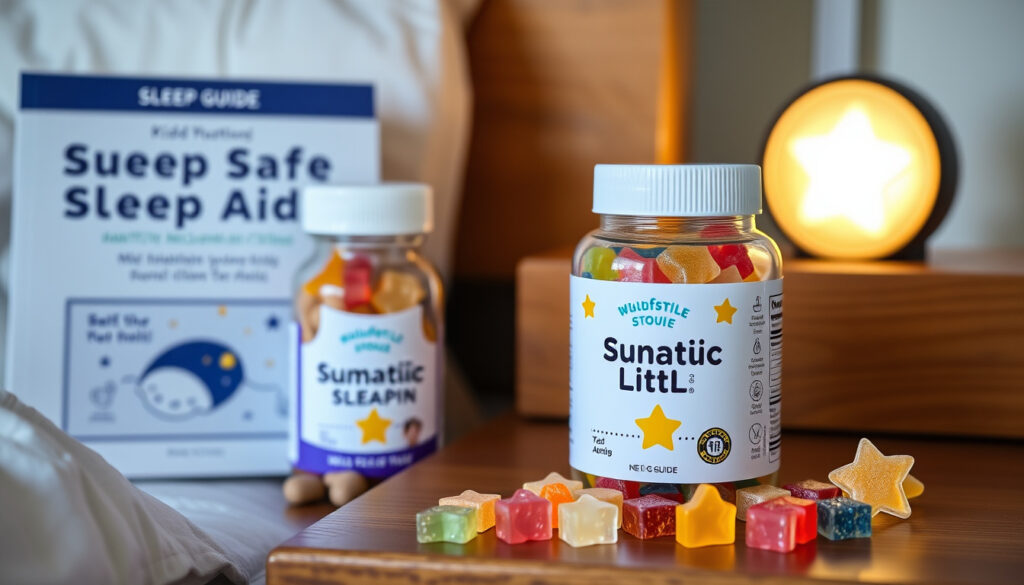
Melatonin Gummies for Kids: Safety, Side Effects & ADHD Guide
Rows of colorful melatonin gummies marketed directly at kids line supplement aisles, looking and tasting like candy. Pediatricians are paying close attention, and the research behind these products raises serious questions about dosing accuracy, safety standards, and whether a gummy is the right delivery method for a developing child.
Not for healthy kids under 3: Boston Children’s Hospital ·
Short-term use while building routines: healthychildren.org ·
Commonly used for ADHD sleep issues: ADDitude and Sachs Center ·
Side effects include daytime drowsiness: Medicines For Children ·
Magnesium blends in some gummies: Holland & Barrett products
Quick snapshot
- Melatonin ingestions in children rose 530% from 2012–2021 (CDC)
- Most brands contain more melatonin than labeled (Seattle Children’s)
- Gummies often have 40–130× the melatonin children need (JAMA)
- Long-term hormonal effects on puberty
- Optimal ADHD-specific dosing guidelines
- Whether dependency develops with nightly use
- 2020: Melatonin became the most reported pediatric ingestion to US poison centers
- 2023: JAMA published analysis finding gummies contain unpredictable CBD quantities
- AAP maintains caution against routine use for all children
- Research on standardized pediatric dosing likely to expand
Three data points paint an urgent picture: pediatric melatonin poison control calls jumped 530% in nine years, gummies routinely exceed labeled dosage, and the FDA treats melatonin as a supplement rather than a medication—meaning less oversight of what’s actually in the bottle.
| Fact | What the data says |
|---|---|
| Under 3 years safe? | No for healthy kids |
| ADHD benefit | Yes for some sleep issues |
| Nightly use | Short-term preferred |
| Common side effect | Daytime sleepiness |
| Serious ingestion outcomes | 1.6% of cases; 2 child deaths 2012–2021 |
| Gummy dosage accuracy | 0–347% of labeled amount across products |
Is it safe to give children melatonin gummies?
Here’s the core tension parents encounter: melatonin itself is a hormone the body produces naturally, but melatonin supplements sold over the counter in gummy form aren’t held to the same pharmaceutical standards as prescription sleep aids. The safety profile depends heavily on accurate dosing—which is where the problems start.
The Centers for Disease Control and Prevention tracked pediatric melatonin ingestions from 2012 to 2021 and found that calls to poison control centers related to melatonin exposure in children rose 530% over that period (CDC). In 2020 alone, melatonin became the most frequently reported substance children ingested according to poison center records (CDC). Most cases resolved without serious symptoms—about 82.8% of reported ingestions showed no symptoms at all—but roughly 1.6% had serious outcomes, including five children under age 2 who required ventilation and two who died (CDC).
A JAMA study published in 2023 analyzed melatonin gummy products sold in the United States and found that many contained melatonin quantities far exceeding what children actually need. Consuming the products as directed could expose a child to between 40 and 130 times the melatonin they require (JAMA). The same study also identified unpredictable quantities of CBD in some gummies, a substance not approved for healthy children (JAMA).
The FDA classifies melatonin as a dietary supplement, not a drug, which means manufacturers aren’t required to prove accuracy of label dosages before selling gummies to parents. A Tufts study found melatonin content in supplements ranged from 0 to 347% of advertised dosage, with only 3 of 25 products tested matching their labeled dose.
General safety for kids
Boston Children’s Hospital states melatonin should not be given to healthy, typically developing children under age 3, where behavioral sleep issues are common and often manageable without supplements (Boston Children’s Hospital). For children older than that, the picture is more nuanced—short-term use under medical supervision appears safe for some, but the American Academy of Pediatrics does not recommend routine melatonin use in children without consulting a pediatrician (University of Utah Health).
Comparison to other sleep aids
Melatonin occupies a middle ground between behavioral interventions and prescription medications. Unlike sedatives, it doesn’t force sleep—it nudges the body’s circadian rhythm toward rest. Unlike some supplements marketed for children’s sleep, the research base on melatonin in pediatric populations is more established, though still incomplete. Mayo Clinic Health System notes melatonin may be used under medical supervision for children with ADHD or autism (Mayo Clinic Health System).
What age is it safe to give a child melatonin?
Age thresholds in pediatric sleep research aren’t arbitrary cutoffs—they reflect developmental differences in how young bodies process supplements and the severity of risks from accidental ingestion.
Toddlers and under 3
Children under age 3 shouldn’t receive melatonin supplements unless a physician specifically prescribes one for a diagnosed medical condition. Tufts School of Medicine reports melatonin is not recommended for children under 5, and exceeding dosage in young children can cause grogginess, diarrhea, vomiting, confusion, depression, and seizures (Tufts School of Medicine). Accidental ingestion rates are particularly concerning: unintentional melatonin ingestions in children under 5 increased 530% from 2012 to 2022 (PMC). Children’s Colorado notes that gummy forms increase the risk of overconsumption because they appeal to children as candy (Children’s Colorado).
School-age children
For school-age children, melatonin may serve as a short-term tool while establishing consistent bedtime routines. healthychildren.org, the parenting site of the American Academy of Pediatrics, states melatonin may help some kids get rest while parents work on building good bedtime habits (healthychildren.org). The key caveat: the gummy format introduces dose variability that makes accurate administration difficult. Parents should work with a pediatrician to identify an appropriate dose rather than relying on label directions.
What are the side effects of melatonin for kids?
Understanding side effects matters more for melatonin than for many pediatric medications because the dosing uncertainty means a child might accidentally receive far more than intended.
Daytime drowsiness ranks as the most frequently reported side effect in pediatric melatonin use. A Kosin Medical Journal analysis of melatonin use in children and adolescents found fatigue affected 18.9% of users, vomiting affected 16.8%, and mood swings affected 13.7% (Kosin Medical Journal). Boston Children’s Hospital lists minor side effects as headaches, bedwetting, nightmares, dizziness, mood changes, and grogginess (Boston Children’s Hospital). Children’s Colorado reports that melatonin side effects in kids include daytime drowsiness, mood disturbances, headaches, dizziness, and night terrors (Children’s Colorado).
Most pediatric melatonin ingestions produce no symptoms at all. Of the 260,000-plus cases tracked from 2012 to 2022, 82.8% were asymptomatic, with symptoms when they did occur mostly affecting the digestive system, heart, or central nervous system.
Common side effects
The most frequently encountered effects cluster around daytime grogginess and mild digestive upset. Parents commonly report children waking still tired, having difficulty starting activities in the morning, or experiencing loose stools. These tend to resolve when the supplement is discontinued or the dose is reduced.
Rare effects and behavior changes
Less commonly reported but documented effects include night terrors, vivid dreams, and behavioral changes. PMC research documented nightmares, vivid dreams, and extreme sedation as adverse effects in pediatric populations (PMC). Some parents report mood swings or increased irritability, though connecting these directly to melatonin versus underlying sleep issues or behavioral conditions can be difficult. Healthline notes no evidence that melatonin worsens ADHD symptoms, but the potential for mood changes warrants monitoring (Healthline).
Will melatonin help my ADHD child sleep?
For parents of children with ADHD, sleep difficulties often represent one of the most persistent daily challenges. Children with ADHD experience higher rates of delayed sleep onset, and the stimulants commonly used to treat ADHD can further disrupt circadian rhythms. Melatonin’s role in this context is more evidence-based than for typically developing children.
Mayo Clinic Health System explicitly notes melatonin is recommended for children with ADHD or autism under medical supervision (Mayo Clinic Health System). Healthline reports that melatonin supplements can help children with ADHD fall asleep earlier and are considered safe when used appropriately (Healthline). Critically, melatonin is safe to use alongside ADHD medications like methylphenidate for sleep issues without apparent interaction concerns (Healthline).
No evidence shows melatonin worsens ADHD symptoms, according to Healthline’s review of clinical data. For families already managing medication schedules, this additional layer of support may integrate without complicating existing treatment plans—but only with pediatrician oversight.
Evidence for ADHD
Research specifically examining melatonin in children with ADHD shows improved sleep onset latency, meaning children fell asleep faster than without treatment. The mechanism appears to involve melatonin helping reset the circadian rhythm that stimulant medications can disrupt. Parents should note the evidence supports melatonin as an adjunct to behavioral sleep interventions, not a replacement for them.
Best practices for ADHD kids
Health professionals working with ADHD children often reference the “30 rule” for melatonin timing—giving the supplement approximately 30 minutes before the desired bedtime allows it to align with the body’s natural preparation for sleep. Mayo Clinic Health System specifically cites combining melatonin with bedtime routines rather than using it in isolation (Mayo Clinic Health System).
The key best practice: melatonin supports the sleep onset window, but consistent routines—dimming lights, limiting screens, maintaining regular bedtimes—build the habits that sustain healthy sleep long-term.
Can I give my child melatonin every night?
The question of nightly use gets at one of the central uncertainties in pediatric melatonin research: whether the body develops tolerance or dependency with regular use.
Long-term data remains limited, but available studies offer some reassurance. A Kosin Medical Journal study following children using melatonin over a mean of 3.7 years found no serious adverse effects reported (Kosin Medical Journal). However, the researchers themselves note this represents early-stage evidence—long-term impacts on puberty and hormonal development remain unclear (Healthline). healthychildren.org frames melatonin as a short-term tool to help establish bedtime routines, implying it’s not intended as a permanent nightly intervention (healthychildren.org).
The American Academy of Pediatrics urges pediatricians to exercise caution with routine melatonin use, citing the lack of long-term safety data and the dramatic rise in pediatric ingestion reports. Parents considering nightly use should treat melatonin as a temporary bridge, not a permanent solution.
Long-term use risks
What remains genuinely uncertain: whether regular melatonin use during childhood affects puberty timing or hormonal development. Healthline notes the potential hormonal effects on puberty are unclear (Healthline). University of Kansas Medical Center reports melatonin use is rising globally in children aged 6 and under, but long-term data remains lacking (University of Kansas Medical Center).
Alternatives to nightly dosing
Before committing to nightly melatonin, parents should explore behavioral sleep hygiene—consistent bedtime routines, screen curfews, darkened rooms, and regular sleep-wake schedules. Mayo Clinic Health System specifically recommends combining melatonin with routines rather than using it alone (Mayo Clinic Health System). For children whose sleep difficulties stem from underlying conditions like ADHD, the supplement is more likely to remain helpful long-term as part of a broader sleep strategy.
Upsides
- May improve sleep onset for children with ADHD or autism under medical supervision
- Short-term tool for building consistent bedtime routines
- Generally well-tolerated with mild side effects when dosed correctly
Downsides
- Pediatric melatonin ingestions rose 530% from 2012–2021; 2 child deaths reported (CDC)
- Gummies often contain 40–130× the melatonin children actually need (JAMA)
- Dosing accuracy wildly inconsistent—some products contain only a fraction of labeled melatonin (Tufts)
- FDA classifies melatonin as supplement, not drug—minimal manufacturing oversight
- Long-term effects on puberty and hormonal development remain unknown
Pieter A. Cohen, MD (Corresponding Author, JAMA)Consuming melatonin gummies as directed could expose children to between 40 and 130 times higher quantities of melatonin.
Aarti Grover (Clinical Assistant Professor, Tufts)Melatonin is not recommended for children under 5.
Dr. Malik (Physician, Children’s Healthcare of Atlanta)Melatonin is typically very well-tolerated.
Related reading: Best Pillows for Neck Pain · Is Olive Oil Good for You
healthline.com, jamanetwork.com, seattlechildrens.org, medicine.tufts.edu, childrenscolorado.org, pmc.ncbi.nlm.nih.gov, mayoclinichealthsystem.org, cdc.gov, answers.childrenshospital.org, healthcare.utah.edu, kosinmedj.org, kumc.edu
The ADHD guide notes that identifying signs of ADHD in kids early often leads parents to melatonin gummies for managing associated sleep challenges.
Frequently asked questions
Is melatonin addictive for kids?
Current research doesn’t show physical dependency or withdrawal symptoms in children using melatonin, but the lack of long-term data means definitive statements about extended use remain premature. Parents should treat melatonin as a temporary tool and regularly reassess with their pediatrician whether continued use is necessary.
How does melatonin work for child sleep?
Melatonin is a hormone the brain’s pineal gland produces naturally in response to darkness, signaling the body it’s time to rest. Supplementing with synthetic melatonin mimics this signal, helping shift the circadian rhythm earlier for children who struggle to fall asleep at a desired bedtime. It doesn’t force sedation—it supports the body’s own sleep mechanisms.
What is the 30 rule for ADHD kids?
The 30 rule refers to timing: giving melatonin approximately 30 minutes before the target bedtime allows it to take effect as the child is naturally preparing for sleep. This aligns the supplement’s action with behavioral cues like dimming lights and starting bedtime routines.
Are there natural alternatives to melatonin gummies?
Sleep hygiene practices often work as well as or better than supplements long-term. Consistent bedtime schedules, limiting screen exposure in the evening hour, blackout curtains, and avoiding caffeine remain first-line interventions. For children with ADHD, addressing medication timing with a physician may resolve sleep difficulties without adding supplements.
What can I give my 7 year old to help him sleep?
For a typically developing 7-year-old, sleep difficulties usually respond to routine adjustments before supplements enter the picture. If behavioral interventions don’t resolve the issue within a few weeks, a pediatrician visit can determine whether melatonin is appropriate and what dose to try. Gummy forms introduce dosing variability that liquid or pill forms reduce.
Is melatonin FDA approved for children?
No. The FDA classifies melatonin as a dietary supplement, which means it isn’t evaluated through the same drug approval process that governs prescription sleep medications. Manufacturers aren’t required to prove safety or efficacy for pediatric use before selling products.
Can melatonin interact with ADHD medications?
According to available clinical data, melatonin doesn’t appear to interact negatively with common ADHD medications like methylphenidate. Healthline reports melatonin is considered safe alongside ADHD meds for sleep issues. However, parents should always discuss all supplements with their child’s prescribing physician.
More related posts
 Maeva Made in Chelsea – Age, Husband and Family Facts
 Isabel Oakeshott: Dubai move, partner Richard Tice, career
 Hayley Squires: Biography, Movies, and Personal Life
 Charlotte Rampling: Age, Movies, Dune Role, and Where She Lives Now
 Linda Bassett: Biography, Age, Husband, Nurse Crane
 Omar Sy: Biography, Ethnicity, Languages, Net Worth and Career
 Best Flea Tablets for Dogs: Reviews, Dosage & Ireland Prices
 Rachel Zoe: Net Worth, Divorce, and Career Updates