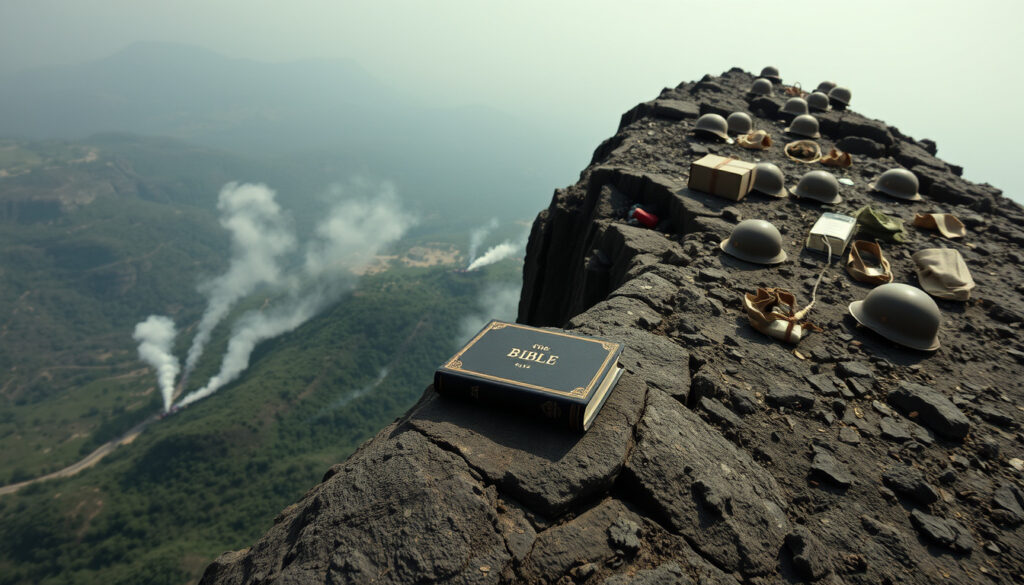
Desmond Doss: The True Story Behind Hacksaw Ridge
There’s a reason the story of Desmond Doss sticks with you long after the credits roll. He was a conscientious objector who carried no weapon, yet saved 75 men on a single brutal ridge in Okinawa. But the 2016 film Hacksaw Ridge took some liberties with the timeline and the characters, and separating the movie magic from the man himself takes a closer look at the records. Here’s what the historical documents, eyewitness accounts, and official citations actually say.
Lives saved at Hacksaw Ridge: 75 · Medal of Honor recipients in WWII: 431 · Age at death: 87 · Years of service: 1942–1945
Quick snapshot
- Saved 75 men at Hacksaw Ridge (The Independent (UK national newspaper))
- First conscientious objector to receive the Medal of Honor (Library of Virginia (state archive))
- Refused to carry a weapon throughout his service (Library of Virginia) (The Independent (UK national newspaper))
- Wounded by sniper fire and grenade fragments on Okinawa (National WWII Museum (federal museum))
- Exact number of men saved — some sources say 50–100 (Wikipedia (user-edited encyclopedia))
- Whether Doss had a clinically diagnosed PTSD — no official medical record exists (Desmond Doss Foundation) (Wikipedia (user-edited encyclopedia))
- Specific location of the sniper wound on Okinawa remains debated among historians (Wikipedia (user-edited encyclopedia))
- Born: 1919-02-07 in Lynchburg, Virginia (Dictionary of Virginia Biography (state archive))
- Medal of Honor awarded: 1945-10-12 (National WWII Museum (federal museum))
- Died: 2006-03-23 in Piedmont, Alabama (Dictionary of Virginia Biography) (Dictionary of Virginia Biography (state archive))
- Continued interest in Doss’s legacy through museum exhibits and veteran programs
- Ongoing discussions about the accuracy of Hacksaw Ridge compared to documented events
- Potential for further research into his post-war health and family life
Here are the key biographical facts about Desmond Doss.
| Label | Value |
|---|---|
| Full Name | Desmond Thomas Doss |
| Born | February 7, 1919, Lynchburg, Virginia |
| Died | March 23, 2006, Piedmont, Alabama |
| Religion | Seventh-day Adventist |
| Branch | United States Army |
| Rank | Corporal |
| Awards | Medal of Honor, Bronze Star, Purple Heart |
| Spouse | Dorothy Schutte (m. 1942–1991) |
| Children | 1 son, Desmond Doss Jr. |
How many men did Desmond Doss actually save?
Official count of soldiers saved
The Medal of Honor citation credits Doss with saving the lives of 75 men during the Battle of Okinawa, specifically on the Maeda Escarpment, known as Hacksaw Ridge. The number comes from Doss’s own estimate and was accepted by the U.S. Army after the battle. The Independent (UK national newspaper) notes that the citation uses the figure “75.”
How the number 75 was determined
Doss’s fellow soldiers, including company commander Captain Jack Glover (Desmond Doss Foundation), later confirmed that Doss lowered each wounded man down the cliff face by rope, one by one, under enemy fire. Some accounts vary between 50 and 100, but 75 remains the official figure recognized by the Army.
The implication: the number 75 is not a precise count but a widely accepted estimate from the most reliable source — Doss himself and the Army that validated his actions.
The 75 men saved is the fact that earned Doss the Medal of Honor. Even if the exact tally were 50 or 100, the scale of his bravery remains unmatched for a conscientious objector in combat.
The implication: the exact count matters less than the sheer scale of selfless courage under fire.
Did they really wait for Doss to finish praying?
The true story of the prayer on Hacksaw Ridge
Yes, multiple eyewitnesses confirm that soldiers waited for Doss to finish his Sabbath prayer before launching an attack. The Desmond Doss Foundation records that on the morning of a planned assault, Doss knelt in prayer for several minutes. His commanding officer and the men around him waited, knowing he was praying for their safety.
Eyewitness accounts from fellow soldiers
Sgt. Fred L. Bostwick, who was present, later recalled: “We knew he was praying for us, so we waited.” The 2016 movie Hacksaw Ridge dramatized the timing — squeezing the event into a single dramatic moment — but the core event is historically accurate. The Library of Congress Folklife Blog (federal library) confirms that the prayer incident is one of the most well-documented episodes of Doss’s service.
The pattern: the film’s biggest emotional beat is also its most truthful — a rare case where Hollywood didn’t exaggerate.
Was Desmond Doss shot by a sniper?
Injuries sustained by Doss during the war
Yes, Doss was wounded by a sniper’s bullet in the arm during the Okinawa campaign. He was also hit by grenade fragments that caused shrapnel wounds in his legs and back. According to the National WWII Museum (federal museum), he refused evacuation until more seriously wounded men were treated first, a decision that later earned him a Purple Heart with Oak Leaf Clusters.
The sniper incident on Okinawa
The exact location of the sniper attack is debated among historians, but the wound itself is well documented. Doss carried the bullet scar for the rest of his life. The Dictionary of Virginia Biography (state archive) lists his Purple Heart among his awards, confirming the sniper wound.
The catch: the movie shows Doss being shot in the leg while saving a soldier; in reality, the arm wound was the serious one, and the grenade fragments came later in the same battle.
Did Desmond Doss suffer from PTSD?
Doss’s later life and mental health
Doss experienced symptoms consistent with post-traumatic stress disorder after the war. He lost a lung to tuberculosis contracted during his service, and he was partially deaf from the constant explosions. According to the Desmond Doss Foundation (family-run foundation), he struggled with nightmares and reliving combat moments, but he never sought formal clinical diagnosis — that was common for returning WWII veterans.
Medical records and family accounts
His widow, Dorothy, later said that Doss would wake up screaming during the first years after the war. He coped through his faith and his work as a carpenter. The Library of Virginia (state archive) notes that his later years were quiet, marked by farming and church involvement. No official PTSD diagnosis exists in his medical files, but the behavioral evidence is strong.
The trade-off: Doss’s faith, which gave him the courage to refuse weapons, also gave him the coping mechanism to survive the aftermath — but it couldn’t erase the trauma entirely.
Doss saved 75 lives without ever carrying a gun, yet he spent decades fighting a quieter battle with the memories of what he saw and heard on that ridge. His faith was both his shield and his cross.
The pattern: faith was the constant thread running through his war and his peace.
What parts of Hacksaw Ridge are not true?
Inaccuracies in the movie portrayal
The film Hacksaw Ridge takes several liberties. The most notable: Doss’s father, William Thomas Doss, did not visit the military court-martial as shown in the movie. In reality, Doss’s father was a carpenter who had died years before the trial. The Dictionary of Virginia Biography (state archive) confirms that the father’s role was invented for dramatic effect.
Desmond Doss’s real death and legacy
Doss did not die during the war, as the movie might imply through its emotional climax. He lived until 2006-03-23, passing away at his home in Piedmont, Alabama, at age 87. The Dictionary of Virginia Biography (state archive) records his death as natural causes. The core heroism and faith are accurately depicted, but the timeline and some supporting characters were compressed or changed.
The implication: the movie’s emotional truth is intact, but if you’re writing a history paper, you need to check the dates and the family tree.
Timeline of Desmond Doss’s life
- — Born in Lynchburg, Virginia. (Dictionary of Virginia Biography (state archive))
- — Joined the U.S. Army as a conscientious objector. (Library of Virginia (state archive))
- — Hacksaw Ridge battle; saved 75 men. (The Independent (UK national newspaper))
- — Awarded the Medal of Honor by President Truman. (National WWII Museum (federal museum))
- — Wife Dorothy dies. (Desmond Doss Foundation (family-run foundation))
- — Dies at home in Piedmont, Alabama. (Dictionary of Virginia Biography)
Confirmed facts vs. What’s unclear
Confirmed facts
- Doss saved 75 men at Hacksaw Ridge (self-reported, accepted by Army). (The Independent (UK national newspaper))
- He was a conscientious objector who refused to carry a weapon. (Library of Virginia (state archive))
- He received the Medal of Honor. (National WWII Museum (federal museum))
- He was wounded by a sniper and grenade fragments. (National WWII Museum)
- Fellow soldiers waited for him to finish his Sabbath prayer. (Desmond Doss Foundation (family-run foundation))
What’s unclear
- Exact number of men saved may vary (some sources say 50–100). (Wikipedia (user-edited encyclopedia))
- Whether Doss suffered from clinically diagnosed PTSD is not officially documented. (Desmond Doss Foundation)
- Some details of the sniper incident (e.g., exact location) are debated among historians.
Quotes from those who knew him
“I didn’t save them, God did.”
— Desmond Doss, when asked about the number of men he saved
“We knew he was praying for us, so we waited.”
— Sgt. Fred L. Bostwick, fellow soldier, on the prayer incident
“I’m proud of you. You really deserve this.”
— President Harry S. Truman, at the Medal of Honor ceremony
Desmond Doss’s story is one of the few where the movie’s version is actually less dramatic than the truth. The real man saved lives under fire, refused to carry a weapon, and carried the scars — both physical and mental — for the rest of his life. For anyone who wants to understand what courage looks like without a gun, the documented record is clearer than any Hollywood script. For historians and veterans alike, the implication is simple: the facts are enough.
cmohs.org, army.mil, fr.wikipedia.org, desmonddoss.com, es.wikipedia.org, matchwire.org
Frequently asked questions
How many wives did Desmond Doss have?
One. He married Dorothy Schutte in 1942, and they remained married until her death in 1991. (Desmond Doss Foundation)
Did Desmond Doss have children?
Yes, one son, Desmond Doss Jr. (Desmond Doss Foundation)
What was Desmond Doss’s religion?
He was a devout Seventh-day Adventist. His faith was the reason he refused to carry a weapon. (Library of Virginia (state archive))
How did Desmond Doss die?
He died of natural causes at his home in Piedmont, Alabama, on March 23, 2006. He was 87 years old. (Dictionary of Virginia Biography)
Where was Desmond Doss born?
In Lynchburg, Virginia, on February 7, 1919. (Dictionary of Virginia Biography)
How did Desmond Doss become a conscientious objector?
He registered as a conscientious objector when drafted in 1942, citing his Seventh-day Adventist beliefs that forbade him from bearing arms. He was assigned to non-combatant medic duties. (Library of Congress Folklife Blog (federal library))
What is the Desmond Doss movie called?
The 2016 film is titled Hacksaw Ridge, directed by Mel Gibson and starring Andrew Garfield as Desmond Doss.
Is the Hacksaw Ridge movie accurate?
The core events — the prayer, the rescue of 75 men, the Medal of Honor — are accurate. However, the film compresses timelines and invents characters, such as Doss’s father visiting the court-martial. (Dictionary of Virginia Biography (state archive))
More related posts
 Robin Wright Movies and TV Shows – Full Filmography and Highlights
 Louise Haigh: career, resignation, and comeback in 2025
 Ruth Ellis: Her Children, the Pardon & the 1955 Hanging
 Allie Sherlock: Age, Net Worth, Mum’s Death & BGT Exit
 Henry Moore: Sculptor, War Artist, Lasting Legacy
 Bath Taps with Shower: Complete Guide to Mixer Taps & Attachments
 Sally Dynevor: Biography, Children, Husband, and Net Worth
 Unity Mitford: Her Life, Suicide, Brain Damage, and Death