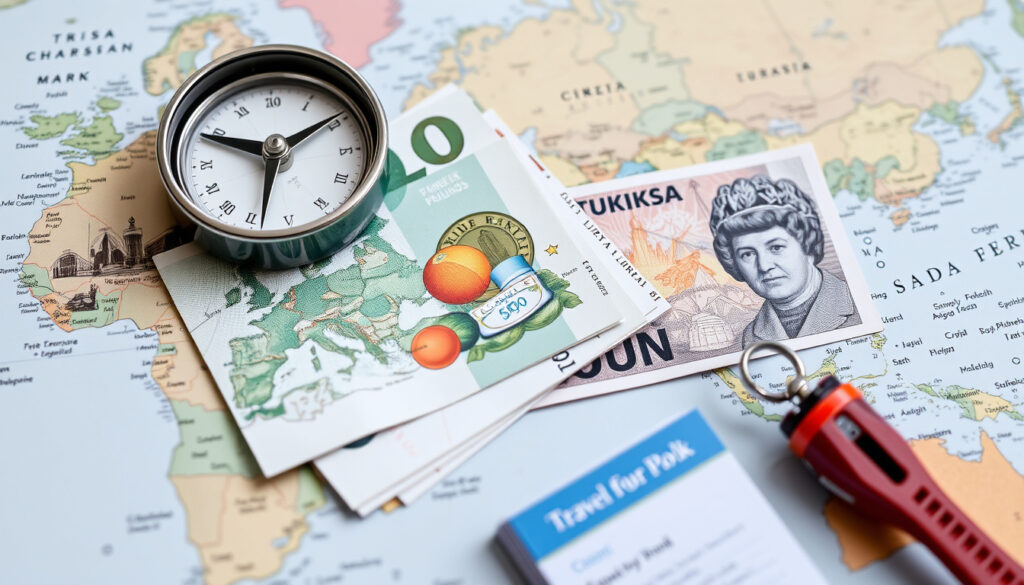
Turkish Lira to Pound: Exchange Rates & Travel Guide
You’ve booked your trip to Turkey, and now you’re wondering about the money. This guide lays out what UK travellers need to know about exchanging currency, picking the right cash to carry, and tipping without the awkward guesswork.
Current exchange rate (1 TRY to GBP): 0.0162 · Current exchange rate (1 GBP to TRY): 61.73 · 100 Turkish lira to pounds: 1.62 · 10 British pounds to Turkish lira: 617.3
Quick snapshot
- 1 TRY = 0.0162 GBP as of today (Revolut currency converter)
- Rates update every 15 minutes (Revolut currency converter)
- Use live calculator for exact amounts (Revolut currency converter)
- UK bank or Post Office before travel (Tesco Travel Money)
- ATMs in Turkey (avoid airport) (Tesco Travel Money)
- Currency exchange offices in cities (Tesco Travel Money)
- Turkish lira is recommended (HSBC UK travel guide)
- Euros accepted but with poor rates (HSBC UK travel guide)
- Avoid bringing USD or other currencies (HSBC UK travel guide)
- 5–10% of bill in restaurants (Post Office tipping guide)
- 10 TRY is appropriate for small services (Post Office tipping guide)
- Round up taxi fares or leave small change (Post Office tipping guide)
Here are the key exchange rates you need to know for planning your trip.
| Fact | Value | Source |
|---|---|---|
| Current mid-market rate (1 TRY to GBP) | 0.0162 | Revolut |
| Current mid-market rate (1 GBP to TRY) | 61.73 | Revolut |
| 100 Turkish lira in pounds | 1.62 | Calculated |
| 10 British pounds in Turkish lira | 617.3 | Tesco Travel Money |
| Typical exchange office markup | 2–5% above mid-market | HSBC UK |
How many Turkish liras to a pound?
As of today, the mid-market rate sits at 1 British pound = 61.73 Turkish lira, according to Revolut’s live converter. That means one Turkish lira is worth about 0.0162 GBP – roughly 1.6 pence. These rates fluctuate daily as global currency markets trade, so the figure in your pocket when you exchange may differ by a fraction.
How much is 100 Turkish lira to a pound?
One hundred Turkish lira converts to £1.62 at today’s mid-market rate. If you’re buying lira from a UK high street provider, expect a markup of 2–5%, meaning you’d receive slightly less – around £1.54 to £1.59 actual value after fees.
What’s 10 pounds in Turkish lira?
Ten British pounds get you about 617.30 Turkish lira at the mid-market rate. Tesco Travel Money shows a Clubcard rate of around 1 GBP = 55 TRY when buying physical currency, so £10 would buy roughly 550 lira, reflecting their commission.
How much is 20 pounds in Turkish lira today?
Twenty pounds equates to roughly 1,234.60 TRY at the interbank rate. However, if you exchange at an airport kiosk in Turkey, you might get only 1,100–1,150 lira due to wider spreads – a difference of about £1.30 lost on the transaction.
The implication: small differences in exchange rates add up quickly on larger amounts, so choosing where to convert matters.
Is it cheaper to buy Turkish lira in Turkey?
For most UK travellers, the answer is yes – but with important caveats. HSBC UK’s travel guide notes that withdrawing Turkish lira from an ATM in Turkey often gives you a rate much closer to the mid-market than buying cash from a UK bank or travel money shop. The trade-off: your UK bank may charge a foreign transaction fee (typically 2.99% on withdrawals) plus a flat ATM charge (usually £1.50–£3 per withdrawal).
Where can I exchange currency in Turkey?
Currency exchange offices (döviz büroları) are common in city centres and tourist areas. They post live rates on boards and usually have no commission, but their buy-sell spread is about 2–4%. The Post Office recommends comparing rates at two or three offices before exchanging a large amount.
Should I exchange before or after arrival?
Bringing a small amount of lira (say £50–£100 worth) from the UK covers airport transfers and small purchases upon arrival. Then use ATMs or exchange offices in Turkey for the bulk of your spending. Avoid airport exchange kiosks – their rates can be 5–10% worse than city-centre alternatives.
Airport kiosks in Turkey advertise “0% commission” but hide the poor exchange rate in a wide spread. A £200 exchange at the airport could cost you £10–15 more than using a city-centre exchange office two miles away.
The pattern: a small upfront purchase in the UK combined with ATM withdrawals in Turkey gives the best overall value.
Follow these steps for the most cost-effective approach to getting Turkish lira:
- Order £50–£100 in Turkish lira from a UK bank or Post Office before departure for immediate expenses.
- Upon arrival, find a city-centre ATM (avoid airport machines) and withdraw larger amounts as needed.
- Compare exchange office rates if you need cash beyond ATM limits; check two or three offices before committing.
- Use a travel money card with no foreign transaction fees for card payments at hotels and larger shops.
- Keep receipts and track your spending to avoid carrying large amounts of unused lira at the end of your trip.
Which is the best currency to take to Turkey?
The Turkish lira is the official currency and the safest bet for all transactions. HSBC UK confirms that while euros and US dollars are accepted in some tourist hotels, shops and restaurants, the exchange rate offered is almost always unfavourable – often 5–8% worse than the lira rate. Using lira avoids that double-conversion penalty.
What are the pros and cons of using Turkish lira vs euros?
Upsides
- Lira is accepted everywhere without negotiation
- No conversion fee on purchases
- Easier to tip and pay for small items
Downsides
- You must exchange GBP to lira first
- Lira is less stable than major currencies
- Unused lira may be harder to convert back to GBP in the UK
A UK tourist who brings £500 in euros instead of lira could lose around £25–40 over a week purely due to poor exchange rates when paying in euros. That’s a decent meal for two in Istanbul.
The verdict: lira wins on cost for any stay longer than a weekend, despite the inconvenience of exchanging first.
Is 10 Turkish lira a good tip?
Ten Turkish lira is about 16 pence. As a tip, it’s modest: appropriate for a small favour like a hotel porter carrying one bag, but too low for a restaurant meal. The Post Office’s tipping guide recommends 10–15% in restaurants if no service charge is included. Wise adds that 10% is the standard for most services, with 15–20% for exceptional service.
How much should I tip in Turkey?
- Restaurants: 10–15% of the bill unless service charge is already included. Post Office
- Hotel staff: 5–10 lira per day for housekeeping, 10–20 lira for porters. HSBC UK
- Taxis: Round up the fare or add 5 lira on longer journeys. Post Office
- Tour guides: Around 10% of the tour price. Wise
Wise emphasises always using Turkish lira when tipping: paying in euros or dollars forces the recipient to exchange the currency, eating into their tip.
Some tourist restaurants automatically add a 10–15% service charge. Check your bill before adding an extra tip – you may already be covered.
What this means: a 10-lira note is fine for small gestures but doesn’t reflect proper restaurant etiquette.
Is it better to take Turkish lira or euros?
The short answer: take Turkish lira. As noted above, euros are accepted in many tourist areas but at a poor rate. If you already have euros from a previous trip, you can use them, but expect to lose 5–8% on each transaction compared to using lira.
What is the current exchange rate for euros to Turkish lira?
At the time of writing, 1 euro buys roughly 22.5 TRY. That means a €50 note converts to about 1,125 lira. But in practice, a Turkish shop might give you only 1,050–1,080 lira for that €50 – the same amount you’d get by exchanging €50 at a currency office into lira first.
The trade-off: using euros is convenient but costly. For any stay longer than a weekend, exchanging your pounds to lira – either before travel or at an ATM in Turkey – will leave you with more spending money.
Here is a comparison of the main exchange methods available to UK travellers.
| Exchange Method | Typical Rate vs Mid-Market | Fees | Convenience | Best For |
|---|---|---|---|---|
| UK bank/Post Office advance order | Mid-market minus 2–4% | Often free on orders >£400 | Medium – order 1–2 days ahead | First £100 cash for arrival |
| ATM in Turkey | Close to mid-market (within 0.5%) | UK bank fee 2–3% + £1.50–£3 per withdrawal | High – available 24/7 | Most everyday spending |
| Travel money card (e.g., Hays Travel) | Mid-market minus 1–2% | Loading fee sometimes waived | High – load online, use like debit | Locking in a rate before travel |
| Currency exchange office in Turkey | Mid-market minus 2–5% | Usually no commission | Medium – city centre only | Large amounts after checking rates |
The catch: no single method is perfect for every situation, so a hybrid approach works best.
Clarity check
Confirmed facts
- Mid-market exchange rates are publicly available from financial data providers (Revolut)
- Airport exchange kiosks charge higher fees (Post Office)
- ATMs in Turkey dispense Turkish lira (HSBC UK)
- Tipping is expected in tourist areas, 10–15% for meals (Post Office)
What’s unclear
- Future movement of TRY/GBP exchange rate – markets are volatile
- Exact fees charged by individual UK banks for foreign transactions – check with your provider
“The mid-market rate is the midpoint between buy and sell prices in global currency markets.”
“Always tip in Turkish lira rather than foreign cash so service providers do not incur exchange fees.”
Wise (money transfer service)
For UK travellers heading to Turkey in 2025, the smartest approach is a hybrid: bring a small stash of lira from the Post Office or a supermarket travel money desk, then rely on ATMs in Turkey for the rest. Avoid airport kiosks at all costs. Tip in lira, 10–15% at restaurants, and round up for taxis. The choice between lira and euros is no contest – lira wins every time on cost. For the British traveller who wants maximum spending power on the ground, the move is clear: withdraw lira from an ATM in Turkey and skip the high-street exchange counter.
For the latest numbers, check the current lira to pound rate here before you exchange your money.
Frequently asked questions
What is the exchange rate for 500 Turkish lira to pounds?
500 Turkish lira converts to £8.10 at today’s mid-market rate of 1 TRY = 0.0162 GBP. Retail rates will give you slightly less – about £7.70–£7.90 after fees.
Can I use my UK debit card in Turkey?
Yes, most UK debit cards work in Turkish ATMs and shops. Be aware of foreign transaction fees (typically 2.99%) and potential cash withdrawal charges from your bank. Notify your bank before travel to avoid blocks.
Are there ATMs in Turkey that dispense Turkish lira?
Yes, thousands of ATMs across Turkey dispense Turkish lira. Look for banks like İşbank, Garanti, Yapı Kredi and Ziraat. Most accept Maestro, Visa and Mastercard.
Is it better to exchange money in the UK or Turkey?
For most travellers, withdrawing from an ATM in Turkey gives a rate closer to mid-market than buying lira in the UK. However, bring a small amount of lira for immediate expenses. Compare rates on both sides.
What is the best way to send money from the UK to Turkey?
Online transfer services like Wise, Revolut or MoneyGram offer competitive exchange rates with low fees. Bank transfers are slower and often more expensive. Check the recipient’s preferred method.
Do I need to declare currency when leaving Turkey?
Turkish customs requires declaration if you carry equivalent of €10,000 or more in any currency. UK customs has the same limit when returning. Always declare large sums to avoid penalties.
More related posts
 Dennis Hopper’s Final Battles: Death, Feuds, and Estate
 Emily VanCamp: The Resident Exit, Relationships, and Net Worth
 Brandi Carlile: Illness, Grammy Wins, and LGBTQ Advocacy
 Ken Doherty Retires: 1997 World Champion’s Journey
 When Is Ballon d’Or 2025 – Date, Venue, Nominees Confirmed
 Symptoms of New COVID Variant: What to Know in 2025-2026
 St. Mirren Standings 2025: Scottish Premiership Position
 Real Pictures of Breast Cancer Lumps – How to Identify Them