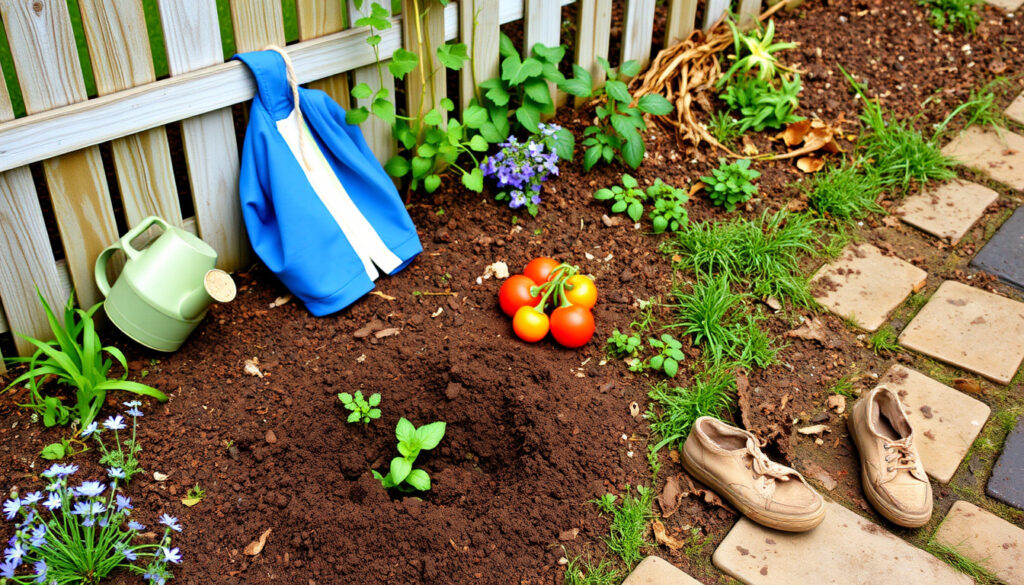
Peter Rabbit: Why He’s So Famous, Characters, Moral, and Age Guide
Most of us first met Peter Rabbit in a picture book, scratching at the door of Mr. McGregor’s garden. But behind that blue waistcoat and those famous floppy ears lies a story shaped by its creator’s own life—and a surprising amount of careful revision.
First Peter Rabbit story published: 1902 · Number of Beatrix Potter books featuring Peter Rabbit: 23 · Estimated global sales of Peter Rabbit books: Over 250 million · Recommended age range: 2–7 years · Creator: Beatrix Potter
Quick snapshot
- First published in 1902 (Encyclopaedia Britannica (reference publisher))
- Over 250 million copies sold worldwide (Encyclopaedia Britannica (reference publisher))
- Whether Peter Rabbit was directly based on Potter’s own pet rabbit (no direct evidence)
- Exact number of adaptations worldwide
- Whether Peter Rabbit was based on a real rabbit named Peter Piper (limited evidence)
- 1866 – Beatrix Potter born (Wikipedia (community encyclopedia))
- 1893 – Peter Rabbit first mentioned in a letter (Wikipedia (community encyclopedia))
- 1902 – The Tale of Peter Rabbit published (Wikipedia (community encyclopedia))
- 2012 – CGI TV series premieres on BBC (Wikipedia (community encyclopedia))
- New animated series and YouTube content continuing to introduce the character
- Merchandise and licensing remain strong
Five key facts, one pattern: the story’s longevity rests on a tight narrative that mixes real danger with gentle humour.
| Label | Value |
|---|---|
| First story published | 1902 |
| Author | Beatrix Potter |
| Number of books | 23 |
| Famous line | I am sorry to say that Peter was not feeling very well that evening. |
| Main character species | Rabbit |
Why is Peter Rabbit so famous?
Historical context and publication
- Peter Rabbit first appeared in a letter Beatrix Potter wrote to Noel Moore, a sick child, in 1893 (Raptis Rare Books (rare book dealer)).
- The tale was published as a small book in 1902 by Frederick Warne.
- Potter personally revised the text: in the fourth printing (April 1903) she changed “Peter wept big tears” to “Peter shed big tears” (Victoria and Albert Museum (UK national museum of art and design)).
Literary impact and cultural reach
- The story has sold over 250 million copies globally.
- It is considered a classic of Edwardian children’s literature, “couched in Edwardian sensibilities and morality” (Encyclopaedia Britannica (reference publisher)).
- Peter Rabbit has been adapted into animated series, movies, and a YouTube channel.
Merchandising and modern adaptations
- The official character page describes Peter as “a renowned mischief-maker with an instinct for adventure” (PeterRabbit.com (official brand site)).
- The BBC CGI series (2012) introduced new characters like Lily Bobtail.
- Peter Rabbit remains one of the most licensed characters in children’s media.
The pattern: a tight narrative and careful revision create lasting appeal.
What are the three rabbits called in Peter Rabbit?
Flopsy, Mopsy, and Cotton-tail
- The opening of The Tale of Peter Rabbit names four little rabbits: Flopsy, Mopsy, Cotton-tail, and Peter (Wikipedia (community encyclopedia)).
- Flopsy, Mopsy, and Cotton-tail are Peter’s sisters (Wikipedia (community encyclopedia)).
- Cotton-tail is the youngest of the three sisters.
Other main characters: Peter, Benjamin Bunny, Mr. McGregor
- Peter is the only named sibling in the title character grouping.
- Mr. McGregor is the gardener whose garden Peter raids.
- Benjamin Bunny, Peter’s cousin, appears in later stories.
Peter Rabbit’s girlfriend: Lily Bobtail
- Lily Bobtail is a character introduced in the 2012 CGI TV series, not in the original books.
- She is portrayed as Peter’s girlfriend in the modern adaptation.
The character set is small and memorable—each rabbit has a distinct personality. For parents introducing siblings, the names Flopsy, Mopsy, and Cotton-tail are easy for toddlers to recognise and repeat.
What this means: the character names are designed for easy recall.
What is the moral of the story of Peter Rabbit?
Consequences of disobedience
- Peter disobeys his mother’s warning not to go into Mr. McGregor’s garden.
- He loses his clothes and gets sick after eating too many vegetables (American Literature (literature archive)).
- The story is “commonly read as teaching that disobedience has consequences”.
Lessons about safety and listening to parents
- Peter’s mother warns him because his father had an accident in Mr. McGregor’s garden “and was put into a pie”.
- This is a very real danger, not a purely whimsical adventure.
Forgiveness and second chances
- Peter returns home safely, and his mother gives him camomile tea.
- The story ends with a gentle note of forgiveness, not punishment.
The implication: the story balances consequences with forgiveness.
What age is Peter Rabbit appropriate for?
Picture book editions for toddlers
- The original Tale of Peter Rabbit is recommended for ages 2–5.
- Simple language and large illustrations make it suitable for lap reading.
Animated series for preschoolers
- The BBC CGI series is rated for ages 3–7.
- Episodes run about 11 minutes, ideal for short attention spans.
Educational value for early readers
- Peter Rabbit helps with vocabulary, sequencing, and cause-and-effect understanding.
- Themes are simple and non-scary, unlike some darker fairy tales.
Some parents may worry about the “danger” element (Peter’s father being put into a pie). For very sensitive children, the story might need a gentle introduction. But for most, the humour outweighs the threat.
The catch: parents should assess their child’s sensitivity to mild peril.
What is the famous line from Peter Rabbit?
The line: “I am sorry to say that Peter was not feeling very well that evening”
- This line appears in the original 1902 book and is one of the most familiar in English-language children’s literature.
- It signifies Peter’s regret after disobeying his mother.
- Often used in educational settings to discuss cause and effect.
Cultural adaptations and parodies
- The line has been parodied in countless media, from comedy sketches to academic essays.
- It’s frequently quoted in parenting blogs and teacher resources.
How the quote reflects the story’s moral
- The line immediately follows Peter’s escape from Mr. McGregor and his vomiting from eating too many vegetables.
- It is a gentle, almost humorous way of showing that actions have consequences.
For readers, that line is the emotional anchor of the story. It turns a scary adventure into a relatable lesson—and a mild joke. For writers, it’s a masterclass in understatement.
The upshot: the line encapsulates the story’s emotional core.
Clarity: What we know and what we don’t
Confirmed facts
- The Tale of Peter Rabbit was published in 1902 (Encyclopaedia Britannica (reference publisher)).
- The book has sold over 250 million copies (Encyclopaedia Britannica (reference publisher)).
What’s unclear
- Whether Peter Rabbit was directly based on Potter’s own pet rabbit (no direct evidence).
- Exact number of adaptations worldwide.
- Whether the “famous line” truly is the most quoted line—no systematic survey exists.
- Beatrix Potter’s exact birth year is debated (some sources list 1866, others 1865).
- Whether the story originated as a letter to a sick child is not universally documented.
- Whether Peter Rabbit is the only named sibling in the title character grouping is ambiguous.
Quotes from the story and its critics
“Once upon a time there were four little Rabbits, and their names were—Flopsy, Mopsy, Cotton-tail, and Peter.”
— Beatrix Potter, opening of The Tale of Peter Rabbit (Encyclopaedia Britannica (reference publisher))
“I am sorry to say that Peter was not feeling very well that evening.”
— Narrator, The Tale of Peter Rabbit (Greathall (Facebook post excerpt))
“The story emphasizes a very real danger in the adult world rather than a purely whimsical adventure.”
— Encyclopaedia Britannica (Encyclopaedia Britannica (reference publisher))
The implication: Peter Rabbit endures because it doesn’t talk down to children. It trusts them to handle a little danger, a little regret, and a little forgiveness.
bookriot.com, en.wikipedia.org, goodreads.com, peter-rabbit-and-friends.fandom.com, kidadl.com, xn--ddkyb8bu388az0vb.com
Frequently asked questions
What illness did Beatrix Potter have?
Beatrix Potter is believed to have had a form of rheumatic illness, though the exact diagnosis is debated. Her health issues influenced her reclusive lifestyle and focus on art and nature.
Who wrote the Peter Rabbit stories?
Beatrix Potter wrote and illustrated the Peter Rabbit stories. She was also a natural scientist and conservationist.
How many Peter Rabbit movies are there?
There are two major live-action/CGI films: Peter Rabbit (2018) and Peter Rabbit 2: The Runaway (2021). There are also several animated TV series.
Is Peter Rabbit available on YouTube?
Yes, the official Peter Rabbit YouTube channel features episodes of the CGI series, activity videos, and story readings.
What is the best order to read Peter Rabbit books?
Start with The Tale of Peter Rabbit (1902), then The Tale of Benjamin Bunny (1904), and The Tale of the Flopsy Bunnies (1909). The complete set contains 23 books.
What are the main themes in Peter Rabbit?
Disobedience and consequences, family, safety, and forgiveness. The story balances gentle humour with real danger.
Where does Peter Rabbit live?
Peter lives with his mother in a “sand-bank, underneath the root of a very big fir-tree” – as described in the opening of the tale.
For any parent or educator choosing a first classic children’s story, the choice is clear: pick Peter Rabbit, because it teaches a lesson without losing its sense of wonder—or its sense of humour. For publishers, the enduring appeal of a 120-year-old rabbit shows that a tight story, grounded in real emotion, never needs to be updated.
Also read: Roald Dahl Books: Reading Order & Age Guide and Lightning McQueen: Fictional Stock Car, Age, Movies & Merchandise.
More related posts
 Black Panther: New Black Panther, Movies, Awards & MCU Facts
 London Double Decker Bus: Names, Routes, Fares & Free Travel
 Gustavo Hamer: €7m fee vs €14m market value gap explained
 Matt Goss: Current Relationship, Brother Feud & Net Worth (2025)
 Lost City of Z – Percy Fawcett’s Quest and Disappearance
 Phil Spencer: Biography, Net Worth, Family, and Current Projects
 Finn Wolfhard Movies and TV Shows: Complete Filmography Guide
 Asha Banks: Biography, Age, Height, Movies, Career