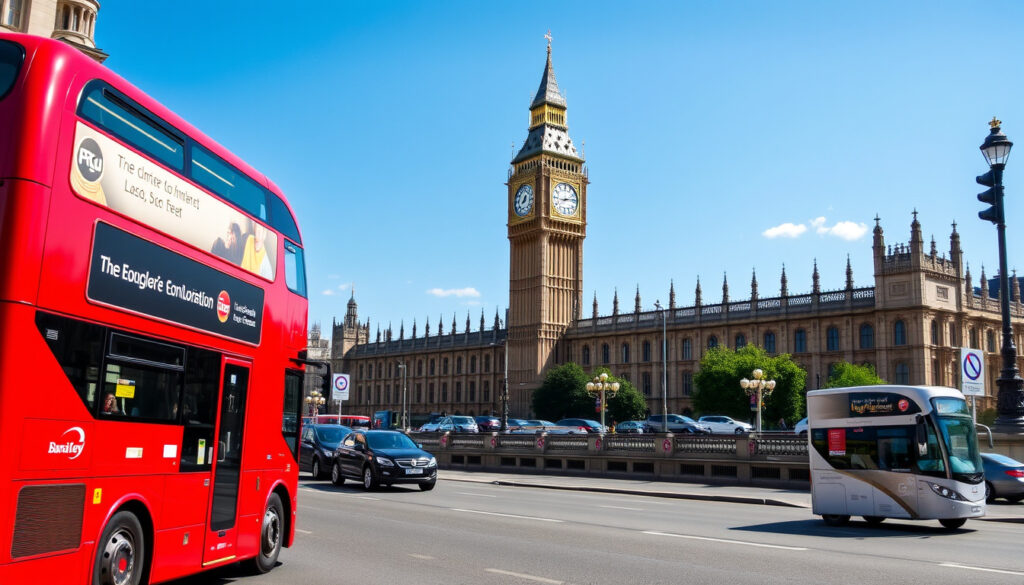
London Double Decker Bus: Names, Routes, Fares & Free Travel
You’ve spotted one from the top deck of another, or waited at a stop as a red two-storey bus rolls in — London’s double-deckers are everywhere, and the classic Routemaster is the bus people photograph most. Before you tap on, it helps to know the names, the routes, and the fare rules, including who rides free and why your bank statement sometimes shows a 10p hold.
London bus single fare: £1.75 with one-hour Hopper transfer ·
Classic London double-decker model: Routemaster ·
Route 29: Double-decker route between Wood Green and Trafalgar Square ·
First country to make public transport free: Luxembourg (2020) ·
London bus fleet size: More than 9,000 vehicles
Quick snapshot
- London buses don’t take cash — contactless, Oyster, Travelcard, or a compatible mobile device is how you pay (Transport for London, payment guidance).
- The adult single fare is £1.75 and the daily bus-and-tram cap is £5.25 (Transport for London, TfL bus and tram fares).
- A reported 10p charge on statements is not a TfL fare — it’s usually a card-issuer hold.
- The claim that the 129 bus is free doesn’t match TfL’s published fare rules.
- RM1, the first Routemaster prototype, appeared at the 1954 Earl’s Court Motor Show and entered service on 8 February 1956, according to the London Transport Museum’s vehicle archive.
- Low-floor double-deckers now handle most of London’s daily routes.
- Check TfL’s published fare page before travelling — caps and Hopper rules are set there.
Ten rows, one pattern: the double-decker’s fame comes from history, but its usefulness comes from the fare system.
| London bus fleet | More than 9,000 vehicles |
| Route 29 | Wood Green to Trafalgar Square, run with double-deckers |
| Single bus fare | £1.75 pay-as-you-go |
| Daily bus-and-tram cap | £5.25 for adults |
| Weekly bus-and-tram cap | £24.70, Monday to Sunday |
| Hopper window | One hour of unlimited bus and tram journeys on the same card or device |
| 60+ Oyster card | Free TfL travel for London residents aged 60 and over |
| Classic model | AEC Routemaster, designed by London Transport |
| Typical double-decker height | Around 4.4 metres |
| Luxembourg free transport | First country-wide fare-free network, February 2020 |
What is the name of a double-decker bus?
A double-decker bus is a bus with two passenger decks, one above the other. The layout packs far more seats into the same road space, which is why London never let the format go.
Strictly, “double-decker” is the generic name. The model everyone means is the AEC Routemaster, designed by London Transport as a post-war London bus; nearly 3,000 Routemasters of different configurations were produced between 1961 and 1969, and the design used a lightweight aluminium monocoque body rather than a conventional chassis — an approach described as 40% lighter than a comparable steel-bodied bus (London Transport Museum, design archive).
RM1, the first prototype, was shown at the Earl’s Court Motor Show in 1954 and entered service on 8 February 1956 (London Transport Museum, vehicle archive). The last traditional Routemasters left regular service in December 2005, and heritage operation on two central London routes continued until 2019, per the historical summary collated on Wikipedia’s AEC Routemaster history.
Is every London double-decker a Routemaster?
- No — “Routemaster” is one model family, not a catch-all term.
- A double-decker is any two-storey bus, whatever the manufacturer.
- Modern London double-deckers come from several builders and don’t have to follow the old Routemaster’s shape.
So if you hear “Routemaster”, picture the classic post-war bus. If you hear “double-decker”, look up — almost any two-storey bus will do.
The lighter the bus, the cheaper every mile — that engineering bet is why nearly 3,000 Routemasters rolled out between 1961 and 1969.
Are there double-decker buses in London?
Stand at any busy central stop and the answer is visible: red two-storey buses are the backbone of the network. TfL runs more than 9,000 buses, and the double-deck format is the default on many of London’s busiest corridors.
Route 29, from Wood Green down to Trafalgar Square, is one of the best-known double-decker runs in the city, and the same pattern holds across many central and commuter corridors (Visit London, official tourism guide).
Is the 29 a double-decker bus?
- Yes — route 29 operates with double-deckers.
- It runs between Wood Green and Trafalgar Square.
- It’s a regular high-frequency commuter route, not a tourist-only bus.
The 29 also happens to be one of the easiest double-decker rides for visitors: start at Trafalgar Square, grab a top-deck seat, and watch the street life roll past for the price of a single fare.
Which London routes use double-deckers?
- Most high-frequency central routes run with double-deckers.
- Long suburban corridors use them where passenger numbers justify the extra capacity.
- Where low bridges or narrow roads limit height, TfL still runs single-deckers.
The general rule: if a route carries a lot of people over a long distance, the operator picks a double-decker. The single-deckers remain for quieter stretches and tighter junctions.
The pattern: follow the red double-deckers for the best views at commuter prices — the top deck of a 29 is a sightseeing seat that happens to get you home.
What is the 1 hour bus rule in London?
Transport for London’s payment guidance is clear: London buses are cashless, and you touch in when you board with no touch-out step (Transport for London, TfL payment guidance).
The published figures sit on the same page family: a single adult bus ride costs £1.75, the daily bus-and-tram cap is £5.25, and the Monday-to-Sunday cap is £24.70.
- Single bus ride: £1.75
- Daily bus-and-tram cap: £5.25
- Weekly bus-and-tram cap: £24.70
- Hopper window: one hour on the same card or device
Add the Hopper fare to that arithmetic and one tap starts a full hour of unlimited bus and tram rides. In practice, the rule means you never pay twice for the standard sightseeing lap: hop on a 29, ride three stops, hop off for a coffee, and catch the next bus within the hour — the Hopper window covers it.
Why do I get charged 10p for a bus?
A 10p charge on your statement is almost always a contactless hold from your bank, not a TfL fare. TfL’s listed single fare is £1.75; the 10p is a check that the card is live.
When you tap a new contactless card for the first time, some banks reserve a small amount to verify the card before the real fare settles. The hold usually vanishes once the journey is processed. Use the same card or device for the whole day and the Hopper and cap benefits apply automatically.
Why is the 129 bus free?
- It isn’t free under TfL’s published fare structure.
- Occasional promotions or service changes can make certain days fare-free.
- If someone says “the 129 is free”, check TfL’s service notices before planning around it.
The 129 has built a small reputation for free rides, typically tied to a one-off weekend promotion. A single free day doesn’t change the rule: everyday travel on the 129 needs the same tap-in as anywhere else.
What happens if you tap on a bus but don’t tap off?
- Nothing — London buses are touch-in-only travel.
- No tap-off means no extra charge.
This trips up a lot of Tube riders. On the Underground you tap out to finish the fare; on a bus the single fare is fixed, so stepping off is all you need to do.
The pattern: the one-hour Hopper rule rewards sticking with one card. Switch between Oyster and a phone mid-trip and you can easily pay twice for a journey that should have cost a single £1.75.
Can pensioners use the Tube for free?
Yes — if they live in London and are 60 or over. Under TfL’s Oyster scheme, the Transport for London 60+ Oyster card gives London residents free travel on buses, Tube, DLR, London Overground, and other TfL services. It’s separate from the State Pension age, so the qualifying test is residency, not retirement.
Are there any free buses in London?
- Free travel exists for specific concession holders, not for every passenger.
- London residents aged 60+ qualify via the 60+ Oyster card.
- Children travelling under TfL’s age-based rules and other eligible groups also ride free.
For everyone else, the £1.75 single fare is the best view in London for the price of a coffee.
Are buses free for 60 year olds?
- Yes for London residents who hold the 60+ Oyster card.
- No for visitors who don’t meet the residency requirement.
The 60+ card is a small plastic upgrade with a big effect: every bus ride costs zero, and the Tube does too. For Londoners nearing 60, it’s worth setting a reminder to apply.
What this means: “free buses in London” is a shorthand for concessions, not a universal offer. If you qualify, the 60+ Oyster card is the best transport deal in the country; if you don’t, the Hopper fare is still the cheapest way around.
What is the average salary of a London bus driver?
Typical advertised salaries sit in the £30,000–£35,000 range, according to current operator recruitment pages. Pay depends on the company, the route, and the driver’s experience, and overtime can push take-home pay higher.
London’s bus routes are contracted to several private operators under TfL branding, so two drivers on similar work can earn different amounts. An operator’s own advert is the only reliable number.
TfL is the network planner and fare-setter, but it doesn’t directly employ every driver behind the wheel. That’s why “London bus driver salary” has no single answer — the range is real, and the fine print is in each operator’s vacancy.
The trade-off: contract competition holds down London’s running costs, but it also makes pay uneven across the network. If you’re comparing driving jobs, read the operator’s contract terms, not the averages.
Which is the only country in the world to offer free public transport to everyone?
Luxembourg became the first country to make all public transport free in February 2020. Trains, trams, and buses are included nationwide, with the single exception of first-class train travel.
How does Luxembourg’s free transport work?
- It applies to residents and visitors alike — no ticket, no reservation, no gates.
- First-class rail is the only paid option.
- The national budget covers the cost instead of ticket sales.
Luxembourg’s system runs on tax revenue, which is the fundamental difference from London. TfL’s buses depend on fares, caps, and concession cards; Luxembourg’s depend on the state paying the operator directly.
The trade-off: fare-free sounds like the easy win, but a fare-funded network like London’s can target free travel at the people who need it — pensioners, children, and eligible residents — while keeping the red double-deckers running for everyone else.
What’s confirmed and what’s still unclear about London’s double-deckers
Confirmed facts
- Route 29 operates as a double-decker service between Wood Green and Trafalgar Square.
- The Hopper fare gives one hour of unlimited bus and tram journeys on the same card or device.
- 60+ Oyster card holders get free TfL travel.
- Luxembourg launched the first countrywide fare-free public transport in February 2020.
What’s unclear
- The exact reason a 10p hold appears on individual bank statements.
- Whether the 129 bus is free on specific days or only during short promotions.
- The precise salary for a London bus driver, since each operator sets its own rates.
- How heritage Routemaster operations will evolve after regular heritage services ended in 2019.
The pattern in both columns: TfL’s published rules are clear, but bank holds, operator differences, and one-off promotions blur what riders actually see.
What the sources say about London’s buses
The Hopper fare allows unlimited bus and tram journeys made within one hour when the same payment card or device is used.
— Transport for London, TfL bus and tram fares
The Routemaster is internationally recognised as a symbol of London.
— London Transport Museum, vehicle archive
A single London bus fare is not calculated by distance or Tube fare zone.
— Visit London, official tourism guide
The common thread in all three: London’s bus system is simple at the point of use, and the complexity lives in the payment rails behind it.
The red double-decker is still the cheapest front-row seat in London — if you respect its payment rules. Use one card, stay inside the one-hour Hopper window, and the whole sightseeing lap can run on a £5.25 daily cap. For visitors planning a London itinerary, the practical choice is clear: learn the tap and the top deck of the 29 becomes your tour bus, or juggle different cards and risk paying twice for the same view.
Frequently asked questions
How many passengers can a double-decker bus carry?
There isn’t one fixed number. Modern London double-deckers typically seat between 60 and 70 passengers across two decks, with standing space pushing the total higher depending on the model and layout.
Why are London’s double-decker buses red?
Red has been tied to London’s buses since the early days of motor bus operation. The colour became standard for the capital’s main operators long before TfL existed, and it stuck because it makes buses easy to spot in traffic.
Can you use a contactless card to pay on a London bus?
Yes. Contactless cards, mobile wallets, and Oyster cards are the standard ways to pay on TfL buses, and cash is not accepted.
Are London double-decker buses wheelchair accessible?
Yes. Modern TfL double-deckers are low-floor vehicles with ramps and dedicated wheelchair spaces. The driver lowers the bus and deploys the ramp at the stop.
Do children get free travel on London buses?
Under TfL’s age-based rules, children under 11 travel free on buses when accompanied by a fare-paying adult, and older children can get a discounted Zip Oyster photocard.
What replaced the classic Routemaster?
Modern low-floor double-deckers took over most routes after the classic Routemasters left regular service in December 2005. Heritage Routemasters continued on two central London routes until 2019 (Wikipedia, AEC Routemaster history).
The FAQ answers follow the same pattern: know the card, know the window, and the fare rules take care of themselves.
Related reading
- Samuel Pepys: Diary, Great Fire of London, and Naval Career — another window into London’s past.
- Eddie Stobart: Driver Pay, Fleet, Death Cause & Current Owner — what driver pay looks like across British transport.
Both reads circle back to the same idea: London’s everyday infrastructure carries its history with it.
More related posts
 BIAB Nails Near Me – Top Salons, Prices and Guide
 Best Coffee Machine with Grinder 2026: Home Buyer’s Guide
 Nicola Roberts: Kids, Partner, and Net Worth in 2026
 Best Desk Chair 2026: Chiropractor Picks & Long Hours Guide
 Timor Leste Travel: Safety, Problems & Is It Worth Visiting
 Pinkie Pie: Neurodiversity, Symbolism, and Character Facts
 Logan Lerman: Relationship, Ethnicity, Net Worth, Career
 Turkish Lira to Pound: Exchange Rates & Travel Guide