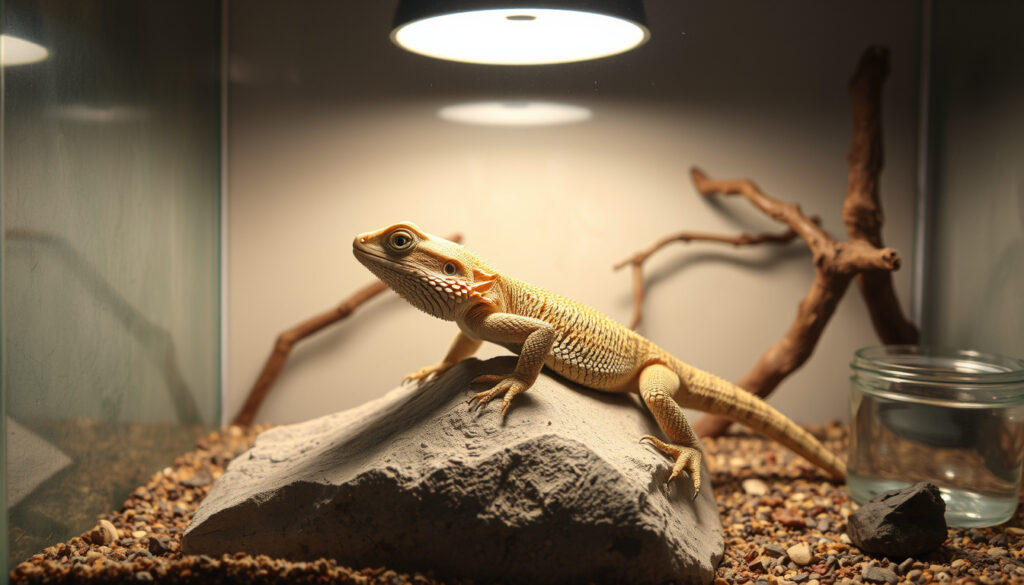
Bearded Dragon Care: Cost, Bites, Bonding & Safety Questions
Few reptiles get as much social media love as the bearded dragon, but behind those calm portraits is an animal with real needs. This guide cuts through the cute videos and answers the 12 questions every future owner should ask before bringing one home, from whether they actually cuddle to how much a proper setup truly costs.
Average lifespan: 10–15 years ·
Adult length: 16–24 inches ·
Minimum adult tank: 120 gallons (4×2×2 ft) ·
Basking spot temperature: 100–110°F
Quick snapshot
- Require UVB lighting and a temperature gradient daily (TheBeardie (reptile husbandry resource))
- Native to Eastern Australia (NC State Veterinary Hospital (university veterinary teaching hospital))
- Can carry Salmonella – never kiss or co-sleep (RSPCA Knowledgebase (leading animal welfare charity))
- Lifespan 10–15 years with proper care (TheBeardie (reptile husbandry resource))
- Exact emotional capacity – whether they “love” owners is not proven
- National average cost ranges vary by region and breeder
- Ideal handling frequency differs per individual temperament
- Optimal UVB bulb strength and replacement schedule vary across care guides
- 0–4 months – hatchling phase, high-protein diet
- 4–12 months – juvenile phase, larger enclosure, more vegetables
- 1–7 years – adult phase, stable routine
- 7–15 years – senior phase, age-related health checks
Growth phases per NC State Veterinary Hospital (university veterinary teaching hospital) and TheBeardie (reptile husbandry resource).
- Decide if you can commit 10–15 years and daily care
- Budget $620–$1,285 for initial setup (TheBeardie (reptile husbandry resource))
- Source a captive-bred dragon from a reputable breeder
- Set up enclosure before bringing the animal home
Cost figures per TheBeardie (reptile husbandry resource); sourcing advice per NC State Veterinary Hospital (university veterinary teaching hospital).
The core specs below are what veterinary and reptile-specialist sources consistently list for the common pet species.
| Scientific name (common pet species) | Pogona vitticeps |
|---|---|
| Native range | Eastern Australia |
| Average lifespan | 10–15 years |
| Adult length | 16–24 inches |
| Minimum adult tank | 120 gallons (4×2×2 ft) |
| Diet type | Omnivorous (insects and plants) |
Is a bearded dragon a good pet?
If you’re looking for a reptile that tolerates handling and has a manageable personality, a bearded dragon is often recommended as a starter species. They’re generally docile, widely bred in captivity, and can learn to relax in your hands. NC State Veterinary Hospital (university veterinary teaching hospital) notes that they are “quick-growing” and need a large, well-ventilated enclosure—hardly a low-maintenance pet. The decision comes down to whether you can provide that space, time, and budget for a decade-plus commitment.
What are the downsides of owning a bearded dragon?
- Daily maintenance: spot-cleaning, fresh water, and live insect feeding
- Expensive initial setup: $300–$700 for enclosure, $150–$250 for lighting (TheBeardie (reptile husbandry resource))
- Ongoing costs: $400–$700/year for food, $100–$200/year for electricity (TheBeardie (reptile husbandry resource))
- 10–15 year commitment – not an impulse purchase
- May carry Salmonella, requiring hygiene caution
The upfront cost and daily work are real, but for an owner who can meet them, the payoff is a calm, fascinating companion that can live well into its second decade.
Which gender of bearded dragon is nicer?
Temperament varies more by individual than by sex, but experienced keepers report that males can be more territorial and prone to black-beard displays, while females are often calmer. Neither sex is definitively “nicer”; consistency of handling matters more.
| Category | Male | Female |
|---|---|---|
| Temperament tendency | More territorial, may head-bob | Often calmer, less dominant |
| Size | Larger (up to 24 in) | Slightly smaller (16–20 in) |
| Housing together? | Can be aggressive (never house two males) | May cohabitate with supervision |
| Breeding needs | Not an issue unless paired | Egg-laying requires extra calcium |
What this means: for a first-time owner, a healthy female from a reputable breeder is often the safer bet. But either sex can make a good pet if cared for correctly.
How much does a bearded dragon cost?
Beyond the purchase price ($40–$100 for a common morph), the real cost is the habitat and ongoing care. TheBeardie (reptile husbandry resource) estimates a proper adult setup can range from $620 to $1,285 depending on enclosure choice, with lighting alone costing $150–$250. Annual food and electricity add $500–$900. A INKBIRD (smart device maker with reptile guides) article notes that a quality tube UVB fixture and basking lamp together may cost about $100–$150. The takeaway: the dragon itself is the cheap part.
Pre-arrival checklist: 5 steps before the dragon arrives
- Choose a front-opening 4×2×2 ft (120-gallon) enclosure for adult size.
- Install a T5 HO UVB bulb covering at least half the enclosure length.
- Set up a basking lamp on a thermostat at 100–110°F.
- Create a cool side between 75–85°F with hides and a water bowl.
- Source a captive-bred juvenile from a reputable breeder after the enclosure is stable.
Will bearded dragons cuddle with you?
If you’ve seen photos of a bearded dragon snoozing on a shoulder, you might assume they’re cuddly. The reality is more nuanced. Bearded dragons tolerate handling and may sit still because they associate humans with warmth, food, and safety—not because they seek affection. NC State Veterinary Hospital (university veterinary teaching hospital) advises giving a new dragon 3–4 days to adjust before attempting short handling sessions, indicating they need gradual trust-building, not instant bonding.
Do bearded dragons like to be held?
- They tolerate being held more than most reptiles
- Regular, calm handling (3–4 times per week) helps them stay comfortable (TheBeardie (reptile husbandry resource))
- They may close their eyes when petted – but that can be a stress response, not relaxation
How can you tell if a bearded dragon is comfortable with you?
- Relaxed posture without flattened body or black beard
- Comes toward the front of the enclosure when you approach
- Accepts food from your hand easily
Why does my bearded dragon close its eyes when I pet it?
Closing eyes during handling can indicate stress or discomfort. Some experts interpret it as an attempt to block out a perceived threat. If your beardie frequently shuts its eyes while being petted, reduce handling pressure and observe body language.
The relaxed-looking dragon on a lap may be simply tolerating the situation. True “cuddling” is an anthropomorphic label; what you’re seeing is trust, not affection.
Does a bearded dragon bite hurt?
Bearded dragons have small, sharp teeth. An adult bite can pinch, scratch, or break skin—especially if the lizard feels threatened or mistakes your finger for a waxworm. Rice University IRC (university safety resource) advises washing thoroughly with soap and water if a bite breaks skin to reduce infection risk. The pain is comparable to a strong pinch, not severe, but it can draw blood.
Why do bearded dragons bite?
- Defensive: stressed, mishandled, or startled
- Food confusion: fingers that smell of insects or are moving quickly
- Rarely aggressive – usually a last resort
How can you prevent a bearded dragon bite?
- Approach slowly and from the front
- Support the body fully when picking up – RSPCA Knowledgebase (Royal Society for the Prevention of Cruelty to Animals) recommends gently restraining the base of the tail with the thumb if needed
- Avoid handling after handling feeder insects
What should you do if a bearded dragon bites you?
- Wash the area with soap and water immediately (Rice University IRC (university safety resource))
- Apply an antiseptic and cover with a bandage
- Seek medical attention if the bite is deep or signs of infection develop
A single defensive bite can shake an owner’s confidence. Knowing the triggers and proper restraint prevents most bites and keeps handling a positive experience for both human and reptile.
What not to do with a bearded dragon?
Some common owner habits carry real risks. The safety list covers health, hygiene, and handling zones that new owners often overlook.
Why can’t you kiss a bearded dragon?
Reptiles, including bearded dragons, can shed Salmonella bacteria. RSPCA Knowledgebase (Royal Society for the Prevention of Cruelty to Animals) emphasizes hygiene when handling reptiles—kissing or putting a bearded dragon near your mouth is a direct transmission risk, especially for children and immunocompromised adults.
Is it safe to sleep with a bearded dragon in bed?
- Risk of crushing – a sleeping human may roll onto the dragon
- Escape – they can wander off and get lost or injured
- Overheating – body heat combined with bedding can be too warm
The safe answer is no. Use a dedicated sleeping hide inside the enclosure instead.
Where should you not touch a bearded dragon?
- Tail: NC State Veterinary Hospital (university veterinary teaching hospital) warns never to handle by the tail because it can break off
- Back: stroking against the scale direction can cause stress
- Head: some dragons dislike head pats – watch for flinching
Many well-meaning owners inadvertently stress their dragon by petting the back or tail. Stick to chin strokes and side pets, and always support the full body when lifting.
Can I leave my bearded dragon alone for 2 days?
An adult bearded dragon can go two days without live insects, but the enclosure’s temperature, lighting, and water still need daily monitoring. A timed UVB light and a stable temperature gradient are essential—if the power fails or a bulb burns out, the animal can become seriously ill within hours.
How long can a bearded dragon be left alone?
- Hatchlings: maximum 24 hours (need frequent feeding)
- Adults: up to 48 hours with preparation, but not recommended
- With a sitter: safe for longer periods if they understand reptile care
What does a bearded dragon need while you are away?
- Fresh water in a heavy bowl (can’t tip over)
- Timed UVB and heat lamps on correct cycle
- Vegetables left in the enclosure (collard greens, squash)
- Stable room temperature so the gradient holds
Is a pet sitter necessary for a two-day trip?
Yes – for a two-day trip, a sitter who can check temperatures, replace water, and observe behaviour is the safest option. TheBeardie (reptile husbandry resource) notes that handling 3–4 times per week helps with socialisation, so a brief absence won’t harm an adult, but neglect of the environment can.
The same animal that can go two days without food is completely dependent on its environment every minute. The barrier to leaving a bearded dragon alone is not hunger—it’s the fragility of its artificial habitat.
Do beardies recognize humans?
Bearded dragons can recognise individual humans through sight and scent. They often respond differently to familiar handlers—coming to the front of the enclosure, remaining calm, or accepting food readily. This isn’t mammalian love, but it is a form of recognition based on associative learning.
Can beardies remember you?
Yes. They learn routines and associate people with positive experiences like feeding and warmth. A dragon that has been gently handled from a young age will show less fear toward its owner.
Can a bearded dragon bond with its owner?
- They form trust, not emotional bonds
- Trust is built through consistent, gentle handling
- Avoid forcing interaction – let the dragon approach
How do bearded dragons show recognition?
- Calm body posture when approached
- Lack of black beard or hissing
- Willingness to be picked up without struggle
Clarity breakdown
Confirmed facts
- Need UVB lighting and temperature gradient
- Native to Australia
- Can shed Salmonella
- Live 10–15 years in captivity with proper care
What’s unclear
- Exact emotional capacity and ability to “love”
- National cost ranges vary by region
- Best handling frequency depends on individual
- Optimal UVB bulb strength and replacement schedule vary across care guides
“A 4×2×2 ft enclosure is widely presented as the gold-standard minimum for adult bearded dragons.”
TheBeardie (reptile husbandry resource)
“Never handle a lizard by the tail because it can break off.”
NC State Veterinary Hospital (university veterinary teaching hospital)
For anyone in the UK considering a bearded dragon, the decision is clear: invest in a front-opening 4×2×2 enclosure, a T5 HO UVB lamp, and a reliable thermostat before bringing the animal home, or risk a stressed, unhealthy pet and a costly vet bill. The rewards of a calm, trusting bearded dragon are real, but only for owners who respect its needs as a wild-adjacent reptile, not a furry lapdog.
articles.hepper.com, scienceinsights.org, realitypathing.com, ewash.org, spectrumcare.pet, thevetdesk.com
Frequently asked questions
What do bearded dragons eat?
Bearded dragons are omnivores. Hatchlings eat mostly live insects (crickets, dubia roaches). Adults need a mix of leafy greens, vegetables, and insects. Avoid spinach and avocado.
How often should I feed my bearded dragon?
Hatchlings: 2–3 times per day. Juveniles: once daily. Adults: insects every other day, vegetables daily.
Do bearded dragons need light at night?
No. They need complete darkness at night for proper sleep. Use a ceramic heat emitter if additional heat is required.
Can two bearded dragons live together?
It’s risky. Males will fight. Females may cohabitate in a very large enclosure, but stress and competition for basking spots are common. Separate housing is recommended.
Why is my bearded dragon’s beard black?
A black beard is a stress signal, often caused by fear, territoriality, or illness. Check enclosure temperatures and reduce disturbances.
How big does a bearded dragon get?
Adults typically reach 16–24 inches from snout to tail tip.
What temperature should a bearded dragon tank be?
Basking surface: 95–110°F. Cool side: 75–85°F. Use a thermostat to prevent overheating.
More related posts
 Human Resources Career in Ireland: Salary & Jobs 2026
 New Century Hall Manchester: Capacity, Seating & Events
 Alex Karp: Ethnicity, Education, Net Worth, and Personal Life
 Mark Zuckerberg: Bio, Net Worth, Family, and Verified Facts
 Brigitte Nielsen: Biography, Age, Children, Movies, and Net Worth
 Daniel Naroditsky Death: Cause, Allegations, Kramnik Reaction
 Princess Leonor: Marriage Rules, Education & Future
 Rachael Blackmore Retirement, Net Worth & Family