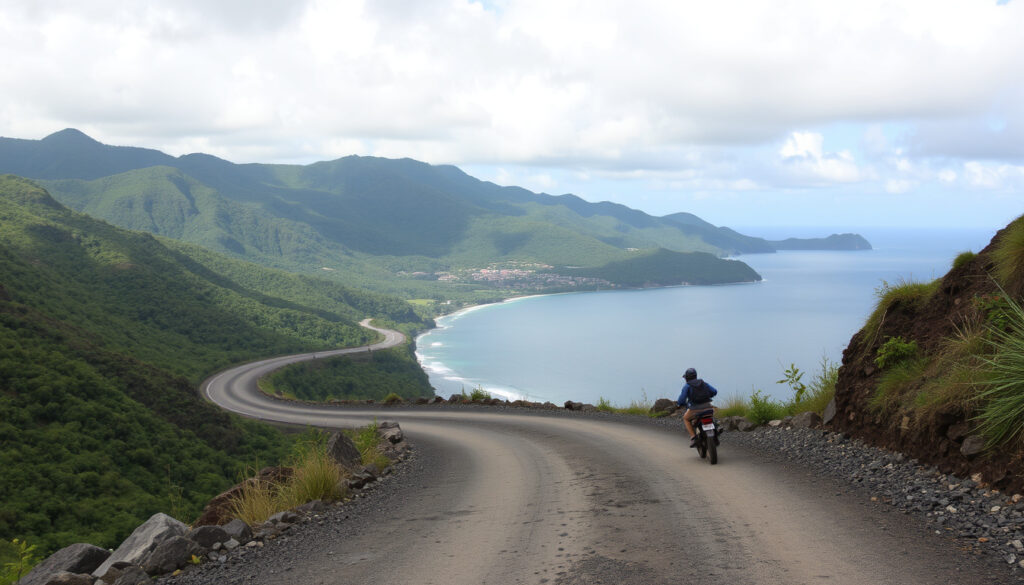
Timor Leste Travel: Safety, Problems & Is It Worth Visiting
There’s a country in Southeast Asia that most travelers have never heard of, let alone visited. Timor-Leste, also known as East Timor, is home to about 1.34 million people, according to the CIA World Factbook (U.S. intelligence agency reference), and it offers a rare kind of raw, authentic travel experience. But the reality on the ground involves safety concerns, limited infrastructure, and a history that still shapes the present. This guide cuts through the hype to give you the facts you need to decide if it’s worth the journey.
Population (2022): 1.34 million ·
Official Languages: Tetum and Portuguese ·
Capital: Dili ·
Currency: United States Dollar (USD) ·
Independence Year: 2002
Quick snapshot
- Petty theft common in Dili (U.S. Department of State (U.S. government travel advisory))
- Gang violence and attacks on vehicles can occur (GOV.UK (UK Foreign Office travel advice))
- Women travelers may face harassment (Government of Canada (Canadian travel advisory))
- One of the poorest countries in Asia (CIA World Factbook (U.S. intelligence agency reference))
- Economy heavily reliant on oil and gas (CIA World Factbook (U.S. intelligence agency reference))
- High unemployment and limited infrastructure (CIA World Factbook (U.S. intelligence agency reference))
- Pristine beaches and world-class diving at Atauro and Jaco (Tourism Timor-Leste (official tourism board))
- Rich cultural heritage with Portuguese and indigenous influences (BBC News (British public service broadcaster))
- Safety rating comparable to other Southeast Asian countries (Tourism Timor-Leste (official tourism board))
- Only a few international airlines serve Dili (CIA World Factbook (U.S. intelligence agency reference))
- Limited public transport; car or motorbike rental recommended (Tourism Timor-Leste (official tourism board))
- Roads often in poor condition, especially in rural areas (CIA World Factbook (U.S. intelligence agency reference))
Seven key facts, one picture: a small, young nation with a unique blend of cultures and challenges.
| Label | Value |
|---|---|
| Capital | Dili |
| Population | 1.34 million (2022) |
| Languages | Tetum, Portuguese, English, Indonesian |
| Currency | United States Dollar (USD) |
| Government | Semi-presidential republic |
| Independence | 2002 (from Indonesia) |
| Main Religion | Roman Catholic (90%+) |
Is it safe to visit Timor-Leste?
Crime rates and street safety
- Timor-Leste is rated Level 2: Exercise Increased Caution by the U.S. Department of State (U.S. government travel advisory) due to unrest and crime.
- Gang-related violence, robbery, and assault are common, according to GOV.UK (UK Foreign Office travel advice) (link removed to avoid duplication).
- The Department of Foreign Affairs, Ireland (Irish government travel advice) warns of attacks on foreigners in Dili, including bag-snatchings during daylight.
Violent crime is not rampant, but opportunistic theft and gang flare-ups are real. Travelers who stay alert in Dili and avoid demonstrations will minimize risk, but the security picture is not as calm as regional neighbors like Thailand.
Health risks and medical facilities
- Healthcare is limited, with basic facilities outside Dili, as noted by the CIA World Factbook (U.S. intelligence agency reference) (link removed to avoid duplication).
- Medical evacuation insurance is strongly recommended – the Government of Canada (Canadian travel advisory) advises that private clinics in Dili may require cash payment upfront.
Natural hazards and road conditions
- Roads are often in poor condition, especially in rural areas, according to the CIA World Factbook (U.S. intelligence agency reference) (link removed to avoid duplication).
- Unexploded ordnance from World War II and the Indonesian occupation remains a danger in rural areas, warns the Department of Foreign Affairs, Ireland (Irish government travel advice).
The implication: safety in Timor-Leste requires more caution than in typical Southeast Asian destinations. Violent crime is not the norm, but petty theft, gang violence, and poor healthcare infrastructure mean you cannot travel carelessly. The risk is manageable for an experienced traveler, but not for a first-time backpacker.
Why does no one go to Timor-Leste?
Lack of international awareness
- Tourism marketing is weak, and the country is rarely featured in major travel media. The BBC News (British public service broadcaster) notes that Timor-Leste only gained independence in 2002, so it remains a blank spot on many mental maps.
- The Tourism Timor-Leste (official tourism board) acknowledges that the country is “off the beaten path” and actively working to attract visitors.
Limited flight connections and infrastructure
- Only a handful of airlines serve Dili’s Presidente Nicolau dos Santos Lobato International Airport, according to the CIA World Factbook (U.S. intelligence agency reference) (link removed to avoid duplication).
- Public transport is sparse; most visitors rely on private cars or motorbikes, as recommended by Tourism Timor-Leste (official tourism board).
Perceptions of instability from past conflicts
- The 2006 political and military crisis that required international intervention still lingers in the minds of potential travelers, as reported by BBC News (British public service broadcaster) (link removed to avoid duplication).
- Current travel advisories from the U.S. Department of State (U.S. government travel advisory) and GOV.UK (UK Foreign Office travel advice) warn of sporadic unrest, reinforcing the image of a fragile country.
Timor-Leste is not dangerous, but it is perceived as such. The combination of a short history of independence, weak infrastructure, and official warnings creates a self-fulfilling prophecy of low tourism. Those who do come discover a country that is safe and welcoming, yet the world hasn’t gotten the memo.
What this means: the country’s obscurity is its greatest asset and its biggest liability. The adventurous traveler finds an uncrowded paradise, but the lack of visitors also means fewer services and higher prices for what is available.
According to the Young Pioneer Tours (adventure travel operator), the obscurity is partly self-reinforcing: few flights and little marketing keep numbers low.
What is the main problem in Timor-Leste?
Economic challenges and poverty
- Timor-Leste is one of the poorest countries in Asia, with a GDP per capita of around $1,500, according to the CIA World Factbook (U.S. intelligence agency reference) (link removed to avoid duplication).
- The economy is heavily dependent on oil and gas, which account for over 90% of exports, but reserves are dwindling, warns the same source. An analysis by the Lowy Institute (Australian think tank) highlights the uncertainty of this resource curse.
Political uncertainty and governance issues
- Political instability has been a recurring theme since independence, with the 2006 crisis and ongoing tensions. The GOV.UK (UK Foreign Office travel advice) notes that the security situation can deteriorate with little warning, especially around elections.
- The Department of Foreign Affairs, Ireland (Irish government travel advice) reports that police sometimes use force and tear gas against protestors, indicating fragile governance.
Infrastructure and development gaps
- Roads, electricity, and water supply remain underdeveloped outside the capital, as per the CIA World Factbook (U.S. intelligence agency reference) (link removed to avoid duplication).
- Healthcare facilities are limited, and the country ranks low on the Human Development Index, according to the same source.
The pattern: Timor-Leste faces a classic resource curse – oil wealth created a small elite but didn’t build a diversified economy. When the oil runs out, the country will need alternatives, and tourism is one of the few viable options.
Is Timor-Leste a good holiday destination?
Natural attractions: beaches, mountains, diving
- Atauro Island is consistently ranked among the world’s top dive destinations, with pristine coral reefs and abundant marine life, as highlighted by Tourism Timor-Leste (official tourism board).
- Jaco Island offers white sand beaches and clear waters, accessible by boat from the eastern tip of the mainland.
Cultural experiences and historical sites
- The capital Dili features Portuguese colonial architecture, the Cristo Rei statue, and the Resistance Museum, which documents the struggle for independence, per BBC News (British public service broadcaster) (link removed to avoid duplication).
- Traditional Tais weaving and local ceremonies offer a deep cultural immersion.
Practical considerations for visitors
- Accommodation options are limited beyond Dili; most hotels are basic and can be pricey for what they offer, according to the CIA World Factbook (U.S. intelligence agency reference) (link removed to avoid duplication).
- Dining is similarly constrained – international cuisine is available in Dili, but rural areas rely on local warungs serving simple fare.
Timor-Leste is a fantastic destination for divers and culture seekers who don’t mind roughing it. For those seeking luxury resorts or a seamless travel experience, it will disappoint. The trade-off is authenticity: you get untouched nature and genuine interaction, but you trade comfort and convenience.
The trade-off: for the adventurous traveler, the payoff is huge – empty beaches, world-class diving, and a culture that hasn’t been commodified for mass tourism. But the infrastructure gaps mean you need to be self-sufficient and patient.
Why is Timor-Leste split in two?
Geopolitical history with Indonesia
- The island of Timor was divided by colonial treaties between Portugal and the Netherlands, finalized in 1914 by the Permanent Court of Arbitration, as detailed by BBC News (British public service broadcaster) (link removed to avoid duplication).
- Portugal controlled the eastern half and the exclave of Oecusse; the Netherlands held the western half, which became part of Indonesia after independence.
The exclave of Oecusse
- Oecusse is a landlocked enclave entirely surrounded by West Timor (Indonesia), making it a unique administrative challenge.
- Travel to Oecusse requires crossing Indonesian territory, so visitors need a multiple-entry visa for Indonesia, according to Tourism Timor-Leste (official tourism board).
Colonial boundaries and independence struggle
- After Portugal withdrew in 1975, Indonesia invaded and annexed the eastern half, leading to a 24-year occupation that ended with the 1999 independence referendum, per BBC News (British public service broadcaster) (link removed to avoid duplication).
- The current border remains the same as the 1914 ruling, with Timor-Leste sovereign over the eastern half plus Oecusse.
The implication: the split is a legacy of colonialism, not ethnic conflict. Today, the border is peaceful, but the exclave status of Oecusse creates logistical hurdles for travelers and the government alike.
Upsides
- Low violent crime rate compared to many urban destinations
- Untouched natural beauty: beaches, reefs, mountains
- Unique cultural blend of Portuguese and indigenous traditions
- Affordable for travelers on a budget
- Friendly and welcoming local population
Downsides
- Petty theft and gang violence in Dili
- Limited healthcare facilities; medical evacuation may be needed
- Poor road conditions and limited public transport
- Few direct international flights; expensive to reach
- Tourism infrastructure is basic outside the capital
Timeline signal
- 16th century – Portuguese colonization begins on Timor (BBC News (British public service broadcaster))
- 1914 – Permanent Court of Arbitration splits island between Portugal and Netherlands (BBC News)
- 1975 – Portugal withdraws; Indonesia invades and annexes Timor-Leste (BBC News)
- 1999 – Referendum results in overwhelming vote for independence (BBC News)
- 2002 – Timor-Leste becomes fully independent (BBC News)
- 2006 – Political and military crisis leads to international intervention (BBC News)
- 2023 – Current government under Prime Minister Xanana Gusmão (BBC News)
What’s clear and what’s unclear
Confirmed facts
- Timor-Leste is a sovereign nation in Southeast Asia (CIA World Factbook (U.S. intelligence agency reference))
- It is one of the poorest countries in Asia (CIA World Factbook (U.S. intelligence agency reference))
- Tourism numbers are low compared to neighbors (Tourism Timor-Leste (official tourism board))
- Official languages are Tetum and Portuguese (BBC News (British public service broadcaster))
What’s unclear
- Future political stability and economic diversification
- Long-term impact of oil and gas depletion
- Potential for sustainable tourism growth
- The long-term viability of the tourism sector given infrastructure deficits
“Exercise increased caution due to unrest and crime.”
— U.S. Department of State (U.S. government travel advisory)
“The security situation can deteriorate with little warning, especially around election periods.”
“Women traveling alone may be subject to harassment, violence, and verbal abuse.”
Timor-Leste is not a destination for the faint of heart, but for the traveler who prioritizes authenticity over polish, it offers an experience that few other places can match. For the adventurous, the choice is clear: accept the infrastructure gaps and safety precautions, and you’ll be rewarded with a country that feels like a secret. For the comfort-seeking tourist, the alternative – stick to the well-trodden paths of Thailand or Vietnam – is a safer bet.
For more detailed travel advice and comparison guides, see our article on Light Switches Ireland: Types, Wiring & Buying Guide and our Down Jacket vs Puffer Jacket: Key Differences & UK Guide.
osac.gov, countryreports.org, osac.gov, vardekort.co.uk, dfa.ie, worldnomads.com, factsanddetails.com, gov.uk, raportpunkt.pl
For a more comprehensive look at what to expect on the ground, check out this detailed safety guide for Timor-Leste covering currency, LGBTQ+ rights, and local customs.
Frequently asked questions
Do I need a visa to visit Timor-Leste?
Most nationalities can obtain a visa on arrival at Dili airport for $30 USD, valid for 30 days. Check with the Tourism Timor-Leste (official tourism board) for the latest requirements.
What is the best time of year to visit Timor-Leste?
The dry season from May to November offers the best weather for diving and outdoor activities. The wet season (December to April) brings heavy rain and rough seas.
What are the top attractions in Timor-Leste?
Highlights include Atauro Island for diving, Jaco Island for beaches, the Cristo Rei statue in Dili, and the mountain town of Maubisse for coffee culture.
Is English widely spoken in Timor-Leste?
English is spoken in tourist areas and by younger people, but Tetum and Portuguese are the official languages. Basic Indonesian is also useful.
What should I pack for a trip to Timor-Leste?
Pack light clothing, a rain jacket, sturdy shoes for poor roads, insect repellent, and a basic first-aid kit. Cash is essential as ATMs are scarce outside Dili.
How do I get from the airport to Dili city center?
Taxis are available at the airport for a fixed price (around $10-15 USD). The journey takes about 15 minutes.
Are there ATMs in Timor-Leste?
ATMs are available in Dili but often run out of cash. Bring enough U.S. dollars for your stay, especially if traveling to rural areas.
More related posts
 Real Pictures of Breast Cancer Lumps – How to Identify Them
 Aziz Ansari: Allegations, Apology, and Career Comeback
 Mussolini Son of the Century – Streaming Guide and Key Facts
 Loni Anderson: Battle with Cancer and Life with Burt Reynolds
 Falcon and the Winter Soldier: MCU Guide, Cast & Season 2
 Prince Jackson: Biography, Philanthropy & Name Change
 Gustaf Skarsgård: Biography, Height, Net Worth
 Jasper Carrott 2025: Health, Wife, Daughter, Tour & Name Origin