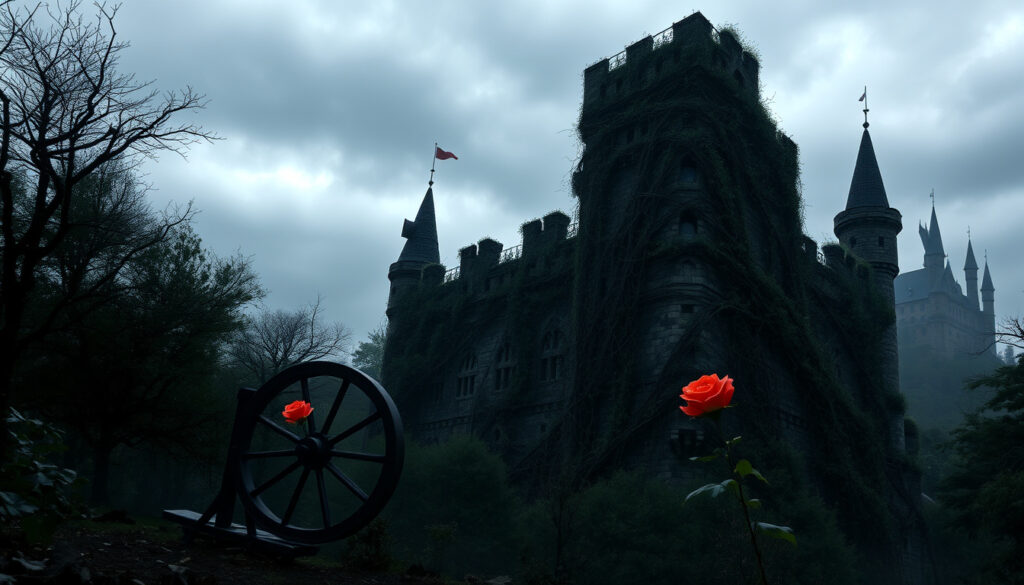
Sleeping Beauty: Story, Grimm Version, and Disney Differences
Most people know Sleeping Beauty through Disney’s 1959 musical — but that version is a heavy rewrite. The original fairy tale by Charles Perrault and the Brothers Grimm’s “Little Briar-Rose” tell a darker, different story.
Release Year: 1959 ·
Running Time: 75 minutes ·
Box Office (initial): $51.6 million ·
Production Budget: $6 million ·
Based on: Sleeping Beauty by Charles Perrault
Quick snapshot
- Princess Aurora cursed by Maleficent (Disney+ official streaming platform)
- Sleeps for 100 years (Grimmstories public domain fairy tale collection)
- Prince Phillip breaks the spell (Disney+ official streaming platform)
- Aurora (Briar Rose) (Disney+ official streaming platform)
- Maleficent (Disney+ official streaming platform)
- Prince Phillip (Disney+ official streaming platform)
- Three Good Fairies (Disney+ official streaming platform)
- Charles Perrault (1697) (Grimmstories public domain fairy tale collection)
- Brothers Grimm (1812) (Grimmstories public domain fairy tale collection)
- Disney animated film (1959) (Disney+ official streaming platform)
- Maleficent film (2014) (Disney+ official streaming platform)
- Disney princess franchise (EBSCO Research Starters academic literature database)
- Iconic villain Maleficent (EBSCO Research Starters academic literature database)
- Spinning wheel symbolism (EBSCO Research Starters academic literature database)
- Castle at Disney parks (Disney+ official streaming platform)
Five key facts about the 1959 Disney film and its source material:
| Fact | Detail |
|---|---|
| Release Date | January 29, 1959 (Disney+ official streaming platform) |
| Director | Clyde Geronimi (Disney+ official streaming platform) |
| Voice of Aurora | Mary Costa (Disney+ official streaming platform) |
| Voice of Maleficent | Eleanor Audley (Disney+ official streaming platform) |
| Based on | Sleeping Beauty by Charles Perrault (Grimmstories public domain fairy tale collection) |
Is Sleeping Beauty Rose or Aurora?
Why is Sleeping Beauty called Aurora?
- In Disney’s 1959 film, the princess is named Aurora (Disney+ official streaming platform).
- Charles Perrault’s original 1697 fairy tale does not give the princess a personal name — she is simply “the princess” (Ashliman’s Folktexts academic folklore archive).
What does the name Briar Rose mean?
- The Brothers Grimm titled their version “Little Briar-Rose” (Dornröschen), referring to the hedge of thorns that grows around the castle (Grimmstories public domain fairy tale collection).
- The Walt Disney Family Museum notes that Disney’s film is partially based on the Grimm tale “Briar Rose” (The Walt Disney Family Museum museum and archive).
The princess has three names — Aurora (Disney), Briar Rose (Grimm), and no name at all (Perrault) — and each reflects a different cultural layer. For parents researching Disney princess branding versus literary tradition, the name choice signals which version they’re dealing with. (EBSCO Research Starters academic literature database)
What Is the Basic Story of Sleeping Beauty?
Plot summary of the Disney version
- Princess Aurora is cursed by the evil fairy Maleficent to die on her 16th birthday after pricking her finger on a spindle (Disney+ official streaming platform).
- The good fairy Merryweather modifies the curse so that Aurora falls into a deep sleep instead (Disney+ official streaming platform).
- Prince Phillip, with the help of the three good fairies, battles Maleficent in dragon form and awakens Aurora with a kiss (Disney+ official streaming platform).
Key elements: curse, sleep, true love’s kiss
The Grimm version follows the same core beats: a princess is cursed to sleep for 100 years and is awakened by a prince’s kiss (Grimmstories public domain fairy tale collection). The sleeping period of 100 years appears in both Perrault and Grimm (Ashliman’s Folktexts academic folklore archive).
Disney transformed the brief folk tale into a feature-length musical — a shift in format that changed the pacing and depth of the narrative. Audiences expecting a simple fairy tale get an elaborate production with songs, character development, and a fully realized villain. (Disney+ official streaming platform)
The implication: each adaptation rearranges the same three beats — curse, sleep, kiss — but changes everything else around them.
What Is the Grimm Version of Sleeping Beauty?
Differences from Perrault’s version
- Perrault’s tale includes a second part where the prince’s mother tries to eat the children; the Grimm version ends with the awakening (Ashliman’s Folktexts academic folklore archive).
- Perrault names the fairies and gives them gifts; Grimm names none (Grimmstories public domain fairy tale collection).
- Disney drew from the Perrault framework but also incorporated the Grimm-inspired name “Briar Rose” and the 100-year sleep (The Walt Disney Family Museum museum and archive).
The name Briar Rose
In the Brothers Grimm’s collection, the story is titled “Little Briar-Rose” — the princess is called Briar Rose because of the briar hedge that surrounds the castle (Grimmstories public domain fairy tale collection). Disney adopted this name as an alias for Aurora while she is hidden in the forest.
The role of the prince
In both Grimm and Perrault, the prince is a passive figure who simply arrives after the curse has run its course (EBSCO Research Starters academic literature database). Disney reinvents Prince Phillip as an active hero who fights Maleficent in dragon form, a change that modern audiences now take for granted.
Are Sleeping Beauty and Maleficent the Same?
Who is Maleficent?
- Maleficent is the villain of Disney’s Sleeping Beauty, voiced by Eleanor Audley (Disney+ official streaming platform).
- She curses Princess Aurora to prick her finger on a spindle and die (Disney+ official streaming platform).
- Maleficent is a separate character from Sleeping Beauty — the princess is Aurora, the villain is Maleficent (Disney+ official streaming platform).
Difference between character and film
The 2014 live-action film Maleficent reimagines the story from the villain’s perspective, portraying Maleficent as a misunderstood fairy who curses Aurora after being betrayed (Disney+ official streaming platform). This later film does not change the identity of the characters in the 1959 original: Sleeping Beauty and Maleficent are not the same person.
What Is the Moral Lesson of Sleeping Beauty?
Traditional interpretations
- The story has been read as a warning against disobedience: the princess disobeys the king’s ban on spindles and suffers consequences (EBSCO Research Starters academic literature database).
- Another traditional reading is that love conquers all — the prince’s kiss breaks the curse (Grimmstories public domain fairy tale collection).
Modern critique
- Modern readers often point out that the passive princess asleep for 100 years presents a problematic ideal of female passivity (EBSCO Research Starters academic literature database).
- Some scholars interpret the spindle and the sleep as metaphors for adolescence and sexual awakening (EBSCO Research Starters academic literature database).
The moral shifts depending on which version you read. Perrault’s full tale ends with a cannibalistic mother-in-law — a far cry from “happily ever after.” For parents introducing their children to the story, the lesson changes with every adaptation. (Ashliman’s Folktexts academic folklore archive)
A direct comparison of the three major versions reveals how much each adaptation reinterprets the core narrative:
| Element | Perrault (1697) | Grimm (1812) | Disney (1959) |
|---|---|---|---|
| Princess’s name | None (Ashliman’s Folktexts academic folklore archive) | Briar Rose (Grimmstories public domain fairy tale collection) | Aurora (Disney+ official streaming platform) |
| Villain | An old fairy who was not invited (Ashliman’s Folktexts academic folklore archive) | A vengeful fairy (Grimmstories public domain fairy tale collection) | Maleficent (Disney+ official streaming platform) |
| Awakening | Prince’s kiss, but story continues with ogre queen (Ashliman’s Folktexts academic folklore archive) | Prince’s kiss; story ends (Grimmstories public domain fairy tale collection) | Prince’s kiss after dragon battle; story ends (Disney+ official streaming platform) |
| Genre | Fairy tale prose (Ashliman’s Folktexts academic folklore archive) | Folk tale prose (Grimmstories public domain fairy tale collection) | Musical fantasy film (Disney+ official streaming platform) |
Confirmed facts & what’s unclear
Confirmed facts
- Disney’s Sleeping Beauty was released in 1959 (Disney+ official streaming platform).
- Aurora is the name of the Disney princess (Disney+ official streaming platform).
- Maleficent curses Aurora to fall into a deep sleep (Disney+ official streaming platform).
- The Brothers Grimm version is titled “Little Briar-Rose” (Grimmstories public domain fairy tale collection).
- The 100-year sleep appears in both Perrault and Grimm (Ashliman’s Folktexts academic folklore archive).
What’s unclear
- Exact origin of the fairy tale is debated; it may have older oral roots (EBSCO Research Starters academic literature database).
- Whether the princess’s name in Perrault’s original was “Aurora” is disputed (it is not given in the text) (Ashliman’s Folktexts academic folklore archive).
- Some scholars point to earlier variants like Basile’s “Sun, Moon, and Talia” as possible predecessors, but the direct line is unclear (Ramble of a Silvered Skinned Frog folk tale analysis blog).
“She fell into a deep sleep, which was to last a hundred years.” — Charles Perrault, La Belle au bois dormant (1697)
Ashliman’s Folktexts academic folklore archive
“Disney’s Sleeping Beauty is a romantic fantasy rather than a strict fairy-tale transcription.” — The Walt Disney Family Museum, 2013
disney.fandom.com, reddit.com, en.wikipedia.org, snowwhitewrites.com, dailymotion.com, pookpress.co.uk, colombiahoteles.co
Readers interested in the differences between the original fairy tale and the animated film will find a detailed Grimm vs Disney comparison on Coast Current.
Frequently asked questions
What is the original Sleeping Beauty story?
The earliest known literary version is Charles Perrault’s La Belle au bois dormant published in 1697. It tells of a princess cursed to sleep for a hundred years after pricking her finger on a spindle, eventually awakened by a prince. (Ashliman’s Folktexts academic folklore archive)
How does the Disney version differ from the Brothers Grimm version?
Disney’s 1959 film is a musical romantic fantasy with named characters (Aurora, Maleficent, Prince Phillip) and a dragon battle. The Grimm version, “Little Briar-Rose,” is a brief folk tale with no named characters outside of the princess’s title and ends with the prince’s kiss. (Grimmstories public domain fairy tale collection)
Why is Sleeping Beauty also called Briar Rose?
Briar Rose is the name given to the princess in the Brothers Grimm version, referencing the briar hedge that grows around the castle during her sleep. (Grimmstories public domain fairy tale collection)
Is Sleeping Beauty based on a true story?
No. Sleeping Beauty is a traditional fairy tale with no known historical basis. Some researchers suggest it may have roots in ancient oral traditions, but no evidence points to a real person. (EBSCO Research Starters academic literature database)
What is the meaning of the spinning wheel in Sleeping Beauty?
The spinning wheel is often interpreted as a symbol of fate or female domesticity, and the spindle prick as a metaphor for sexual awakening. (EBSCO Research Starters academic literature database)
How old was Princess Aurora in the Disney film?
In the Disney film, Aurora is 16 years old when she pricks her finger and falls asleep. (Disney+ official streaming platform)
Did Sleeping Beauty have a child in the original tale?
Yes, in Perrault’s original, after the prince awakens the princess and they marry, she gives birth to two children (a girl named Dawn and a boy named Day). The story then continues with the prince’s mother trying to eat the children. (Ashliman’s Folktexts academic folklore archive)
More related posts
 Alison Brie: Biography, Marriage, Children & Ethnicity
 Ben Duckett: Age, Wife, Child, Earnings, Why He’s Not Playing
 Amanda Anisimova: Biography, Net Worth, and Career
 Henri Matisse: Life, Art Style, Famous Works & Disability
 Mac Miller Death: Cause, Relationship, & Legal Case Explained
 Patrick Troughton: Doctor Who, Cause of Death, and Acting Dynasty
 Seth Rogen: James Franco Breakup, Net Worth, and Beliefs
 Gaben Newell Net Worth, Biography, and $900M Lawsuit