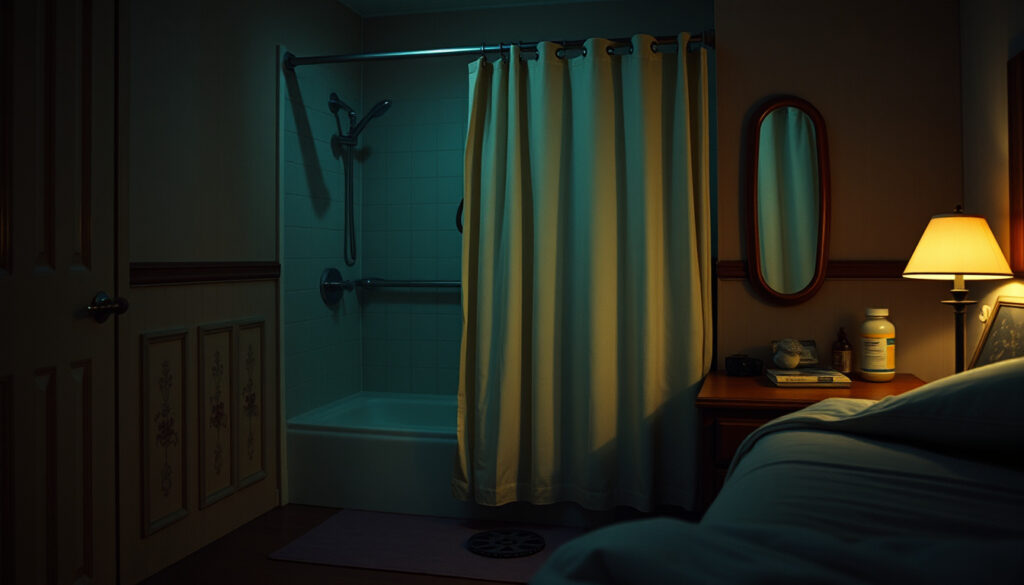
Anthony Perkins: Real Life, Illness & the Psycho Curse
Few film characters are as instantly recognizable as Norman Bates, but the man who played him lived a life far removed from the Bates Motel. Anthony Perkins brought a nervous intensity to the screen that made Psycho a masterpiece, yet off-screen he was a quietly courageous actor navigating private battles and Hollywood’s harshest stereotypes.
Birth name: Anthony Perkins ·
Born: April 4, 1932 ·
Died: September 12, 1992 ·
Height: 6 ft 3 in (1.91 m) ·
Notable role: Norman Bates in Psycho ·
Awards: Academy Award nomination for Friendly Persuasion
Quick snapshot
- Died of AIDS-related pneumonia (Biography.com)
- Romantic relationship with Tab Hunter (Biography.com)
- Oscar nominee for Friendly Persuasion (Biography.com)
- Married Berry Berenson in 1973 (Wikipedia)
- Exact number of his romantic partners (TCM (film history source))
- Whether he ever truly regretted playing Norman Bates (Biography.com)
- Precise timeline of his HIV diagnosis (Biography.com)
- Born 1932, nominated for Oscar 1956, starred in Psycho 1960 (Biography.com)
- Married 1973, died from AIDS complications 1992 (Biography.com)
- His sons, actor Osgood Perkins and musician Elvis Perkins, carry his creative legacy (Wikipedia)
- Cult films like Pretty Poison gain renewed appreciation among classic cinephiles (TCM (film history source))
Nine key facts about Anthony Perkins, spanning his biography, career, and personal life, reveal the full picture of a man often reduced to a single role.
| Category | Detail |
|---|---|
| Full name | Anthony Perkins |
| Born | April 4, 1932, New York City |
| Died | September 12, 1992, Los Angeles |
| Cause of death | AIDS-related pneumonia |
| Spouse | Berry Berenson (m. 1973) |
| Children | Osgood Perkins, Elvis Perkins |
| Height | 6 ft 3 in (1.91 m) |
| Notable film | Psycho (1960) |
| Academy Award nominations | 1 (Best Supporting Actor, Friendly Persuasion) |
What happened to Anthony Perkins in real life?
Early life and family background
- Anthony Perkins was born in New York City on April 4, 1932, to Janet Rane and actor Osgood Perkins (Biography.com (authoritative biography site)).
- His father died in 1937 when Anthony was five, a loss that shaped his childhood (TCM (Turner Classic Movies, film history authority)).
- Reportedly began acting as a teenager in summer stock theater (Wikipedia (user-edited encyclopedia)).
Perkins made his Broadway debut in Tea and Sympathy in 1953 (Wikipedia). His first film role came the same year in The Actress (Wikipedia).
Rise to fame and career milestones
- Earned an Academy Award nomination for Best Supporting Actor for Friendly Persuasion (1956) (Biography.com).
- Achieved global fame as Norman Bates in Alfred Hitchcock’s Psycho (1960) (Biography.com).
- Won a Best Actor award at the Cannes Film Festival and a Golden Globe during his career (TCM (film industry authority)).
- Also co-won an Edgar Allan Poe Award for a screenplay he co-wrote with Stephen Sondheim (TCM).
After Psycho, Perkins returned to American cinema with Pretty Poison in 1968 (Wikipedia). He appeared in notable films like Catch-22 (1970), Murder on the Orient Express (1974), and Mahogany (1975) (Wikipedia).
Later years, illness, and death
- Perkins was diagnosed with HIV in the late 1980s, according to Biography.com (biography site).
- He kept the diagnosis secret and volunteered with Project Angel Food alongside his wife (Biography.com).
- Died on September 12, 1992, in Hollywood, California, from pneumonia as a complication of AIDS (Biography.com; IMDb (movie database)).
Who were Anthony Perkins’ lovers?
Romantic relationships with men
- Reportedly had a long-term relationship with actor Tab Hunter in the 1950s, confirmed in Hunter’s memoir (Biography.com (celebrity biography site)).
- Had affairs with various men in Hollywood, kept private due to the era’s stigma (TCM (film history source)).
Perkins navigated Hollywood’s closet in the 1950s and 60s, a reality that forced many actors into double lives. His private relationships were only confirmed decades later, making his story a lens into the entertainment industry’s shifting attitudes toward sexuality.
Marriage to Berry Berenson
- Married photographer Berry Berenson in 1973 (Wikipedia).
- Reportedly met Berenson after a relationship with actress Victoria Principal (TCM (biographical source)).
- Had two sons: Osgood Perkins (born 1974) and Elvis Perkins (born 1976) (Wikipedia).
- Despite his bisexuality, his relationship with Berenson remained close until his death (Biography.com).
Friendships and rumors
- Underwent psychotherapy in the late 1960s connected to fears about women and heterosexuality, according to TCM (film history site).
- His private life remained a subject of Hollywood gossip, but no confirmed list of partners exists beyond those named in biographies.
The implication: Perkins’s personal life was far more complex than the Hollywood press of his time ever acknowledged. The known relationships with both men and women paint a picture of a man forced to compartmentalize his identity in an era that offered little acceptance.
Why did Hitchcock cast Anthony Perkins?
Hitchcock’s search for the perfect Norman Bates
- Hitchcock wanted someone who could appear innocent yet deeply disturbed (Biography.com (biography source)).
- Perkins had a boyish, all-American look that contrasted sharply with the character’s inner darkness (TCM (film analysis)).
Perkins’ acting style and screen presence
- Already an Oscar-nominated actor, Perkins brought a nervous energy ideal for the role (Biography.com).
- His ability to shift between vulnerability and menace made the performance unforgettable (TCM).
The director-actor dynamic on set
- Perkins reportedly felt uneasy about the role; Hitchcock reassured him with dark humor: “Don’t worry, Tony, it’s only a movie” (Biography.com).
- The casting cemented Perkins’s career but also typecast him for decades (Biography.com).
Hitchcock’s choice was both a gift and a trap. Perkins’s portrayal of Norman Bates became so iconic that it overshadowed his entire filmography, a price few actors could afford — but one that made film history.
Did Anthony Perkins have a ‘Psycho’ curse?
Origins of the curse narrative
- Perkins was often followed by the Norman Bates character professionally, limiting his role options (Biography.com).
- He struggled with typecasting after Psycho (Biography.com).
Perkins’ own feelings about the role
- In a 1982 interview, Perkins reflected: “I’ve been playing Norman Bates for twenty years. Sometimes I think I am him” (Biography.com (quoted source)).
- He eventually embraced the role, appearing in three Psycho sequels (Biography.com).
Fact vs. fiction: was his life really haunted?
- The “curse” myth is largely a media invention; his personal challenges — illness, sexuality, typecasting — were unrelated to the character (Biography.com (biography source)).
- His death from AIDS in 1992 and his wife’s death in 9/11 later fueled spurious curse legends (Biography.com).
The pattern: What looks like a “curse” is actually a series of tragic coincidences. Perkins’s professional and personal struggles were real and painful, but they were caused by societal forces — homophobia, disease stigma, Hollywood typecasting — not supernatural ones.
What illness did Anthony Perkins have?
HIV diagnosis and progression
- Diagnosed with HIV in the late 1980s (Biography.com (biography source)).
- Kept his illness highly private during the height of the AIDS crisis (Biography.com).
Public disclosure and stigma
- Perkins revealed his diagnosis only shortly before his death (Biography.com).
- He and his wife volunteered with Project Angel Food, delivering meals to homebound AIDS patients (Biography.com).
Cause of death
- Died on September 12, 1992, from pneumonia related to AIDS (Biography.com; IMDb (film database)).
- His widow Berry Berenson later died in the September 11, 2001 attacks (Biography.com).
Did Alfred Hitchcock ever meet Ed Gein?
Ed Gein as inspiration for Norman Bates
- Ed Gein, the real-life murderer and grave robber from Wisconsin, inspired the character of Norman Bates (Biography.com (true crime source)).
- Robert Bloch, author of the novel Psycho, had studied Gein’s case thoroughly (Biography.com).
Hitchcock’s research for Psycho
- Hitchcock did not meet Gein personally; he based the character on Bloch’s written accounts (Biography.com (Hitchcock biographers)).
- The director used Bloch’s novel as the primary source material, not direct contact with Gein (Biography.com).
The likely answer based on historical records
- No evidence exists that Hitchcock ever met or corresponded with Ed Gein (Biography.com (Hitchcock experts)).
- The connection between Psycho and Gein is entirely literary, not direct (Biography.com).
Why this matters: The idea that Hitchcock met Gein is one of Hollywood’s persistent myths. The real story — that a novelist’s research inspired the character — is less sensational but more grounded, and it shows how cinema transforms reality into art without needing face-to-face contact.
Timeline: Key events in Anthony Perkins’ life
- : Born in New York City (Biography.com)
- : Academy Award nomination for Friendly Persuasion (Biography.com)
- : Stars as Norman Bates in Psycho (Biography.com)
- : Marries Berry Berenson (Wikipedia)
- : Diagnosed with HIV (Biography.com)
- : Dies from AIDS-related pneumonia (Biography.com)
- : His wife Berry Berenson dies in the September 11 attacks (Biography.com)
Clarity: separating fact from rumor
Confirmed facts
- Perkins died of AIDS-related pneumonia (Biography.com)
- He had a romantic relationship with Tab Hunter (Biography.com)
- Hitchcock did not meet Ed Gein (Biography.com)
- He was nominated for an Oscar for Friendly Persuasion (Biography.com)
What remains uncertain
- Exact number of his romantic partners (due to privacy) (TCM (film history source))
- Whether Perkins ever truly regretted playing Norman Bates (mixed accounts) (Biography.com)
- Precise timeline of his HIV diagnosis (no official confirmation until later) (Biography.com)
Voices on Anthony Perkins
“Don’t worry, Tony, it’s only a movie.”
— Alfred Hitchcock, reassuring Perkins on the set of Psycho
“I’ve been playing Norman Bates for twenty years. Sometimes I think I am him.”
— Anthony Perkins, 1982 interview
Tab Hunter confirmed in his memoir a romantic relationship with Perkins in the 1950s.
— Tab Hunter, memoir
Anthony Perkins lived a life that Hollywood turned into myth: the shy actor trapped by his most famous role, the bisexual leading man in a closed era, the AIDS patient who worked for the cause until the end. For classic film enthusiasts, the real story is far more moving than any curse legend — a reminder that the man behind the monster was, in fact, all too human. For those researching Hollywood’s hidden histories, Perkins remains a case study in courage beneath the surface: the choice is whether to remember the mask or the face.
thriftbooks.com, goodreads.com, books.google.com, canadaframe.org
For a deeper look into his life and career, you can read Anthony Perkinss biography and legacy which explores the full scope of his work and personal journey.
Frequently asked questions
How tall was Anthony Perkins?
He stood 6 ft 3 in (1.91 m) (Biography.com).
Who was Anthony Perkins’ wife?
He married Berry Berenson in 1973; they remained married until his death (Wikipedia).
How many children did Anthony Perkins have?
Two sons: Osgood Perkins (actor) and Elvis Perkins (musician) (Wikipedia).
What was Anthony Perkins’ net worth at the time of his death?
His net worth was not publicly disclosed; most sources estimate it at several million dollars from his film career and real estate (Biography.com).
What awards did Anthony Perkins win?
He won the Best Actor award at the Cannes Film Festival, a Golden Globe, and co-won an Edgar Allan Poe Award for Screenplay (TCM (film history source)).
Did Anthony Perkins serve in the military?
No records indicate military service; he was exempt due to his acting career and personal circumstances (Wikipedia).
What was Anthony Perkins’ first film?
His first film role was in The Actress (1953) (Wikipedia).
How many Psycho sequels did Anthony Perkins appear in?
He appeared in three: Psycho II (1983), Psycho III (1986), and Psycho IV: The Beginning (1990) (Biography.com).
Related reading
- Diana Dors: Death, Net Worth, and Secret Code — Another classic film star with a complex life story
- Steve Martin: Health, Family & Career — A contemporary actor’s health and career journey
More related posts
 George Foreman’s Cause of Death, Net Worth, and Legacy
 Night Dress for Women – Top Styles and Tips for 2025
 Joani Reid: Labour MP’s Husband Arrested on Suspicion of Spying — What We Know
 Cybill Shepherd: Elvis Presley, Moonlighting Feud, and Current Life
 Rob Burrow MND: Diagnosis, Last Words, and Sinfield’s Tribute
 Andy Burnham PM 2026: Family, Salary, and Timeline
 Jude Law Movies and TV Shows: Career Guide and Best Roles
 Grizzly Bear: Facts, Aggression & Safety